People who work in planning and development or marketing departments often hear the word “insight” when it comes to finding out why consumers make purchases.
Sometimes called “user insights,” “consumer insights,” or “consumer insights.”
What does the word insight actually mean as a marketing term?
We will explain in an easy-to-understand way about insights that seem to be well understood but are difficult to explain in words.
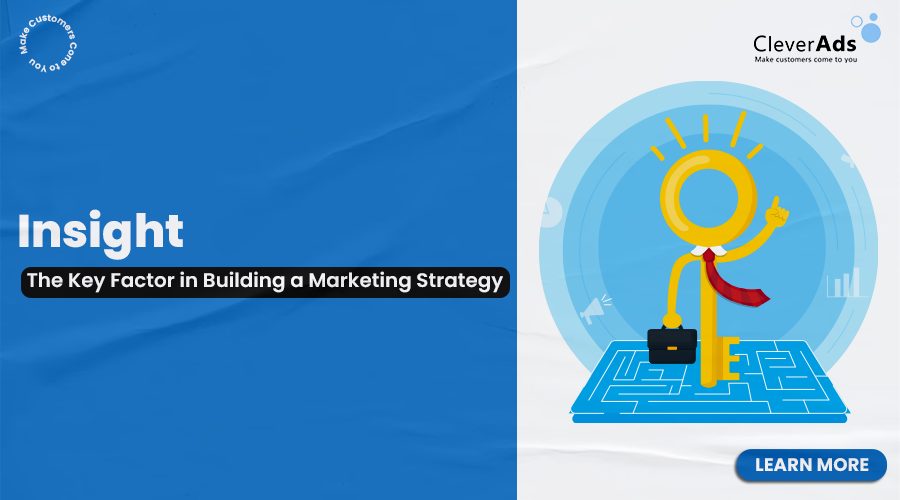
Insight is a switch that triggers a latent purchase desire that the person himself or herself is unaware of.
The literal translation of insight is “insight (power), discernment, insight, discernment” (Genius English-Japanese Dictionary 4th edition).
However, these meanings are not directly used as the meaning of insight in marketing.
Insights, in marketing terms, are often referred to as ”
latent needs
.” Insights are very vague and do not have a clear form, so it is difficult to express them simply, and the term “latent needs” seems to be a partial expression of this.
However, latent needs and insights are not the same thing.
Insight is like a switch that brings out the latent needs of consumers and turns those latent needs into purchase desires.
A switch is something that intuitively makes people want to buy it.The features, the world view, the texture, the appearance, the scent, and everything else stimulates the consumer’s mind and makes them want to buy it. It refers to “something”.
Some people have a desire to purchase, but at the same time they also have negative feelings and cannot easily lead to purchasing behavior.There are also those who use a reverse concept to add value to and motivate their purchasing behavior.
When finding insights,
it is important to analyze what kind of latent needs consumers have in order to find out their reasons for purchasing.
In today’s world, we are overflowing with all sorts of things, and most consumer needs are satisfied. However, we must discover hidden needs among them.
Compared to overt needs that consumers can express verbally, latent needs are often things that consumers are unaware of or have difficulty expressing, making it extremely difficult to discover them.
In recent years, various methods have been devised to uncover latent needs in order to discern consumers’ reasons for purchasing. Many research companies conduct research and analysis, companies themselves have marketing departments related to insights, and research and analysis itself is becoming established as a major business.
In order to obtain high-quality insights (user insights), you need to take various steps. Check out the columns below to learn the steps you need to take to gain user insights.
-6f80c08b-4a48-4f4b-ae66-a3143ac1c56b.jpg)
Why insights matter in marketing
Insight is the “motivation for purchasing behavior” that lies deeper than needs.
In reality, simply creating products and services that are in high demand is not enough to lead the market. By focusing on insights and understanding why a product or service is needed, you can predict what products or services will be needed in the future.
By creating products and services that will be needed in the future, you can differentiate yourself from other companies. In order to become a creator of the times rather than a follower of them, it is necessary to analyze consumers with a focus on insights.

Benefits of pursuing insights
Pursuing insights has the following benefits:
By analyzing the insights, you can uncover the motivations behind consumer purchasing behavior, making it possible to develop new products and services. If insight analysis is reflected in sales and advertising methods, it may bring innovation not only to products and services but also to business models.
In addition, by creating sales methods and products and services that accurately reflect consumers’ feelings, we can give consumers the impression that we are a company that understands our feelings. If you can gain the trust that “this company’s products and services are reliable,” you can strengthen your ties with consumers.
You can also target new customer groups by selling new products and services. If we can steadily expand our market share, it is not a dream for us to become a leading company in the industry or in the economic world.
Things to keep in mind when pursuing insights
The method of developing products and services with emphasis on insights has not yet been established as a practical method.
In marketing that focuses on insights, we proceed from the standpoint that “all human behavior can be explained rationally,” but in actual consumer behavior, there are many things that cannot be explained rationally. Because there is.
Therefore, it is necessary to develop products and services by using not only insights but also different perspectives that are not based on insights.
Additionally, there is a possibility that the analysis of the insights is incorrect, so it is necessary to repeat practice and verification in the field and accumulate know-how that can be used in the future.

4 points to find insights
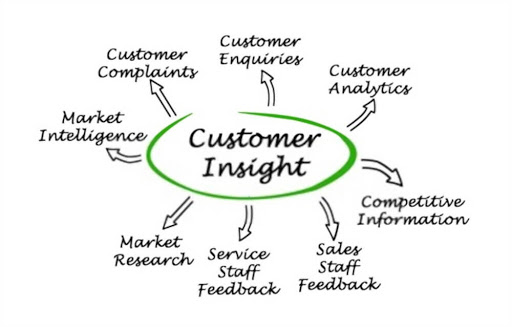
Finding insights requires rationally analyzing consumer motivations. Follow these steps to discover insights.
1. Collect data
2. Analyze the data
3. Create personas and empathy maps
4. Overturn stereotypes and approach from a new perspective
We will explain each step.
1. Collect data
Start by gathering data that shows consumer motivations.
We collect as much data as possible that expresses consumers’ thoughts, including survey results, tracking data such as site access history, user interviews, and behavioral observations.
2. Analyze the data
Next, analyze the collected data.
With surveys, it is necessary to focus not only on the results but also on the consumer’s actions that led to the results and the reasons for the actions.
Additionally, for tracking data from websites, e-commerce sites, etc., we use access analysis tools such as GA4 (Google Analytics 4) to explore trends and backgrounds from the collected data.
3. Create personas and empathy maps
Based on the analysis results, we will identify the persona that will be the target of your product or service.
The more detailed your personas are, the more you can develop products and services from a consumer’s perspective.
It is also necessary to create an empathy map. An empathy map is a concrete representation of what a target consumer thinks, feels, knows, stresses, wants, etc.
By carefully creating personas and empathy maps, you can visualize insights.
4. Overturn stereotypes and approach from a new perspective
Even if a consumer’s latent needs are identified in the scene of discerning consumers’ reasons for purchasing, nothing can be achieved by that alone. Insight has another important element.
That means
“overturning fixed concepts and approaching things from a new perspective.”
Once insights have become clear in identifying consumers’ purchasing reasons, the marketing department collaborates with the development and manufacturing department, promotion department, etc. to create new proposals and products based on new ideas and approach them. It is.
Insights include the comprehensive worldview of various consumers, such as “functionality,” “color,” “texture,” “fragrance,” “comfort,” and “convenience,” such as “I want this kind of product or service.”
Whether it’s product development, service development, advertising or promotion, the key to marketing that creates hit products is how close you can get to actual consumer insights.
In order to create hit products and services from insights, a new perspective is required. It is important to overturn stereotypes in order to gain new perspectives.
We must fundamentally overturn what everyone thinks should be the way things should be, and give substance to consumer needs in ways never seen before.
For example, many new products have been created that overturn conventional wisdom, such as smokeless cigarettes, bladeless fans, and healthy instant noodles. These were hits due to the development of new products from a new perspective and advertising and marketing promotions that led to consumer purchasing behavior.
Modern times are full of things. The key to success in marketing is to throw away fixed ideas, stand in a place where no one has been before, and come up with ideas from that perspective.
If insights are reflected there, it will be possible to tap into consumers’ purchasing desires and guide them toward purchasing behavior.
What is business insight in business-to-business (BtoB)?
Insight-based marketing includes strategies that target not only consumer insights but also business-to-business (B2B) insights.
In BtoB, of course, insights are “like a switch that leads to purchasing (contract) motives,” but compared to consumer insights, the approach is somewhat different.
In BtoB, there are often multiple people in charge of purchasing and contracts. Multiple people in charge hold multiple meetings, analyze and discuss the matter, and after receiving approval from senior management, proceed to purchasing and contracting.
Marketing for BtoB insights
requires a clear understanding of each company’s insights and an approach that captures the hearts of multiple people in charge.
In contrast to individual consumers, who take purchasing actions based on an intuitive sense of inspiration, in BtoB, the purchase or contract of a product or service is based on the question of how beneficial the result will be for the company. We carefully analyze and consider whether the price to be paid is balanced. Once the customer comes to the conclusion that they want the product or service by paying the price, they move on to purchasing and contracting.
The time when corporations begin to consider purchasing and contracting from insights is also the time when new business is born for companies that propose solutions.
In the business world, it is believed that a period of insight is behind new business and marketing decisions.
In the book `
`Business Insight: What is Creative Knowledge?
” author Junzo Ishii refers to the knowledge that comes into play when a new business model is born as “business insight.”
-
Related article:
What is BtoB? Easy-to-understand explanation of the characteristics of BtoB marketing and the difference from BtoC

Business insight example
The following are examples of business insights (knowledge used when new business models are created):
Rather than upgrading an existing product, customers are more likely to consider replacing the product due to aging of its peripherals or the end of its software support period.
When proposing contract renewal, it is important to make proposals in advance based on the contract renewal period, rather than at the same time as the support suspension notice.
The timing of organizational and corporate restructuring, such as mergers and reorganizations, is often an important factor in product selection.
The media that influence business insights are different from consumer insights.
For business insights, the medium that influences the insights is different from consumer insights.
For personal insights, media such as TV, commercials, and SNS have a large influence, while for business insights, specialized magazines, websites, owned media, exhibitions, seminars, etc. have a large influence. give.
In order to discern the reasons for BtoB purchases, it is necessary to accurately grasp the insights and select an approach method that is likely to elicit a response.
The following links may be helpful for articles about sites that influence business insights.
Three Insight Success Stories
Here are three success stories that leveraged insights. Please use this as a reference when proceeding with your business using insights.
Case 1. Lion Corporation “Top Super NANOX”
Lion Corporation has developed and sold “Top Super NANOX,” a detergent that focuses not only on “stain removal,” which is required of laundry detergents, but also on “odors.”
We focused on the act of “sniffing the laundry” that consumers do to check whether the laundry is dirty, and analyzed that there is insight into “no unpleasant odors” as a latent consumer need. From this, “Top Super NANOX” was born.
In fact, many consumers are concerned about the smell of their laundry, and this product boasts a large share of the laundry detergent market.
Case 2. Nissin Foods Co., Ltd. “Cup Noodle Rich”
Foods for seniors tend to be health-oriented, such as low-salt and low-calorie foods. However, in reality, based on an analysis that suggests that many seniors seek gourmet food rather than health, Nissin Foods Co., Ltd. has created Cup Noodle Rich, which uses high-quality ingredients such as shark fin and soft-shelled turtle, while also being health-conscious. Sold.
Although this product was in a higher price range than regular products, it was popular among active seniors who are particular about their food, and it became a huge hit.
Case 3. Unilever “Dove”
Unilever, a household goods company, once conducted a survey asking people whether they considered themselves beautiful. It seems that only 2% of Japanese women answered “yes”.
Therefore, Unilever focused on the insights of consumers who have difficulty affirming themselves, and developed a promotion that expresses the diversity of beauty through its flagship product Dove. This promotion received a great response and is said to have led to an increase in Unilever’s corporate value.
It’s not an insight unless it’s actionable.
Even if the insights obtained through research and analysis are used to discern customers’ reasons for purchasing, it is impossible to realize them unless they are commensurate with the customer’s physical strength.
Insights have a positive effect on consumers and companies only when they are realized, and insights that cannot be realized cannot be called insights in the first place.
From the results of various surveys and analyses, it is important to identify and begin implementing insights that are suitable for the customer.
If you cannot accurately discern insights from the numerous survey and analysis results, your subsequent operations may be hindered.
Recently, market-in (customer-oriented sales strategy) that emphasizes consumer needs has become mainstream, but from now on, it will be necessary to understand latent needs and accurate insights.
In BtoB as well,
it is important to accurately grasp latent needs and the true feelings of the business target
.Whether it’s consumer insight or business insight, it can be said that a clear understanding of the customer’s reasons for purchasing is the key to successful planning, development, and marketing.
Summary: Read insights and connect them to marketing activities
Insights, which are used to discover consumers’ reasons for purchasing, are like a switch that brings out consumers’ latent needs and turns them into purchase desires.
By analyzing insights, you can not only create new products and services, but also create new needs.
Pay attention to the insights and use them in your marketing activities.