

GDN is an abbreviation for “Google Display Network,” and to put it simply, it refers to display ads that can be posted through Google. Display advertising is web advertising that uses visual images, which will be explained in detail later.
Display ads and listing ads

First, what is display advertising? In the world of web advertising, there are two main types: listing ads and display ads. Most people have seen both.
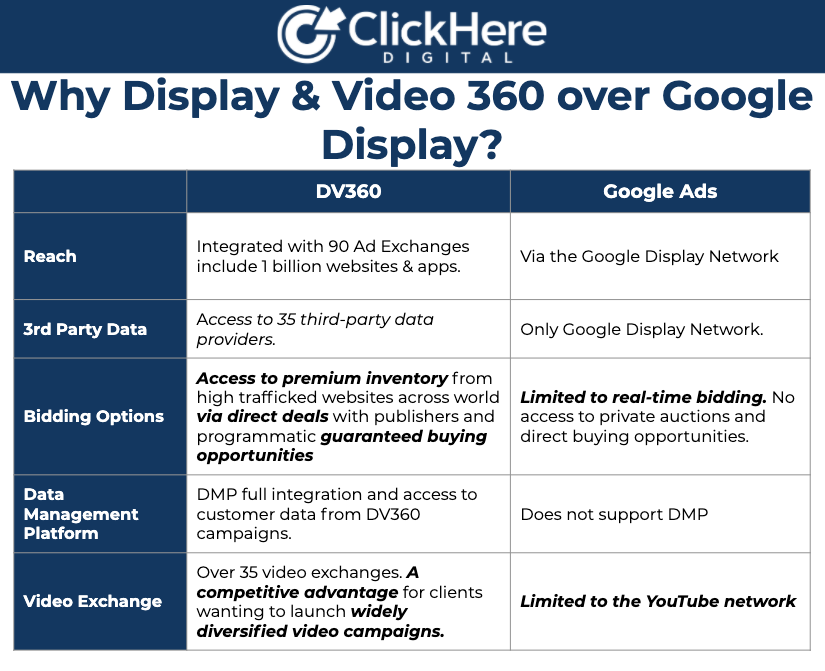
Listing ads are text ads that appear at the top of the list when you search for a keyword using Google’s search function, for example.
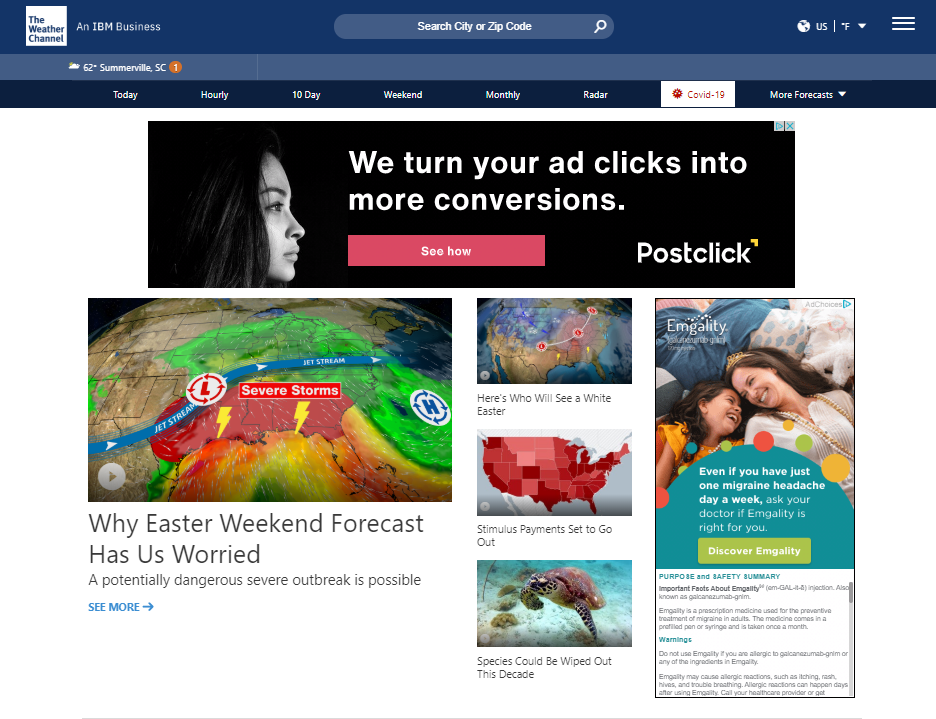
Display ads are other types of ads. Also called “banner ads.” When you open a web page in your browser and view content such as news articles, you often see advertisements using images displayed at the end, top, or middle of the page.
Of course, not all of the advertising space is provided by Google, but at this point it is no exaggeration to say that Google is the world’s largest advertising agency. It can be said that many of the image-based advertisements displayed on all web pages and apps are provided through Google.
Given this situation, many companies and organizations are considering advertising on Google. In that case, one important point is whether it should be a display ad or a listing ad.
Very broadly speaking, if you’re aiming to make your customers think, “Oh, by the way…” then display advertising is basically more suitable. On the other hand, if you are aiming to suggest your products to customers when they have clear needs and are considering it or are about to consider it, listing ads are more suitable.
That’s because display ads are more or less relevant to a customer’s content when they open, view, or interact with that content. On the other hand, listing advertisements are shown to customers while they are taking active actions such as searching by keywords, so it may be said that the need for products and services is more apparent.
However, this does not mean that we can definitively say that display advertising will be highly effective in meeting latent needs. Since latent needs are “latent”, they do not appear on the surface, so if you misjudge whether or not there is a latent need in the first place, display advertising will of course not be able to “fix it”. This is just a comparison with listing ads, so a deep understanding of your target customers is essential.
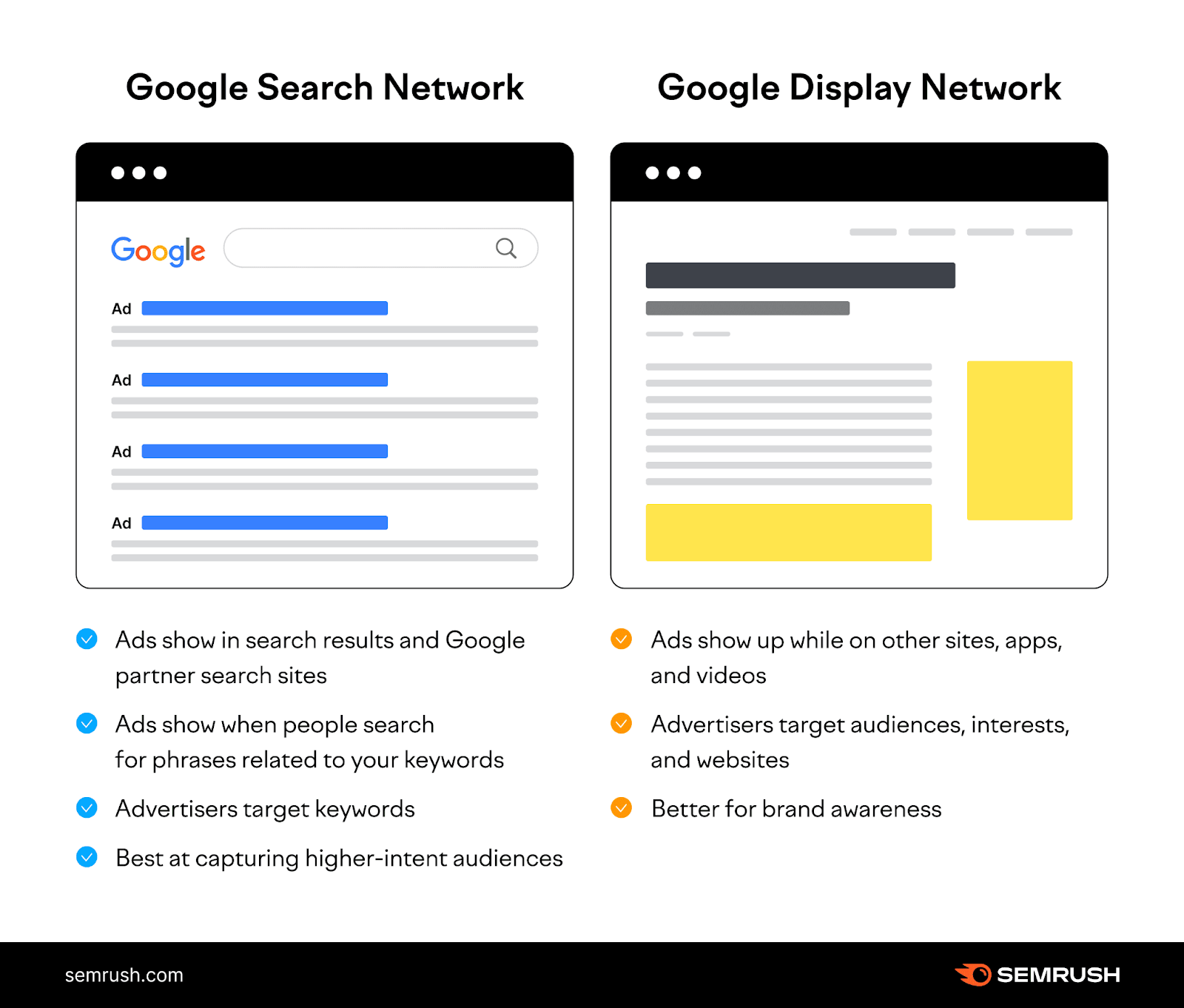
Features of GDN

Detailed condition settings
In terms of marketing, display advertising is more appropriate when it comes to attracting aware customers into a state of interest. Or, you may want customers who are aware of and interested in a certain area to become aware of and interested in related products and services. Or, it may be time to ask a customer who was interested in the product in the not-too-distant past to recall their interest in a similar field, or to suggest a replacement or repurchase (repeat).
Targeting
in business requires planning to this level of detail. As a prerequisite, it is necessary to deeply understand the behavior and psychology of the target customer segment, estimate the market size, and compare and consider it with other target segments and other recognition methods.
Google has “Targeting Options,” and if you want to set detailed conditions, it’s more likely than other services to be able to accommodate that.
remarketing

There is also a feature called remarketing. There are cases where an ad appears and the customer clicks to go to the linked page, but the customer does not
(the action they ultimately want the customer to take). Remarketing is the process of displaying ads in a targeted manner to these customers.
Customers who have followed this route are likely to have some strong interest. If you display your ad at the right time when you have a chance to show your ad to that customer, you may even reach a conversion.
Although it may seem like an ideal function, it does not necessarily mean that it will be highly effective. This is because the customers who clicked but did not convert did not convert. For example, if a customer stopped converting because it was payday and they didn’t have enough money, it might be a good idea to do it after payday.
On the other hand, this is just an example, but if you click on a link because your favorite celebrity was featured in an ad but it doesn’t lead to conversion, you may click on the same ad every time you see it, but you may click on it every time. This may lead to a situation where you will not be able to convert.
Furthermore, in the unlikely event that the ad is causing some kind of unpleasantness to the customer, and the indignant customer clicks and wonders, “What kind of company is this!?”, it is reasonable to think that redisplaying the ad will lead to conversion. No, and remarketing may actually be counterproductive.
Of course, not all customers are in the same state, so remarketing is effective when many customers have a strong need to convert but are holding off for temporary reasons. You can think that there is. In other words, remarketing is effective if the cost-effectiveness (also known as the conversion probability (CVR)) is high enough, but this will vary depending on the product, service, and advertising method. The hypothesis construction and verification cycle for this purpose is also important.
Is display advertising expensive?
So, the question is whether the “cost” is high or not, but what is often said is that the cost is relatively high because the CVR is lower than that of listing advertisements. However, this is a generalization, and even if you compare high and low costs in general terms, it does not necessarily match the cost effectiveness for your product or service, so it is hard to say. This theory can be expressed as an “average value” if you compare display ads and listing ads for the same specific product, service, or brand, and then compare whether that product, etc. is sold more or less. However, collecting such data would be extremely difficult, if not impossible.
As I mentioned earlier, listing ads and display ads each have their own pros and cons. For example, if there is little apparent need for the product field you want to advertise in, it is unlikely that listing advertising will be cheaper.
As another example, if a product is likely to attract customers’ attention by displaying attractive images (e.g., delicious-looking food or nice clothes), a listing ad is not necessarily a better option. It’s no longer a good thing.
In other words, there is little point in deciding which advertising method is the absolute best, and marketing strategy should come first. Therefore, the cost effectiveness will vary depending on the characteristics of the product or service you are advertising and the goals you have in mind.

In addition, it is necessary to go through a cycle of constructing and verifying hypotheses regarding what kind of advertising method will increase the probability, so the corresponding cost must also be accounted for. In other words, it is better to think that the probability of success from the initial stage is extremely low. By increasing that probability, the real cost should come down. Moreover, the faster this happens, the faster costs will fall. Therefore, I have to say that the cost is also up to you.
Well thought out GDN
Many people may sigh and say, “I don’t have confidence in my marketing strategy even if I say, “It’s up to you.” However, this cycle of hypothesis building and verification will be automatically taken over to some extent. This can also be said to be a good thing about GDN.
For example, there is a function called “Automatic targeting setting”. This function automatically measures target customer segments that have the highest effectiveness and prioritizes displaying ads. To give a simple example, if you, as an advertiser, initially had a hypothesis that you should target women in their 30s, but if the effect was higher on women in their 50s, then Automatic targeting settings are like testing this hypothesis.
There is also a feature called “auto bidding”. This automatically adjusts your bids to make them more cost-effective. Therefore, it can be said that the aforementioned cost-effective hypothesis construction and verification can be done on its own to some extent.
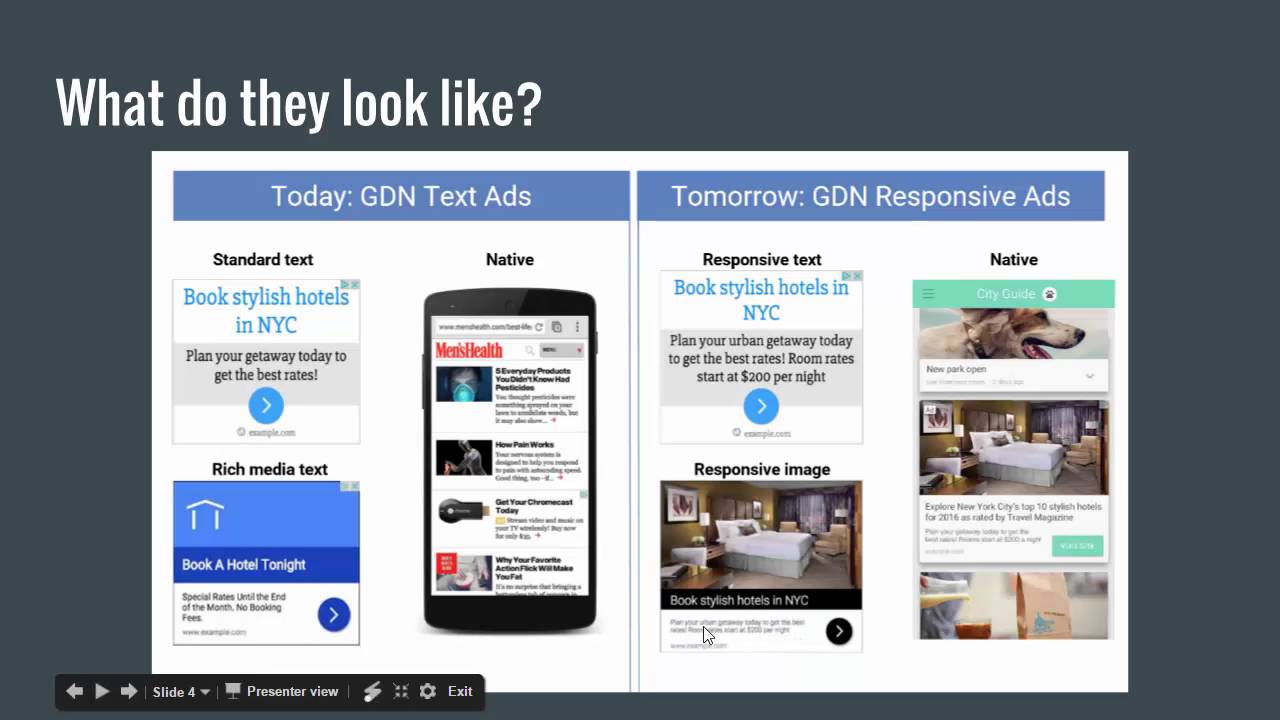
Additionally, a function called “responsive display advertising” can be said to automate the hypothesis construction and verification cycle. In short, the catch phrases and images displayed in advertisements are automatically created and optimized to maximize advertising effectiveness. Of course, there remains a need to construct and verify hypotheses such as original catchphrases and images.
In addition, it also measures which web pages had the highest advertising effectiveness. This can also be said to be part of the responsibility of hypothesis construction and verification.

summary
In this way, GDN can be said to be an excellent service that, objectively, has very well-thought-out functions and can take over the role of hypothesis construction and verification for marketers to some extent.
It is generally said that “display advertising” is suitable for latent needs, and that the most promising service is GDN. To be more precise, rather than “stimulating latent needs,” it is “stimulating needs that already have a need but have not been linked to a product or service,” or “stimulating a need that has already been forgotten but has not been linked to a product or service.” It can be said that it is more suitable than listing advertisements when it comes to “re-awakening new needs.”
Here, we refer to this as latent needs, but in order to arouse latent needs and obtain sufficient cost benefits, various hypothesis building and testing cycles are required. For example, hypotheses about target customer segments, unit price settings, advertising display methods, and effectiveness measurements to verify them. GDN automatically adjusts and optimizes these things for you.
However, it should be noted that this is something that will take over your duties to a certain extent. In other words, it cannot be said that it is something that will automatically sell everything.
In what areas do you need to construct and verify your own hypotheses? For example, creating an initial hypothesis. Using the example from earlier, if you thought that women in their 30s were the initial target customer, but you weren’t showing ads to women in their 50s, GDN wouldn’t automatically make that determination.

Or you may want to leave it to automatic processing from the beginning. However, we cannot deny the possibility that doing so may take more time than building and testing a hypothesis. To put it simply, if you start by displaying a thin and wide advertisement to measure its effectiveness, and then narrow it down from there, that measurement will require a certain amount of verification data, so it will take time to reach that point. It will take. Of course, it would be a different story if you could invest a lot of money into it.
Therefore, it is better to think that it is not a product that allows anyone, even an amateur, to become a marketer and sell completely automatically.
Rather, I think it would be more accurate to think of it as “an excellent tool that allows even a small number of people to plan and execute advertising strategies.” Building and verifying such hypotheses takes a lot of time and effort, so please make good use of GDN.