

When conducting business through websites such as corporate homepages, blogs, portal sites, and media, it is common sense to include a copyright notice to protect the copyright of the site.
In today’s world where information transmission using the Internet is rapidly increasing, site owners should have basic knowledge of the meaning of copyright.
In this article, we will explain in detail what copyright (copyright) is, its outline, meaning, notation method, and writing method.
What is copyright?
“Copyright” is essential to understanding
copyright
, and the words “work” and “author” are often heard.
Copyright is the Japanese translation of the word copyright, but what do these words mean? Check out the overview below.
Copyright
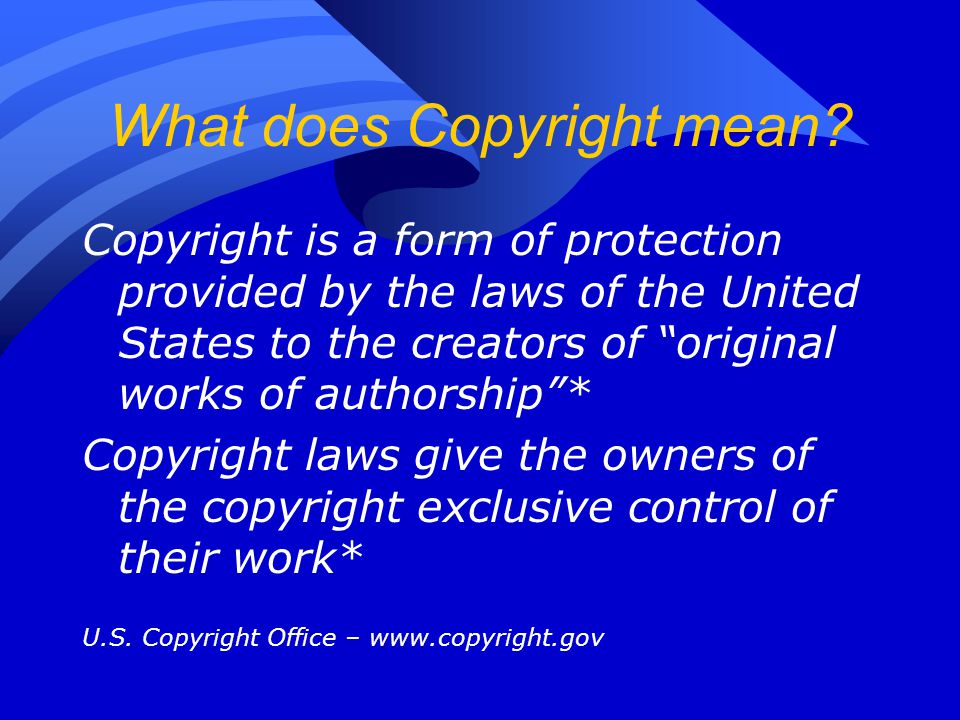
Copyrights are legally granted to those who create the photographs, videos, texts, music, and other various creative works (works expressed based on ideas) that we encounter on a daily basis. Masu.
The condition for being eligible is that the work expresses the creator’s thoughts and feelings.
The purpose of copyright law, which stipulates copyright, is to contribute to the development of culture by considering and protecting the fair use of cultural creations, whether tangible or intangible. It is being
Copyright is an important right that prevents third parties from using creative works without permission and allows us to clearly decide how those works will be used.
copyrighted work
A work that creatively expresses “thoughts” or “feelings” that are clearly protected by the rights that accrue at the time of creation. According to the regulations, it falls within the scope of “academics”, “literature”, “arts”, or “music”.
Author
In principle, the “person” who created the work is the author. This is a frequently asked question, but simply giving advice or hints to a work does not constitute involvement in its creation, and is generally not considered an author.
copyright holder
A person who owns a copyright is called a copyright holder. Because copyrights are often distributed through transfer, inheritance, etc., the author and copyright holder are not always the same.
In the case of media owned by a company, the copyright may be transferred to the company by signing a contract with the actual author and paying a writing fee. Therefore, there are cases where the author and the copyright holder are not the same.
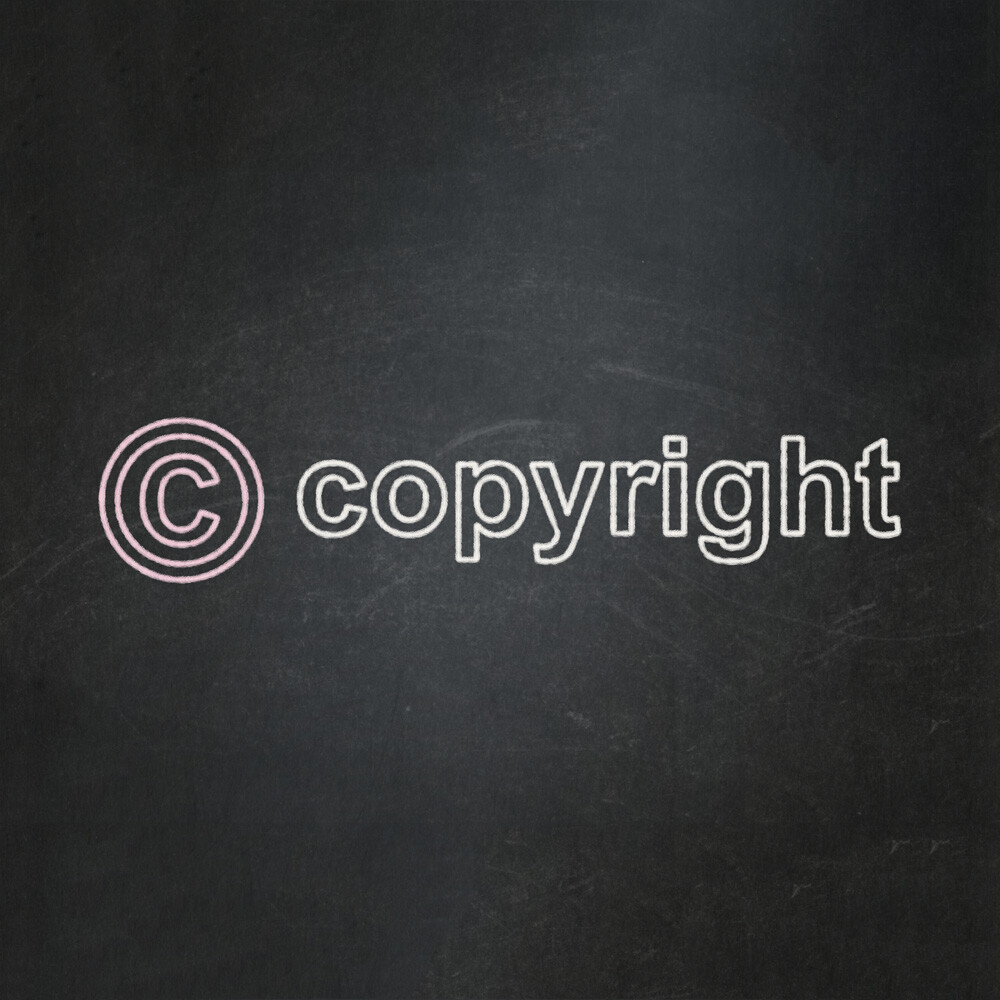
What does copyright mean?
Copyright refers to the notation used to protect copyright and the copyright itself.
Copyright is automatically generated and granted from the time the subject matter is created, so there is no need to take any special steps to obtain the right, but it is a good idea to mark the copyright on the work you create. It’s common.
The origin of copyright and the “Berne Convention”
The first copyright law enacted in Japan is said to be the Publication Ordinance of 1869.
It is believed that the so-called modern copyright law was established in 1899, the year the country joined the Berne Convention. This is a basic treaty that was already established in Europe in 1886, and is an international rule.
There are two types of copyright in the world: “formalism (the idea that registration of the work and display of the © mark is required for copyright to occur)” and “non-formalism (the idea that no registration or display is required for copyright to occur)” , the idea that copyright arises at the time of creation).
Japan is a member of the Berne Convention, which adopts a “non-formalist” system, but in 1956, Japan adopted a “universal convention” that requires all copies to be marked with a © to meet the requirements of the formalist system. We are also a member of the Copyright Treaty.
Advantages of writing copyright
There are two main reasons for the meaning of copyright notation.
First, it is possible to clearly state the copyright owner and the year of publication. As will be explained later in “How to Write and Notate a Copyright,” a copyright consists of the name of the copyright holder and the copyright start date, so anyone can identify the content at a glance.
The second point is that it acts as a deterrent against unauthorized reproduction and copying. In order to prevent acts that may lead to copyright infringement, it is important to clearly state that the content is protected so that it cannot be used without permission.
The need for copyright
Many sites customarily display copyright information, but it is not always necessary to include it.
Legally, copyright occurs in a creative work at the stage of its creation and lasts for a specific period of time, so copyright is not essential, but it is better to write it down to give the impression that it is copyrighted. Please understand that it is a good thing.
Especially when it comes to content that will be seen by people all over the world, it is important to display a copyright notice that can be seen at a glance. This will also give you peace of mind in the unlikely event that a problem occurs.
In Japan, the notation does not have much meaning, but since the concept of reproduction varies from country to country, “copyright that can be understood at a glance” consisting of © etc. is clearly stated, including the meaning of checking on third parties. It’s a good idea to keep it.
How to write and describe copyright
If you are in charge of a company that creates original content for blogs, homepages, etc., you may have at least once worried about how to write it or notation.
Below is a summary of the basics of how to write a copyright, including the position of the notation and matters to be included.
Copyright © 2021 □□□□ Corporation.
© 2021 □□□□ Corporation.
How to write C mark
There is no clear rule on the order of notation, but generally the mark “©” or the word “Copyright” is written first.
<Example of notation>
© 2020-2021 □□□□ Corporation.
© 2021 □□□□ Corporation.
© is an international mark that indicates “copyright ownership” as stipulated in the Universal Copyright Convention mentioned above. The words © mark and Copyright have the same meaning, so be sure to include one of them.
In the HTML source when creating a homepage etc., there is a way to write “©”.
Where “©” is written in the HTML source, it will be shown as a © mark on the website.
<HTML source>
<Same part of website>
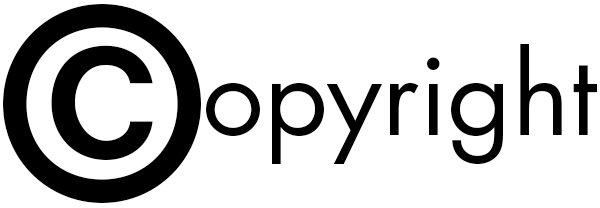
There is also no problem using half-width parentheses such as (C).
In recent years, many users prefer not only computers but also smartphones, so it is important to use shortened symbols and avoid long sentences.
How to write the Western calendar
Next to the “©” mark or “Copyright”, write a number representing the year in Western calendar when the copyrighted work was published. If 2021 is the year the content was published (year of publication), write only 2021.
For example, if there is a year in which the work was updated or renewed, such as by adding some new information, it is common to write it in the format 2020-2021 after the year of publication.
People who see it will think that “new information has been added,” so it is often intentionally written.
<Example of notation>
© 2021 □□□□ Corporation. All Rights Reserved.
© 2021 □□□□ Corporation.
How to write the copyright holder’s name
The name of the copyright holder is written after the year of publication. If the copyright holder is a corporation, you can use the company name; if you are an individual, you can use a pen name or site name instead of the individual name.
An example of a common notation is when “All Rights Reserved.” is added at the end, such as “© 2020-2021 ○○○○○ Corporation. All Rights Reserved.”
Translated into Japanese, this means “copyright protected,” but as it does not need to be listed under the Universal Copyright Convention mentioned above, it can be omitted.
Where should I write the copyright notation?
There is no clear rule as to where the copyright should be written, and basically it can be written anywhere. However, if it is placed in a location that is too difficult to understand, it will lose its meaning, so please write it in an easy-to-understand location.
For corporate websites and photos, it is common to display them at the bottom.
What is copyleft?
Copyleft is the opposite of copyright, and has the opposite meaning.
While copyright is a term that refers to copyright that prohibits unauthorized use or copying of another person’s work, copyleft is a term that allows the free use, modification, and redistribution of copyrighted works.
Because this concept is in conflict with copyright, it is called copy “left,” which is the opposite of copy “right,” as a pun.
Origin of copyleft
Copyleft is a concept proposed in 1984 by Richard Matthew Stallman (hereinafter referred to as Stallman), a programmer and free software activist who graduated from Harvard University.
Stallman, who is also the founder of the non-profit organization SFS (Free Software Foundation), strongly promoted copyleft, which he advocated, and continues to passionately promote free software.
Copyleft concept
Copyleft is defined as follows, based on the concepts of “necessary for the development of copyrighted works” and “removal of obstacles to collaborative creative activities by a large number of people.”
In other words, works to which a copyleft license is applied can be used freely, and derivative works that have been modified and evolved can also be used freely.
Examples of using copyleft licenses
Copyleft is a concept often used mainly regarding the use and distribution of computer program source code. For example, use a copyleft license in the following cases:
By actively providing source code to OSS projects, the purpose of each is to contribute to one’s own growth and the promotion, dissemination, and development of the projects.

What is public domain?
Public domain refers to a state in which intellectual property rights have not arisen or have expired in an intellectual creation.
Public is a word that means the public, domain is a territory, etc., and public domain is positioned as “something shared by society as a whole.”
In other words, intellectual creations that are in the public domain can be freely used by anyone, regardless of whether they are a company or an individual.
What is intellectual property rights?
For example, some of the creations created by human intellectual activities have value as property. These things are collectively called “intellectual property.”
The profits that should originally be obtained from this intellectual property naturally belong to the person who created the creation. The rights that protect the profits generated from this intellectual property are called “intellectual property rights.”
Types of intellectual property rights
Intellectual property rights primarily include:
Please note that each right has a different protection period.
When it becomes public domain
For example, “copyright”, the most commonly heard of the above intellectual property rights, is stipulated to be protected for 70 years after the author’s death. After this period, the copyright expires and the work becomes public domain.
Specific examples of works that have become public domain
For example, the so-called folk tales (folk tales) that have been passed down throughout Japan, such as Urashima Taro, Momotaro, and The Crane’s Return, can almost be said to be in the public domain. In addition, literary works by Ryunosuke Akutagawa and Osamu Dazai, musical works by Beethoven and Mozart, and works of art by Van Gogh have already entered the public domain because more than 70 years have passed since the author’s death.
What to note about public domain
Even if a work is in the public domain, the author’s moral rights continue, so not all works can be used freely. Below, we will explain the points to keep in mind when dealing with public domain materials.
derivative works
If you create a new work using a copyrighted work that is in the public domain, that work is subject to copyright. This is called a derivative work.
These works are not in the public domain, so you cannot create new works using derivative works.
Related rights
If a certain musician performs music that is in the public domain and creates a new work, the copyright of the new work will be held by the performer. This is called neighboring rights.
Neighboring rights are rights granted to those who transmit copyrighted works, and are called “neighboring rights” because they are adjacent to copyright.
Similar to derivative works, works that have related rights cannot be used to create your own work.
Cases that are not in the public domain
Please be careful not to mistake the following for public domain.
royalty free
Royalty-free means that there are no copyright usage fees. Just because “we do not collect fees” for the use of creations, copyrights do exist and are strictly managed and retained.
Please note that this is different from public domain, where there is no copyright in the first place.
creative commons license
The Creative Commons License (CC License) is a license provided by the international non-profit organization called Creative Commons, which proposes new copyright rules for the Internet age.
By applying this CC license, authors can freely distribute their works while retaining the copyright.
Recipients of the author’s work can use, adapt, and redistribute it under the terms of the CC license.
Although active use may be promoted for copyrighted works to which CC licenses are applied, it is important to note that they are not in the public domain.

Things to note about copyright, what if it is copied without permission?
If a third party copies or reprints a copyrighted work without the permission of the copyright holder, it may constitute copyright infringement.
For example, if content such as comics or movies is duplicated, the profits that could have been made by selling it may be lost.
If your company’s homepage is copied without permission, Google or Yahoo! may determine that your copyrighted material is duplicated, and it may be deleted from their databases. Given these circumstances, if your work is copied without permission, you must take prompt action.
If you discover an unauthorized copy of your company’s homepage, etc., please contact Google or Yahoo! by reporting copyright infringement or using the violation report form. We also recommend that you take measures as early as possible, such as consulting with a copyright expert.
In addition, if you do not intentionally write down the copyright and want to make it available to anyone for free and want many people to use it, you may write “There is no copyright. Please feel free to use it.” there is. In this case, it can generally be interpreted as permission to use the content, but it is important to check whether the statement is actually from the copyright holder who has the authority, and whether there are any other regulations governing the use of the content. It is important to carefully check the accompanying terms and conditions.
Even if it is marked as copyright free, be careful when using it.

What does copyright mean? A thorough explanation of the correct copyright notation, how to write it, and its necessity.
It can be said that most companies write copyright on their creations. Although it is not necessary to write it down, in this day and age where there is a lot of information on the Internet, it is important to first know how to write it and its detailed meaning, and to write it down as a deterrent against unauthorized copying by third parties.