

Recently, many companies and businesses are holding seminars with various contents and increasingly using them for their own marketing and branding. In fact, there are many benefits for companies and businesses to hold seminars. By holding seminars, you can increase the number of potential customers for your products and services, which can lead to sales promotion and have a great impact on business management.
However, simply holding seminars is unlikely to be very effective. By properly understanding what a seminar is and keeping in mind the key points for conducting it effectively, you will be able to hold a seminar that suits your company’s objectives.
In this article, we will explain the basic meaning of a seminar, its advantages and disadvantages, the process for holding one, and the points to keep in mind to make it an effective seminar.
What is a seminar?
I use the word “seminar” casually, but I think there are a lot of people who say, “I can’t explain the meaning in detail.” When you decide to hold a seminar, you need to understand its meaning and hold a seminar that fits the purpose. First, I will explain the meaning and outline of the word seminar.

An event held to recruit people interested in a set theme.
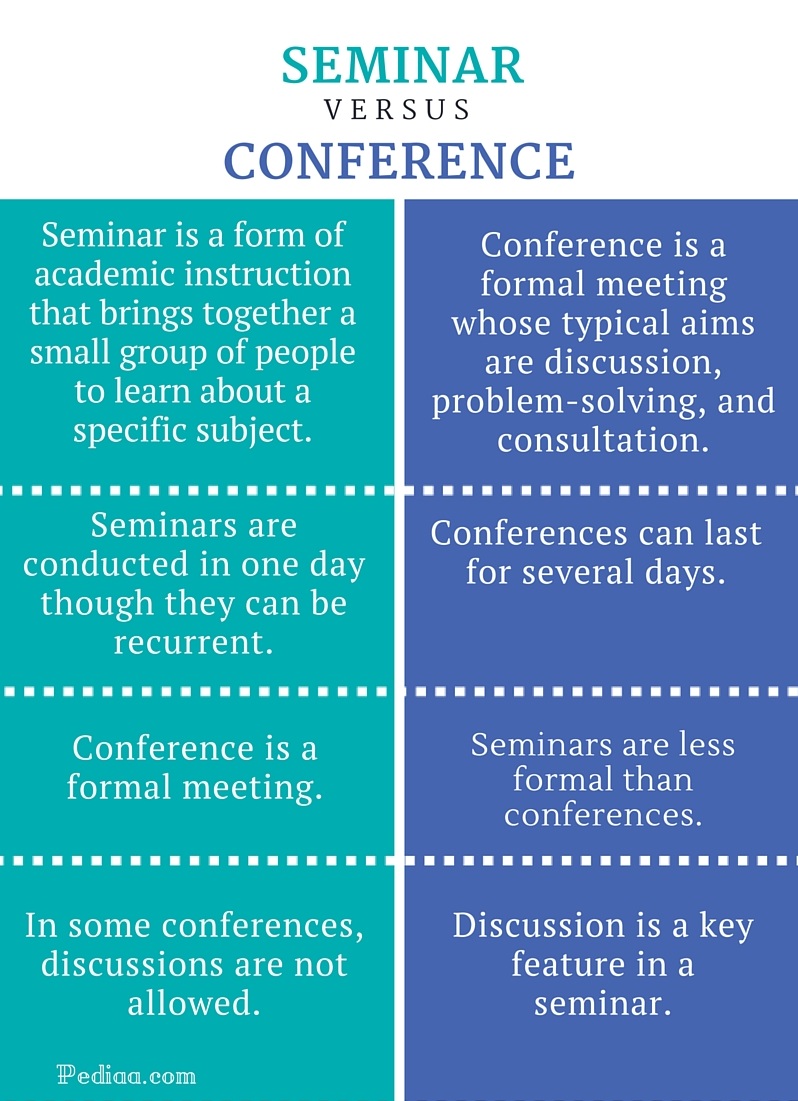
A seminar is an event held to attract people interested in a set theme. The organizers decide on a theme, and people who are familiar with that theme act as lecturers and teach various things. We will solicit a wide range of people from the general public who have a strong interest in the specified theme, but since participants participate voluntarily, unless the organizer specifies participants and conditions, they may have various titles such as company, position, age, etc. participants will gather.
The word “seminar” originally comes from the German word “seminar.” A seminar is a training and discussion session for students on a specific topic under the guidance of a professor or teacher. University seminars are also synonymous with the word, so it may be easier to get an idea of the word if you imagine them.
There are various genres of seminars. There is a wide range of genres, such as financial systems for future assets, self-development systems for career advancement, and business systems for stabilizing business management, so you can choose the content you want to learn or want to know more deeply. You can participate voluntarily in this area.

Purpose of the seminar
Although it is generally called a seminar, there are various purposes for companies to hold seminars. Common examples include the following objectives:

Type of seminar
Generally speaking, seminars come in a wide range of types and can be held in a variety of ways. Here we will explain the types of seminars.
Face-to-face seminar
A face-to-face seminar is a format in which a large number of participants are gathered at a venue, and a lecturer conveys information and know-how on a set theme to a large number of participants.
Since the main part is the transmission of information and know-how from the lecturer to the participants, the level of satisfaction of the participants will vary depending on the content and flow of the lecture. Therefore, if you can convey information and know-how that satisfy your target audience, the satisfaction level of participants will be extremely high, and the probability of success will increase.
Since you are free to choose the venue and set the number of participants, it can be said that the degree of freedom in holding the event is quite high. However, be aware that the larger the scale, the more time and effort it will take to complete administrative procedures and venue procedures.
As a participant, you basically listen to the story and ask questions later if you have any questions. As a result, they are less likely to speak up on their own and are able to listen carefully to what is being said. Another advantage is that the psychological hurdles for participation are low.
Online seminar
In recent years, as web tools have become more popular, an increasing number of companies are holding online seminars using tools such as Zoom. Since it is online, there is no need to reserve a space, and there is no limit to the number of participants, allowing you to recruit as many participants as you like. Participants can participate from anywhere with a smartphone or PC, making it easy to participate.
However, compared to face-to-face seminars, it tends to be difficult to understand participants’ reactions. You can see the participants’ faces on the web tool, but since it’s through the tool, it’s a little difficult to see their reactions. Even if participants are worried about a difficult part of the content, it is important to be careful as there is a risk that they will be left behind if their reactions are difficult to understand.
Workshop format
The word “workshop” in Japanese means “workplace” or “workplace,” but in seminars it refers to experiential courses and group learning that emphasize the independence of participants. Of course, there are opportunities for instructors to speak, such as in face-to-face seminars, but the main format is for participants to be more active and gain learning and awareness through experience.
For example, based on what the instructor was talking about, participants could work together to formulate a plan for a new business, or what measures should be taken to increase the sales of an existing business. This will be the flow that will occur. Rather than just listening, you will be able to participate in the seminar with a sense of ownership and learn a lot through your own actions.
However, since it requires active speech and action, it may be a little difficult for those who are not good at such actions to participate. If you can create a flow that makes it easy for participants to participate, they will be able to be proactive, and they will learn and realize more, so it is important to have a system in place.

7 benefits of holding a seminar
Seminars are held by many companies and businesses with various contents, and holding them brings many benefits. Here are 7 benefits of holding a seminar.
Able to speak to a large number of people
Generally speaking, sales involve one-on-one face-to-face sales, but by holding seminars, you can discuss information, products, and services to a large number of people at once. As a result, sales efficiency is very high, and the leverage of money and time becomes effective. It has become possible to increase efficiency many times over the previous one-on-one sales method.
Of course, holding a seminar requires a lot of time and preparation, but considering that you can approach many people at once, holding a seminar can be said to be very efficient.
You can attract interested prospects
If you are attending a seminar, there is a high possibility that you are a potential customer who knows about your company or already has a strong interest in the field. If the seminar is focused on a certain problem, it means that the people attending the seminar want to solve that problem. You can gather highly interested prospective customers, and by holding an effective seminar, it will be easier to conclude a contract.
You can convey the appeal of your company and products to the fullest extent possible.
Seminars, whether held in real life or online, have the advantage of allowing you to talk face-to-face with actual participants, allowing you to convey the appeal of your company and products to the fullest.
Many companies use advertising and SNS to raise awareness of their company and promote their products, but no matter how creative they are, there are times when they cannot convey the content to prospective customers. is. This is because there are few users who read advertisements, SNS, and websites from beginning to end.
However, at a seminar, fewer people leave or leave their seats midway through, and they tend to listen to the presentation from beginning to end. When the organizers clearly convey the content, it is easier to convey their enthusiasm and humanity, and it is also possible to convey what they want to convey in detail. You can also let potential customers see and touch the actual product, allowing you to convey its appeal to the fullest.
You can form a position that is not possible in normal sales.
Holding a seminar allows you to form a position that is not possible in normal sales. In most sales activities, you make phone calls or walk in, make appointments, and present your products, but with seminars, you attract customers, convey information and know-how to those who have gathered, and conduct sales in that flow. There is a lot of flow. Therefore, unlike in general face-to-face sales, where the only competition is on-the-spot sales and contracts, rather than acting as a “seller”, participants are able to communicate information during the seminar and make sales within the flow of the seminar. You can proceed with the contract and be in a “teaching position.”
Since you can form a position that allows you to conduct sales smoothly, it becomes much easier to sell products and services and make contracts, and you can sell without feeling like a sales pitch.
Easy to build relationships of trust
If participants are satisfied by participating in a seminar, such as being able to solve their own problems or obtain useful information, this will lead to trust in the company hosting the seminar.
If you do walk-in sales or over the phone, you may not be able to understand what kind of person the person is after just one appointment, so there is a high possibility that they will feel skeptical or rejected. However, by holding seminars, you can increase your credibility by making people feel that “this company’s information doesn’t just sell products, but also provides useful information.” This can lead to subsequent presentations and individual consultations, making it easier to conclude a contract.
You can proceed while watching the reaction
By engaging with a large number of participants during a seminar, you can proceed while observing their reactions. As a result, it is possible to create a flow that will easily lead to subsequent deals, such as solving problems that participants currently have in real time and solving questions they have on the spot.
In addition, by looking at real feedback and reactions, you can understand the current issues and concerns of potential customers. After confirming the content, you can discover new market opportunities and learn where the actual needs are, which you can then utilize in your future marketing activities.
Leads to increased customer satisfaction
By using seminars, you can connect to the branding of companies and individuals. This allows us to differentiate ourselves from companies that simply present their products, and allows our customers to feel valued. Therefore, current customers can feel secure that they are a customer of an excellent company, which will lead to increased satisfaction. Customer satisfaction is a very important point in ensuring that customers continue to use our products and become repeat customers. If customers do not have a sense of security and trust in the company, they may lose their customers, so it is extremely important to maintain continuous contact with existing customers through seminars and other events.

Disadvantages of seminars
Although there are many benefits to holding an event, there are also some disadvantages. Here we will discuss the disadvantages of seminars.
The burden on those in charge may increase
Holding a seminar requires a variety of advance preparations, including planning, creating slides, writing manuscripts, attracting customers, preparing for the day, and accepting reception. As a result, the burden is wide-ranging, and there is a risk that the burden on those in charge will be heavy.
Once you have decided to hold a seminar, instead of placing the burden on one person, assign someone to be in charge of each step and work together to prepare. Also, if you find it difficult to do all the preparations yourself, one option is to hire a company that handles things like attracting customers and managing the event on your behalf. It would be a good idea to consider cost-effectiveness.
Must focus on attracting customers
Of course it is important to deepen the content of the seminar, but you must also focus on attracting participants. The larger the seminar, the more difficult it is to attract customers. If you get too focused on the content and end up with zero participants on the day, you’ll be putting the cart before the horse.
Use your company’s homepage, SNS, web advertisements, flyers, etc. to advertise and let as many people know that you are holding a seminar. We also recommend posting it on a portal site where you can promote it. Both free and paid portal sites can reach a large number of people, making it possible to attract more customers. If you are unable to do this in-house, consider hiring a customer acquisition agency.
May cost a lot of money
Seminars incur various costs, including venue costs, advertising costs, advertising costs, and staff costs. This will vary depending on the scale of the seminar being held, the use of the seminar management company, the size of the venue, etc., but there is a risk that it will cost a lot of money.
Be sure to carefully estimate the costs in advance and check whether the benefits outweigh the costs and whether the costs can be recouped by acquiring new customers. If you really want to cut costs, it would be a good idea to take measures such as holding online seminars that do not require venue fees.
Not all participants become customers
If you are satisfied with just attending the seminar, it will be difficult to lead to future product purchases or service contracts. If you hold a seminar to attract new customers, but none of the attendees turn into customers, you will end up wasting your time and money. Set the purpose of the seminar firmly, plan the content, and be conscious of holding a seminar that will ultimately lead to the results you want.

What is the difference between “lecture” and “training”?
Similar to a seminar, you often hear the terms “lecture” and “training,” but each of the three has different characteristics.
Lecture
In a lecture, a talk is given to a large number of people according to a set theme. Celebrities and others who can speak in detail about the topic will be invited as speakers, and they will give speeches based on the theme to the participants. At lectures, the speaker speaks one-sidedly, so in most cases there is no exchange of opinions. It is held in a place where a large number of people can participate, and people who want to deepen their understanding or gain knowledge about the topic participate.
For example, a famous athlete will tell you the secret to being able to continue as a professional for 30 years, an economist will tell you about the future of the Japanese economy and way of life, an astronaut will talk about his experiences in space, and things he would like to share because he knows about space. etc., in various genres.
It would be considered a success if the participants of the lecture thought about the theme and said something like, “It gave me courage,” or “It gave me an opportunity to think about the future of my life.”
training
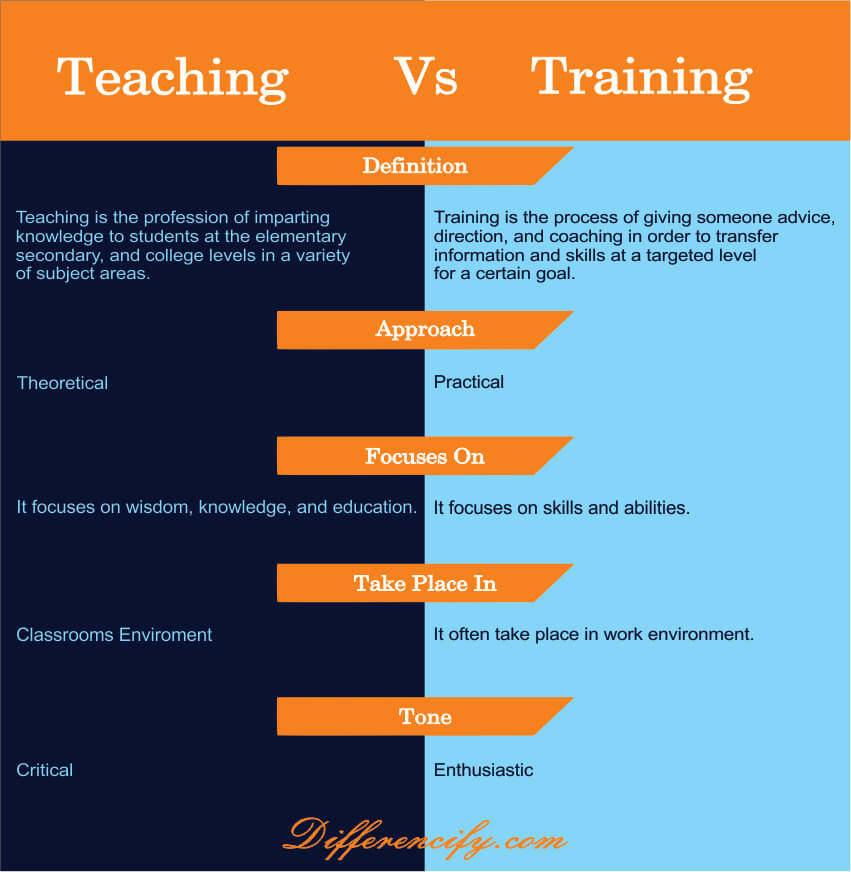
Training is special study or practical training in order to acquire the knowledge and skills necessary for a job. It is strongly positioned as a learning machine for employees provided as part of the company’s operations. Training is provided for a wide range of positions, including new employees and managers. Unlike seminars, there is not as much autonomy as the purpose of training is to develop human resources within a company. In many cases, it is mandatory for those who fit the theme to undergo training.
Training sessions incorporate a variety of methods, including classroom lectures to acquire the necessary knowledge, as well as work and practical skills to acquire skills. The purpose of the training is to acquire the knowledge and skills necessary to perform the job, so it can last from a few hours to half a day, or even several days. In some cases, they occur on a regular basis, multiple times a year. The key to success in training is whether participants acquire the necessary knowledge and skills and are able to utilize them in the actual field.

6 steps to hold a seminar
Seminars are extremely effective in marketing, but unless you clearly define what purpose, what kind of users, and what you are going to talk about, they will not be as effective as possible. you can’t. Here we will explain the 6 steps to follow when holding a seminar.
Set the purpose of the event
The first thing you need to do is set your goals. It can be said that it is difficult to conduct an effective seminar unless this purpose is clearly defined. Depending on the purpose of holding a seminar, the target audience, the content to be conveyed, and the method of follow-up after the seminar will vary greatly. For example, the following objectives may be mentioned:
Set targets and content
Once you have determined your purpose, set your targets and content. If you have a clear purpose at the beginning, it will be easier to think about it.
If the goal is to acquire new customers, the target will be prospective customers, and if the purpose is to follow up on existing customers, the target will be existing customers. However, the range of potential customers is wide, so it is important to be specific about whether they are in the information gathering stage or those in the concrete consideration stage.
Once you have determined your target, decide on content that is of strong interest and that meets their needs. When a company does this, make sure to get opinions from the sales staff who are actually in the field and the people in charge of customer support, and make sure that it is consistent with what customers are really interested in. .
Decide how to follow up after the seminar
It is also important to decide how to follow up after the seminar. No matter how good a seminar is, people tend not to purchase products immediately after the seminar ends. Therefore, it is necessary to follow up with participants and lead to actual business negotiations and contracts.
However, it is not a good idea to perform the same follow-up for all participants. Try changing your follow-up methods depending on the likelihood. For example, during individual consultations after a seminar, it would be a good idea to directly explain the details of the product to participants who say “I want to hear what you have to say right away.” Participants who say “I want to consider it gradually” or “I think I’ll buy it someday” are unlikely to lead to business negotiations right away, so be sure to follow up on an ongoing basis. It is effective to make proposals again when concerns and needs arise.
Set details such as event date, time, and method
Once the content of the seminar has been finalized, it’s time to set details such as the date, time, and method of holding the seminar. It’s a good idea to consider a date, time, and location that will be easy for your target customers to attend, and also decide on the number of people who can attend. Also, if you are targeting people working in a specific industry, it is important to choose a date and time that is convenient for that industry to participate. Appropriate days and times for seminars will differ between general companies, which are closed on Saturdays and Sundays, and service and beauty industries, which often have holidays on weekdays.
Also, recently, there has been an increase in the number of online seminars using web tools, so we recommend holding them online. You don’t have to own a venue, you just need to prepare a web tool that allows you to stream online, so it will probably be cheaper than renting a venue.
Decide how to attract customers
No matter how great the content is, if there are no participants, it will not be a success. Decide how to attract customers and start attracting participants. We recommend using the following methods to attract customers.
Set up a plan and share information with related parties
Once you have finalized your plans for holding the event, be sure to share the information with related parties within your company. It would be a good idea to summarize what you have defined so far in detail.
By compiling a plan, you can use it to obtain consensus within the company or to give approval, and you can also use it to review after a seminar has been held.
Key points for conducting effective seminars
In order for companies and businesses to hold seminars successfully, it is important to keep a few points in mind, rather than just holding them. Just keeping these points in mind will greatly change your chances of success.
After conducting the seminar, measure the effectiveness.
After holding a seminar, you should analyze and measure the effectiveness of the seminar. Check how much results and sales it has led to, and if things are going well, what measures should you take next time to further increase the closing rate?If the results are not good, what parts of the plan should be revised? This is because you need to think about things like: The method of measuring effectiveness and the parts to be analyzed vary depending on the purpose of the seminar. Check the data necessary for analysis according to your purpose and make use of it next time.
You can also collect even better data by conducting surveys among participants after the seminar. It will also lead to improving the effectiveness measurement system, so let’s take advantage of it.
Check whether it is possible to plan and attract customers.
Even if the content is decided, if the seminar is difficult to actually hold or if it is difficult to expect to attract an audience, it will be meaningless. For example, if the content is as follows, it will be difficult to plan and attract customers.
Be sure to carefully consider the date, time, venue, and time period required to attract customers before making your plans.
Have a meeting/rehearsal
In order to ensure that the seminar goes smoothly, be sure to conduct thorough meetings and rehearsals in advance. If those involved don’t know what’s going on on the day, there’s a good chance it won’t be a satisfying experience for attendees. Let’s have frequent discussions with the people involved to decide how we should proceed.
We also recommend that rehearsals be conducted in the same environment as the actual performance. For example, be sure to check that there are no problems with the equipment and web tools you will be using on the day of the rehearsal. By doing so, you will be able to perform the same movements on the day of the actual event, and if there is a problem, you will be able to deal with it calmly.
summary
In this article, we have explained the basic meaning of a seminar, its advantages and disadvantages, the process for holding one, and the points to keep in mind to make it an effective seminar. Seminars, which are held by many companies and businesses, bring many benefits. However, in order to achieve your goals and achieve success, it is important to prepare carefully in advance, formulate a plan, and implement measures to attract customers. It is important not only to hold seminars, but also to consider the needs of the participants and to hold seminars that will satisfy them. Please take advantage of our seminars to help stabilize your business and increase sales.