

Launching means starting to sell or provide a new product or service. In business settings, the word release may be used in addition to launch in many cases.
In this article, we will explain the meaning of launch, the difference from release, and other related terms such as deploy and build.
We will also introduce terms such as product launch and launch customer, as well as product launch procedures, so please use this as a reference.
What does launch mean?
First, let’s look at the meaning of launch. Launch means launching a new product or service, or starting to provide a service. The term launch has a wide range of meanings, and in some cases it refers to entering a new genre or launching a new service.
Launch has traditionally been a term often used in the IT industry. Specifically, the act of publishing a homepage or website is called launching, and from there it has evolved into various industries and is now used in many situations.
Recently, many terms related to launches have appeared, such as product launch, launch title, and launch party.
This time, we will explain launch in the following two situations.
Launch in business scene
In the business world, launching mainly refers to making a service public or starting a new sale.
It is used in expressions such as “We will launch a web application service in six months” or “We just launched a new product of our company.”
As you can see from the example above, launch can also be used for services that have not yet been released or released, such as “the service will be launched in ◯ months.” Please understand that this term is not only used after the service is published.
Launch in the financial industry
The word launch is used not only in business settings but also in the financial industry. Launching in the financial industry refers to issuing securities to the market.
Securities include stocks, bonds, checks, etc. For example, it is characterized by being used in expressions such as “Company has launched a two-year bond worth 200 million yen” or “The United States has launched a yen-denominated government bond.”
Be careful not to confuse the terms with “launch” in a business setting, as the usage and meaning are completely different.
Difference between launch and release
So far, I have explained about launch, but many people may not understand the difference between it and release.
Release also has a broader meaning, and strictly speaking, there is not much difference from launch. Release has connotations such as “publication” and “announcement” and is characterized by being used regardless of industry.
When starting a service in the IT industry, launch tends to be used more often, but there are also many cases where release is used, such as “We have released a homepage” or “We have released a web application service.”
For services aimed at general consumers, release may be more familiar than launch, and it may be easier to convey that the service has started.
Therefore, carefully consider who you should inform about the start of sales or service, and then choose the appropriate words.
Program terminology around launch and release
Terminology surrounding launch releases includes:
Let’s take a look at the details.
build
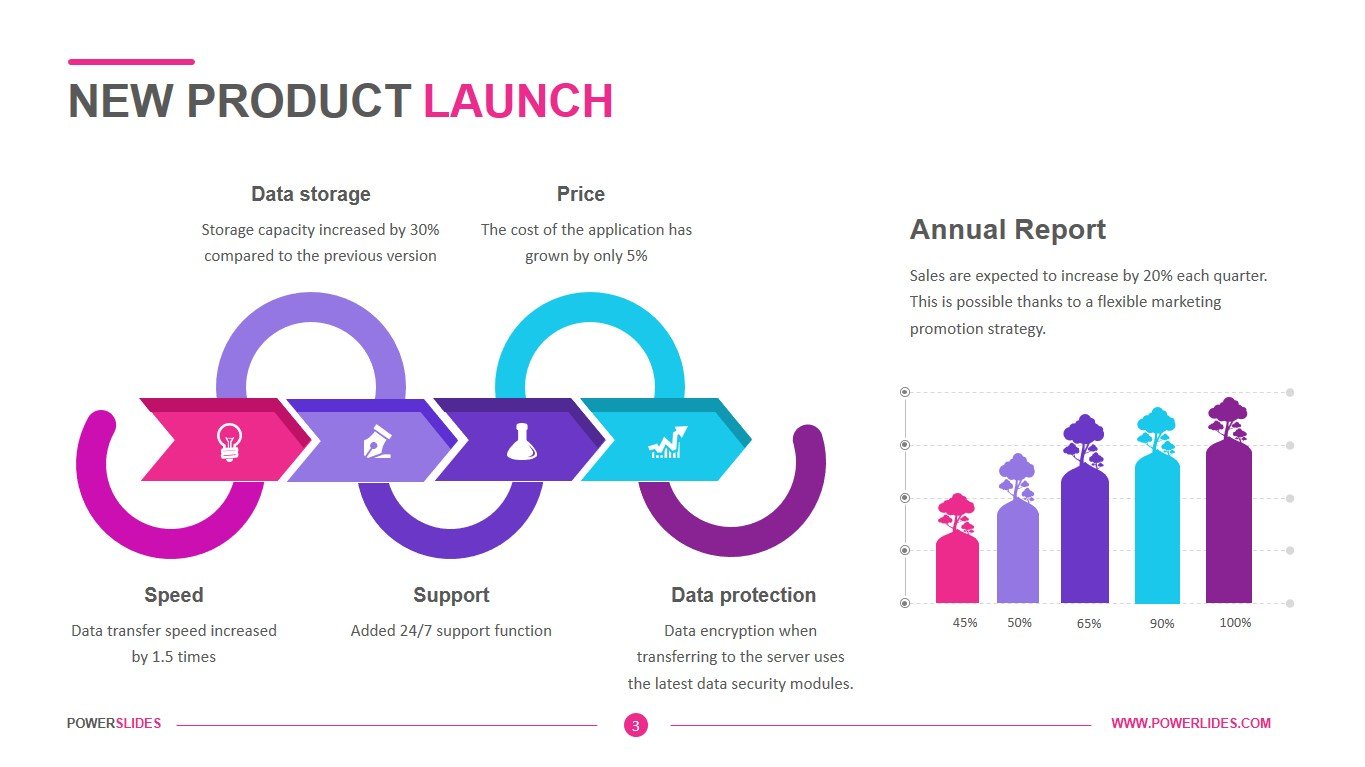
“Build” is a term used in situations related to programs, along with launch, release, and “deployment” (described later). Build is the process of replacing files generated by programming with executable files needed to deploy to a specified environment. The two operations of “compiling” and “linking” described later are collectively called a build.
Why build?
We humans write the programming languages that run the systems. Therefore, programming languages are written using half-width alphanumeric characters and full-width characters so that humans can understand them.
However, even if you send instructions to a computer using a programming language written by a human, the computer cannot understand the human programming language.
Therefore, we work to convert the programming language into Arabic numerals “0” and “1” based on the binary notation system so that computers can understand it.
This code replaced with “0” and “1” is called a binary language. By the way, the method of expressing information using a series of “0” and “1” is called digital.
Execute link
By converting the programming language written by humans into a binary language in which “0” and “1” are replaced, computers are able to understand human instructions. This conversion process is called compilation.
However, just compiling it only allows it to understand human instructions, but does not allow it to execute them.
A program cannot operate with a library alone; it can only operate by associating and linking it with other files, such as by adding library call processing and startup code.
Therefore, we perform a process called “linking,” which involves combining and adjusting multiple program files that were developed separately.
By performing this linking, the files that have been compiled individually can be linked together and exported as a single executable file.
example sentence for build
Build is used in the following situations.
- Check the operation of the built application
- If Mr. A executes a build, other workers’ work will be interrupted.
- Let’s do a full build using the copied repository
Deployment
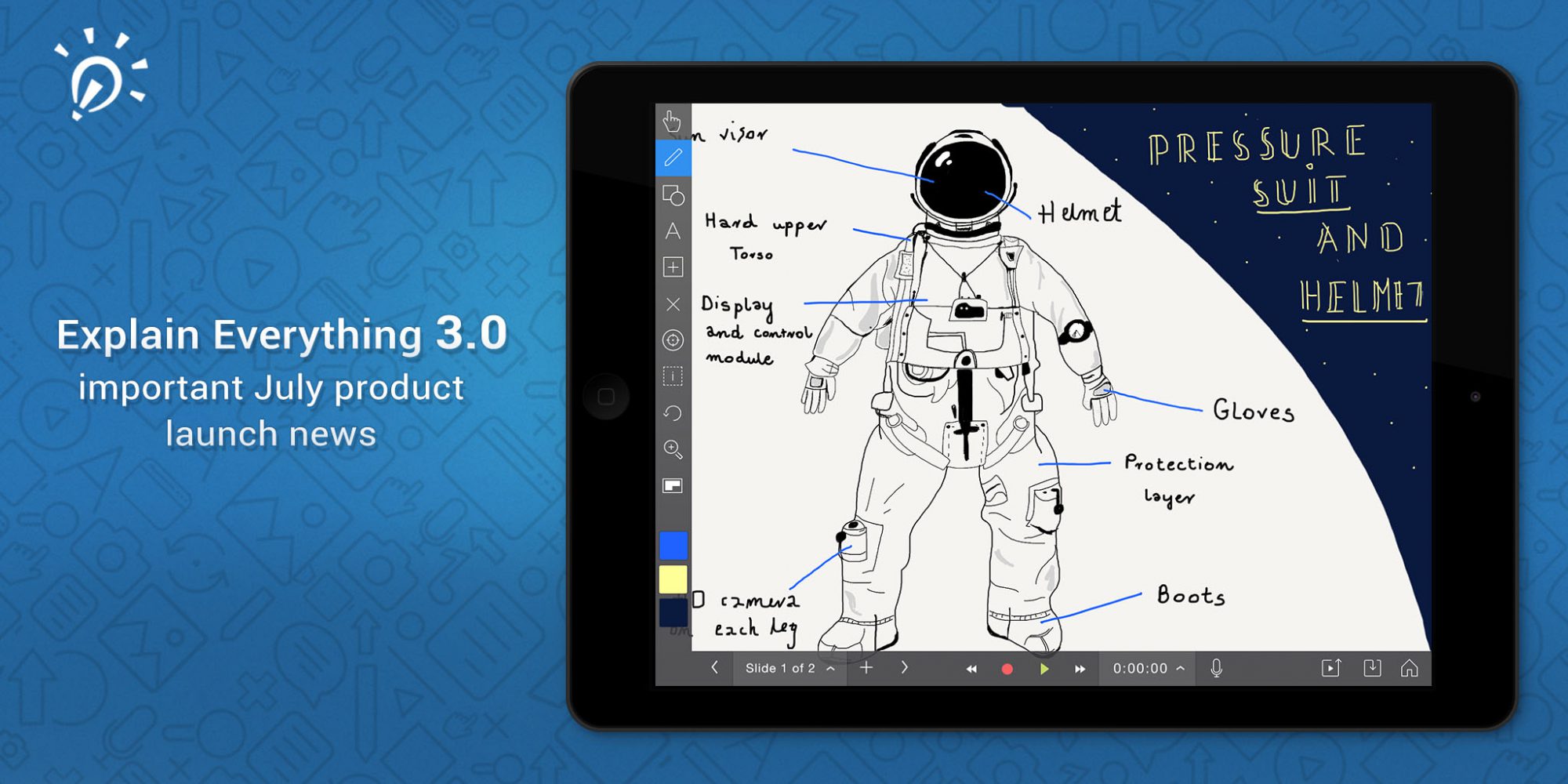
“Deploy” has the meaning of deploying or introducing, and it means placing a built executable file in an executable environment so that it can be executed. That is, uploading the built executable file to a web server and making it available.
In system development, three main environments are often prepared: a “development environment”, “test environment”, and “production environment”. The same file is installed for each environment, creating a state in which development work can proceed individually.
The “development environment” is an environment where you can build early-stage programs, which are developed using a text editor for development. Programs built in the development environment can be converged to a certain level of accuracy by placing them far from the production environment.
The “test environment” is an environment for checking and verifying the behavior of the functions built in the development environment, and is constructed in a state that is almost similar to the production environment. The “production environment” is the environment used by customers and users.
When to deploy
The timing of deployment differs depending on the company, but it is mainly the timing when software and application updates are released.
Deployment is often done at the stage before the so-called service is provided to users (launched), and after deployment, it is confirmed that the system operates without problems at any time. In particular, we perform verification work when deploying from a test environment to a production environment, but the system assumes that there are no problems.
Important points when performing a deployment
If you do not finish the deployment early, you will not be able to perform the next phase of service-in, and you will not be able to perform operational tests in the verification environment. Therefore, please work with the following points in mind.
Creating a state that can be executed quickly
<br/> Deployment involves time-consuming and labor-intensive tasks such as “compiling” and “linking.” Then you need to place those objects appropriately in the environment.
For these reasons, it is desirable to complete this phase as soon as possible. Therefore, it is necessary to create a state where it can be executed quickly. One example is to keep your code simple and check for errors frequently.
Do it under stable conditions
<br/> Create a situation where you can complete the deployment regardless of the development environment or time of day. The way to achieve this is by automating deployment.
Stability can be ensured through automation. However, when an error occurs, it is necessary to be able to handle it manually at any time.
Ensure certainty
<br/> Deployment requires constant certainty, with the possibility of failure in the deployment and construction of the system.
To achieve this, it is important to be able to immediately interrupt work or roll back the system.
As a countermeasure, if you are working with multiple servers, check for errors on each server.
By checking for errors frequently and making corrections as they occur, even if work is interrupted, it is unlikely to cause major problems.
Also, system rollback is required. The ability to quickly restore a problem-free state when a problem occurs is a factor that determines the efficiency of deployment.
Deployment example sentence
Build is used in the following situations.
- Deploy and make this program work
- This application has been brought into service early, so we will move forward the deployment.
- Let’s deploy this program and move it from a test environment to a production environment as soon as possible.
service in
“Service in = go live” is a phrase used when a new service is officially launched to users.
It is mainly used when a company starts offering its products or services, when a website is published, or when a company’s employees start using a new system within the company.
Service in is a Japanese-English word, so when expressed in English, it is not “service in” but “go live”, “start”, “begin”, “launch”, etc.
What is the difference between release, launch, and cutover?
Words that are used in the same way as service-in include “release,” “launch,” and “cutover.”
Although these terms have subtle differences in nuance, they are all treated as synonyms in the sense of “the launch of a new service for users.”
What are the detailed differences in nuance?
If we were to divide these four words into detailed nuances, they would be as follows.
- Service-in cutover: Start using the production environment
- Launch release: Publication and start of use/unveiling of products and services
There is almost no difference in meaning, but if you want to use them differently as detailed nuances, it is best to understand them in this way.
Example sentences using service in
Service-in is used in the following situations.
- Our cloud storage service will be launched on April 1st.
- When will your company’s homepage be in service?
- Internal applications are scheduled to be in service on April 1st

4 words related to launch
There are several other terms related to launch, so let’s introduce some of the most popular ones.
product launch
Product launch means launching a product (product/service), so it can be considered synonymous with a general launch.
However, the biggest difference from a launch is that information about the product is made public even before the product is put on the market, and potential customers are gathered before the product is launched.
A good example would be the sale of a new iPhone. Before the iPhone goes on sale, the color, camera features, and detailed information about the new model of iPhone will be released.
By advertising in this way, you can gather a certain number of potential customers who want the new iPhone. By selling the new iPhone in this state, it is possible to obtain large sales from the initial launch.
Product launches are a very powerful sales method, and are often used for products with high unit prices.
launch customer
Launch customers are general consumers who have already decided to purchase a new product before it is sold.
For example, if you accept advance payment for a product launch, the launch customers will be the general consumers who have already made the payment.
From a manufacturer or distributor’s perspective, the greater the number of launch customers, the more safely they can continue operating their products.
launch title
Launch title refers to the title of a product that is sold in conjunction with a new product when it is released.
For example, PlayStation 5 and Fortnite are good examples. When PlayStation 5 launches, Fortnite will serve as the launch title.
Launch titles are often used primarily for the gaming industry, as in the case above.
launch party
A launch party is, as the word suggests, a party to commemorate the launch of a product.
There are many different types of events, including cases where only the company’s important customers are gathered together, and cases where general consumers are also involved.
Another type of launch party is a “New Product Release Commemoration Presentation.”
Four steps to product launch
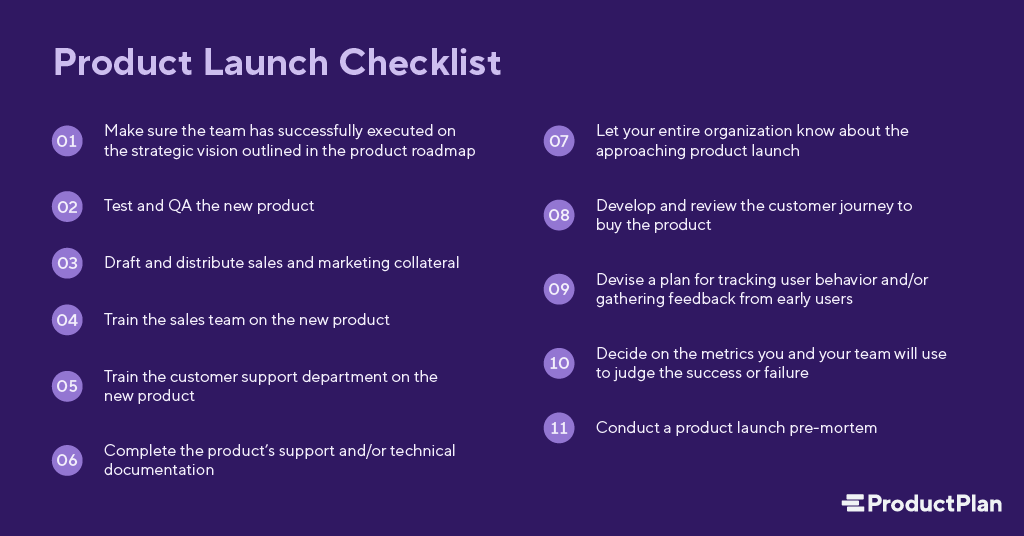
So far, we have explained terms related to launch. From here, I will explain the four steps of product launch.
Acquisition of prospective customers (lead generation)
To launch a product, you first need to acquire potential customers (leads). There are multiple ways to acquire potential customers, including placing ads, using social media, and even doing SEO.
The process is to calculate the number of potential customers by calculating backwards from your company’s sales target and CVR forecast, and then decide on the advertising budget accordingly.
The following material explains in detail the key points regarding acquiring prospective customers. Please use this as well as the article.
Related materials
Lead development (lead nurturing)
Next, you need to work on
nurturing
the potential customers
you have collected, so-called lead nurturing.
This is because there are only a small
number
of
potential customers who
truly have a strong desire to purchase, so when you launch a product in that case, there are many cases where you are unable to generate sales as expected despite
the number of potential customers
.
Therefore, it is important to
educate
the list of
potential customers
you have gathered by telling them, “There is a reason why you should use our product,” to increase the likelihood that they will purchase your product when you launch.
There are multiple tools for
training
, but in recent years LINE has often been used in BtoC marketing, and e-mail newsletters may also be used for higher-priced products.
Please refer to the article below for information on methods and tools for nurturing in BtoB.
Product release
We actually release and launch products and services.
After a certain amount of time has passed since the launch, you can send an e-mail newsletter or SNS message to the list of potential customers you have gathered in advance, saying things like, “This is how many people have sold (this is how many people are using this product) in the ◯ time it was published!” I will send a message. This will encourage users who have not yet purchased or used the product to purchase or use it.
After-sales follow-up
Finally, let’s do after-sales follow-up. Product launches are often used to sell high-priced products, so in addition to the content of the product, if the after-sales follow-up is not thorough, it can lead to a firestorm.
Additionally, by collecting customer opinions during after-sales follow-up, it is possible to utilize them in the next product launch.
How to collect leads for your launch
Earlier, I explained that there are multiple ways to collect potential customers when launching. Here, we will introduce specific ways to collect prospective customers using each method.
internet advertising
Advertising is mostly done through internet advertising. One way to do this is to use listing (search) ads for the actual demographic, and display ads for the latent demographic.
Also, if many of your target potential customers are on SNS, it is also effective to use SNS advertising.
SNS advertising
Next is the use of SNS. Each member involved in the product will create their own SNS account, and will gather potential customers while disseminating the process and background behind the product on SNS.
The more appealing the advance social media posting is, the more you can create a system that will allow your products to sell naturally without the need for detailed training.
SEO measures
Lastly is SEO. Attracting customers with SEO takes time, so it is limited to cases where you are launching a medium- to long-term product, but it is extremely useful when you want to gather high-quality prospects.
Take measures using the keywords that your target searches for, and first prepare a conversion path so that you can get them to register on LINE, email newsletters, etc.
Summary: The meaning of launch is diverse, so let’s use it differently for each scene.
In this article, we have explained about launch. Launch is a word used when announcing a service or launching a new product.
There is launch in the business scene, launch in the financial industry, and launch as a program term, and the meanings of each are very different, so you need to be careful not to confuse them.
Additionally, the word “release” is similar to “launch,” but there is no doubt that “release” is easier to convey to general consumers. Therefore, please think about who you want to communicate your message to and use different words accordingly.