

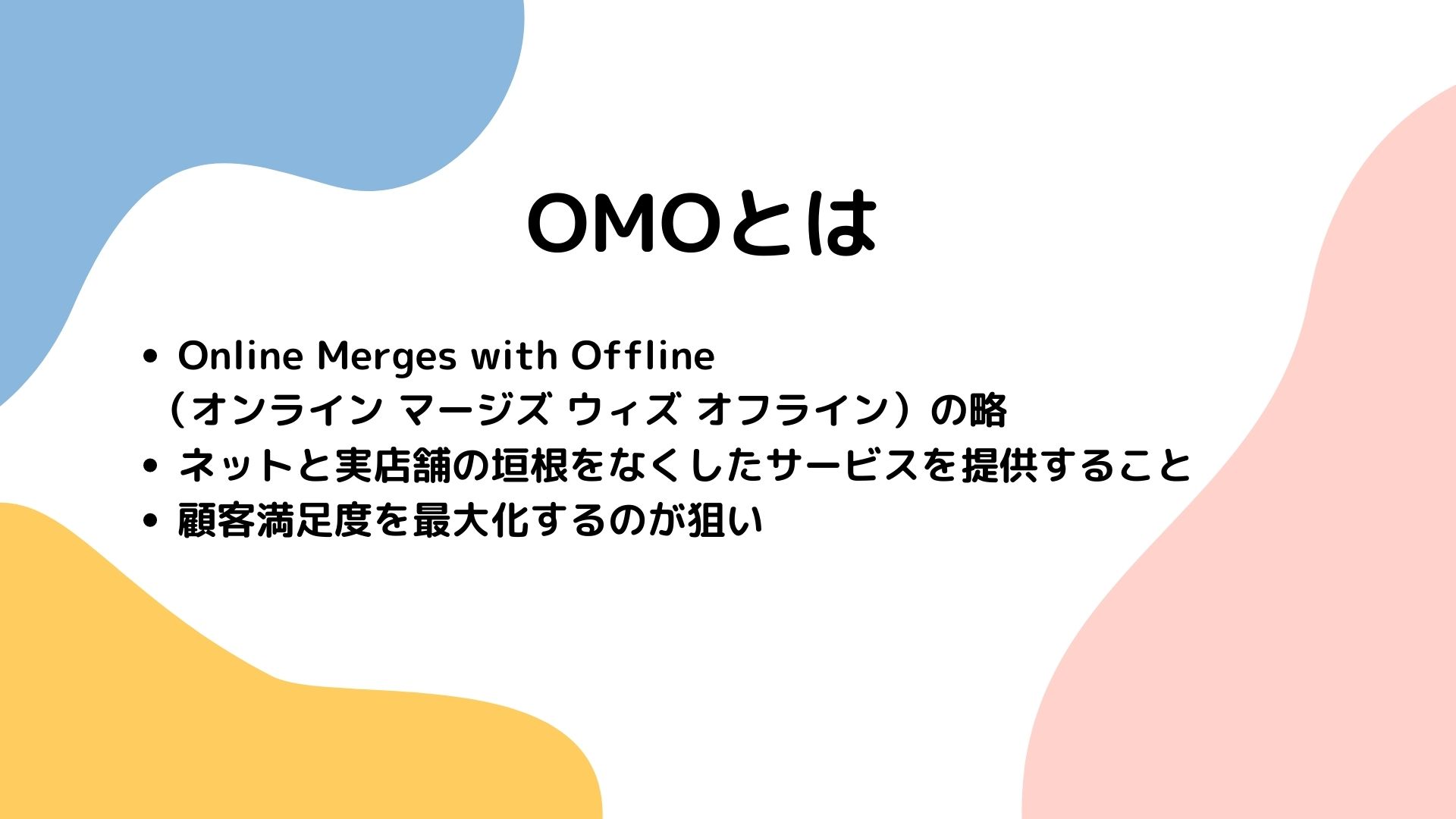
OMO is an abbreviation for “Online Merges with Offline,” and when translated into Japanese, it refers to the combination of
online
and offline. It has attracted attention mainly in the retail industry, and a typical example is linking products and customer IDs from smartphone payments at physical stores, and recommending recommended products by email the day after purchase.
In recent years, people who run physical stores have been putting effort into
web marketing
, but in many cases they are not achieving good results. Even in such cases, focusing on OMO increases the possibility of achieving better results than the current situation.
Therefore, in this article, we will provide an overview of OMO and explain the difference between O2O and omnichannel, which are often confused with OMO. We will also explain how to increase sales with OMO, so please refer to it.
What is OMO?
First, I will explain the overview of OMO (Online Merges with Offline). OMO is a combination of online and offline, and is mainly attracting attention in the retail industry. Specifically, the aim is to implement measures that eliminate the barriers between e-commerce sites and physical stores, and to maximize the value of the experience from the user’s (consumer’s) perspective.
A typical example of OMO is smartphone payments at physical stores. Let’s say you tried on a product at an apparel store and then purchased it using your smartphone. At this time, we can link the product to the customer’s ID and recommend recommended products or send coupon information by email from the day after purchase. In other words, by using OMO, you will be able to take measures that combine online and offline efforts.
OMO is said to have been proposed by Kaifu Lee, former CEO of Google China. In fact, there are cases where sales have increased by more than 20% by making full use of OMO.
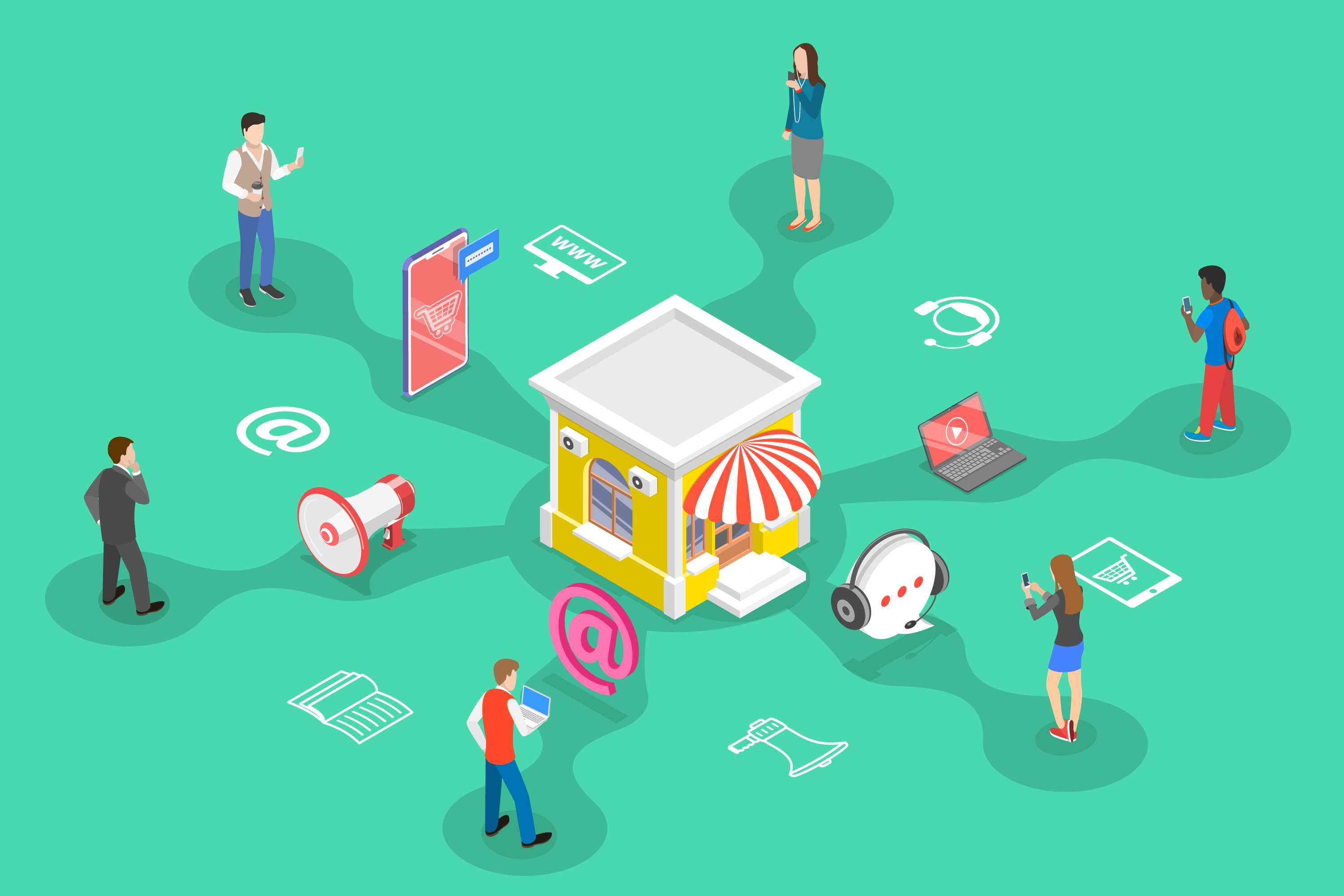
OMO and other differences
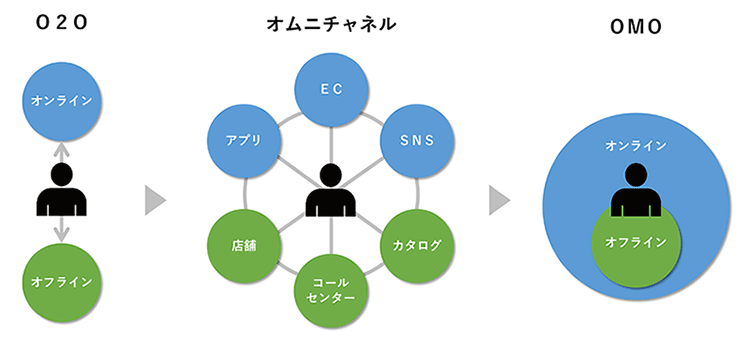
Earlier, I gave an overview of OMO (Online Merges with Offline). On the other hand, I think there are many people who do not understand the difference between O2O and O2O. Here, we will explain the difference between OMO and O2O.
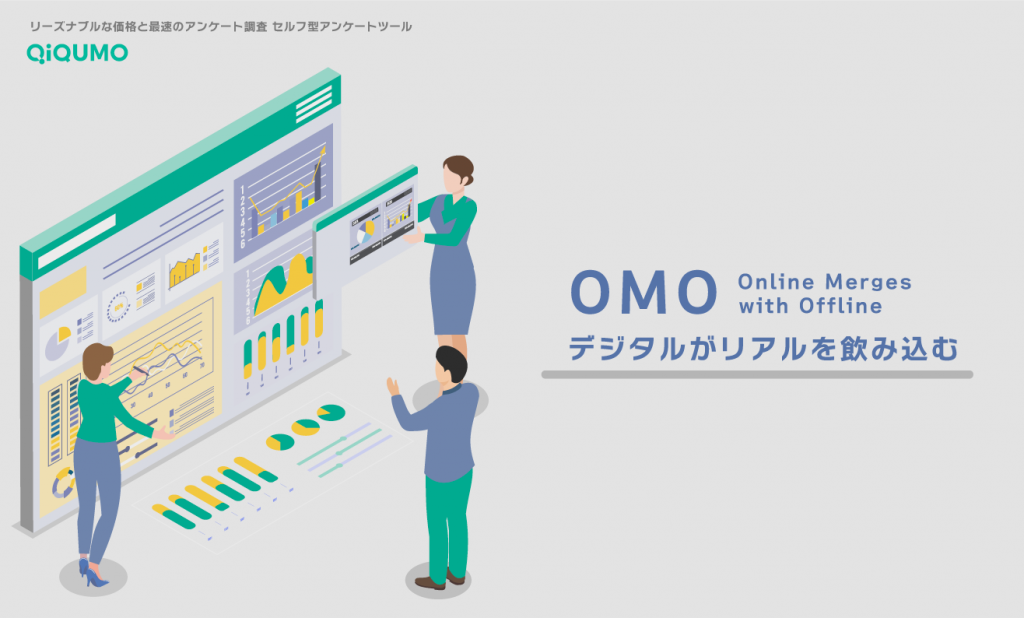
Difference with O2O
O2O is an abbreviation for “Online to Offline,” and refers to measures and ideas that encourage customers to visit offline stores (physical stores) based on online (on the Internet) information. For example, we encourage users to visit the store by distributing coupons for nearby stores based on the user’s location information, or by distributing sale information from SNS such as Instagram and Twitter.
OMO refers to a measure that combines online and offline, so OMO is a two-way measure, while O2O is a one-way measure from online to offline. However, neither measure is absolutely correct. After implementing both measures, it is important to implement measures that will lead to more results and sales.
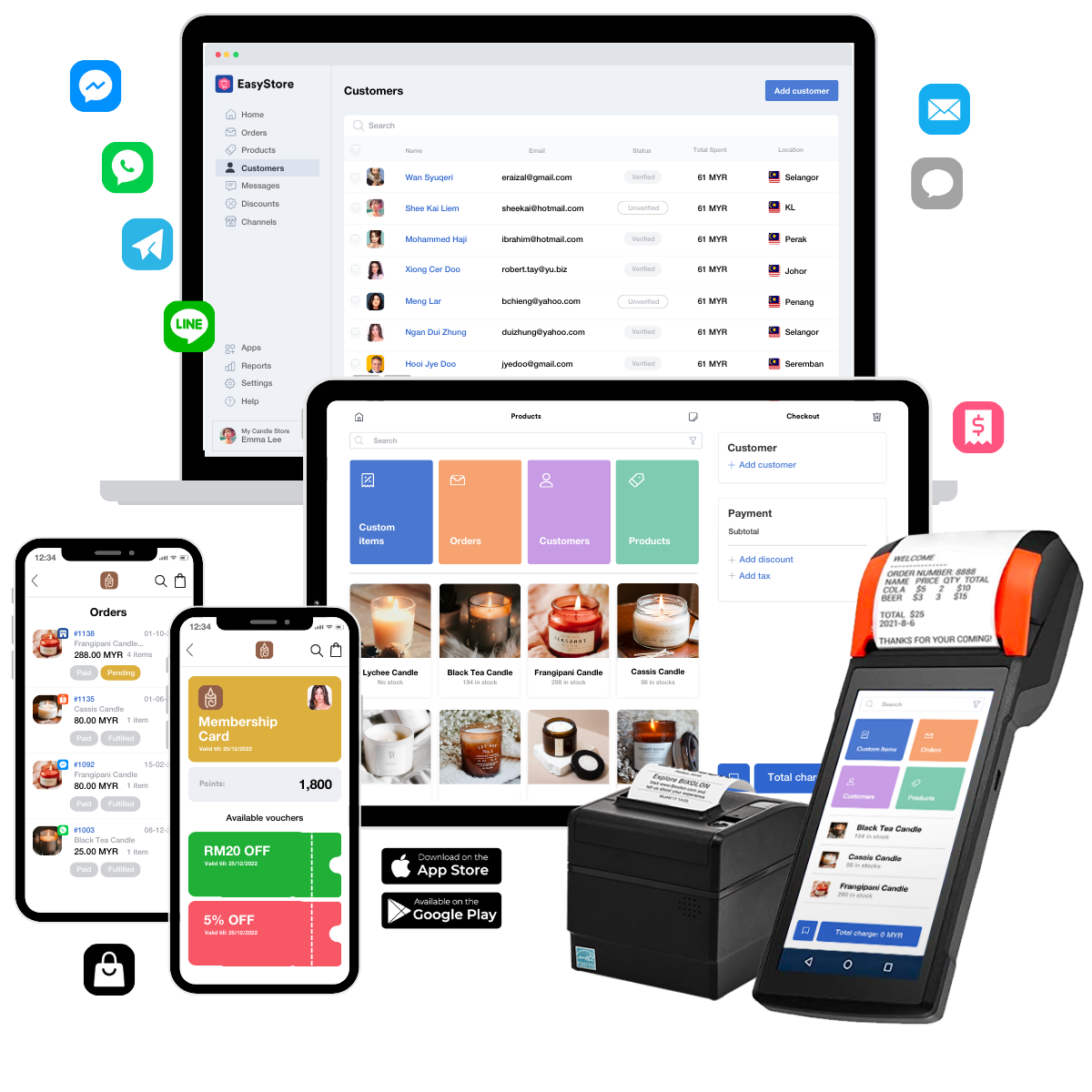
What is omnichannel?
Omnichannel is another term that is often confused with OMO (Online Merges with Offline). Omnichannel refers to linking all of a company’s
channels
to increase opportunities for contact with consumers. OMO is a measure that is attracting attention mainly in the retail industry, and as a result, it is often seen as a measure only for e-commerce sites and physical stores.
Omnichannel, on the other hand, refers to all sales channels, including TV commercials,
internet advertising
, telephone orders, and web apps. In addition, with omnichannel, all measures are linked, so data to be analyzed is consolidated in one place. This makes it possible to develop a comprehensive sales strategy. As a result, you will be able to see which measures should be excluded from omnichannel, and which measures you should invest more money into.
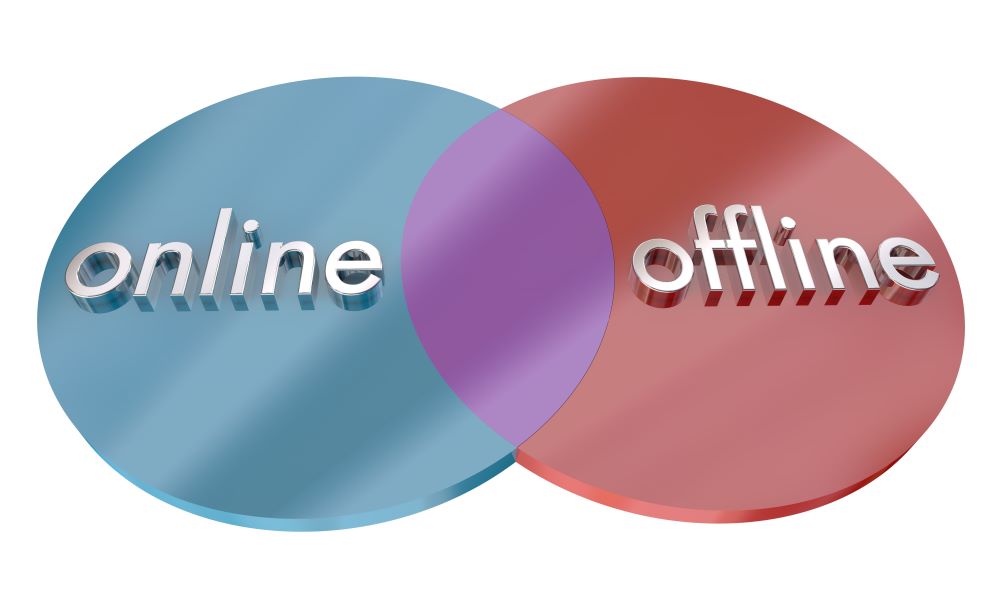
What do you do to increase sales at OMO?
From here, we will explain four important points to increase sales with OMO (Online Merges with Offline).
- Utilize ICT
- Increase points of contact with consumers
- Increase in-store satisfaction
- Develop personnel who can monitor both the web and physical stores
Let’s look at each in turn.
Utilize ICT
ICT (Information and Communication Technology) refers to
information and communication technology
in a broad sense, but in OMO it refers to technologies and tools that aggregate and analyze information. When implementing OMO, you first need to aggregate online and offline data. This is because unless we aggregate them, we cannot derive measures that are truly useful to consumers.
After that, it is necessary to reflect the aggregated data in products and services. Among ICT tools,
MA (marketing automation) tools
,
CRM
tools, and SFA tools are especially essential for OMO. Additionally, Kaifu Lee, mentioned above, stated that four things are essential to realizing OMO: mobile apps, smooth payment systems, high-quality and low-cost sensors, and AI technology.
Increase points of contact with consumers
Next, it is important to increase points of contact with consumers. In recent years, consumer purchasing behavior has become more complex. For example, when purchasing a smartphone, some users go to a physical store, while others purchase it online.
In particular, users who purchase on the Internet gather information on various websites, thoroughly check review sections on sites such as Amazon, and even listen to the opinions of other users on SNS. Also, check to see if they have a customer center, and if you see negative reviews, compare their products with competitors.
In this way, as users’ purchasing behavior becomes more complex, increasing the number of points of contact that can accommodate them is essential to realizing OMO. If you currently only have two points of contact: your physical store and your website, you should immediately consider increasing other points of contact.

Increase in-store satisfaction
At OMO, which implements measures that combine online and offline, it is naturally important to increase customer satisfaction in stores. Rather than simply improving the quality of customer service, concrete measures are needed.
For example, McDonald’s, a world-famous hamburger chain, offers mobile ordering. By ordering products in advance using a mobile app, customers can take them home immediately when they visit the store. Additionally, since it supports mobile payments, it reduces the need for customer service staff to handle cash registers (payments) on the spot.
In addition, some physical stores have introduced a system that allows you to check the country of origin and allergy information by scanning the QR code of the product displayed on the shelf.
As mentioned above, comprehensively increasing consumer satisfaction at physical stores is extremely important in realizing OMO.

Develop personnel who can see both the web and physical stores
In order to realize OMO, it is also important to develop personnel who can monitor both the web (online) and physical stores (offline). The difficult part of OMO is that even if you optimize each of web marketing and offline measures, OMO cannot be realized unless they are combined. In other words, the prerequisite is that each is multiplied.
Therefore, we need someone with the planning and execution skills to propose online and offline measures necessary to realize OMO. However, developing one from scratch can be extremely time-consuming, so consider hiring an outside consultant or hiring a new person who already has the skills.

Two benefits of supporting OMO
Finally, I will explain two advantages of supporting OMO (Online Merges with Offline).
-
Improving
LTV (Life Time Value)
- Improving experience value
Let’s look at each in turn.
Improving LTV (Life Time Value)
LTV (Life Time Value) stands for lifetime customer value, and refers to the profits and sales that one customer generates over his or her lifetime. If you can increase consumer satisfaction through various sales channels, you will increase the likelihood that they will become fans of your services and products. As a result, LTV will also improve.
In addition, by improving LTV, you can create a situation where you do not have to devote large resources to acquiring new customers. Increasing LTV means that consumers are becoming repeat customers, so you don’t have to put a lot of resources and effort into acquiring new customers. As a result, there will be no need to spend on advertising, which will increase your profit margin.
Improving experience value
In modern times, there are countless products and services, making it difficult to differentiate the products themselves. What is necessary when trying to differentiate is what kind of experience value can be given to consumers.
Like the apparel store example mentioned above, OMO allows you to provide a personalized experience. As a result, the experience value improves, which also leads to an improvement in the LTV mentioned above.

summary
In this article, we have explained OMO (Online Merges with Offline). OMO is a combination of online and offline, and is mainly attracting attention in the retail industry. By implementing sales strategies that eliminate the boundaries between online and offline, you can increase your chances of increasing sales quickly. Additionally, as the experience value improves, the LTV is likely to increase as well.
Why not start by considering the best OMO strategy for your company?