

When sitting with clients or superiors, there are many cases where people become rude if they do not understand joza and geza. Some of the people reading this article may have had trouble understanding the difference between upper and lower seats.
Therefore, in this article, we will explain the concept of upper and lower seats, why they are necessary, and basic knowledge. In addition, we will introduce the upper and lower seats for each case, such as taxis and elevators, so please refer to them.
What are Upper and Lower seats?
First, let’s take a look at the outline of Joza and Geza. Upper and lower seats are sitting positions that are considered important manners in business and social situations. These are etiquettes that are considered important worldwide, especially in Japanese culture, and understanding and practicing them correctly will lead to demonstrating trustworthiness and politeness in business.
In fact, if you don’t understand the difference between upper and lower positions and put a client in a lower position, it may be perceived as disrespectful by some clients, and this may affect future business. Also, since the upper and lower seats differ depending on the case, it is important to understand them correctly in each case. This article will provide a comprehensive explanation of each case.
Why it is necessary to understand Upper and Lower seats
It is very important to understand Upper and Lower seats. Typical reasons are as follows.
As mentioned above, it is said that the upper and lower ranks are basically the most important in Japan. However, even people from other countries understand the difference between upper and lower za, and it is an important element that shows trustworthiness during cross-cultural exchanges.
Also, of course, in the case of Japanese people, there are many cases in which the upper and lower seats are viewed more strictly, so depending on the client, mistaking upper and lower seats can be a major cause of losing business.
In other words, upper and lower positions are extremely important for gaining trust from clients and for smooth communication.

Basic knowledge of Joza and Geza
Up to this point, I have provided an overview of Upper and Lower seats. From here, we will introduce the basic knowledge of Joza and Semoza.
Let’s look at each in turn.
Order of sitting on the upper seat
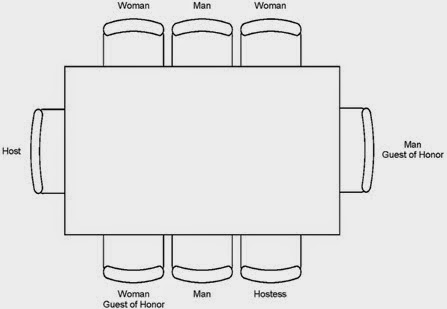
The order of sitting on the upper seat is generally as follows.
Additionally, although it varies depending on the case, when a client guest is seated with a person of higher age or status, the person of higher age or status will often sit in the upper seat. However, these cannot be definitively defined as they depend on the relationship between the client and the person of higher age and status.
If you are unsure whether to seat someone higher in age/status or a client/guest, you will need to flexibly deal with the situation, such as by separating the tables.

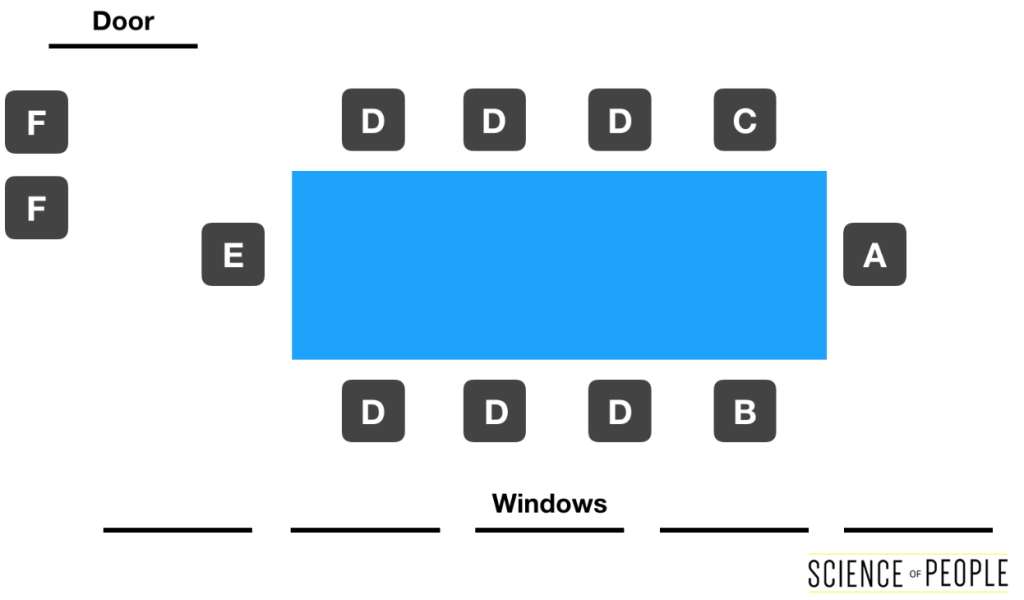
The seat farthest from the entrance is the top seat.
Next, Kamiza is basically the seat farthest from the entrance/exit. If a venue has multiple entrances and exits, the seat furthest from the farthest entrance is usually considered the upper seat. The rule that the seat furthest from the entrance becomes the upper seat is said to have originated during the Sengoku period as a consideration to keep away attacks from enemies.
For example, in a banquet hall, the seat in front of the main stage is often the seat for the guest of honor, but this is because the seat for the guest of honor is the seat furthest from the entrance/exit. On the other hand, in the case of a wedding, the family seats are the seats closest to the entrance/exit, but since they are meant to entertain guests, they are placed in the lower seats.

Basic knowledge of Kamiza and Shimoza by case
The rules for upper and lower seats vary depending on the situation. From here, we will introduce the basic knowledge of Joza and Geza in the following different situations.
Let’s look at each in turn.

In the case of a Western-style room
In Western-style rooms, the rules for upper and lower seats are generally not very strict. Therefore, there are many cases where the organizer or a person of higher age or status sits on the upper seat. However, in the case of Western-style rooms, this is not so strict, so there is no problem even if the client rather than the host sits in the upper seat.
The important thing is to be respectful and considerate, even when there are no clear rules for seating arrangements. Even without clear rules, these considerations are clearly conveyed to clients.

In the case of a Japanese-style room
In the case of a Japanese-style room, the upper and lower seats are determined by the shape of the tatami room. Usually, the upper seat is near the front of the room, and the lower seat is near the entrance of the room. In the case of Japanese-style rooms, there are strict rules, so be careful no matter what the occasion.

Other basic knowledge of Kamiza and Shimoza by case
From here, we will introduce the basic knowledge of Joza and Geza using the following other cases.
Let’s look at each in turn.

For conference rooms
The upper and lower seats in the conference room vary depending on the arrangement of the conference table.
I will explain each in turn.
In case of square shape
When a square-shaped table is used, the curved part of the table is considered the upper seat. The leader or organizer of the meeting usually sits in that position.
In case of U-shape
When a U-shaped table is used, the opening of the table is considered the upper seat. Participants are often seated around an opening at a table, and the meeting leader or organizer often sits in the opening.
In the case of a round table
In the case of a round table, the upper seat and lower seat are the positions farthest from the center of the round table. Therefore, there is no problem if you understand that the seats above and below the center of the round table are the upper seats. Please note that these are only for conference rooms, so there are generally no cases where round tables are used, but it is a good idea to keep them in mind just in case.

For restaurant seats
The rules for upper and lower seats at restaurants vary depending on the seating arrangement.
Let’s look at each in turn.
For table seats
In a typical table seat, the center of the table is considered to be the upper seat. In this case, the host sits in the center, followed by the guests. However, there are cases where the client rather than the organizer takes the upper seat, so be sure to consider your relationship with the client when deciding.
In the case of a round table
In the case of a round table, the position farthest from the center of the circle is the seat of honor. Round tables, in particular, are suitable for large gatherings and have equally spaced seats. It may be a good idea to take into account your relationship with the client and try to arrange it in a way that will facilitate smooth communication.
For tatami seats
In traditional Japanese tatami seating, it is important to strictly follow the rules of upper and lower seats. Usually, the upper seat is at the back of the tatami room, and the lower seat is at the entrance. You also need to be careful about how you place the cushions (orientation). The side with no seams is the front of the cushion, and basic etiquette is to place it with the front facing up.
I’m sure the restaurant staff will be conscious of the orientation of the cushions when placing them, but I recommend checking to be sure.
In case of counter
At the counter seats, the leftmost seat is considered to be the top seat. This rule relates to the positioning of the head chef and bartender for service, and the seat at the counter will help facilitate smooth communication with the staff.
In case of taxi
Even in taxis, there is a rule of upper seat and lower seat. Relative to the driver’s position, the rear part of the car is considered the top seat, and the front part is the bottom seat. If you are taking a taxi with 3 people, 2 clients and 1 person, make sure you sit in the passenger seat next to the taxi driver.
For elevators
The upper and lower seats in an elevator are considered to be those near the door. This is a rule to help you get in and out of the elevator smoothly. However, since there are no seats in the elevator, it is important to consider your position while standing.
Also, it is good etiquette for guests (clients) to exit the elevator first. Instead of going first, make sure your client has left before you come.

summary
In this article, we have explained basic business etiquette for upper and lower positions. Deepening your understanding of upper and lower positions is a very important element, especially in Japanese business etiquette. If you understand upper and lower positions correctly, you will be able to demonstrate trustworthiness and politeness to clients, and it will lead to future business.
First of all, why not use the contents of this article as a reference to understand the upper and lower positions correctly and be able to handle any situation.