


In the previous article (
), we examined marketing management as a practical matter from the perspective of
Michael Porter
‘s theory of competitive strategy. Focusing on the structure and mechanism of a company while centering on the concept of value chain, we will explain that the structure and sources of competitive advantage differ depending on the industry and company, and explain the series of business flows called value chain at the operational level. He also stated that it is important to discover, build, and strengthen a company’s uniqueness, which is the source of cost advantage and differentiation.
In this article, we will step away from the perspective of a company’s unique structure and mechanism and take a look at the 4Ps and market
segmentation
, which are the basic keys of marketing theory.
Basic keys of marketing management as a practical matter: 4Ps
As mentioned in the first article (What is Marketing? – Classification and Interpretation of Different Levels of Marketing), the concept of
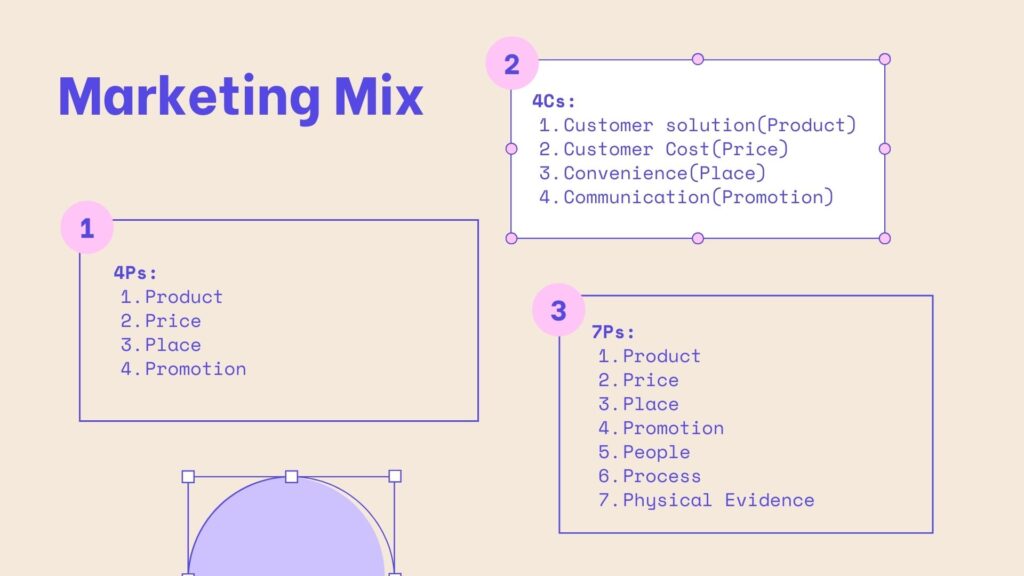
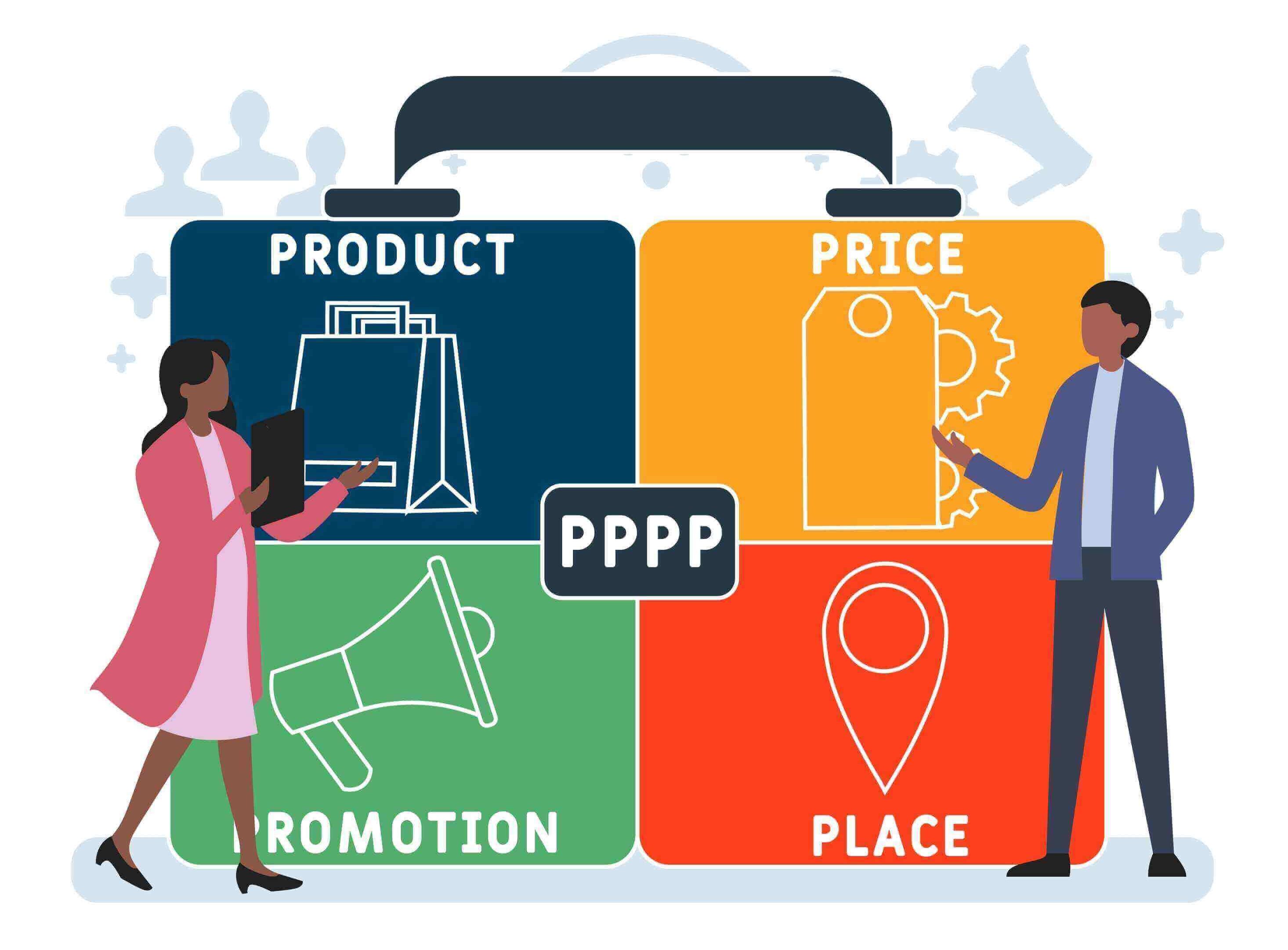
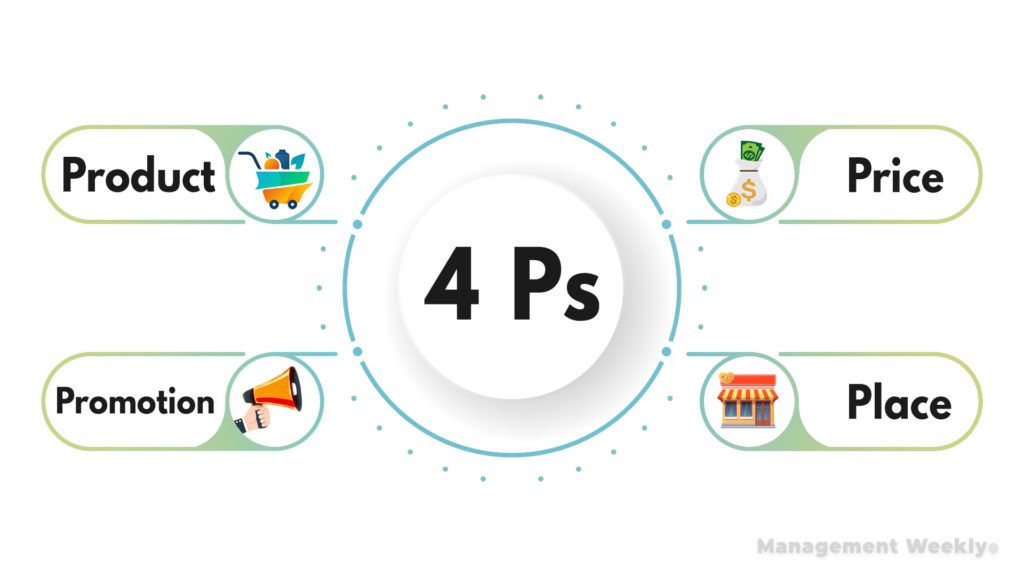
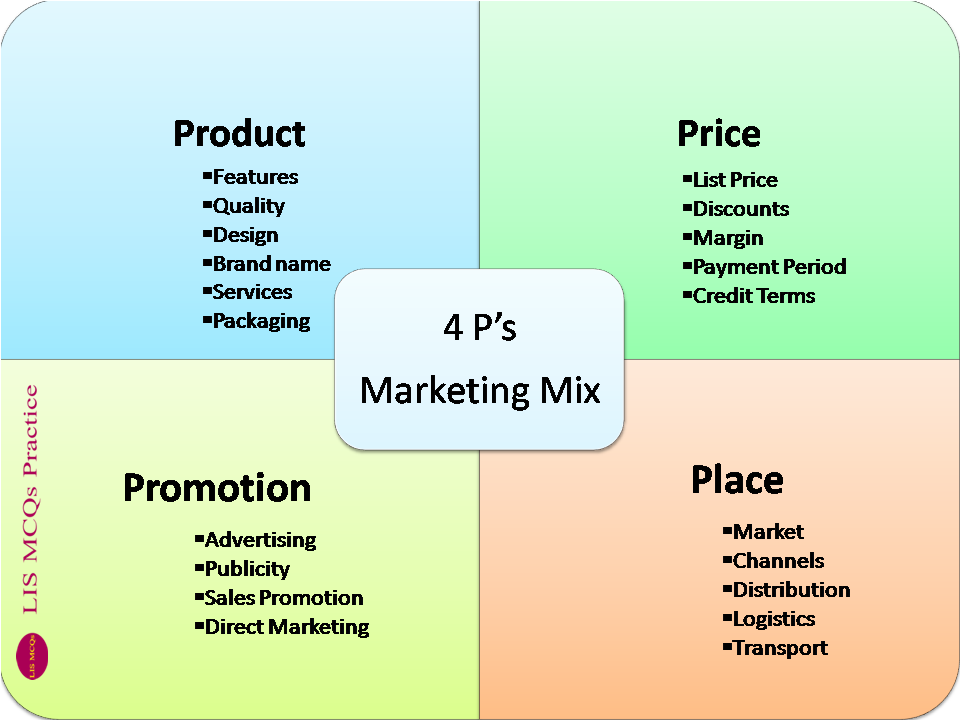
4Ps (Product, Price, Promotion, Place)
was proposed by Neil Borden in 1959. This is a framework proposed by McCarthy and EJ in 1960 that focuses on four important elements that marketing managers must make decisions regarding the concept of
marketing mix
.
I don’t think readers will find much new information if I simply introduce an overview of each of the 4Ps, so this article will focus on the important points in the original 4Ps concept based on the book by McCarty (1960). Describe the assumptions.
McCarty (1960) defined marketing as a practice as “the performance of management activities that manage the flow of goods and services from producers to consumers in order to satisfy customers and achieve corporate objectives.” (Omitted) Marketing is the ability to coordinate the “overall system” that is the business itself (Ibid, pp. 16-17). If we refer to the activities that manage the flow, he points out that all activities such as product development, design, pricing, collection policy, advertising, and sales fall under marketing operations.
This way of looking at McCarty’s marketing can be seen in Part 1 (
) and Part 2 (
the discussion on marketing hierarchy mentioned in ).
Based on this, McCarty (1960) argues that marketing (strategy) as a practical matter consists of the following two parts.
① Target market: A homogeneous customer group that the company is trying to appeal to ② Marketing mix: Variables that the company can control in combination to satisfy this target group
As shown in Figure 1 below, marketing managers need to achieve results by controlling the variables that they can control, even though they are influenced by many variables in the external environment that are beyond their control. .

[Figure 1] Created by the author based on “Marketing Manager’s Framework and Marketing Strategy”, McCarthy (1960)
Companies are affected by various external environments and are forced to respond to many environmental changes and events on a daily basis. Therefore, analyzing and understanding these variables in the external environment and responding accordingly to changes in the environment is an important issue in corporate activities.
However, in reality, although companies may have some influence on the external environment, they cannot control the environment itself.
Based on this premise, the important thing about McCarthy’s 4Ps is that it narrows down the variables that companies should manage to those that they can directly influence.
The concept of the marketing mix proposed by Neil Borden (1959) was ambiguous as to whether it could be managed by companies, but McCarthy’s 4Ps made the marketing mix an element that companies could directly manage. It became widely popular because it was narrowed down and its framework was simple and intuitively easy to understand.

In the previous article, I explained that marketing management as a practical matter needs to break down the value chain and ultimately bring it down to the level of specific business operations in order to discover and build sources of cost advantage and differentiation. said.
As shown as a prerequisite for McCarty’s 4Ps, whether or not the variables involved can be managed as an actor is directly linked to a company’s ability to execute.
Therefore, the author repeatedly uses the keywords “operation” and “ability to execute” in this series. After all, strategies and tactics that cannot be put into practice are meaningless.
As a side note, I once had a private meal with a certain businessman and academic, and they told me the following story.

“Many bad managers (you can replace them with marketing personnel) basically blame the external environment for their company’s performance or lack of results in their own activities.However, external factors Since this is something that cannot be controlled by the company, what is important is how to achieve results within the constraints of the given external environment, and ultimately managers who are unable to do this must take it as their own fault. It is inevitable that companies and businesses led by (or marketers) will eventually decline.
As this statement suggests, it is easy to blame the market and external environment for slumps and failures, but precisely because no one can control them, no one has the responsibility to reflect on the causes of failures or slumps. (Some business people may intentionally blame the external environment to avoid being held responsible…)
In order to continue achieving results in business, we need to understand what and to what extent we can directly manage it, and analyze what kind of results and impacts occurred as a result of changing and adjusting each variable. It is essential to increase reproducibility by repeating and making improvements (execution).
In that sense, marketing is not just about handling all kinds of variables, but McCarty’s suggestion that companies should manage the various activities (variables) necessary to increase customer satisfaction is extremely important for marketing practitioners. You could say it was a proposal.
However, a recent discussion by Kotler et al. (2022) points out that the 4Ps framework is becoming less relevant in the modern business environment.
Kotler
et al. cite the following three reasons for this.
First, the offerings companies provide to consumers are no longer necessarily physical goods, and service-based business models are on the rise.
Second, the traditional 4Ps do not take into account the element of brand, but instead consider it to be an integrated part of the product. Although products and brands are related, they are different aspects of the final offering and each should be considered independently.
Third, regarding the treatment of the word Promotion, it is pointed out that the term includes too wide a range of activities. Traditional promotions include price incentives such as price promotions (discount measures) and coupons, as well as various activities in the communication area such as advertising, public relations, SNS, and sales promotion activities. Incentives directly affect the value of the final offering, whereas communication only conveys information and does not increase value itself. Therefore, incentives and communication need to be clearly distinguished.
Based on the above, Kotler et al (2022) replace the 4Ps with the 7Ts (T is the Tactics: We advocate a framework called T for Tactics.
This change in framework is due to the fact that, compared to the 1960s, when things were important, in today’s world it is necessary to plan based on the entire consumer experience, and more than ever before, companies are This may be a sign that the number of areas that can be managed is increasing.
As for the author, I believe that marketing professionals can use either of the 4Ps and 7T frameworks. To reiterate, a strategy must ultimately be able to be put into action, and to do so, it is necessary to understand the entire flow of the business, such as the company’s value chain, and then develop specific operations. It is necessary to break it down into levels and operate and improve it.
Therefore, for practitioners who are at the level of organizing the general outline of the elements that they can manage, they should choose either the 4Ps or the 7Ts, whichever is easier for them to use. What is important for practitioners in their daily lives is not just knowing the organizational framework, but also how much they can use it to break down manageable elements into operational levels and plan concrete action plans. I believe that this is the case.
Basic key to practical marketing management: Segmentation (market segmentation)
In the previous section, we mainly reviewed the assumptions underlying the 4Ps framework. As mentioned in the previous section, McCarty (1960) points out that before creating a marketing mix such as the 4Ps, it is necessary to define the target market and identify the company’s true customers.
First of all, what is
segmentation
? Why is it necessary?
“Segmentation is the act of classifying the people (or companies) that make up a market into segments with similar needs based on some common feature. This market segment is called the target segment or target market” (Numakami, 2023).
By dividing the market into homogeneous segments, you can reach each segment efficiently and effectively. In other words, the basis of segmentation is the perspective of efficient allocation of management resources.
On the other hand, the act of classifying markets in various ways, not just from a simple efficiency perspective, involves trial and error in determining how to view the environment such as society and the market (how to view and view the environment). You can also say that. In other words, it is a trial and error process of marketing practitioners’ own awareness in order to find their true customers.
At this time, as often mentioned in recent marketing articles, C (Customer) is placed at the center of McCarthy’s 4Ps. When interpreting the market, it is important to keep in mind that it is important to interpret from the consumer’s perspective and with consumer perception in mind, rather than the logic from a corporate perspective.
Insight is a term often used in the marketing world when discussing consumer awareness. In general, it is often said that it is important to accurately tap into consumer insights in marketing cases that have created a market or new products that have become unprecedented hits.
However, insights do not actually exist, but are only conceptual. In general, it is said that insight refers to the state in which you realize, “Yes, that’s what I wanted” for the first time when it is proposed in front of you, precisely because it does not exist. . As insight is conceptual, how marketing practitioners view and interpret the environment (society, market, consumers) is the first step in discovering insight, and one of the means to achieve it. Segmentation is also used.
If we start delving into the topic of what insights are, it would become a long article, so I will omit the details, but here I will explain what I have learned from P&G and Meta, who have been handling customer insights as a practical matter for many years. Let’s reconsider segmentation and the 4Ps, citing Junichi Nakamura’s interpretation of insights.
“Insight is the intuition that enables us to find solutions to difficult situations through keen observation (of customers) and a sense of the whole picture, rather than just the parts. Defining intuition as the ability to find solutions to problems, discovering latent needs is a necessary but not sufficient condition, because in order to solve a business problem, discovering the customer’s latent needs is a necessary condition. Understanding the big picture, understanding the benefits your product or service can provide, and having the intuition to find solutions at the intersection are important for insight.” (Quote: “Insight”) 3 misconceptions about websites: Intuitive ability to see the essence of customer needs is important” (Nakamura, 2019), Nikkei Cross Trend)
The word segmentation is often thought to mean distinguishing markets based on market research or quantitative data, but as mentioned earlier, the important thing is to find “commonalities” among markets and consumers and classify them. It is to do.
Based on Mr. Nakamura’s interpretation of the insights, in terms of understanding the overall picture of customers, including latent needs, how can the act of segmentation help marketers understand the social and market environments? Interpretation can be said to be a prerequisite for uncovering insights.
Furthermore, while McCarty points out that marketing (strategy) consists of two things: the target market and the marketing mix, Mr. Nakamura similarly points out the intersection between the benefits that your company’s products and services can provide and latent needs. He points out that it is important to provide solutions.
As can be seen from the arguments of McCarty (1960) and Mr. Nakamura, segmentation and the 4Ps are mutually related, and marketing practitioners need to adjust their company’s marketing mix to the markets and consumer groups classified by segmentation. An important issue is how to make it fit.
By the way, speaking of the importance of segmentation and 4Ps fit, how is it different from PMF (Product Market Fit), which venture capitalist Marc Andreessen mentioned on his
blog
in 2007? However, McCarthy points out that it is important to fit a company’s activities (4Ps), including products, with market segments, and the content mentioned in the PMF is important. Because the content is more comprehensive than that of the 4Ps, it can be said that the PMF is only a partial discussion that is an extension of the original idea of the 4Ps.
(*Marc Andreessen says that the term PMF itself was coined by venture capitalist Andy Rachleff, and calls it “Rachleff’s Corollary of Startup Success.”)
So, specifically, from what perspective should we perform the task of segmentation? Numagami (2023) lists the following four main segmentation axes in the consumer goods market.
1. Geographic axis: region, city size, population density, climate, etc.
2. Demographic axis: age, family structure, family life cycle, income, occupation, educational background, social class, etc.
3. Psychological axis: lifestyle, personality, etc.
4. Behavioral axis: purchase opportunity, benefits pursued (quality emphasis, etc.), user status (presence of usage experience, etc.), frequency of use, loyalty, purchase preparation stage (awareness, purchase intention, etc.), marketing factor sensitivity (Are you responding to price, quality, advertising, sales promotion, etc.?) etc.
Segmentation is not done by simply selecting from these major axes, but rather it is important to observe the market and consumers yourself and create original segment axes.
In order to achieve this, it is a prerequisite for companies to have their own data on the main axes that are important for their industry, or to acquire and utilize it through research. In addition to these requirements, we will conduct activities such as aggregating and analyzing a complex combination of these axes, or multiplying unique data that only our company owns, in order to create a unique society ahead of our competitors. We need to figure out ways to capture the market.
At a major consumer goods manufacturing company like Kao, where I work, we collaborate with companies and research companies that handle syndicated data, such as Intage and Macromill in Japan, and Euromonitor and Nielsen globally, to obtain quantitative data, which is a prerequisite. will always be captured and available for analysis.
However, for small and medium-sized enterprises, venture companies, and businesses and industrial goods belonging to emerging markets, there are cases where such macro-organized data does not exist, or even if data exists, it is not regularly used. There are many cases where it is not possible to obtain such information because it costs a lot of money.
So, is it not possible for companies in this situation, or companies that cannot obtain the necessary data, to perform segmentation?I do not think so. The phrase “Google it!” has been around for a long time, but in modern society, research releases by companies, fixed-point surveys by the Statistics Bureau of the Ministry of Internal Affairs and Communications, and other economic and industrial A variety of information and data are available for free, including white papers issued by ministries and other government agencies.
In addition, SaaS tools such as search data analysis and site analysis tools that include other companies’ websites are now available at relatively low prices, and segmentation is not necessarily possible without macro quantitative data such as syndicated data. That’s not to say.
I mentioned earlier that data related to the main axes is a necessary condition, but that data does not necessarily need to exist as perfect structured data, and what cannot be obtained cannot be obtained (in some ways, it is difficult to obtain data related to the industry to which it belongs). It can be said that it is more important to define one’s own customers through creativity and ingenuity while making full use of the data that can be obtained.
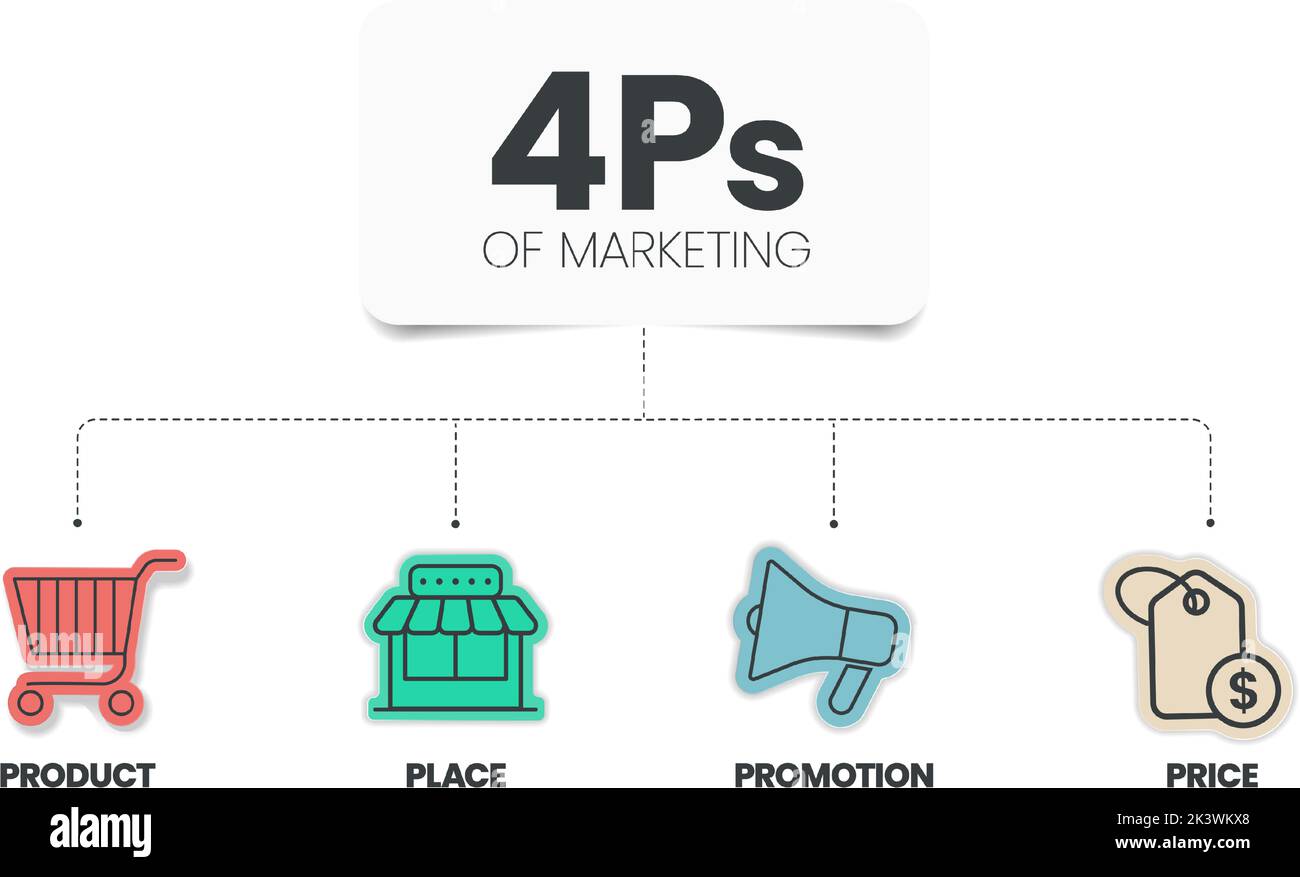
In this article, we have taken up the 4Ps and segmentation (market segmentation), which appear in marketing textbooks, and have explained the underlying concepts and how to understand the framework.

Once again, segmentation is a framework for determining your true customers, and the various axes and data associated with them are just a means to an end.
What is required of marketing practitioners is to skillfully utilize frameworks such as the 4Ps, 7Ts, and segmentation, think on their own, find customers, determine the market to approach, and create a unique marketing mix that is appropriate for the company. It’s about building and implementing.
If you read this article and want to start over with segmentation, first of all, consider (1) information and data that your company owns, and (2) information that you do not currently have but could be acquired if you research. It is a good idea to start by sorting out data and (3) information and data that cannot be obtained due to industry characteristics.

Then, by reinterpreting the customer using your own imagination and at the same time identifying variables that your company can manage, you can decide how to adapt your company’s activities to the reinterpreted customer, and improve business operations. If you reconsider it while breaking it down to different levels, you may be able to make new discoveries.
[References]
Kotler, P., Keller, K., and Chernev, A. (2021), Marketing management 16e, Pearson Education Limited. 2022)
Miki Numagami (2023). “Easy to understand marketing strategy [3rd edition]” Yuhikaku.
McCarthy, EJ (1960). Basic marketing: a managerial approach. Homewood, IL: RD Irwin.
[Reference website]
“The only thing that matters”
URL:
https://pmarchive.com/guide_to_startups_part4.html
(Last accessed: April 2024)
Junichi Nakamura (2019), “Three misconceptions about insight: Intuitive ability to see the essence of customer needs is important”
URL:
https://xtrend.nikkei.com/atcl/contents/18/00199/00001/
(Last accessed: April 2024)