

Louis Vuitton and Disney have left major
e-commerce
platforms and have their own e-commerce sites. What is the background behind this? The rise of e-commerce platforms such as Shopify is also involved.
In this article, we will explain the overview of Shopify and the reasons why you should choose it. We will also provide a comprehensive explanation of the differences between listing on Amazon and Rakuten, how to use Shopify, and costs, so please use this as a reference.
What is Shopify?
First, let’s start with an overview of
Shopify
. Shopify is an e-commerce platform that allows you to open and operate your own e-commerce site.
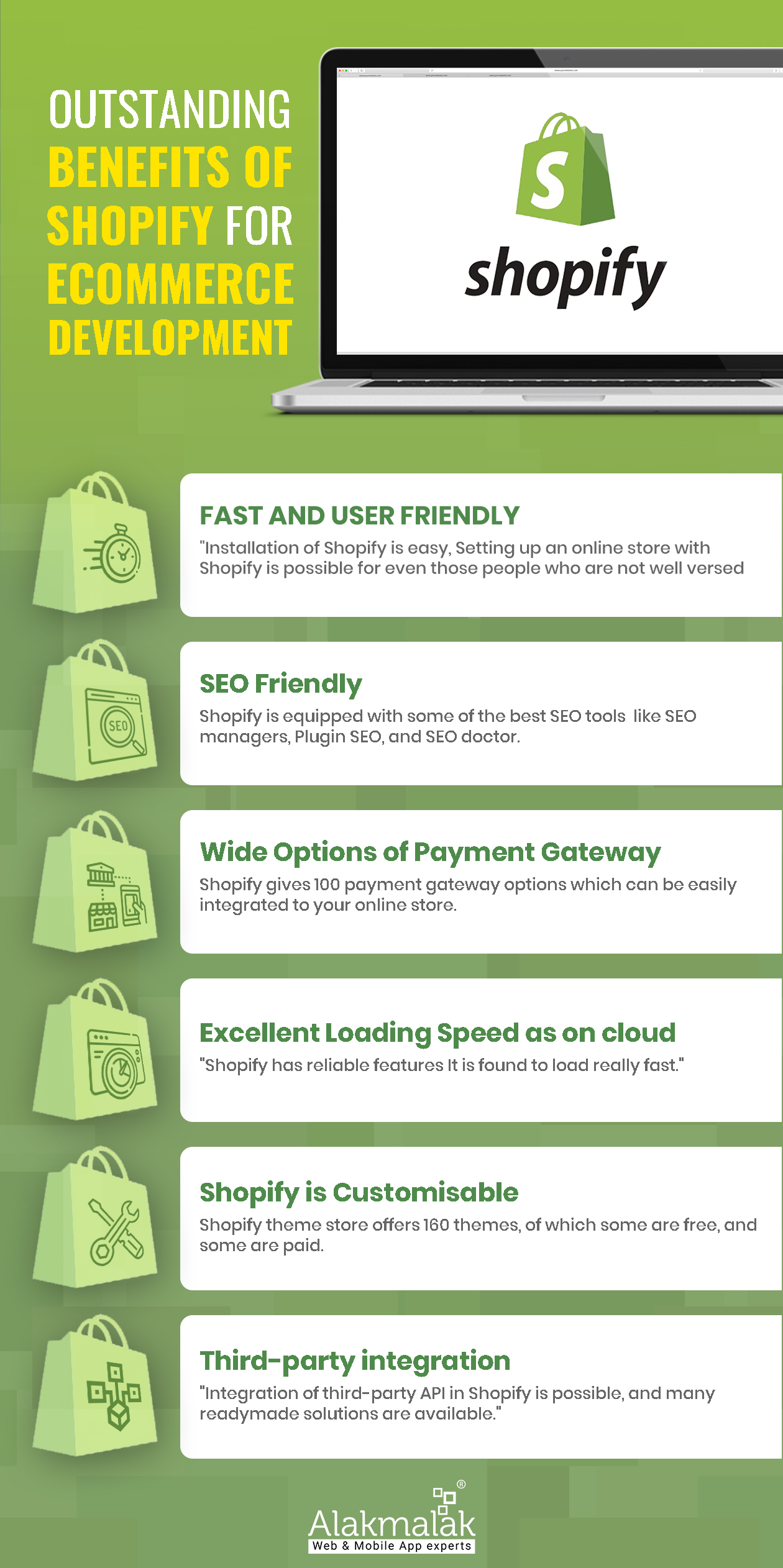
The usefulness of Shopify is that you can immediately operate an e-commerce site without having specialized skills such as engineers or designers. There are a wide variety of designs called templates available, and by using these, you can achieve a design that is as good as your own original design.
In addition, it supports a wide variety of payment systems, and inventory information can be centrally managed in collaboration with stores, making inventory management easy. It is multilingual and can be shipped overseas, and cross-border e-commerce can be established.
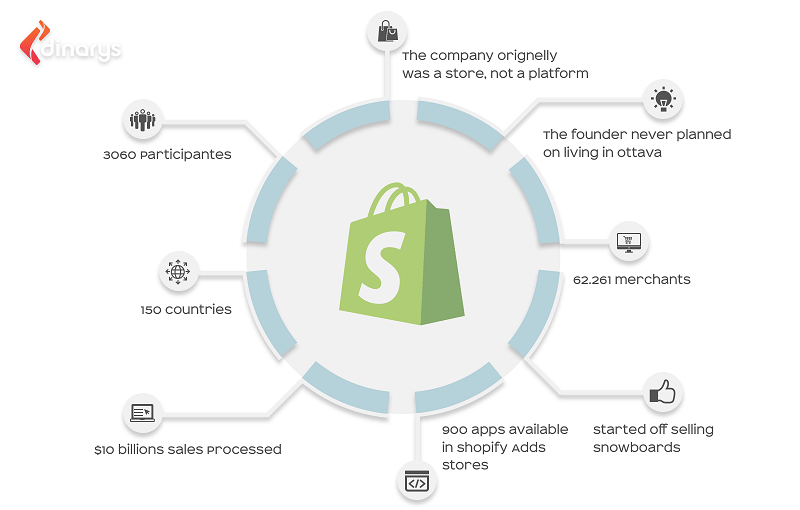
Users also have the advantage of having a wide variety of payment methods and being able to purchase on a subscription basis. For these reasons, Shopify is widely used around the world, and as of 2022, it has over 1.5 million users in over 175 countries around the world.
Reasons why Shopify is chosen for e-commerce sites
So far, we have provided an overview of Shopify. By the way, why do people choose Shopify as their own e-commerce site rather than e-commerce malls such as Amazon or Rakuten? Here we will explain two reasons why you should choose Shopify.
- brand is not recognized
- D2C is accelerating
Let’s look at each in turn.
brand is not recognized
If you list items on Amazon, Rakuten, etc., the EC mall will be responsible for attracting customers and selling. Let’s say your company sells shampoo on an e-commerce mall. In this case, the user must search for “shampoo” on the e-commerce mall and select their product from a huge selection of products. As a result, the sales rate is poor, and since the e-commerce mall is in control of attracting customers, it is not possible to accurately control the number of sales.
In addition, users only recognize your product as “one product on Amazon,” which prevents your brand from spreading. In most cases, products sold on e-commerce sites use a large amount of advertising expenses to generate sales. However, if brand recognition does not spread, it will be necessary to spend a large amount of money on advertising and stay in the eyes of users, resulting in low profit margins and a tendency to become a cycling operation.
That’s why they choose a platform like Shopify that has its own e-commerce, where you can attract customers and sell everything in-house.
D2C is accelerating
In recent years, D2C has been accelerating. D2C is an abbreviation for “Direct to Consumer” and is a business model in which companies sell directly to or have contact with customers. In Japan, successful examples include “
FABRIC TOKYO
” and “
snaq me
.”
D2C has the advantage of creating direct contact with customers and receiving product feedback because there is no intervening vendor between sellers and customers. Of course, since there are no middlemen, the profit margin is also higher.
Even if a product is sold on an e-commerce mall, the seller will not be able to obtain customer information. This means that there is no opportunity to connect with customers.
However, if you have an in-house e-commerce site like Shopify, you can obtain all the personal information of buyers. For this reason, Shopify has been chosen as an extremely useful sales tool by sellers in the modern era where D2C is accelerating.

Is it NG to sell on Amazon or Rakuten?
Earlier, I explained why Shopify is chosen over e-commerce malls such as Amazon and Rakuten. However, is it okay to sell on Amazon or Rakuten? In conclusion, if you are a sportswear or fashion brand and want to expand your brand awareness, you should use Shopify.
On the other hand, for products where the number of impressions should be more important than brand recognition, such as everyday items such as scissors and notebooks, you should use e-commerce malls. The greatest strength of e-commerce malls is their overwhelming ability to attract customers. Therefore, products for which users are unlikely to have strong brand preferences are more likely to sell on e-commerce malls such as Amazon and Rakuten.

How to use Shopify
From here, I will explain how to use Shopify. The steps required are:
- First of all, register
- Add products on the admin screen
- Enhancement of products
- Categorization
- Creating the necessary pages
- Brush up your design
- Deciding on payment method and shipping charges
I will explain each in turn.

First of all, register
First, create and register your Shopify account. Shopify offers a 14-day free trial to see what it can do for you. There is no need to register a credit card in advance, so there is no need to worry about being charged automatically.

Add products on the admin screen
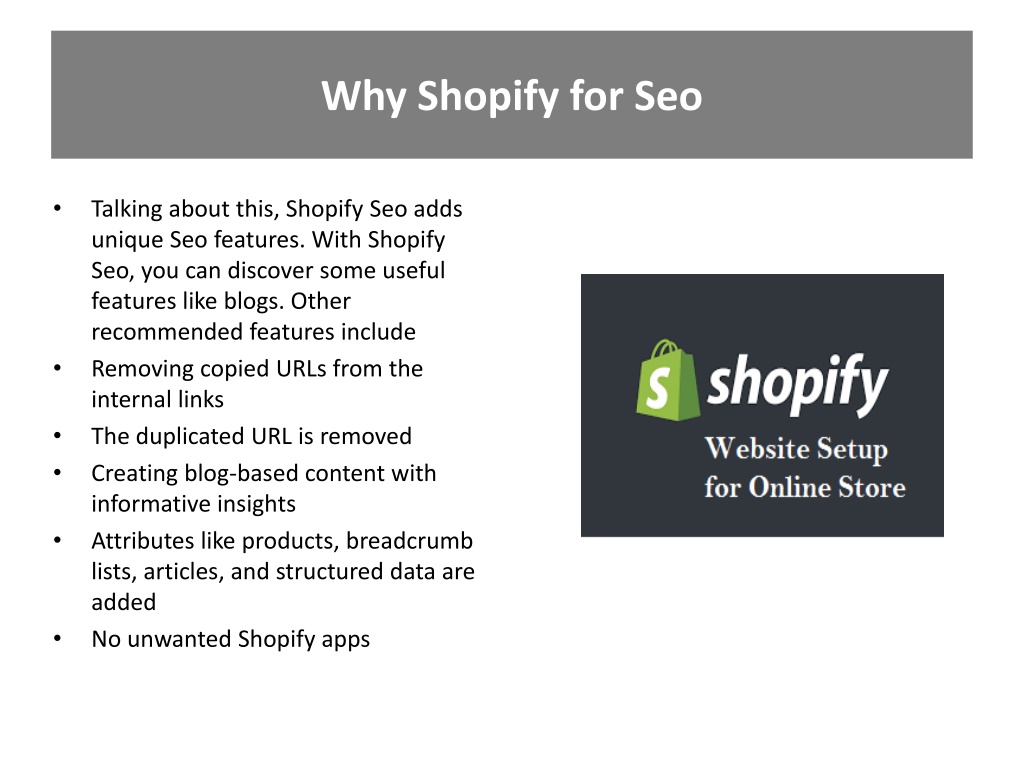
Once you create an account, you will be able to log in to the management screen. You can also actually add products from the management screen. In addition to adding product descriptions and product images, you can also implement simple SEO measures such as setting title tags.
Enhancement of products
Especially when developing an apparel brand, you need to sell the same product in different colors and sizes. Shopify now allows you to set variations of similar products as options.
Categorization
In Shopify, categorization is done using a feature called “Collections”. Collections allow you to set specific categories such as color, genre, or brand. Collections can also be set up automatically, and by setting arbitrary prices and conditions in advance, collections can be automatically sorted into each category.
Creating the necessary pages
Regardless of Shopify, your own e-commerce site will need to create the following pages in addition to product pages.
- Specified Commercial Transactions Law page
- Contact page
- Privacy policy
- EC site (company) overview
Creating these pages will increase the credibility of your e-commerce site and increase your purchase rate.
Brush up your design
As mentioned above, Shopify provides design templates. You can also customize the template, so try customizing it to suit your company’s products. No programming knowledge is required unless the customization is extremely complex.
Decide on payment method and shipping charges
Finally, let’s set the user’s payment method and shipping charges. The more payment methods there are, the better, and the lower the shipping costs, the easier it will be to sell. Make settings based on the cost of your products, gross profit, etc.

Shopify costs
Shopify offers three plans:
- basic
- standard
- premium
Here we will explain the costs of each plan.
Basic plan
The basic plan is available for $29 per month and is recommended for companies who want to develop an e-commerce site for the first time. If your business has monthly sales of around 5 million yen, it can fully serve as an e-commerce site.
Standard plan
The standard plan is available for $79 per month and is recommended for e-commerce sites with monthly sales of around 50 million yen. It has more features than the basic plan, so if you have around 5 people in charge of operations, consider the standard plan.
Premium plan
The premium plan is available for $299 per month and includes Google ad analysis and various reporting. If you have 6 or more operators, operate your e-commerce site with a premium plan.

Shopify usage examples
Lastly, I would like to introduce three success stories using Shopify.
- orion beer
- Furbo
-
GCRESTORE
Orion Beer was successful in the beverage industry, Furbo in home appliances, and GCRESTORE in the gaming goods area. Additionally, each e-commerce site offers discounts on Black Friday, or optimizes the design for specific targets, so why not take a look at them from a comprehensive perspective?
summary
In this article, we have explained about Shopify. Shopify is a very useful platform in today’s era of accelerating D2C because it allows you to sell directly to customers. Depending on the genre of your product, you may be able to significantly increase your sales by using Shopify.
Why not join Shopify’s free trial and register your products?