

Are you familiar with the term “funnel” used in marketing planning?
It may not be possible to understand it very clearly just by listening to the words.
By understanding the funnel, it becomes easier to understand how many potential customers to collect and how to approach them in order to generate sales.
This is because the basic concept used when thinking about customer acquisition strategies is the “funnel”.
Funnel is not a web service or application, but it is one of the marketing tools that is essential for developing marketing measures.
Knowing this will make it easier to find issues to prioritize, whether it’s to increase the number of visitors or increase the purchase rate, whether it’s on your website or in your physical store.
The details are summarized below.
What is a funnel?
Funnel means “funnel,
” and in marketing, a “funnel” is a model that categorizes potential customers into stages such as awareness and purchase consideration.
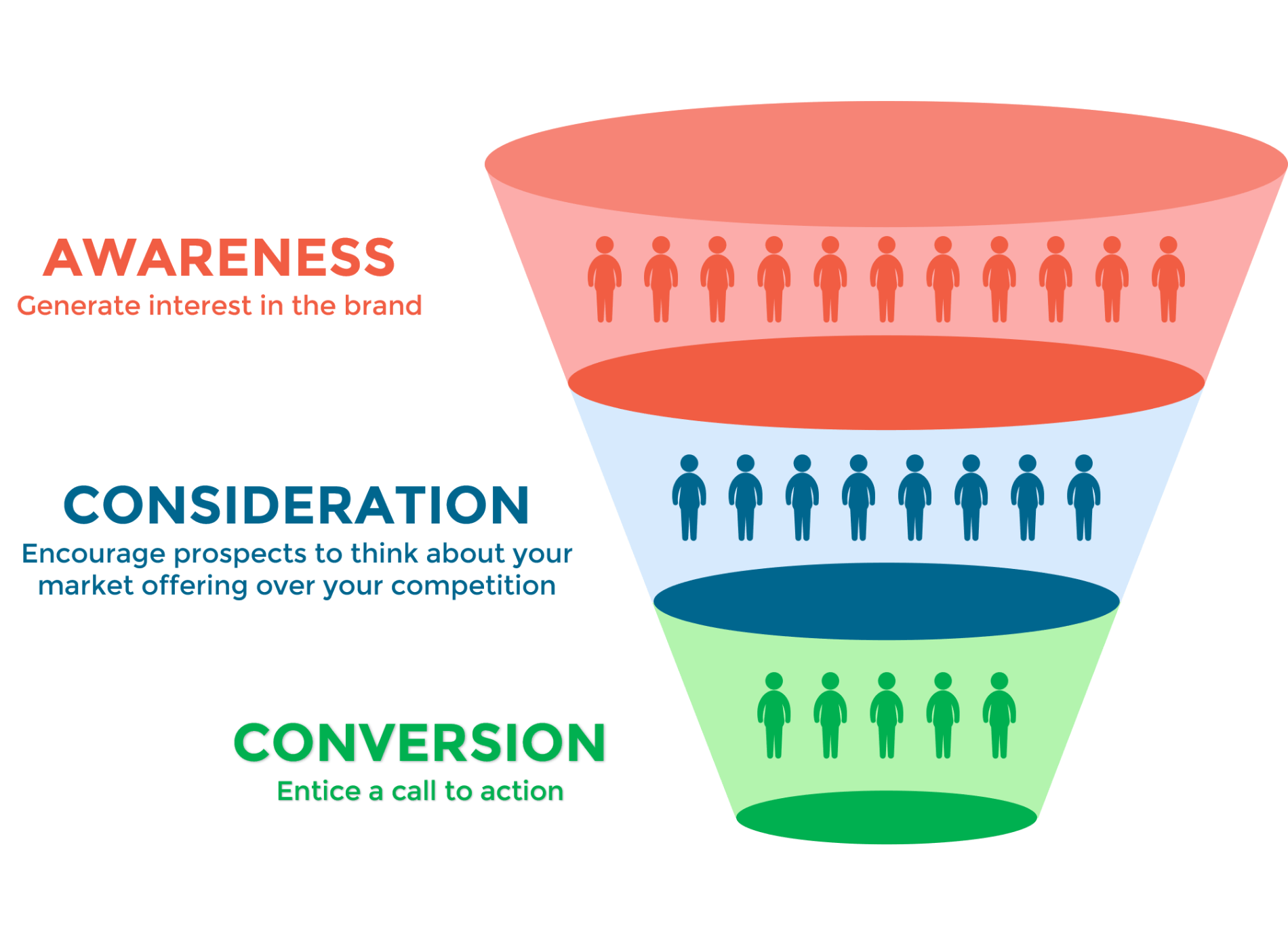
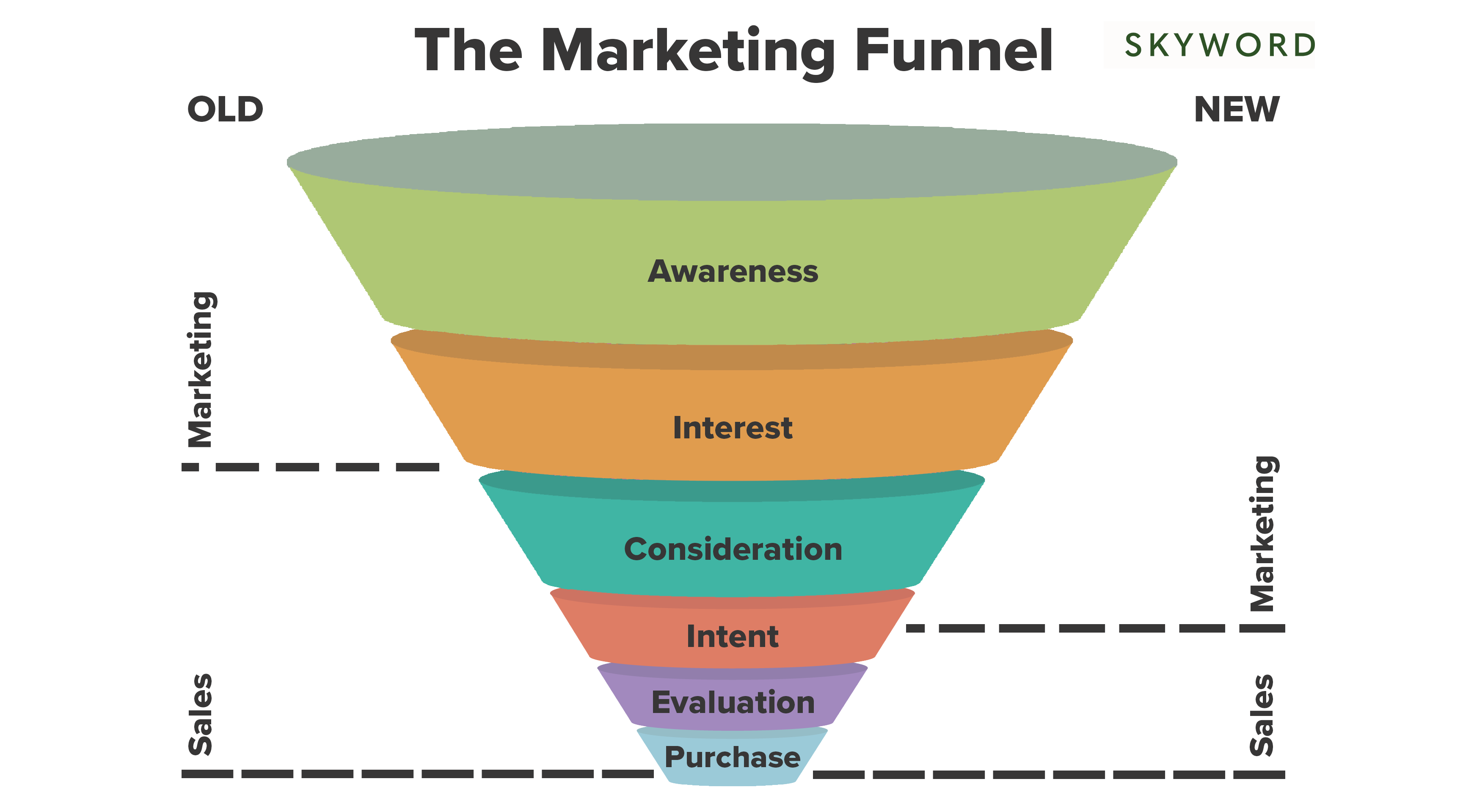
Just as a funnel with a wide range of openings narrows as it reaches the tip, there is a process in which a wide range of potential customers become aware, become interested, make comparisons, and then become a small number of customers. I’m visualizing it.
Generally speaking, funnels have two characteristics.
- The number of prospective customers gradually decreases as they get closer to purchasing.
- Different approaches to each stage of the funnel (awareness, interest, comparison/consideration, purchase)
Because funnels are effective for marketing planning, they are said to be effective in situations where you want to organize touch points with customers.
By breaking down a customer’s behavior into stages, you can understand the steps they take to reach a purchase. This will also help you design personas that will help you think about what kind of customers will buy your products.
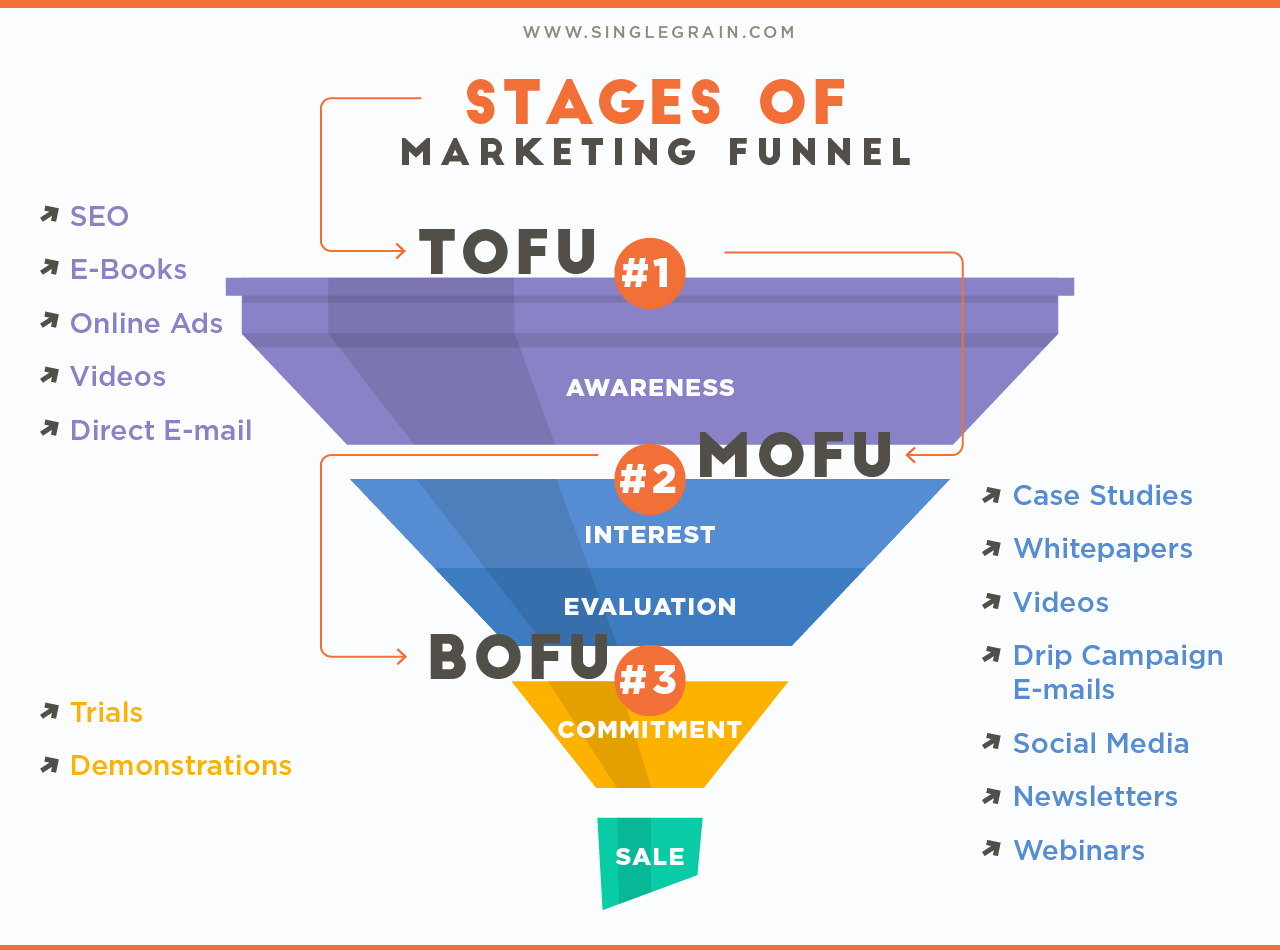
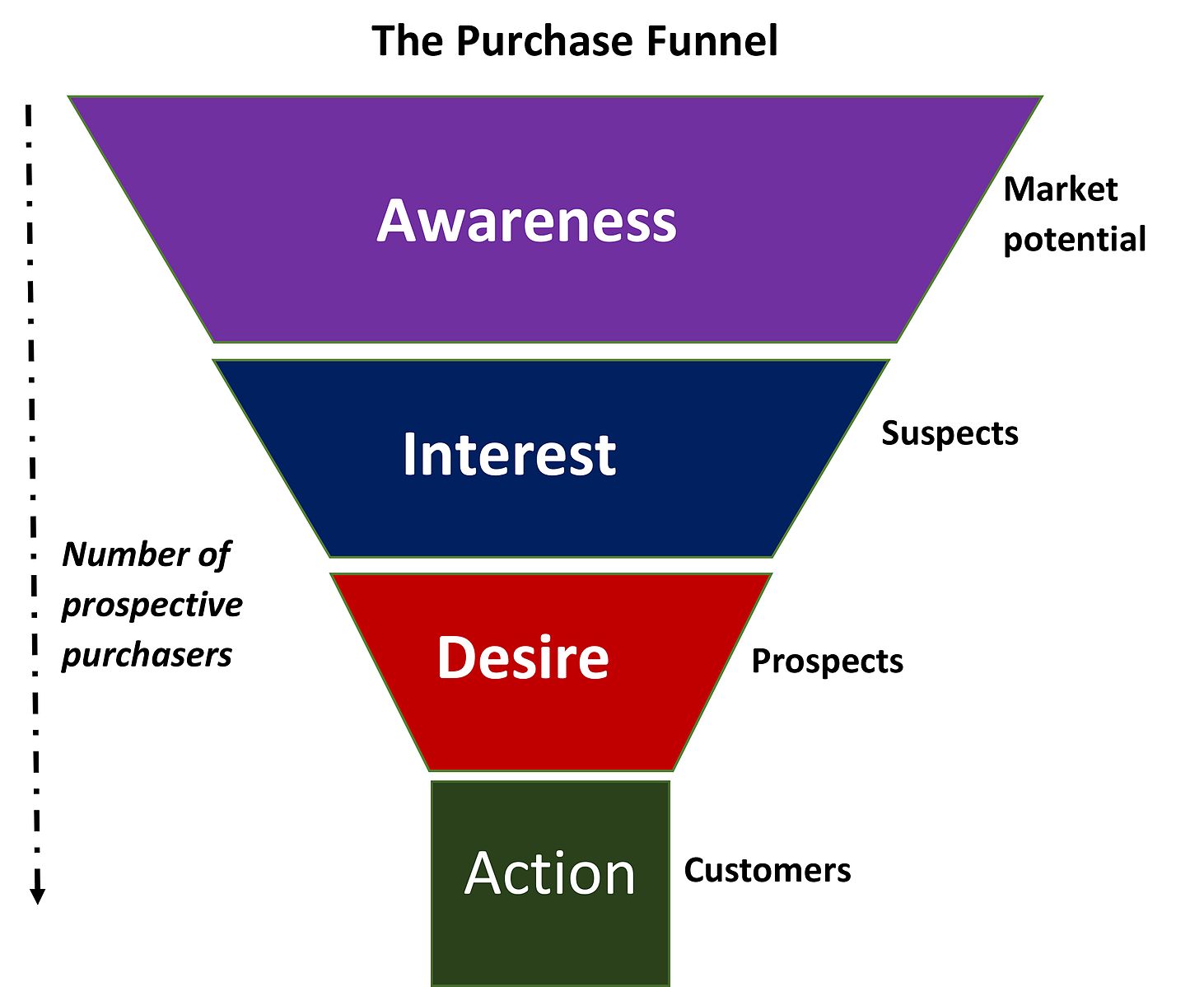
There are three main types of funnel theory. One is the “purchase funnel,” which has been used for a long time in marketing.
Second, the “influence funnel” has been established due to the rapid spread of SNS,
And it is a “double funnel” that synergizes the two.
I hope you can understand the meaning of the funnel itself by looking at these step by step.
The importance of funnels
For consumers, there is a process from recognizing a problem to making a purchase.
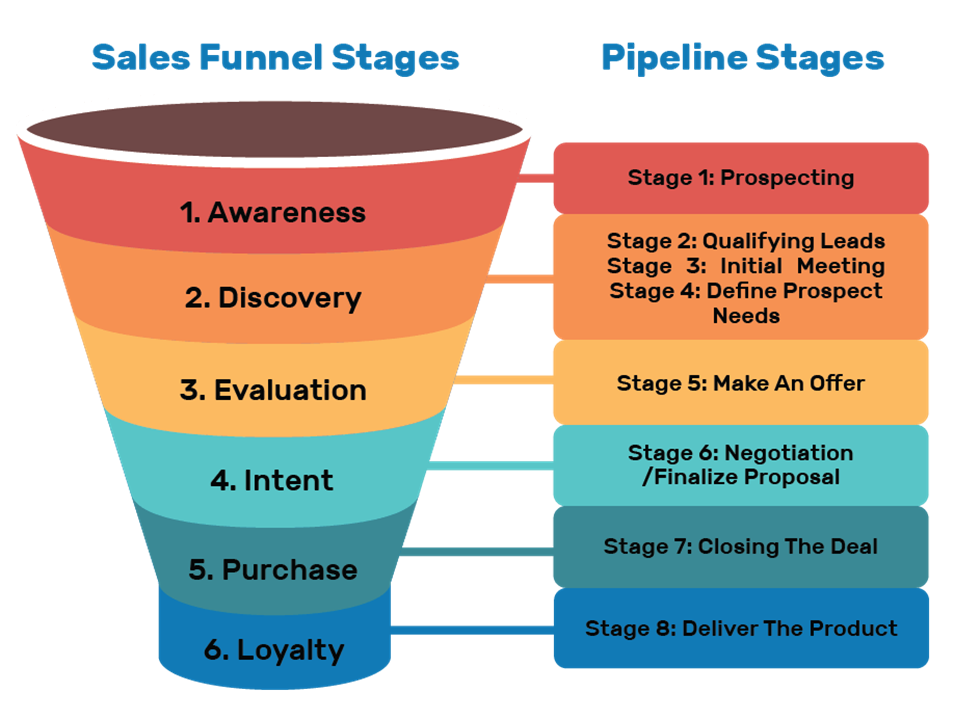
Generally, the process by which a customer makes a purchase can be divided into four stages: awareness → interest/concern → comparison/consideration → purchase.
For example, let’s say you have 100 potential customers.
The “purchasing process” begins when those 100 people search for products on the Internet.
①Visit the site (100 people)
➁ Search for products on the product list page on the site (70 people)
③ Jump to the details page of the product you’re interested in, examine the appearance and functions in detail, and compare and contrast (30 people)
④ Add the product to the cart (20 people)
⑤Purchase the product (10 people)
When conducting marketing and sales activities, it is necessary to keep this flow in mind and approach customers by considering information provision and proposals tailored to each process.
For example, if a customer is considering purchasing a certain product and is gathering information, a sales representative will explain the specific functions of the product or service and how to use them. Suppose I told you. The customer will probably feel a sense of discomfort and think, “I guess we haven’t thought that far yet…”
In this case, the salesperson can support information gathering by providing content such as useful blog articles and checklists for selecting services, and may even be able to advance the purchasing process to the “comparison/consideration” stage. may be possible.
In this way, it is important to understand the customer at each stage of the funnel and take the optimal action.
About the step-by-step funnel
“Purchase Funnel” that brings out more consumer awareness
Purchase refers to “purchase”. The purchase funnel was developed to minimize the number of customers who drop out as the number of customers gradually decreases during the process from awareness to purchase.
One of the representative purchasing behavior models that shows changes in the psychological process leading up to purchasing is the “AIDMA model.” In this model, the behavior of potential customers before purchasing a product is divided into the following stages: Attention → Interest → Desire → Memory → Action.
So, what are the benefits of using purchase funnels?
① By using the purchase funnel concept, you can see where leads (prospective customers) are leaving the market, and you can see which parts are the barriers to purchase.
For example, if you get a lot of impressions on SNS or advertisements, you can judge that your product is recognized.
Still, if fewer people add your product to their carts, there may be a problem with the “interest” or “comparison/consideration” phase.
Purchase funnels help you identify bottlenecks in your marketing efforts.
② If you use a purchase funnel that allows you to take measures at each level, you will be able to see where your weaknesses are, so you can visualize what measures you should take next.
Let’s look at example measures for each phase.
Awareness: Take measures to impress potential customers. Place advertisements (mass advertisements and Internet advertisements) and press releases. In addition, we will use video advertisements and SNS that can spread the word as a way to spread the word.
Interests: Cultivate the potential customer’s needs. Providing appropriate information to prospective customers through sales staff and marketing measures, allowing them to move forward with the next step of “comparison and consideration.”
Comparison/Consideration: Make the final push by having potential customers try it out, negotiating with sales representatives for discounts, and distributing coupons.
As mentioned above, purchase funnels can be used to easily understand consumer behavior and reveal weaknesses in policies and ways to take action.
However, some point out that there are limitations to the purchase funnel concept.
For example, in 2015, Google’s Avinash Kothik is known to have said, “The marketing funnel is dead. Again. Or at least, it should be.” Masu.
Here, we will explain three reasons why purchase funnels are said to have reached their limits.
① Consumer behavior is no longer linear.As society changes, consumer behavior changes.
It is no longer possible to understand things in a straight line: “Awareness” → “Interest/Concern” → “Comparison/Consideration.”
In other words, leads (prospective customers) no longer necessarily come from the “awareness” stage, but may now start from the “interest/comparison/consideration” phase.
For example, if you use your smartphone to jump to an Amazon product page, search for what you want, and purchase it, the “recognition” phase has been skipped.
In addition, if you directly click on a link in the YouTube summary section of a product introduced on YouTube, jump to the relevant page, and purchase it, the “awareness”, “interest”, and “comparison/consideration” phases have not been passed. .
In this way, one of the major factors when considering products is that channels are becoming more diverse and complex. Under these circumstances, it has become difficult to understand consumer behavior in a simple way.
② Diversification of leads (prospective customers) The advantage of the purchase funnel is that it allows for a standardized and simplified view of consumer behavior.
However, consumer behavior has become so complex that it cannot be viewed simply.
Values and preferences have become more complex, and it is no longer possible to identify what is the barrier to purchase by simply creating a diagram.
There is a need for concepts tailored to even more detailed needs.
③ Purchase funnels where post-purchase behavior is not clear are one-way from “awareness” to “purchase,” so there are no cases where “a person who bought once will buy again.”
Additionally, we are unable to find examples where buyers post reviews or otherwise send out information to encourage others to purchase. Rather than ending with “purchasing” a product,
With a purchase funnel, you cannot see the relationship between the customer and the service provider that continues even after the purchase.
As mentioned above, there are some cases that cannot be covered, which is thought to have led to the current situation that purchase funnels cannot cover.
The “influence funnel” emerged with the spread of social media.
An “influence funnel” is the opposite of a purchase funnel, in which the number of customers gradually increases. The spread of social media and the expansion of users have made it easier for customers to send out information, making reviews that were previously invisible to the public visible.
In that sense, it forms a pair (triangular shape) with the purchase funnel mentioned above.
The main feature of influence funnels is that they visualize the actions that customers take after purchasing a product.
We define the customer’s post-purchase behavior in the following order: “Continue → Refer → Disseminate.” Therefore, it is the opposite of a purchase funnel, and is a triangular diagram in which the numbers increase as you go down.
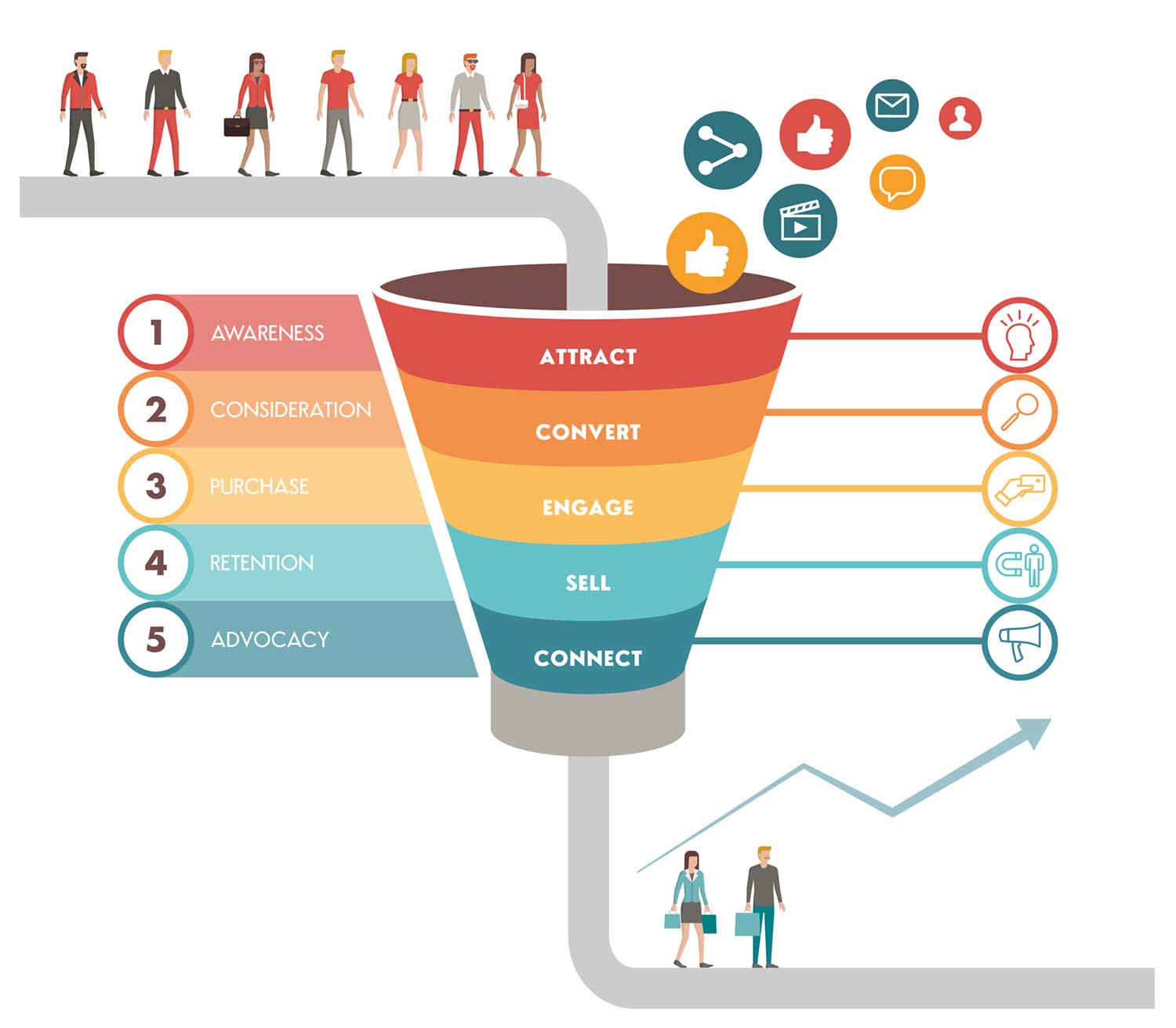
To explain in more detail, the influence funnel hierarchy can be divided into three main layers: repeat, fan, and share/diffusion.
Customers who have purchased the product will become repeat buyers, and the more they repeat, the more they will become fans. Gradually, we reach the step of “sharing and spreading”, where we spontaneously communicate the appeal of the product to others and disseminate it on social media.
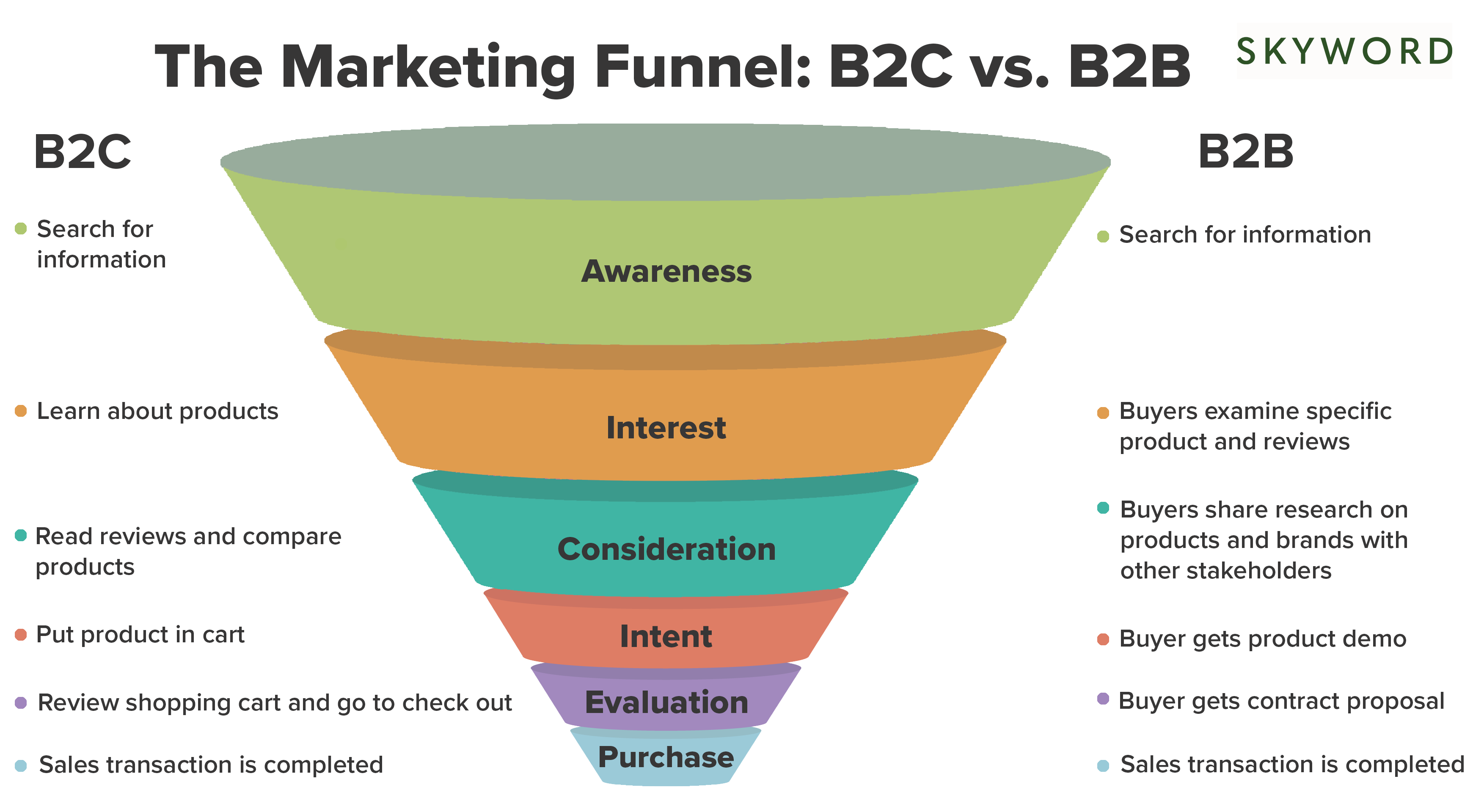
Post-purchase reviews and referrals are key, and in the case of B2C, these are reviews on Kakaku.com, Tabelog, Amazon, etc. In BtoB, this refers to introducing new business partners through clients.
The influence funnel of “Continue → Favor → Share/Introduce → Dissemination” differs from the purchase funnel in that the number increases as the stages progress.
The important thing about influence funnels is how to satisfy the purchasers of your product or service and then generate word of mouth and referrals.
There are several ways to create an opportunity, but one way to encourage communication on SNS is to create a place for “experience.”
By distributing free samples or giving out demonstrations so that people can experience the product, you can expect word of mouth and the spread of the word of mouth.
In BtoB, by interviewing client cases, converting successful cases into content, and disseminating them, other companies in similar industries to which you are interviewing may be able to show interest when they see the content. .

“Double Funnel” requires communication design
The “Purchase Funnel” has been used in marketing since the period of high economic growth, when mass production and mass consumption was the norm, and the “Influence Funnel” was born due to the increased ability of consumers to communicate information such as word of mouth and reviews, and the spread of SNS. A marketing strategy that integrates these two concepts is the “double funnel.”
Double Funnel is a concept that aims to bring about greater marketing effects through a series of processes that go beyond awareness to purchase, including sharing and dissemination.
This funnel is said to have a “double funnel effect,” in which existing customers share and spread the word, and potential customers become new customers after learning about reviews and reputations. Therefore, it is important to create a strategy that does not end with the purchase, but includes a well-designed follow-up with the customer.
The double funnel shape shows that the customer does not stop there after making a purchase, but becomes a fan and creates a new fan base through word of mouth, social media, etc.

3 steps to take advantage of funnel analysis
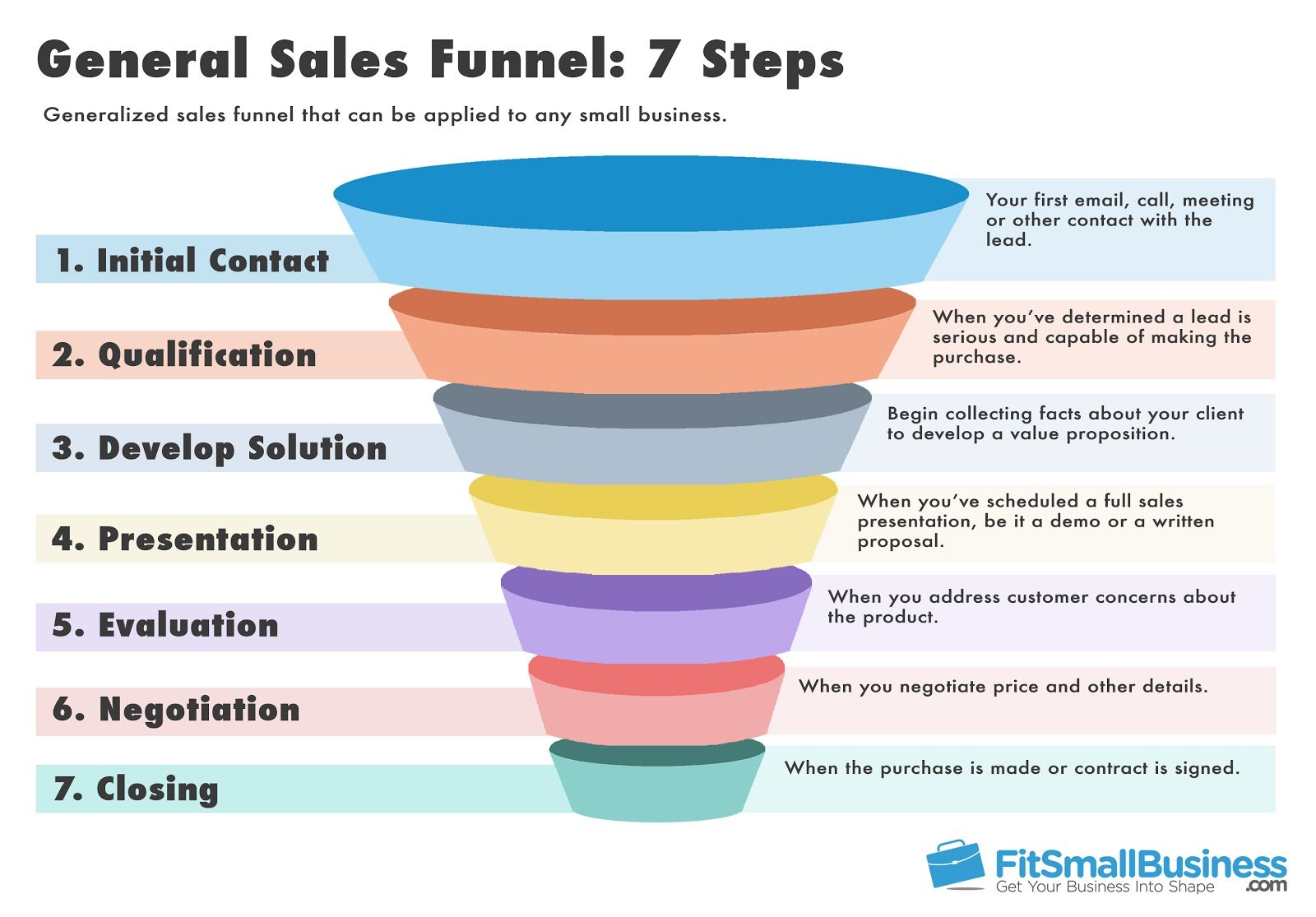
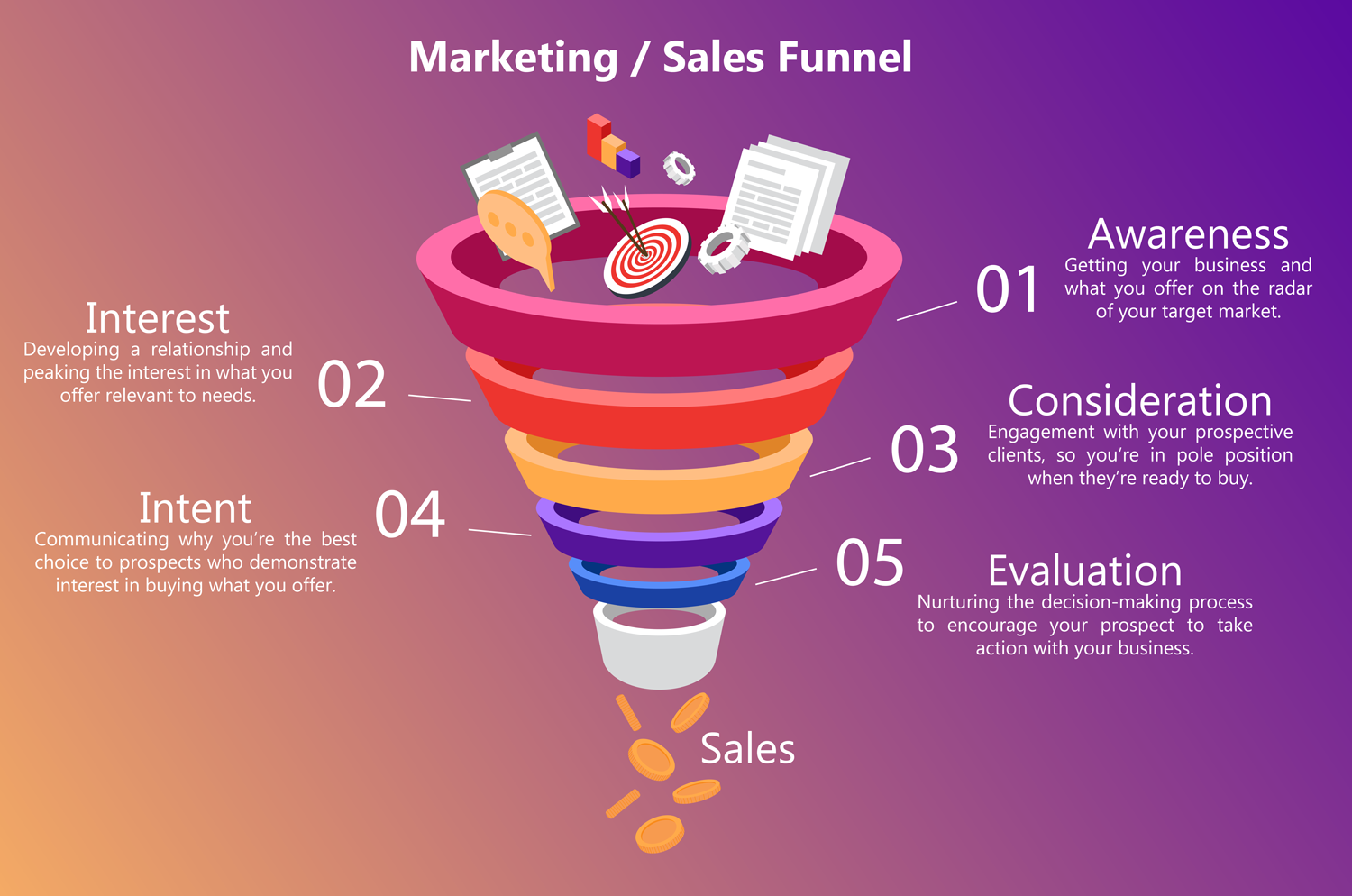
Funnel analysis has three main steps. We break down the flow from a customer’s awareness of a product to purchase into each step, identify bottlenecks in each step, and then consider measures to eliminate the identified bottlenecks.
Break it down into multiple steps
First, let’s organize the flow leading up to purchase, step by step. Break down the steps your customers take after becoming aware of your product. Using the purchase funnel concept, this involves four steps: awareness → interest/interest → comparison/consideration → purchase.
Understand bottlenecks
Next, investigate where the bottlenecks are in each step. By considering each step, areas for improvement become clearer.
At each step, indicators to identify bottlenecks include:
Awareness → Website sessions (SS), page views (PV), unique users (UU), new users, landing page (LP) base views (PV), top page base views (PV).
Interests/interests → page views (PV)/sessions (SS), repeat users, bounce rate, PV and stay time on service pages and product detail pages, etc.
Comparison/examination → Page views (PV) of service overview pages, case studies pages, and FAQ pages.
Purchase → inquiry page, cart session (SS), withdrawal rate repeat → number of revisits, number of repurchases, etc.
The above is just an example, and the indicators you should pay attention to will differ depending on the characteristics and type of the site, and the set results (CV). Check whether this funnel applies to your site and what the set results (CV) are.
Considering measures to eliminate bottlenecks
Once you have identified the point where a large number of prospective customers are abandoning your business, consider measures that can resolve that bottleneck.
This type of funnel analysis reveals at what point most potential customers abandon the company, making it clear which steps should be prioritized for improvement.
How to manage your funnel efficiently
By implementing measures along the funnel, you will be able to think about more efficient marketing and sales activities, but there are some points to keep in mind.
Have a clear funnel definition
We have introduced some specific examples of funnels, but the definition of a funnel will vary depending on the company and the marketing or sales department to which it belongs. You need to put it into a funnel that suits your company.
- What kind of customer base are you defining at this stage?
- What measures should be taken in which phase?
- When to take action
If you specifically define your company’s definitions and document them clearly, you can create a practical funnel.
Utilizing IT tools
Manually managing customer status checks and understanding the status of marketing and sales activities is difficult and time-consuming, and can put pressure on core marketing and sales activities. One idea would be to use IT tools to improve efficiency.
- Examples of effective tools for funnel management
MA (Marketing Automation)
MA
is an IT tool that can streamline marketing activities. You can automate lead generation, status management, and appropriate marketing activities depending on the stage.
By using automation emails based on scoring and scenario design, you can identify responsive customers and help sales representatives choose who to approach.
SFA (Sales Force Automation)
SFA is an IT tool and sales support system that can record and aggregate sales activity history for each customer. To improve the efficiency of sales activities, it has functions such as quotation creation, schedule management, opportunity management, analysis, and sales forecasting. Another benefit is that the status of sales activities can be visualized and shared, allowing for collaboration within the team, such as receiving advice on the sales process between superiors or other members.
summary
If you understand purchase funnels and influence funnels, and can utilize a double funnel that combines both, you will be able to proceed with your marketing and sales activities efficiently and effectively.
In order to take an appropriate approach to get people to know about, buy, and use your products and services while comparing them with your own marketing and sales activities, it is important to understand which stage of the funnel your users are at. is required.
Providing a lengthy introduction to the features of a product to users who are not yet interested in the product or service will not resonate with the user and is inappropriate.
In order to deliver good products and services to customers, it is important to carry out effective advertising and strategies through funnel analysis.
Face each customer individually and use funnel analysis to convey the appeal of your products and services. It is important to consider what measures should be taken at what stage to have an impact on customers.