
![[Special Interview] Success of BtoB marketing in Japan and ABM (Account Based Marketing) Part 1](https://i3.wp.com/s3.us-west-2.amazonaws.com/aa.techdemand.io/wp-content/uploads/2023/02/08172113/Account-based-Marketing.png?resize=1200,701&ssl=1)
Do you know about ABM (account-based marketing)?
ABM is a marketing method that originated in America. Instead of the traditional method of increasing sales from only one company’s product (point), this method involves thinking face-to-face about how many products from multiple lineups can be purchased and linking this to sales.
It started in the 1990s in the United States and is now becoming a popular method among BtoB companies.
We spoke to Ichiro Niwayama, CEO of Symphony Marketing Co., Ltd., who wrote Japan’s first specialized book on ABM, about the fundamentals of ABM and marketing.
What is
ABM
(account-based marketing)?
Japan was not originally a country where marketing was popular.
Why hasn’t marketing developed in Japan? The reason is that when looking at the balance between demand and supply, demand was overwhelmingly higher. Therefore, there was no need to use all your wisdom to help customers choose. This is the reason why Japan was able to achieve high economic growth, and it is also the reason behind the failure of marketing.
However, the situation changed after the Lehman Shock.
Currently, Japan’s economic growth has reached a standstill, and we are forced to reach a stage where we cannot compete without marketing.
However, because the company has not invested in marketing until now, there is no marketing knowledge or brain power inside or outside the company.
At best, you can only ask an advertising agency or PR agency to do something for you.
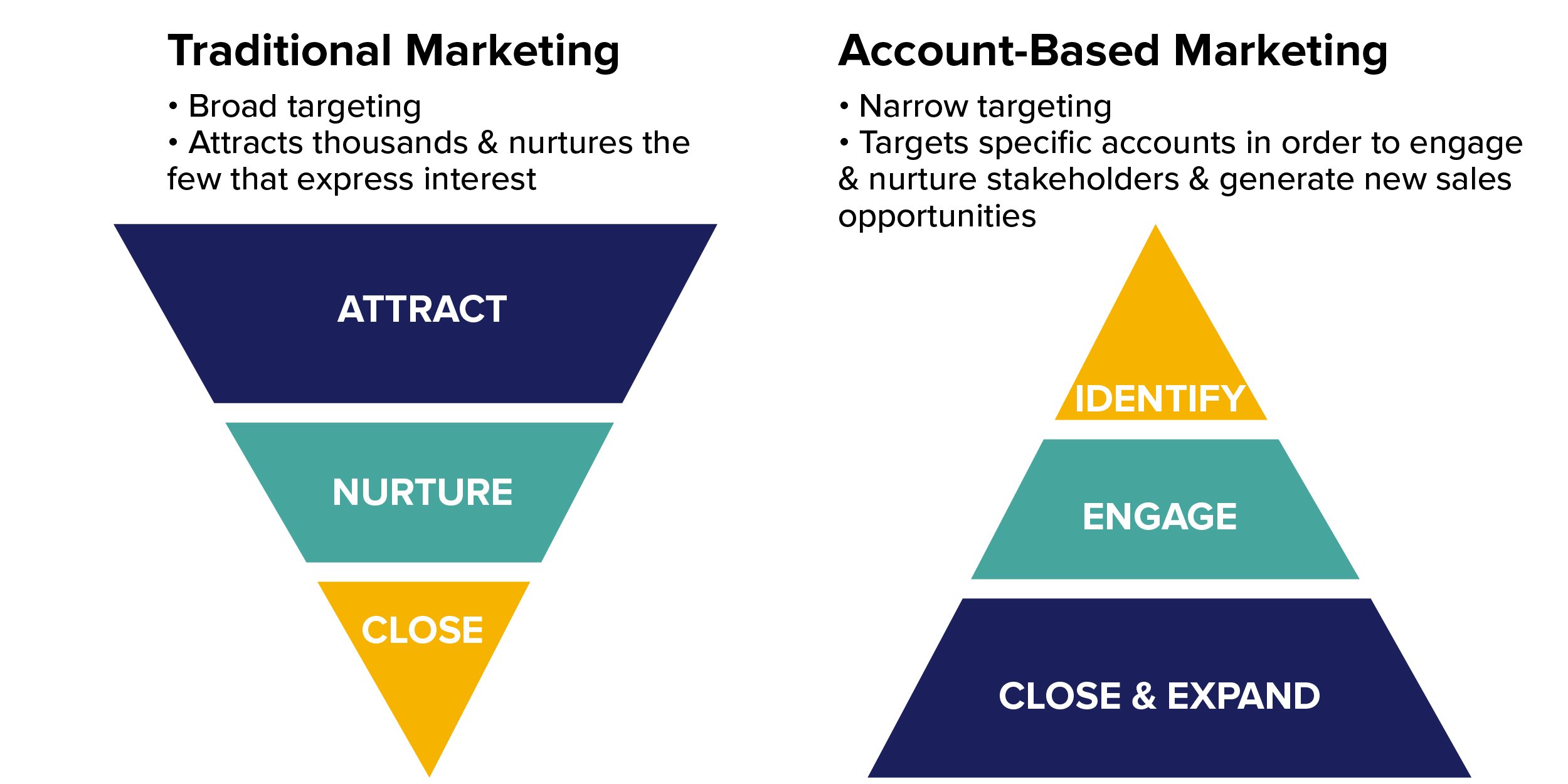
As the necessity of marketing is recognized, ABM (account-based marketing), an evolution of demand generation, is currently attracting attention.
What exactly is ABM? Mr. Niwayama says the following.
![[Special Interview] Success of BtoB marketing in Japan and ABM (Account Based Marketing) Part 1](https://i1.wp.com/thepmgco.com/wp-content/uploads/2018/06/Screen-Shot-2018-06-25-at-9.38.59-AM.png?resize=972,1132&ssl=1)
“The biggest goal of ABM is to maximize sales from target accounts. For example, if someone buys one product, they then buy another product from the same company. But why aren’t people buying other products? Focus on the aspects of multiple products rather than just one product. Marketing that increases sales by selling multiple product lineups. It’s a method.”

![[Special Interview] Success of BtoB marketing in Japan and ABM (Account Based Marketing) Part 1](https://www.munro.agency/wp-content/uploads/2023/02/ABM-Process.png)
Business opportunities are not always open to begin with.
So, why ABM in this day and age?
This is because business opportunities are not always open.
For example, when it comes to relocating an office, the moment a business owner thinks, “It’s too small.It looks like we’ll make a profit this fiscal year, so let’s move to a new office,” the need arises.
Talk to people around you, consult with others, take a look, and close the deal the moment you find a property that looks good.
And the next need will open in a few years. Indeed, business opportunities are fleeting.
If you can’t reach the customer at that time, it doesn’t matter how well you have the property that perfectly matches the customer.
If you can’t sense the moment a business opportunity becomes open, you won’t be able to reach it. ABM is required to maximize profits without missing the moment.
![[Special Interview] Success of BtoB marketing in Japan and ABM (Account Based Marketing) Part 1](https://pamdidner.com/wp-content/uploads/2023/06/The-Ins-and-Outs-of-Account-Based-Marketing-optimized.jpg)
ABM is currently mainstream in the US
In particular, ABM is currently the mainstream marketing method in BtoB marketing in the United States.
A Google search for ABM shows that it has been rapidly increasing in the US since 1993.
In fact, the term account-based marketing was coined and some people in the United States started using it in the early 2000s.
ITSMA, a Boston advisory firm, was the first to come up with the name and come up with a consensus.
Mr. Niwayama himself first heard the term ABM around 2008-2009.
At the time, it was only recognized as a new buzzword, but from around 2013 it suddenly became a hot topic in America.
Around that time, he wrote Japan’s first specialized book on ABM, “The Ultimate BtoB Marketing ABM (Account-Based Marketing)” (Nikkei BP). Regarding this book, Mr. Niwayama says:
“I had been researching the potential of ABM since around 2013, but I had no desire to write a book.
Because I thought it wouldn’t sell. No one will buy it, right? What about ABM books? I don’t want to write a book that doesn’t sell.
By chance, someone from Nikkei BP asked me to write about it.
I suggested, “It’s too early to say anything, and no one will buy it, so let’s do something a little different,” but he said, “I want you to write about ABM,” so I decided to write it. Ta. However, it was the best-selling book I’ve written. I thought the editor’s eyes were reliable.”
![[Special Interview] Success of BtoB marketing in Japan and ABM (Account Based Marketing) Part 1](https://www.davechaffey.com/wp-content/uploads/2019/09/ABM-pyramid.png)
Companies that can and cannot do
ABM
There are barriers faced by many companies that have started demand generation.
That means that sales won’t sell the projects you create. This is a problem that is occurring not only in Japan, but also in the United States and Europe.
One of the best ways to solve this problem is called ABM.
![[Special Interview] Success of BtoB marketing in Japan and ABM (Account Based Marketing) Part 1](https://cdn.business2community.com/wp-content/uploads/2017/03/4-types-account-based-marketing.jpg.jpg)
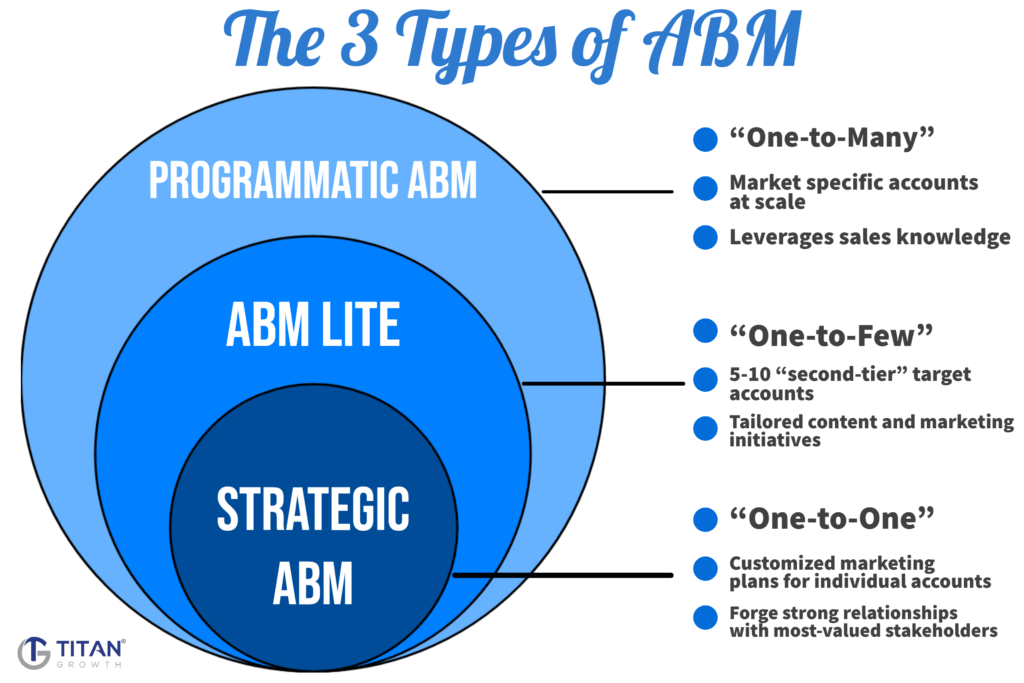
As mentioned above, ABM is the process of selling a wide range of your company’s products in order to maximize sales per target company.
In Japan, people who purchase many products are called “customers,” but in ABM the meaning is slightly different.
Japanese customers refer to companies with high sales amounts. On the other hand, with ABM, even if a customer purchases 100 units of one product, they are not considered a regular customer. They buy multiple products. This is the key.
Let’s say that a long-established Japanese sweets store is a BtoB company.
Unfortunately, ABM is not possible for long-established Japanese confectionery stores. This is because the long-established Japanese confectionery store only carries one product.
On the other hand, companies that provide multiple products and services, such as other Japanese sweets, Western sweets, and restaurants, can deploy ABM.
![[Special Interview] Success of BtoB marketing in Japan and ABM (Account Based Marketing) Part 1](https://outplayhq-uploads.s3.us-west-2.amazonaws.com/ABM_e45204fa07.png)
In order to engage in ABM, you need to have multiple products that serve as a “surface” to some extent.
Furthermore, the purchasing side must also be a “face-to-face” company with multiple decision-makers.
Therefore, basically medium-sized or larger companies often conduct ABM transactions.
![[Special Interview] Success of BtoB marketing in Japan and ABM (Account Based Marketing) Part 1](https://thumbs.dreamstime.com/z/abm-account-based-marketing-business-concept-vector-stock-illustration-abm-account-based-marketing-business-concept-vector-stock-258901774.jpg)
How to succeed with
ABM
?
So what does it take to be successful with ABM? Mr. Niwayama says that in marketing, not just ABM, the principles are “Right Person, Right Information, and Right Timing.”
“I have been working in marketing for 36 years, and the fact that “conveying the right information to the right people at the right time” has never changed.I don’t think this will change. Masu.
However, this “Who is the right person?” ”
“What is the correct information for this person? ”
“When is the most comfortable timing for this person?” The means, techniques, and tools to find out what is happening are evolving at a tremendous pace.
However, the universal principles of Right Person, Right Information, Right Timing will probably remain the same.
You need to study marketing while looking at both.”
![[Special Interview] Success of BtoB marketing in Japan and ABM (Account Based Marketing) Part 1](https://wordpress.bowe.com.br/blog/wp-content/uploads/2021/04/funilinboundabm.png)
Marketing in the
AI
era
In terms of changes in tools, what readers are most concerned about is the rise of AI.
Regarding AI and marketing, Niwayama says the following.
“Marketing has so many variables that it cannot be compared to chess, Go, or shogi.
For example, let’s say someone comes to a landing page (LP) and leaves after 10 seconds. If it were an AI, I think it would determine that this person is not interested in the content of this site.
But maybe they hated the photos there, or maybe the layout of the site was too hard to read, so they left. Originally, it would be necessary to score relative to factors such as the sensibilities of the person viewing the LP and the design of the LP, but computers cannot yet do this. Unless we understand the meaning of his departure after 10 seconds, we will not be able to understand his actions. That’s not possible with today’s computer technology. This is why I don’t think AI will ever catch up with the skills of great marketers. ”
Mr. Niwayama continues.
“The evolution of technology is interesting, but tools are just tools.
For example, in the case of a carpenter, no matter how good the tools he uses, if the carpenter’s skills and design are bad, the house will not be built.
There’s no point in having a good compressor even though the design and carpenter’s skills aren’t that great.
Even if someone says, “Well, this can drive nails at high speed,” the house won’t be built unless the drawings and foundations are in place.
Something similar to this is happening in the Japanese marketing industry today.
No matter how good a tool you have, if you can’t utilize it at all, it’s a wasted treasure.
The word marketing automation (MA) is often misunderstood to mean that marketing can be done automatically.
Even if MA tools are introduced, marketing will not be possible without a basic marketing design and an organization to implement it.
However, managers say, “No, if we were building an organization, we wouldn’t have bought tools.”
It may seem like a comic, but this kind of situation happens far too often in Japan.”
So, why are Japanese managers trying to introduce MA tools?
One reason is that salespeople sell tools saying it’s easy to do. Of course, if you say it’s “difficult” no one will buy it. So I say that and sell it. However, Mr. Niwayama says, “The word ‘easy’ is half true and half false. What is easy is operating MA tools, and marketing itself is by no means easy.”
This is the first part of this article, in which Mr. Niwayama mainly talked about ABM.
In the second part, we will not only talk about ABM, but also the essentials of what marketing is in the first place.
【profile】
Ichiro Niwayama Symphony Marketing Co., Ltd. Representative Director
Born in 1962, graduated from Chuo University. Established Symphony Marketing Co., Ltd. in September 1990. He has worked on numerous marketing projects including database marketing consulting and internet business. In 1997, we started Japan’s first marketing outsourcing business focusing on BtoB. We provide marketing services both domestically and internationally to major companies in various industries such as manufacturing, IT, construction, service, and distribution.
A marketer who strives to provide practical marketing methods and know-how within companies through lectures on over 100 seminars a year and serialization in numerous marketing media such as “Marketing Campus”, which he writes as Professor Noyan. We are sending out messages to.
Japan Human Resources Business Council (Vice Chairman)
Member of DMA (Direct Marketing Association: Headquarters New York)
Director of IDN (InterDirect Network: Headquarters Romania) Visiting Professor, Chuo University Graduate School of Business