

When formulating
a marketing strategy
, segmentation greatly determines subsequent success.

Segmentation refers to the so-called segmentation of the market, but from what angle and how is it segmented?

Are there any differences in segmentation analysis for consumer goods markets and producer goods markets?
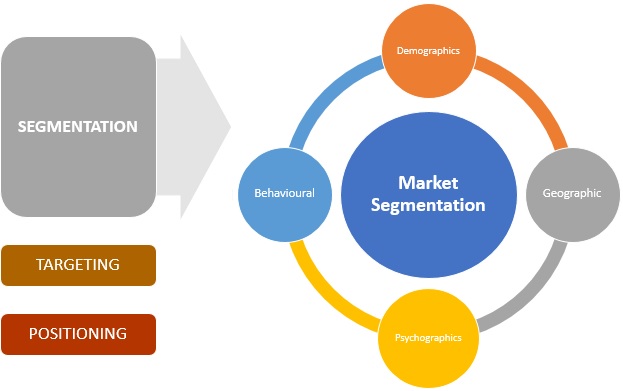
In STP analysis, we will explain segmentation, which affects the next steps after segmentation, such as “targeting” and “positioning,” and ultimately affects sales.
What is segmentation?
Segmentation
is the process of dividing the market into various categories and grouping them into smaller groups.
These small groups are called segments, and targeting is used to decide which segment to target.
Positioning is the process of differentiating a company from other companies within a segment and positioning it with superiority.
The reason why segmentation is the basis of marketing strategy is that no matter how great a product you develop, even if you put up a concept and try to appeal to a market that is not clearly segmented, you will not be able to capture the hearts of customers and the strategy itself will fail. Because it will end in failure.
segmentation variable
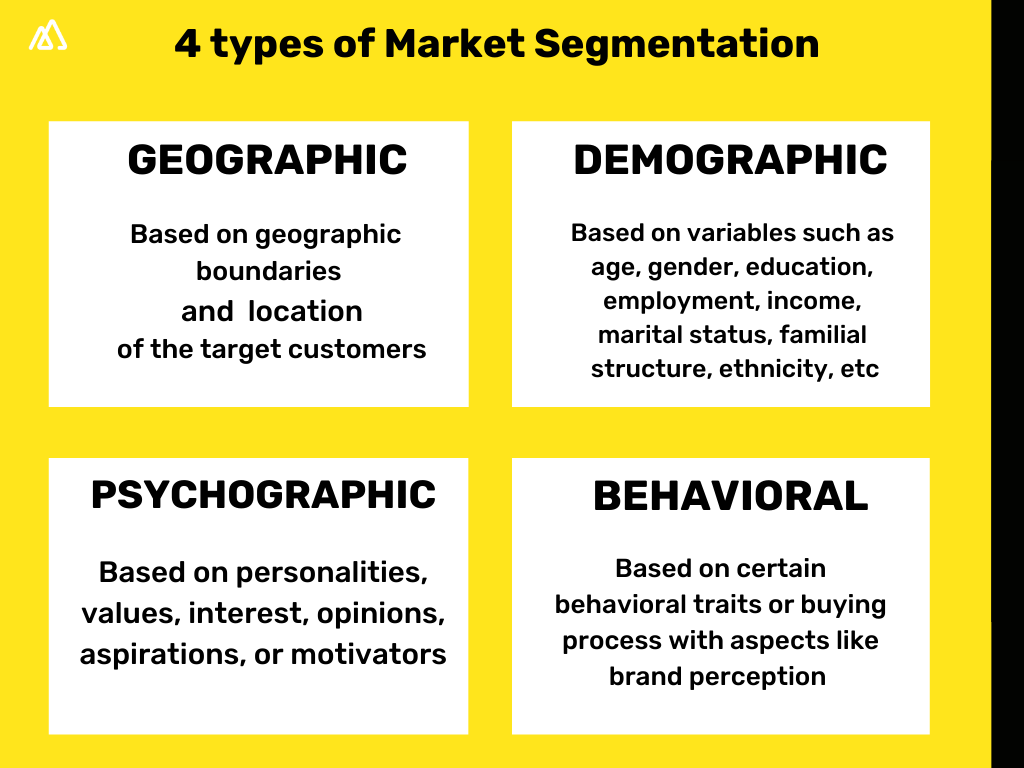
When performing segmentation, it is necessary to divide the information from various angles.
:max_bytes(150000):strip_icc()/MarketSegmenationV2-d07470dbf4fc4a08870ee849e394a926.png)
This angle is called a variable, and there are differences in the variables required for the consumer goods market and the producer goods market.
[Consumer goods market]
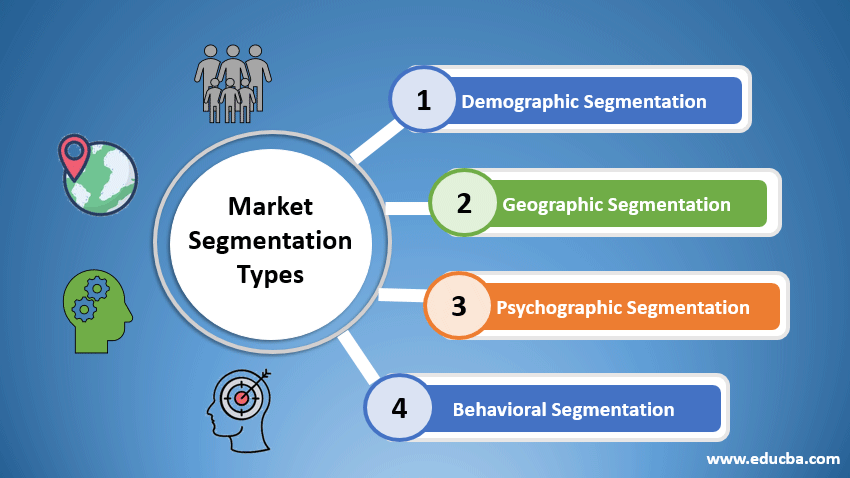
In the case of the consumer goods market, the target customers are individual consumers, so variables are used to classify individuals into their respective attributes.
- Geographic variables: country, region, climate, population density, culture, government regulations, degree of urbanization, customer range, etc.
- Demographic variables: gender, age, occupation, family structure, income level, educational background, religion, race, nationality, etc.
- Psychological variables: lifestyle, values, personality, social class, purchasing motives, etc.
- Behavioral variables: purchasing activity, frequency of use, benefits sought, purchasing patterns, etc.

[Producer goods market]
In the case of the producer goods market, the target customers are corporations, government agencies, and other organizations, so it is important to carefully segment the market using multiple variables in addition to the variables of the consumer goods market.
- Operating variables: frequency of use, usage, etc.
- Purchasing method: Purchasing policy, purchasing standards, etc.
- Situational factors related to purchasing: urgency, etc.
- Purchaser characteristics: presence or absence of settlement rights, etc.
Demographic variables are used in the same way as in the consumer goods market, but in the producer goods market, they are divided by company size and industry.
4 R rules
When proceeding with segmentation, a common mistake is to focus on your own company.
It is important to proceed with segmentation while always being aware of the 4 R rules.

[Law of 4 R’s]
Rank: Prioritization. Are customer groups ranked according to importance?
Realistic: Effective scale. Is the segment large enough to secure sufficient sales and profits?
Reach: Reachability. Can you reliably deliver your products to customers in that segment?
Response: Measurability. Is it possible to analyze the response from the customer base in that segment?
Even if you are able to find a segment that satisfies your company, if the four R rules are unbalanced, sales will be affected.
On the other hand, if a segment meets these conditions, it can be considered a segment that can be expected to receive a good response.

Different segments may require different segmentation
For example, when segmenting the product development department, you can use actual behavioral variables such as past purchasing behavior and purchasing results.
However, when it comes to the promotion department, it is necessary to segment using psychological variables, demographic variables, etc. in order to accurately convey the content you want to appeal to.
In this way, even if you are developing the same product or service, the same segmentation is not always necessary, and sometimes it is necessary to classify the products from a different perspective.

Segmentation in the producer goods market
Let’s look at an example of segmentation in the producer goods market.
For example, some products have a legally defined useful life, such as 4 to 5 years for computers and software, and 5 years for multifunction devices.
It can be inferred that 20 to 25% of companies dealing in such products reach the end of their legal useful life each year and start considering replacing them.
If you are conducting a decile analysis, you will find that if the top sales companies determined by the analysis are 1000, 200 to 250 of them may be considered for replacement.
In some cases, by further segmenting those 200 to 250 companies using operating variables, etc., it is possible to conduct sales activities that respond to clear needs.
【summary】
- Segmentation is the process of dividing the market into various categories and grouping them into smaller groups.
- Segmentation is the basis of marketing strategy because if a market is not clearly segmented, the concept will become vague and the strategy itself will end in failure.
- There are different segmentation variables required for consumer goods markets and producer goods markets.
- Even if you are developing the same product or service, you may sometimes need a different segmentation method to classify it from a different perspective.