

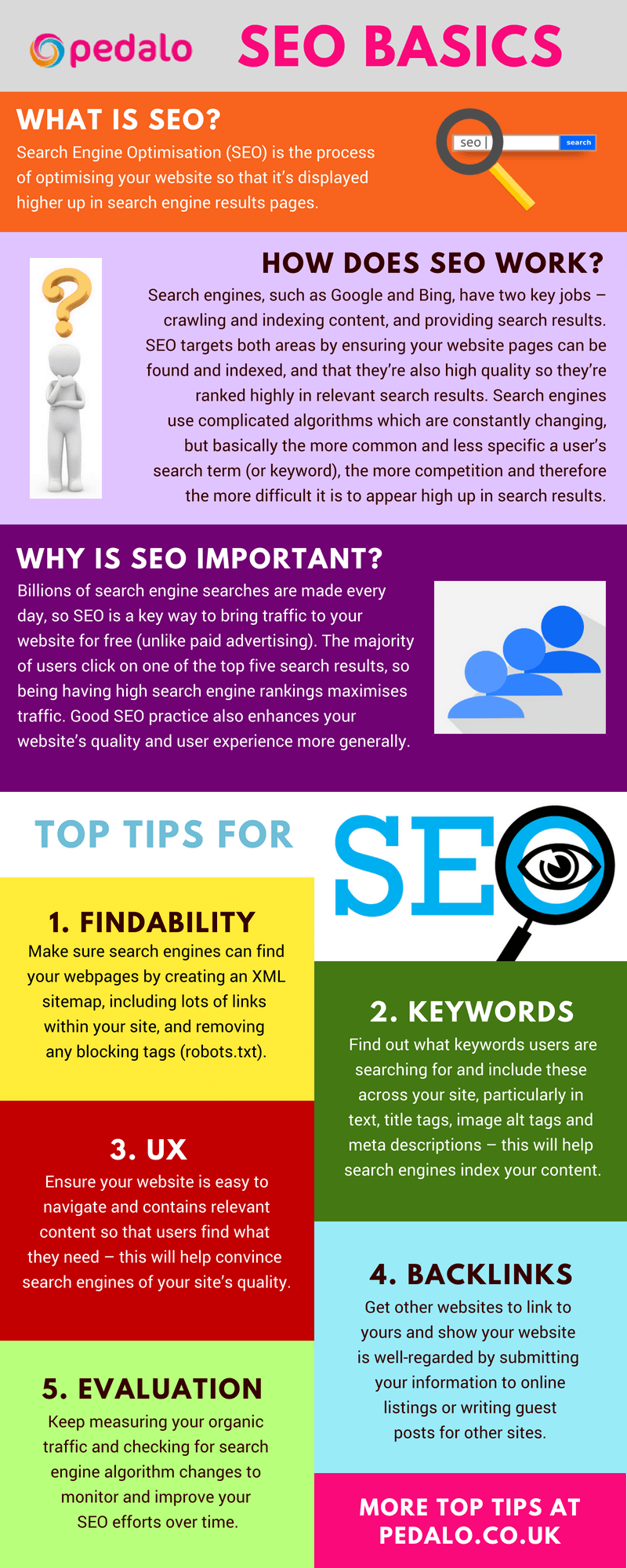
The page title is the most important element in SEO.
In the past, it was thought that it would be a good idea to include many keywords that were in high demand, but things seem to have changed recently.
This time, let’s think about optimizing page titles.
The page title is on the spine of the book.
As you all know, “page title”, “heading”, and “anchor text” of A tag are important in SEO measures.
Why are the “page title”, “heading”, and “anchor text” of the A tag important in the first place?

The book’s back cover is studded with keywords that describe its content, so readers can easily guess the book’s content and instantly decide whether or not to pick it up from the bookshelf.

In the same way with search engines, the title of a page should indicate the content of that page, and by clicking on it, you should be able to view the information you were looking for.
However, it is not easy to reproduce the minute human behavior and psychology using search engine algorithms.
Is the search keyword included in the title or content? This aspect has often been taken advantage of by listing as many keywords as possible in the title.
However, recently it has been found that this list of keywords may actually lower the evaluation.
This is because a list of keywords makes it difficult to understand the content of the page.
Let’s take a look at why setting a title that makes it difficult to understand the content of the page lowers the rating.
What is a good page title?
What is a “good page title”?
It is described in SearchConsole Help –
Search Engine Optimization (SEO) Starter Guide
.
This guide has a section called “Helping Google (and users) understand your content.”
“The homepage title can display the name of the website or business, and can include some important information such as the business’s location or the main purpose of the service.”
It is written.
It is said that this includes the company’s location and the main purpose of the service, but for example, if you list the names of neighboring regions other than the company’s location, or list the services and products handled, you can find out which region the company is located in. What is the main service? This makes it difficult for users to understand.
“Choose a title that is easy to read and effectively communicates the subject matter of the page’s content.”
“Avoid using extremely long titles that are not useful to users.”
“Avoid overusing unnecessary keywords in title tags”
As mentioned above, if you can make it as concise as possible by using the minimum necessary keywords, it is desirable to keep it somewhat short.
What is the right length for a page title?
When we say “somewhat short” here, we can say that the size is just right, with around 30 characters not being cut off when looking at Google search results not only on the PC but also on the mobile version.

Page titles and descriptions must not overlap

In the SearchConsole help above, as a “method to avoid”
“Use one title across all or many pages on your site.”
It says.
For example, if a bookshelf is lined with books with different content but the same title on the spine, readers will be confused, and this is unlikely to happen.
However, when using a CMS, websites often have page titles, headings, and descriptions all set to the same settings unless they are properly configured. (Especially, I still see websites with H1 in their logo.)
In
addition, a study conducted by Internet Marketing Ninjas in the United States in 2017
found that the click-through rate for the first search result was around 20%.
This is proof that users are aware of the page title and are considering whether or not to click on it, and it shows how risky an unattractive title with a list of keywords is because they are too conscious of SEO. mosquito? This is also evidenced by this.
summary
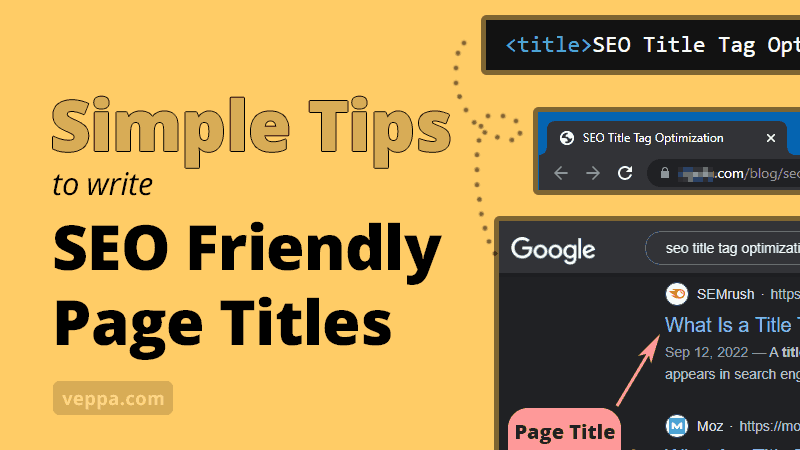
The page title represents the content, so be as concise as possible, avoid duplication with other pages, and use language that appeals to the user as if you were the author of the book.