

DX promotion is now a top priority for companies and governments, with the aim of creating new business models, improving operational efficiency, improving productivity, and strengthening competitiveness. Fabeee Co., Ltd. is strongly supporting the promotion of DX in these companies.
Based on our mission of “raising the world’s heart rate,” we support the promotion of DX through thorough support for our clients, armed with Japan’s top-class technological capabilities and customer understanding, and have earned the deep trust of major, well-known companies. There is.
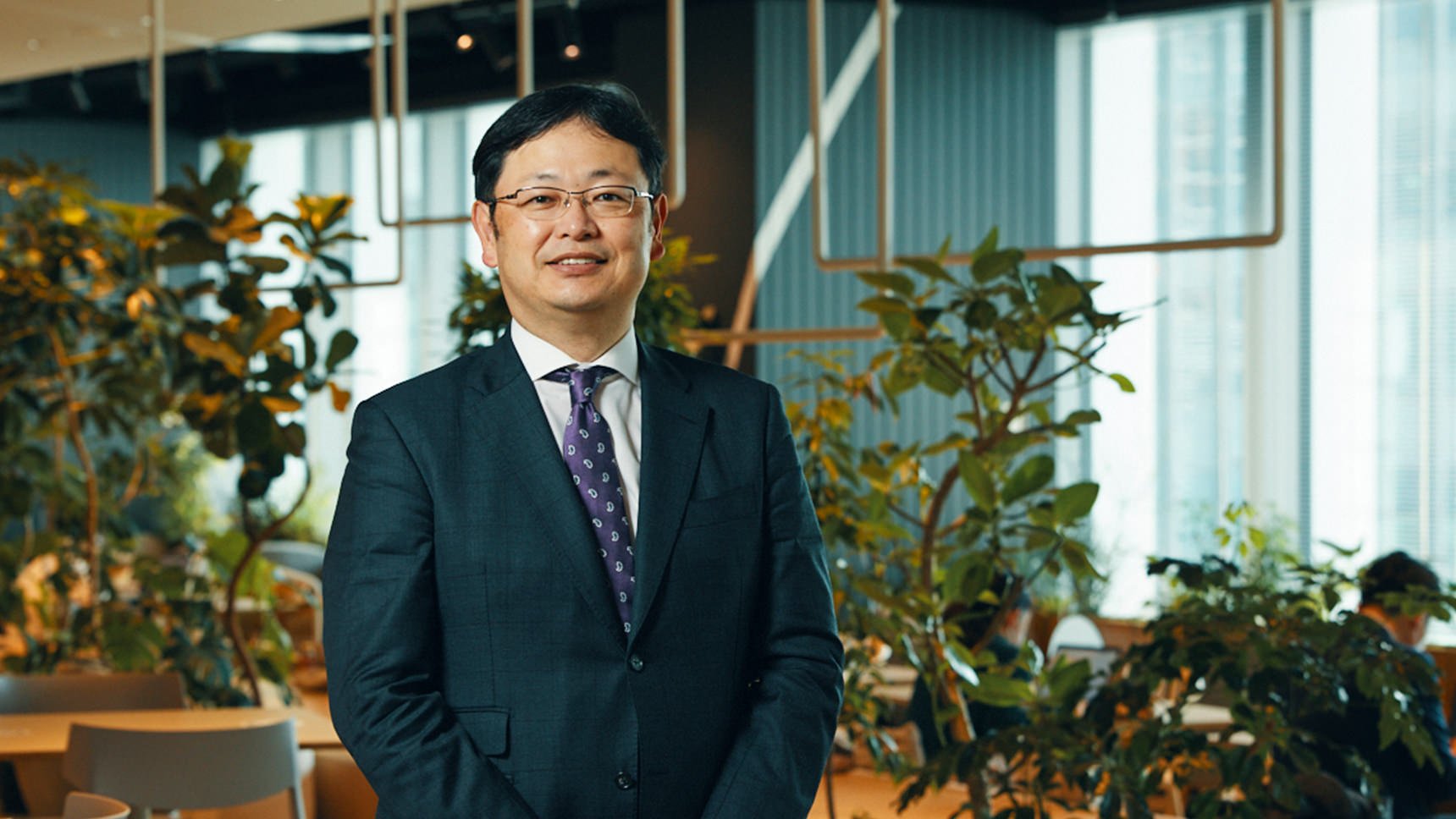
This time, we asked Jun Sasaki, the company’s representative director and CEO, to talk about Fabeee’s DX theory, with themes such as key points in promoting DX in companies, common mistakes, building an organization to lead DX to success, and the correct way to proceed. Ta.
“Means for change” is what Fabeee thinks is true DX
——First, I have a question about Fabeee. Please tell us what your mission is and what kind of company you are.
Sasaki
: “Raise the world’s heart rate by one level.” That is our mission. The reason why we choose a heart rate of 1 is that if we want to provide value that leads to surprise and discovery to our clients and end users beyond them, a heart rate of 10 or 100 would be a leap forward. It’s too much, and I can’t convey what I want to convey. However, if you choose “1”, you will be able to clearly visualize your purpose and your story will be easier to convey. This mission embodies the desire to steadily build up one step at a time and lead to success.
On the business side, we are a company whose main service is DX promotion business. The key word we value here is “transformation.” In addition to DX, processes for change such as BX (Business Transformation) and CX (Corporate Transformation) are trends in the world, but these are all words that put “means” before “X”. In contrast, we value the concept of “XD,” which places “transformation” before “methods.”
–In other words, does Fabeee’s idea of DX be a “means for change”?
Sasaki:
That’s right. Making full use of digital to bring about change. These are the values that all Fabeee employees share. Not only changes in corporate organizations, but also changes in society await us as we raise our heart rate. All of us work with this sense of mission.
Pitfalls of DX

–You were talking earlier about “DX aimed at change,” but do you mean that the primary purpose of DX in your opinion is “change?”
Sasaki: I
have no problem with you thinking that way. In an era where the future is uncertain and difficult to predict, which is similar to the word VUCA (an acronym for volatility, uncertainty, complexity, and ambiguity), it is important to focus on companies that can adjust to society. I think it’s about being able to continue to be an organization and an individual.
In other words, it is no good to transform only internal functions. This is because companies, organizations, and businesses are created by people. No matter how much new technology such as generative AI or data science is used, simply digitizing only the functional aspects will not lead to transformation. What is important is the more human aspect, the mind aspect.
–That’s the misunderstanding and pitfall of DX in the world.
Sasaki:
Many people think of DX as a magic wand, and it is true that there is a strong tendency to think, “If we convert to DX, everything will be fine!” There are many cases where management entrusts DX transformation to young people from the digital generation, thinking, “Our company won’t be left behind!”
But that doesn’t work at all. This is because if someone who does not have an intuitive understanding of the issues is in charge of DX promotion, the means and objectives tend to be interchanged. When left to its own devices, it often happens that only the “means” have been changed, and the “purpose” has gone somewhere. I started climbing from the foot of the mountain one step at a time, aiming for the top, but when I finally reached the top, I felt like, “Huh? I climbed the wrong mountain!” I feel like many companies are suffering this kind of result.
Fabeee is, so to speak, a “transformation contractor”
——Mr. Sasaki, you want to rescue companies that have promoted DX incorrectly, or in other words, are you a “redo contractor”?
SasakiIt
‘s true that we often receive requests from customers to “redo” something.
This is a story about when I was entrusted with a DX project for a large local company, but even though the company had a major vendor contracted to promote DX, it was difficult to see any concrete results. . Management naturally complains that “the cost-effectiveness is low, and the project is slow to progress.” That’s why we asked our company.
In addition, in a DX promotion project for a major pharmaceutical and cosmetics manufacturer, despite paying a huge amount of money every year to the consulting company selected as a partner, the cost-effectiveness was low, and management continued to complain, so we I have also been asked to speak to you.
In that sense, you may end up becoming a “redo contractor.” A smarter way to describe this would be “transformation contractor.”
——Are you a “transformation contractor”? It’s strange to say that.
SasakiDX
does not seek short-term effects, so it is important to steadily accumulate results over a long-term span. This will also lead to our company’s mission of “raising the heart rate by one level.”
Like the lyrics of the song “Life is a one-two punch,” Fabeee’s policy is to take three steps forward and then take two steps back, but at the same time, take one step at a time and move up with a sense of speed. I believe that the accumulation of small successes like these will have an impact on people in roles that make corporate decisions. When promoting DX, it is important to have decision makers at companies understand this idea.

Upper management should involve more people below and discuss WHO, WHAT, and HOW.

——As I listen to Mr. Sasaki talk, I hear that it is difficult not only to deal with client companies, but also to collaborate with major vendors and consultants that are already in the company.
Sasaki:
That’s exactly what you said. In the DX promotion project for a large company in a rural area that I mentioned earlier, we negotiated with a major vendor to step down in some areas, and we are working together and collaborating.
The company was running hundreds of projects a year, almost all of which were managed by major vendors. We have been completely entrusted with one of these projects, and we are highly motivated to work on this project as it is an extremely important piece for the client.
——Do you frequently negotiate and coordinate with management?
Sasaki
is doing it. When I interact with management, I am always trying to tell them that we should have more discussions about WHO, WHAT, and HOW.
For example, if you try to proceed with something according to the basic marketing process of “WHO, WHAT, HOW,” you may lose sight of the appropriateness of what needs to be done if only upper management makes decisions. This is because HOW is a specific method, so we need to think more holistically, including company resources and business. Once the WHO and WHAT have been clarified, upper management should involve more subordinates in discussing the HOW. If this becomes clear, the validity of what needs to be done will become clearer, and the project’s momentum will greatly increase.

Reconsidering our origins is the beginning of change
–In order to advance initiatives for change, it is important to communicate directly with the management who has decision-making and approval authority.
Sasaki:
That’s right. That’s why we value interviews. We interview key people, including management and on-site managers, of companies that are likely to become clients, and then create a report for the client to read.
Various panes and bottlenecks are visualized as a report, so it makes sense no matter what, and it also highlights your company’s values and needs that cannot be seen with abstract strategies. can. As a result, you will be able to demonstrate that “this is your company’s true value.”
–That’s exactly where the change begins.
Sasaki
: When this happens, a constructive atmosphere is created that makes people think, “Maybe we can do something like this based on this?” and we start to receive inquiries from planning staff at companies asking, “Can we do something like this?”
This is where we really shine, and we propose that we turn the “things that need to be done” into a product, create a prototype within two weeks that would normally take several months, and develop the accompanying products. Data analysis will also be visualized and demonstrated the following week.
When this happens, the client’s heart rate increases rapidly, and they realize that it would be a waste to limit this to just one department, and develop an initiative that involves the entire company. I believe that our strength is that we can bring about such behavioral changes.
——What do you emphasize when making proposals to key people at such companies?
Sasaki
emphasizes the importance of reconsidering our origins.
A while back, when I was speaking with the leader of a major manufacturer’s DX promotion department, he advised me, albeit presumptuously, that “the changes in history always contain hints that can lead to reform.” Regardless of size, companies are always taking on new challenges and creating new services and businesses. However, as a result of doing this too much, I have seen many companies lose sight of their original strengths and corporate value based on their original business, and end up going astray.
Therefore, we asked clients questions based on the theme of origins, such as “What are the origins of your company?” and “Where is your company’s focus?” and asked clients to reconsider their origins, such as their strengths and social significance. I’m working hard to get it.
Even if one of your business diversifications is successful, if you move away from your original business, your experience of success will be fragmented. In the long term, it is not a success. I believe that having a clear image of the original origins of a company will become the starting point for promoting DX.
–In other words, in order to discuss what the company as a whole can and should do, not just one department, it is important to reexamine our own business and origins.
The key to interdepartmental cooperation is the existence of “leaders of each department” and “top executives who inspire the whole group”
SasakiThen we
move on to the next step, which is to incorporate the results into concrete measures, but the issue here is “cooperation between departments.”
The larger the company, the more departments it has, and in order to promote DX, it is necessary to integrate data to connect them organically. This is a method, and Fabeee has a wealth of such know-how, so it is not technically difficult. However, since we are only outsiders, there are limits to how much we can encourage collaboration between departments.
I believe that the most effective solution to this problem is to appoint a leader in each department who is strongly motivated to promote DX, and to have a top person who can encourage the whole company and wave the flag.
It is very important to do everything in your power to “reach out to people” and “move people” when promoting DX with the aim of reform.
——The original DX promotion can be said to be a very dirty and impersonal approach.
Create an organization that can fail!

——Mr. Sasaki, are there any other issues that you feel are issues when domestic companies implement DX promotion with the theme of transformation?
Sasaki
: “It’s an old custom of being afraid of failure.”
In Japan, there is a deep-rooted culture in which failure is seen as a “bad” rather than a “right.” However, in order to create something new or achieve change, failure is inevitable. In other words, continuing to fail provides hints for success. Therefore, if you can create an organization that allows you to fail, you will create a situation where it is easier to experience success.
In Japanese organizations, many players are bound by the traditional evaluation system and are constantly afraid that if they fail, they will not be promoted. Therefore, I think we need to change our values to one where failure is acceptable.
——Specifically, what kind of function do you think a “team that should fail” is?
SasakiNew
business team and business promotion team.
These are teams whose mission is to create something new and get it off the ground, and they tend to require a strong sense of trial and error. First of all, try working with the intention of failure and pouring your heart and soul into producing some kind of result. If you can create an organization that can run this cycle, I think your chances of success will greatly increase, whether it’s a new business or DX promotion.
–In other words, when you say “transform,” business creation becomes the driver.
Sasaki:
That’s right. DXing an existing business, that is, digitizing an existing business, is a pattern in which the “means” mentioned at the beginning becomes the subject, and there is a high possibility that it will end up being a wasteful measure. After all, if we are to promote DX, we should focus on “transformation” and aim to create and rebuild new businesses to adjust to society.
I believe that this will serve as an engine to create a trend that will create new things, and a structure will also emerge in which existing businesses will be pulled along by this trend.
–So the word “DX” itself may be misleading.
SasakiThere is an illusion that if you digitize your existing business through
DX
, you will be able to improve sales and efficiency and open up a rosy world, but this is a wrong way of thinking. In order to transform, we should create new businesses based on our original business, and we should utilize digital technology to do so. That’s our basic philosophy.
——This is a way of thinking that can be said to be unique to a “transformation contractor.” What do you think is the most important point when leading such changes while accompanying clients?
SasakiWe
consider four important things: WHY, WHO, WHAT, and HOW.
Through interviews with clients, we catch fragments of the process, and based on that we think of specific measures and mechanisms to realize them, and we work with the client to swiftly deliver what is requested. We will make it happen. By using this cycle as a constant source of new materials, updating plans and incorporating them into measures, we will be able to achieve highly accurate DX promotion.
The only thing left to see is whether the client is willing to say, “Okay, I’ll do it!” If you are determined, we will do our best to accompany you to success through transformation.
–That’s a very powerful message. Thank you very much for this time.

Shooting location: SPACES Shinjuku