In recent years, every company has been practicing planning
marketing strategies
while analyzing the market, customers, and competitors. Among these, a framework called “3C analysis” is often used, especially in the environmental analysis phase. We will introduce basic explanations and hints about 3C analysis that will be useful for those who have heard of it but are not familiar with it, as well as those who have been practicing it but have not had much success and would like to know the tips.
What is 3C analysis?
3C analysis is
a framework
for analyzing the environment surrounding your company and its products and services. The analysis results will be used for planning marketing strategies, etc.
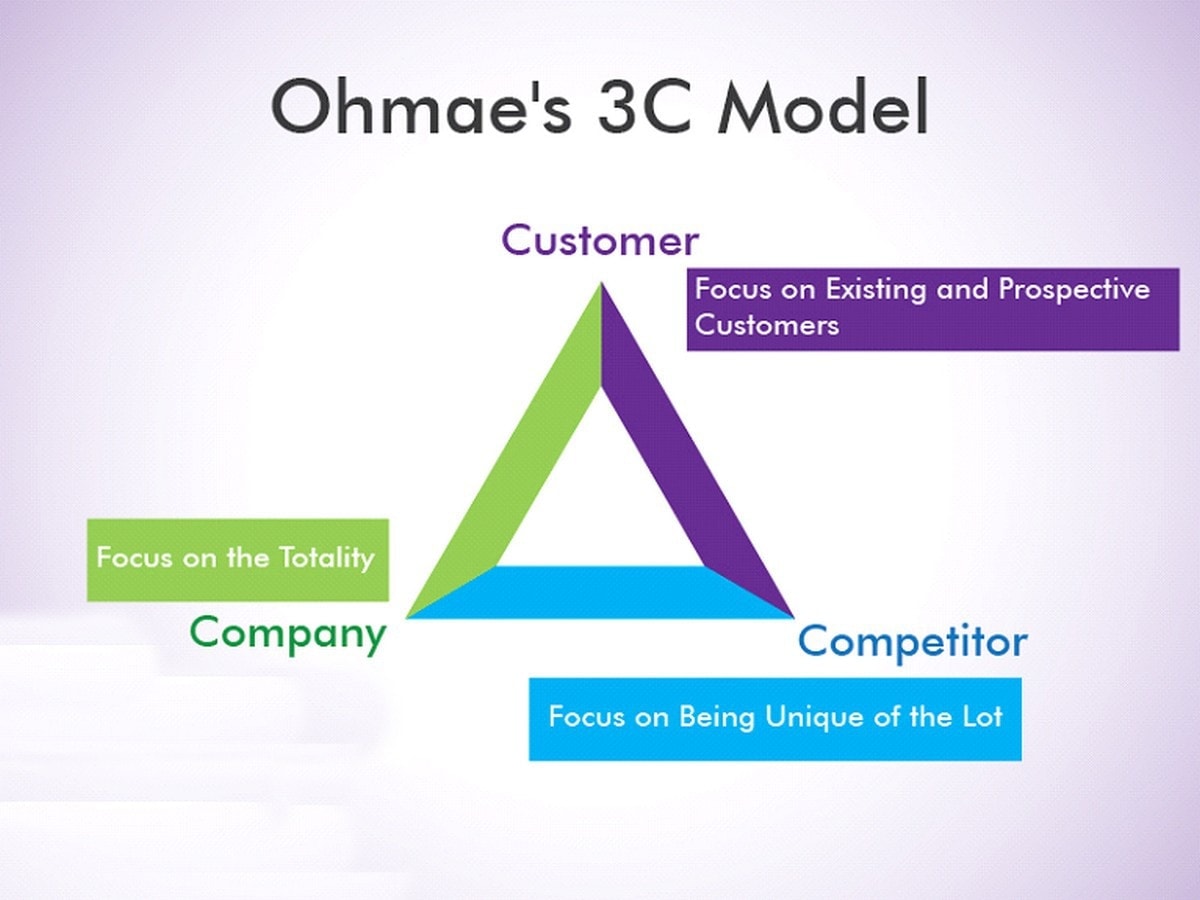
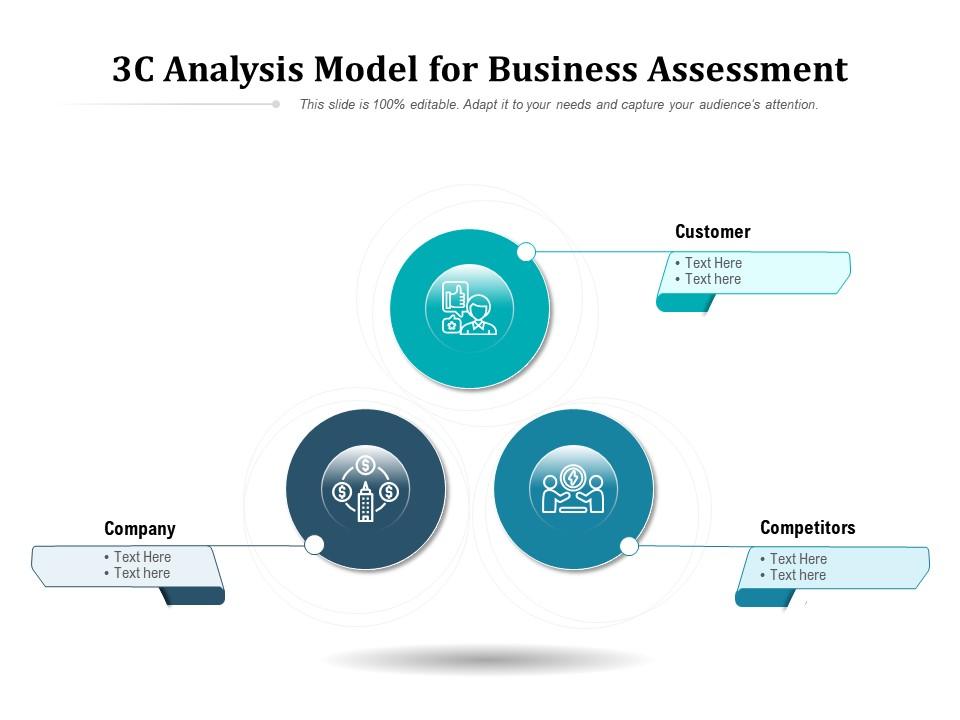
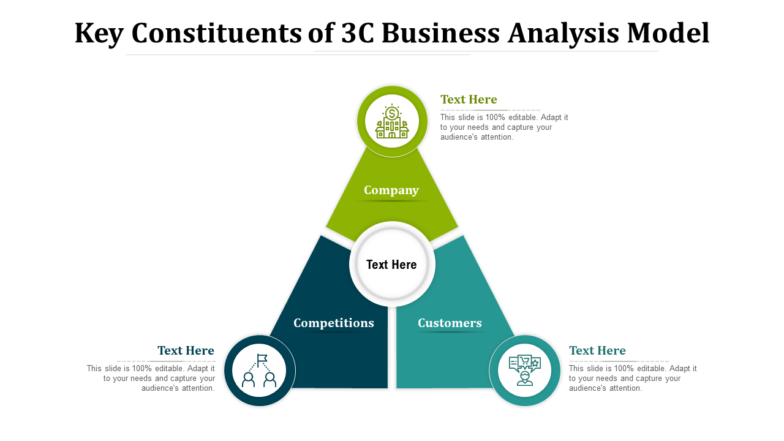
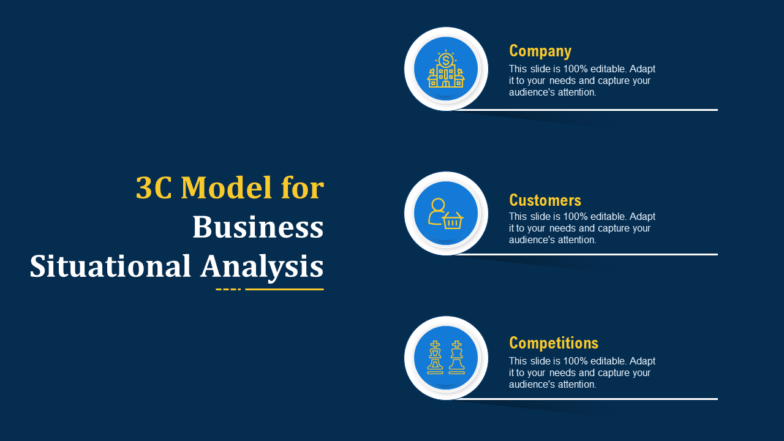
3C analysis is read as “three sea bunseki” or “san sea bunseki.” 3C is an acronym for the three initials of “Customer (market/customer),” Competitor, and Company. It is said that by collecting and analyzing information on each of these three elements, you can thoroughly analyze the marketing environment surrounding your company.
Origin of 3Cs The concept of 3C analysis was originally invented by Kenichi Ohmae, a management consultant. It became popular after being described in his 1982 book “The Mind of the Strategist.”
Meaning of 3C analysis
3C analysis is a framework often used in marketing strategy planning. However, there may be cases where people are doing 3C analysis without knowing the meaning or effect of doing it.
By thinking carefully about what you’re doing and what you’re trying to get, you’ll be able to make more meaningful analysis. So, I would like to introduce what you can get by performing 3C analysis.
Make it easier to clarify your company’s points of differentiation
In 3C analysis, you analyze your company after analyzing the market, customers, and competition, so you can perform analysis while comparing with the market, customers, and competition. By being able to understand your company’s strengths and weaknesses more objectively, it becomes easier to clarify your points of differentiation. Once you understand this clearly, it will be easier to plan future measures, such as putting your strengths to the forefront and devising strategies to compensate for your weaknesses.
When devising a marketing strategy that allows you to formulate a marketing strategy from a multifaceted perspective, if you only look at your company’s products and services, you will only be able to devise measures from a narrow perspective. What is necessary for successful marketing is to analyze the environment surrounding your company and your internal environment from multiple perspectives and formulate a marketing strategy. 3C analysis allows you to have a multifaceted perspective, so you may be able to formulate strategies from all angles. It can be said that the more objectivity of a strategy, the more likely it is to be realized.
You can decide the direction your company should take
3C analysis can help you plan your marketing strategy and determine the direction your company should take. Moreover, since the strategy is based on an accurate understanding of the environment, rather than just pushing out what the company wants to do, it can be said that it is possible to know the correct direction.

Features of 3C analysis
Next, let’s look at the characteristics of 3C analysis.
Framework for analyzing the environment
3C analysis is a framework that helps you analyze the industry environment surrounding your company. Rather than simply exploring your company’s potential and strengths, you can objectively analyze the external environment such as the surrounding market, customers, and competitors, as well as your company’s internal environment based on that.
Understand the three perspectives and their relationships
As explained above, 3C analysis is performed from the three perspectives of Customer, Competitor, and Company, and finally analyzes the relationship between each. In other words, the characteristics of 3C analysis can be said to be that it yields two elements: “three perspectives” and “relationships among the three positions.”
simple framework
One of the reasons why 3C analysis is so widespread is that it is a simple and straightforward framework. If the marketing department takes the lead in conducting 3C analysis, it may be necessary to collect information within the company, but 3C analysis will be easier to understand and be recognized within the company.
Mainly information gathering
Although 3C analysis is called “analysis,” some people think that it is primarily information gathering rather than analysis. When formulating a marketing strategy, it is common to use various other frameworks such as
SWOT analysis
and
PEST analysis
, but compared to other frameworks, 3C analysis may be said to be about information gathering. I don’t know.

Meaning and analysis items of 3C

Now, let’s take a closer look at what to analyze for each of the 3Cs.
1.What is a Customer?
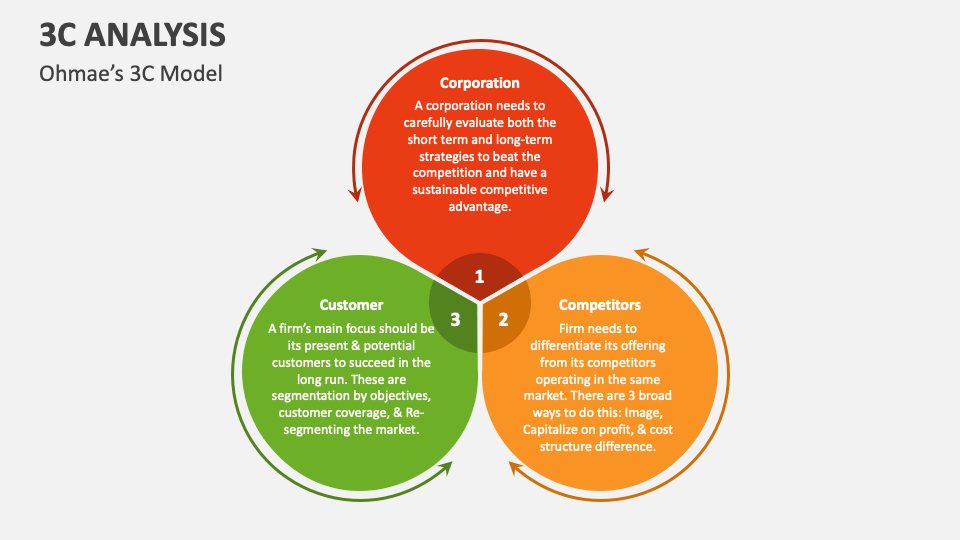
In Japanese, the word “customer” has the image of “customer” or “customer”, but in 3C analysis, we consider the market as well. In other words, Customer is a “market/customer” analysis, and mainly collects and analyzes information on the following items.
market
- Industry market size
- Market growth potential
- market changes
etc.
customer
- customer needs
- Customer consumption behavior (purchasing behavior)
- customer purchase process
- consumer population
etc.
2.What is a Competitor?
Competitor refers to a competitor. A company’s competitors are its competitors. If there are too many competitors, narrow down your analysis to the companies you want to analyze. In most cases, you will choose a representative company with a large market share or a company that competes with your company or its products or services.
First, we analyze the market share of each competitor, and then collect and analyze information about each competitor using the following items.
About competitors in the market
- Competitor shares and trends
- Industry position of competitors
- What are the threats from new entrants and substitute products?
- Companies that specifically compete with your company
etc.
Regarding each competitor (analyze each company separately)
- Capital and size of competing companies
- Influence of competitors
- Characteristics of competitors’ products and services
- Competitor product and service strategies
- Competitor’s ability to develop products and services
- Sales channels for competitors’ products and services
- Number of customers for competitors’ products and services
- Competitor customer support
- Sales unit price and customer unit price of competitors’ products and services
- Revenue and productivity of competitors’ products and services
- PR ability for competitors’ products and services
- Competitor’s resources and structure
etc.
3.What is a company?
Finally, we will analyze the Company based on the Customer in 1 and the Competitor in 2. Company refers to your own company. We collect information about your company’s internal environment using the following items.
- Our company’s corporate philosophy and vision
- Sales, share, strategy, etc. of your own products and services
- Characteristics, strengths, and weaknesses of your company’s existing business
- Your company’s human, material, and financial resources
- Own capital strength/investment ability
- Company personnel allocation and structure
- Your own PR power
etc.
How to do 3C analysis
Next, let’s finally check how to perform 3C analysis.
1.How to do customer analysis
Customer analysis can be broadly divided into two aspects: market and customer.
Market Analysis To understand a market or industry, it is common to perform macro and micro analysis.
From a macro analysis perspective, a framework called “PEST analysis” is often used to understand social changes such as the economy, legal reforms, population, and trends. PEST is an acronym for the four words “Politics, Economy, Society, and Technology” and allows you to understand the external environment.
Micro analysis involves narrowing down the industry and analyzing how that specific industry impacts your company. A framework called “5 Forces Analysis” is often used for microanalysis.
Five forces analysis analyzes five factors in a specific industry: “bargaining power of sellers,” “bargaining power of buyers,” “hostile relationships among competitors in the industry,” “threat of new entrants,” and “threat of substitute products.” This will give you an idea of the profitability in that industry. The higher the strength of these five factors, the less profitable and attractive the industry is.
Customer AnalysisNext is customer analysis. You may have obtained a variety of information through macro and micro analysis of market analysis, but let’s analyze how much this information influences customer needs and values.
For customer analysis, methods such as questionnaire surveys are often used. In addition to conducting surveys directly with customers, one method is to ask the operators who handle inquiries about frequently asked questions from customers.
2. How to do Competitor analysis
Competitor analysis collects and analyzes information on competing companies based on the items mentioned above.
Earlier, we divided the information into two categories: “About competitors in the market” and “About each competitor.” What you want to know from this information is what trends your competitors are doing in the market. The purpose is to find out what strategies they have and how they behave.
Also, the fact that the company is listed as a competitor means that it has achieved some kind of success, such as increasing sales in that market. Therefore, analyzing “how results were achieved?” can be useful in formulating your company’s strategy.
Competitor information is not so publicly available, but try to gather as much information as possible.
3.How to conduct company analysis
Then, based on the results of customer analysis (1) and competitor analysis (2), we conduct an analysis from the perspective of how these external environments affect the company’s internal environment and how to develop strategies. Simply put, we think about how our company can devise a strategy to achieve results in the context of the market, customers, and competition surrounding our company.
To do this, we must dig deeper into our company. In addition, companies decide on their own strategies after knowing what strategies their competitors are using to succeed in relation to market and customer conditions.
Company analysis often uses the VRIO analysis and SWOT analysis frameworks.
VRIO analysis
VRIO analysis’s VRIO is an acronym for the four words: “Value (economic value),” “Rareness,” “Imitability,” and “Organization.” VRIO analysis will analyze these four elements. Focus on your company’s management resources and analyze your internal environment to secure a competitive advantage over competitors in the market.
Let’s check the meaning of each element.
- Value (economic value)
If you are in a pinch, investigate whether the economic value of your company’s financial resources, human resources, facilities, equipment, and other resources is sufficient to cope with the crisis. .
- Rareness
Analyze from the viewpoint of whether the business you are conducting is rare in the industry you are participating in. In other words, to what extent are our competitors doing the same things we do? If scarcity is high, you can judge that your company’s competitiveness is high.
- Imitability
Imitability refers to how easily a company’s business can be imitated. Simply put, it shows whether something can be easily imitated by other companies. If the imitability is high, it can be easily imitated and the competitive advantage is low. Imitability includes not only the characteristics of a business but also the cost and resources required to run it.
- Organization
Organization is an analysis from the perspective of whether the organizational structure necessary to make use of current management resources and maintain scarcity and imitability is in place, and whether it is being operated successfully. Competitive advantage increases when there is a prospect that these policies will be sustainable over the long term, such as when management policies are clearly defined.
By performing VRIO analysis, you can understand the strengths and weaknesses of your company’s management resources, which can lead to optimization.
SWOT analysis
SWOT analysis is also often used. 3C analysis analyzes the external environment such as Competitor and Customer, and the internal environment such as Company. Taking into account the external environment and internal environment, it is possible to determine what challenges exist and what solutions to those challenges. “SWOT analysis” allows you to think about whether there is a
SWOT is an acronym for the four acronyms: “Strength,” “Weakness,” “Opportunity,” and “Threat.” SWOT is an acronym that analyzes both the external and internal environments. This allows you to think specifically about your company’s strategy by crossing the two.
- Strength
It refers to the strengths your company has. Identify the advantages you have over your competitors and the factors that will give you an advantage in achieving your goals.
- Weakness
It refers to the strengths your company has. We will identify factors that are inferior or lacking compared to competitors, and factors that are disadvantageous in achieving goals.
- Opportunity
It refers to the external environment of a company that has a significant positive impact on the company’s growth. For example, the potential for market expansion or gaining an advantage over competitors within the market.
- Threat
Refers to things in a company’s external environment that can become obstacles to the company’s growth. For example, the market may shrink or competition may intensify.
Once you have identified these four elements, you can combine them to come up with a strategy as follows.
“Strengths x Opportunities” What are the ways to leverage strengths and win opportunities?
“Strengths x Threats” How can we overcome threats by leveraging our strengths?
“Weakness x Opportunity” What are the ways to strengthen weaknesses and maximize opportunities?
“Weakness x Threat” How can we minimize the impact of threats based on our weaknesses?
The following article explains SWOT analysis in detail, so please refer to it.
Practical example of 3C analysis
Now, to give you an idea of how to actually perform a 3C analysis, I would like to introduce a specific example.
Let’s look at an example of 3C analysis using a hypothetical case in which an apparel shop specializing in suits conducted 3C analysis when formulating a marketing strategy for entering online sales. There may be fewer items or less specific figures compared to the actual situation, but please treat this as an example only.
1.Customer analysis
- In the apparel market, the market size is large and there is growth potential due to the increase in the number of online sales companies.
- There are two to three suit specialty brands that sell online.
- Due to the spread of the new coronavirus infection, online sales are booming due to demand from people staying at home.
- Consumption behavior is also shifting to EC (results of a survey show that approximately 80% of consumers have intention to purchase from EC)
- The desire to purchase in-store has not been lost (results from a survey showed that approximately 70% of people said they would like to try on the actual item in-store before making a purchase).
2.Competitor analysis
- Company A, a company specializing in suits, has a 50% sales share, Company B has a 30% share, and the rest has a 20% share of sales.
- Company A has suits for men, Company B has suits for men and women, and the rest have limited targets such as large sizes.
- The company that is particularly competitive with our company is Company B.
- Information on company A and company B’s capital, scale, influence, services, product characteristics, etc.
- Company A actively encourages people to try on clothes in-store, and is also focusing on attracting people to visit their stores.
- Company B has adopted online customer service.
- Both Company A and Company B run various types of advertisements online.
3.Company analysis
In this way, we will summarize the information collected for each of the 3Cs. This will help you see what specific strategies you need to create to achieve results.

Key points for successful 3C analysis
So far, we have explained the outline and method of 3C analysis, but there are some points to keep in mind in order to make 3C analysis successful. I would like to introduce the main points.
collect a lot of correct information
I mentioned that 3C analysis is primarily about information gathering as a framework feature. The key to collecting that information is to collect as much correct information as possible. Currently, most information can be collected on the Internet, but by collecting accurate information using various methods such as purchasing data or conducting customer surveys, highly accurate 3C analysis can be performed. .
Information about your company is the easiest to gather by making full use of your internal connections, but as the company grows, the accuracy and amount of information will change depending on who you ask. One idea is for a marketing person who conducts 3C analysis to directly interview all departments and divisions. This is because important information may be obtained. For this reason, it is important to build internal networks on a daily basis.
You can also obtain information about your company from partner companies. If information can be obtained more objectively, the accuracy of 3C analysis will improve.
Proactively collect information that is negative for your company You may ordinarily hide information that is inconvenient for your company. There is also a tendency to focus only on the success factors. However, since 3C analysis collects information only for internal strategy planning, it is important to actively collect information that is negative for your company. The more information you have, the easier it is to avoid risks and develop strategies for success.
Eliminate your company’s wishful thinking When analyzing your company and competitors, you must eliminate as much as possible the wishful thinking that is convenient for your company. For example, suppose you are currently at a disadvantage. Even if you think you will be ahead in the near future, you should not be overconfident and focus only on the fact that you are currently at a disadvantage. Otherwise, correct analysis cannot be performed.
When conducting a competitive analysis, it is difficult to obtain a wide range of information, especially about competing companies, so the analysis will be based on limited information. What I want to be careful about is not making decisions based on a narrow field of view. For example, if there is a company that is successful in e-commerce, if you focus only on its success in e-commerce and overlook the low sales and awareness of other products and stores, you will not be able to accurately evaluate its competitors. I can’t figure it out. Try to see the bigger picture.
In the case of BtoB business, also perform a 3C analysis of the customer.If your company is engaged in
BtoB
business, the customer is a company, so it is also effective to perform a 3C analysis of the customer company. This allows us to develop marketing strategies to increase sales and acquire potential customers for our client companies. You will be able to make proposals that will please your client companies.
By keeping these points in mind when performing 3C analysis, you can obtain more accurate results. Let’s use it together with other frameworks to create meaningful marketing strategies.
summary
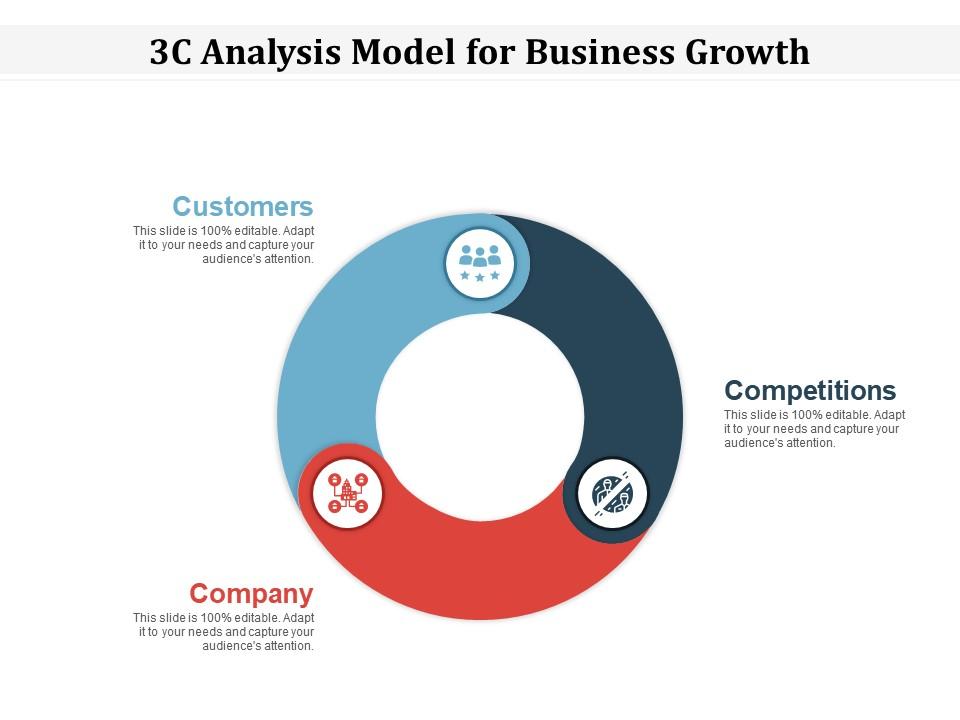
- 3C analysis is a framework for analyzing the environment surrounding your company and its products and services, and is used for planning marketing strategies. By collecting and analyzing information on each of the three elements of 3C: Customer, Competitor, and Company, you can thoroughly analyze the marketing environment surrounding your company.
- Customer analysis involves market and customer analysis, and considers the industry’s market size, growth potential, changes, and customer needs. Competitor analysis involves analyzing competitors in the market. Company analysis involves analyzing your own company. The analysis will also be performed by integrating the three elements.
- Key points for successful 3C analysis include “gathering a lot of correct information,” “actively gathering information that is negative for your company,” “eliminating wishful thinking about your company,” and “looking at a wide range of perspectives when analyzing your competitors.” There is.