Alts Co., Ltd. is a venture company that conducts personal AI (PAI) research and development using artificial intelligence (AI) technology, as well as the development and provision of AI solutions based on this research. Based on its corporate philosophy of “From Lavoro (workers) to Opera (creative work),” the company uses AI-based digital cloning technology to “free people from unproductive labor,” and uses it to create a variety of products. It has sparked unprecedented innovation in various fields and is attracting a lot of attention.
This time, we talked about Alt’s unique AI technology, examples of its use in work such as sales/marketing, and the future of digital cloning, a new AI technology. This interview will be of great help to marketers who need to be the first to know about new trends.
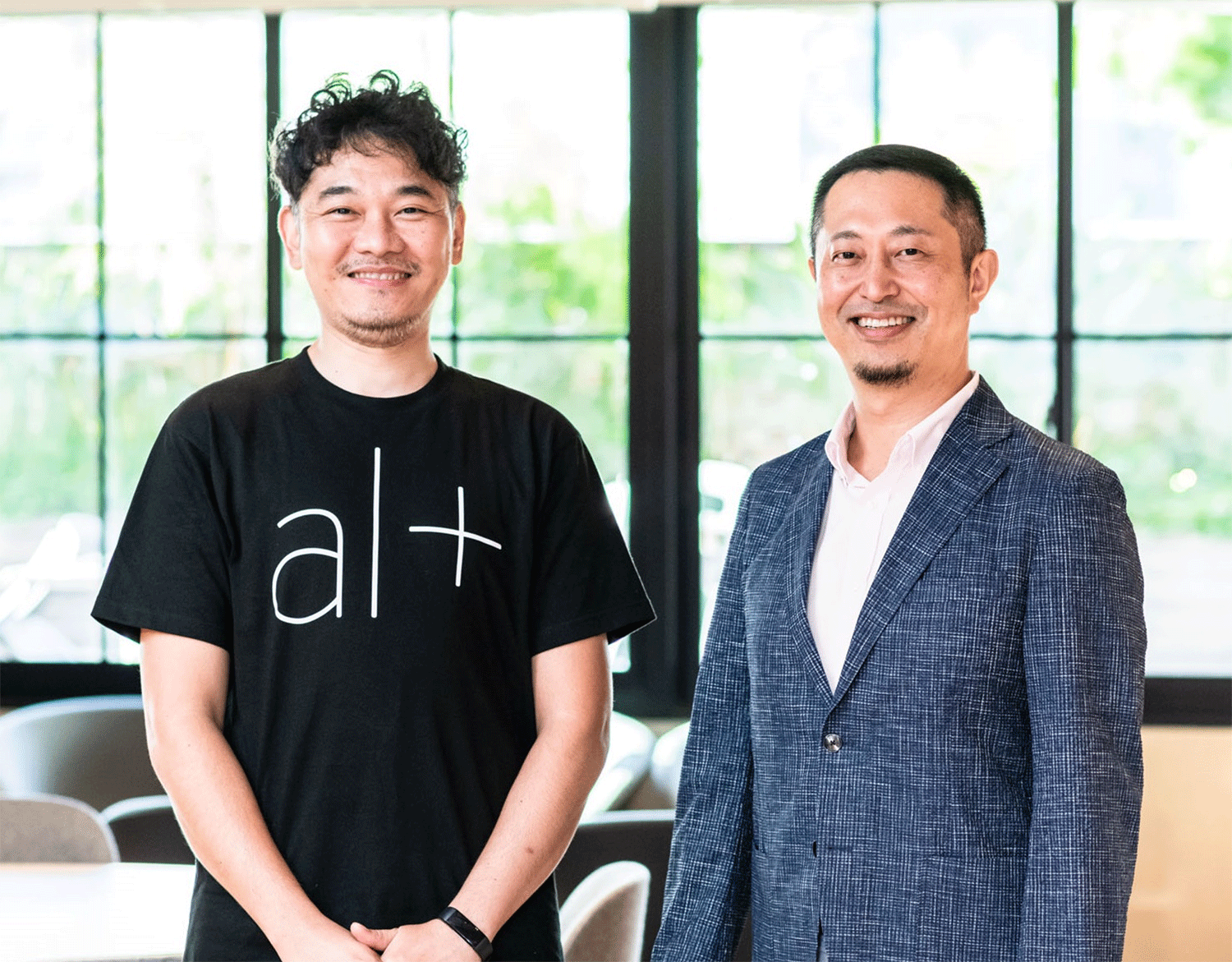
Interviewee: Chitaka Yonekura, Representative Director, Alts Co., Ltd. Interviewer: Toshihiro Yamada, Deputy Editorial Director, Toyo Keizai Inc.
“Digital clones” with individual will will change every job
Yamada
: Alts is a venture company that conducts research and development of personal AI (PAI) and digital cloning technology based on personal AI (PAI). What kind of specific initiatives are you undertaking?
Yonekura
: First, I would like to briefly explain our main theme, personal AI.
Personal AI, simply put, is a “digital clone with our own will.” By digitizing our own will and placing and utilizing it on
the cloud
, we can perform various digital tasks. It is an AI whose purpose is to make you do something.
Since individuals can negotiate and make decisions autonomously, digital clones, or “alter egos”, can travel around the network 24 hours a day, 365 days a year, replacing work, shopping, travel arrangements, and all other tasks. , it is possible to create an environment where humans can concentrate on things that only humans can do.
Yamada
: Has it been put into practical use?
Yonekura
: For example, Orts uses it in its own recruiting. Using Ortu’s unique lightweight large-scale language model LLM, we search for and create a list of human resources who are likely to be compatible with our members. Automatically generate scout text optimized for each job listed and send an email.
My digital clone will conduct an interview with those who are interested after reading the email, and the human resources department will make a decision based on the content of the interview, and almost all processes will be AI-based. I’m doing it. To date, we have interviewed approximately 300 people.
Yamada
: How many people were actually hired?
Yonekura
: So far there are 4-5 people. The advantage of recruiting using personal AI is that it not only reduces the labor of the recruiter, but also that it eliminates fluctuations in evaluations due to personal preferences because the AI makes the decisions. When people do this, they tend to be preoccupied with their feelings of likes and dislikes, and tend to evaluate people based on whether they are useful to them rather than whether they are useful to the company. With AI, you can screen for human resources who will be useful to your company from a completely objective perspective, greatly increasing matching accuracy.
Yamada
: So all processes other than the final pass/fail judgment are replaced by AI.
Yonekura
: Internally, after the demonstration experiment in recruiting, we plan to use it in sales activities. This is similar to the use of LLM and personal AI in recruiting, by automatically searching and creating a list of leads (prospective customers) that are likely to match our products and services, and generating business negotiation messages for the corresponding leads. I’m thinking of sending an email. If there is a response to the email, we will conduct the first interview using a sales clone. After that, we will move on to the actual business negotiations. I’m thinking of using digital clones in a very serious way.
Yamada
: If we use AI to replace what humans used to do, we can save on labor costs. Are there any other benefits?
Yonekura
: AI will handle everything from initial business negotiations to
lead acquisition
and subsequent
nurturing
(customer development), while humans will handle the final closing negotiations. By doing this, people in charge of sales can spend their time creating negotiation strategies aimed at winning contracts.
Yamada
: In the future, will AI be able to replace the closing process?
Yonekura
: Our goal is to reach a level where all sales processes can be completed using AI. However, the need to “ultimately make a decision after discussing it with others” is likely to remain strong, so for the time being human beings will be needed in processes that involve important decision-making and in situations where “trust between people” is strongly questioned. I think I will be in charge of this.
However, there is no doubt that emotion recognition and expression will be implemented in AI within three years. Once this reaches a practical level, the use of AI to complete the entire process up to the conclusion of a contract will gradually increase.
A digital clone that overturns past common sense and creates a “new common sense”
Yamada
: Listening to Alts’ efforts, I feel that AI is evolving much faster than I imagined. Many of the jobs that were once performed by humans will be replaced by AI, and the day will come in the not-too-distant future when we will nostalgically think, “People used to do these things.”
Yonekura
: Yes. AI is no longer a science fiction technology, but a “natural” existence that has deeply penetrated our lives. For example, everyone has come to enjoy the benefits of voice assistants on smartphones, product recommendations when using e-commerce sites, and automatic translation on video sharing sites in their daily lives.
In recent years, the use of AI has progressed at a remarkable pace in call center operations, and customers are starting to feel that automatic responses using AI are the norm. What we are trying to do is completely overturn the common sense of the past and replace it with a “new common sense.”
Yamada
: In order to transition to the “new normal,” we will need to improve accuracy, so I think it will take some time. However, if you strive for perfection, you won’t be able to use it for anything. Are you developing services with a line in mind, such as, “I’m sure it will become a reality in a few years, but for now I’ll limit the scope of the service to this.”
Yonekura
: Yes. This is the most important thing when designing a service. PoC (Proof of Concept) is discussed in depth within the company. When we try to implement the technologies and services we are researching and developing into actual business, there is no doubt that ethical issues regarding the use of AI will inevitably emerge as an issue, so rather than making a sudden leap forward, we will I think it is natural to introduce it while thoroughly clearing up the issues.

The world’s first attempt at “talent matching using digital clones”
Yamada
: Earlier, I heard that you are using personal AI in recruitment activities as an internal demonstration experiment, but are you also conducting external demonstration experiments?
Yonekura
: Yes. For example, we are conducting the world’s first demonstration experiment using clone matching on the theme of “medical care x HR” with M3 Career Co., Ltd., a comprehensive career support service for medical professionals.
This involves digitally cloning both the medical institution that is recruiting and the doctor that is seeking employment, and then the job seeker and recruiter have a virtual interview based on qualitative communication, and an AI agent then proceeds with matching based on that information. It’s a thing.
Since analysis is performed based on qualitative information, highly accurate matching is achieved, which greatly reduces the effort and effort on both sides, creating a situation where both parties can focus on the work they should be focusing on.
Yamada
: Specifically, what is the “world’s first”?
Yonekura
: The concept of “using digital clones for matching” is itself a world first. There are examples of matching using LLM, but this is the first in the world to create a clone of the job seeker and a clone of the recruiter, and to improve efficiency through dialogue between the clones.
Yamada
: What about other examples?
Yonekura
: We are jointly developing AI clones with ADK Holdings, a comprehensive advertising and marketing services company.
Specifically, after developing “AI-CEO,” an AI clone of the company’s CEO Toshiya Oyama, “AI-CEO” will send a personalized message to each new employee at the ADK Group’s induction ceremony in 2024. We made such an attempt. Rather than simply having the CEO’s avatar send a uniform message to all new employees, it is a major epoch in that it generates personalized welcome messages for each of the 125 new employees in real time and delivers them in real time.
Yamada
: Since it is a real voice message that is personalized to each person, it can also convey a sense of human warmth.

Yonekura
: It takes a lot of effort to create and send individual messages to each of 125 new employees, taking time out of your busy work as a president, but by using digital cloning technology, you can send a personal message to each of the 125 new employees. It’s extremely easy to send personalized messages to each person without losing anything. Personally, I think this is one of the ideal use cases for our digital cloning technology.

The need for prompt engineers who breathe life into AI will continue to grow
Yamada
: On April 15th, OpenAI announced the establishment of a Japanese subsidiary. What kind of impact do you think this will have on AI in Japan, mainly in the LMM field?
Yonekura
: I think it will be a great stimulus. With OpenAI’s full-scale entry into the domestic market, various trends will be born, and new industries may be created along with it. For example, AI-based data annotation businesses may grow and create new markets, and there may be an increase in the number of overseas AI vendors operating data centers in Japan.
Yamada
: Mr. Yonekura, how do you think the use of AI in Japan has changed?
Yonekura
: I feel that the way we approach AI is currently changing from the frenzied excitement of the ChatGPT boom a while ago to calm evaluation and concrete utilization. We believe that this is because we are moving from a mere boom phenomenon to a stage where we are conscious of its use in real business situations.A good example of this is the implementation of AI in recruitment activities and sales at our company. You could say it is.
On the other hand, OpenAI itself is probably putting a lot of effort into research and development on what kind of prompts can lead to optimal results for AI models like ChatGPT. If we compare this to an airplane, we have created an aircraft that can fly and put it into practical use, but we do not fully understand the principles of flight.
Therefore, as a future change, the ability of experts to manipulate AI while mastering its principles will be greatly questioned. In order to make the most of AI, the presence of experts called “prompt engineers” is essential. Using the example of airplanes above, these are pilots who understand the principles of airplane flight and can operate to take advantage of its characteristics.

Furthermore, Prompt engineers create new value by leveraging their knowledge and skills. For example, I think there will be a demand for people with original ideas and expertise who can create new small airplanes based on their understanding of the principles of flight of large airplanes.
Yamada
: What fields do highly specialized prompt engineers come from?
Yonekura
: Broadly speaking, I think there are two types of patterns: those that come from engineers and those that come from creator-like people. The former allows you to design prompts from a logical and technical perspective, and the latter allows you to give more intuitive and qualitative instructions to AI. If these two exist in a well-balanced manner and work together, I believe that new value creation through AI will be realized.
Automate almost every sales and marketing process
Yamada
: When looking at the use of personal AI technology that Alts is working on from a business and marketing perspective, where do you think innovation will occur?
Yonekura
: First of all, I think that the use of digital clones in the sales field mentioned earlier will be significant, but in a slightly different way, I think that the use of digital clones in M&A could be a major innovation.
The other day, we announced a product called “CloneM&A,” an M&A matching system that uses “LHTM-2,” an LLM (Large-Scale Language Model) developed in-house. The idea is to use AI to perform everything from creating a list of acquisition target companies that match the company’s strategy to matching and negotiations.By using digital clones and natural language processing, the process can be done in the same way as a human being would when negotiating. It is a system that can clearly show the reasons for matching with the buyer company and the synergies of the partnership to the seller company, and also realizes a huge number of matchings that would be impossible to do manually.
Yamada
: There are an increasing number of cases of companies closing down despite being profitable due to factors such as a lack of successors, deteriorating cash flow, and changes in the business environment, and this is becoming a social problem. I am. This “Clone M&A” seems to be effective in solving such issues.
Yonekura
: That’s right. There are many M&A brokerage companies in the world, but so many of them go out of business that only a few percent of the total can be rescued. So, when we thought about how to scoop up the remaining 90% or more, it was impossible to do so using conventional, individualized methods, so we decided to use digital cloning and the power of LLM to solve this problem. Our commitment is to guide you.
Yamada
: It’s a system that can directly contribute to solving problems at the administrative level, such as rebuilding the Japanese economy. We may be able to expect support from ministries and agencies, including the Ministry of Economy, Trade and Industry.
Yonekura
: Personally, I think that if this can be combined with microfinance, the use of AI in this area will accelerate at once. You can entrust the funds to AI, automatically search for acquisition targets, and even make purchases. By doing so, we will be able to approach all kinds of issues that exist in the M&A field, including going out of business. If a situation arises where a fund is formed for M&A using personal AI, I think it could create a trend that involves stakeholders.
Yamada
: What do you think about the future of the sales field?

Yonekura
: This is a vision of the future that is only half-realized, but the entire sales and marketing process of making things, selling them, and getting customers to buy them will no longer require human intervention. Probably. The only human intervention is in the initial rule-making and approval part. Everything else can be automated.
On the other hand, there will probably remain some companies that emphasize selling with the warmth that only humans can provide, but the trend is that AI will increasingly replace marketing and sales, and the values of companies and customers will change accordingly. I think so. However, there are business fields and local cultures that place emphasis on human connections and trust, so I think sales styles based on entertainment such as dinners and golf competitions will remain.

Yamada
: Is Orts aiming for a world where it is normal for transactions between companies to be negotiated between digital clones?
Yonekura
: It’s not just between companies. The same goes for individuals. I think there should be a style in which individual customers use clones like “AI customers” to deal with sellers.
Yamada
: It seems that digital clones can be used not only in the private sector but also in government and national politics.
Yonekura
: Considering that using AI allows us to obtain optimal solutions without human considerations or emotional considerations, I think that personal AI and politics are compatible.
In the political world, there are still many parts that are managed based on the subjective judgments and preferences of people. On the other hand, AI can perform objective analysis based on vast amounts of data and derive optimal decisions. If AI is introduced into politics, it is thought that the roles of humans and AI will be clearly separated.
As AI takes on the role of policy planning and implementation, politicians will increasingly be required to have human charm and influence, such as dialogue with the public and cooperation with the international community, rather than policy making. At the same time, I think there will be a stronger need for the ability to interact with AI and an awareness of how to utilize it.

With the arrival of the LLM boom, advanced initiatives are rapidly accelerating
Yamada
: The world is now dominated by AI companies, but what are the strengths of Alts in such a situation?
Yonekura
: Since Orts was founded as a company based on cloning technology, I think its strength is that it excels in the technology and know-how to bring out individuality from small amounts of data.
For example, when a large-scale language model such as ChatGPT is trained with a small amount of models, the underlying model may collapse. Because we have been researching this issue for many years, our strength is that we are well versed in identifying areas that do not cause damage and learning methods that affect the whole.
Based on this, one of our major strengths is that we can work on LLM development using the optimal methodology of “how to create it.”
Yamada
: Alts was established in 2014 as a venture company to research and develop digital cloning technology, and has continued to grow to this point after receiving a total of 8 billion yen in investment from venture capital and other sources. Do you still need funds? Or will they start making profits, or will they enter the phase of recovering funds?
Yonekura
: Since there are many stakeholders, we naturally thought that we would move towards a phase where we could generate profits, but last year the LLM boom finally arrived, and now is no longer the time to hesitate in taking on new challenges (lol). Naturally, Orts’ stakeholders have shown a deep understanding of these challenges, so we intend to continue taking on even more advanced challenges. I believe that Alts is one of the few AI companies that continues to engage in R&D fairly steadily, so we will continue to work on creating new value with even more passion than ever before.
Orts has a corporate philosophy of “Lavoro to Opera,” which means changing the perspective of work from “Lavoro,” which means labor in Italian, to “Opera,” which means creative work. It means changing the way we approach things.
Therefore, within our company, we have gathered people with creative minds who can approach work from an operatic perspective, and together with their colleagues, we are using Alts’ unique personal AI technology and LLM technology to inspire people. I would like to create innovations that free people from unproductive labor.