

Segmentation refers to dividing the market into smaller parts and grouping them according to user needs. In order to appropriately market to each user in a market where user needs are diversifying, it is important to segment the market by specific attributes such as place of residence, place of birth, age, gender, and hobbies. I am. Even if you know this, it is difficult to use segmentation properly.
This time, we will introduce segmentation in an easy-to-understand manner, including its meaning, purpose, examples, points to consider when implementing it, and practical methods.
What is segmentation?
Segmentation
refers to dividing the market or customers into groups with similar needs or characteristics.
It goes without saying that selecting competitors is important in marketing strategy, but even if you sell the same product, your competitors will change depending on which market you are targeting. In order to advance your business, you need to determine in which areas of the market your company can win. Segmentation can be seen as a preliminary step in selecting your target customer group.
What is STP analysis?
By the way, do you know about STP analysis?
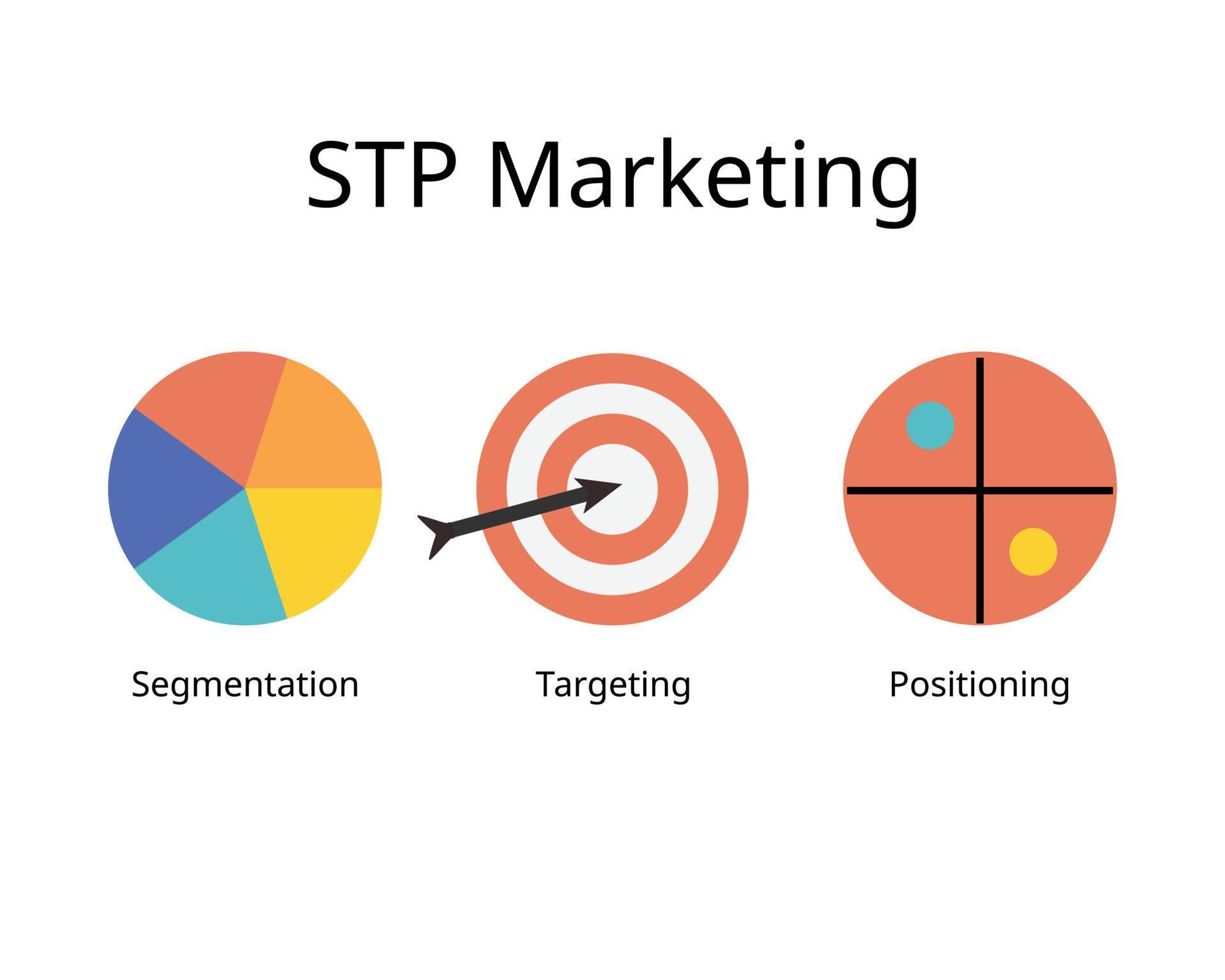
STP analysis is a marketing framework named after the initials of ”
segmentation
,” ”
targeting
,” and ”
positioning
,” and it is closely related to segmentation.
Targeting is the work of establishing the basis for selecting the appropriate area for your company from among the subdivided groups through segmentation.
It’s important to note that targeting doesn’t mean targeting within a segmented group. If you narrow down the target further within an area that has already been segmented, some people may get confused and think, “Isn’t this another segmentation?”
Targeting is simply the work of establishing the basis for selecting the optimal area for your company. Therefore, when conducting targeting, you naturally need to research your company and your competitors.
It is not a simple task of selecting a specific region from several regions divided by segmentation, like a process of elimination. Positioning is determined automatically during the targeting process.
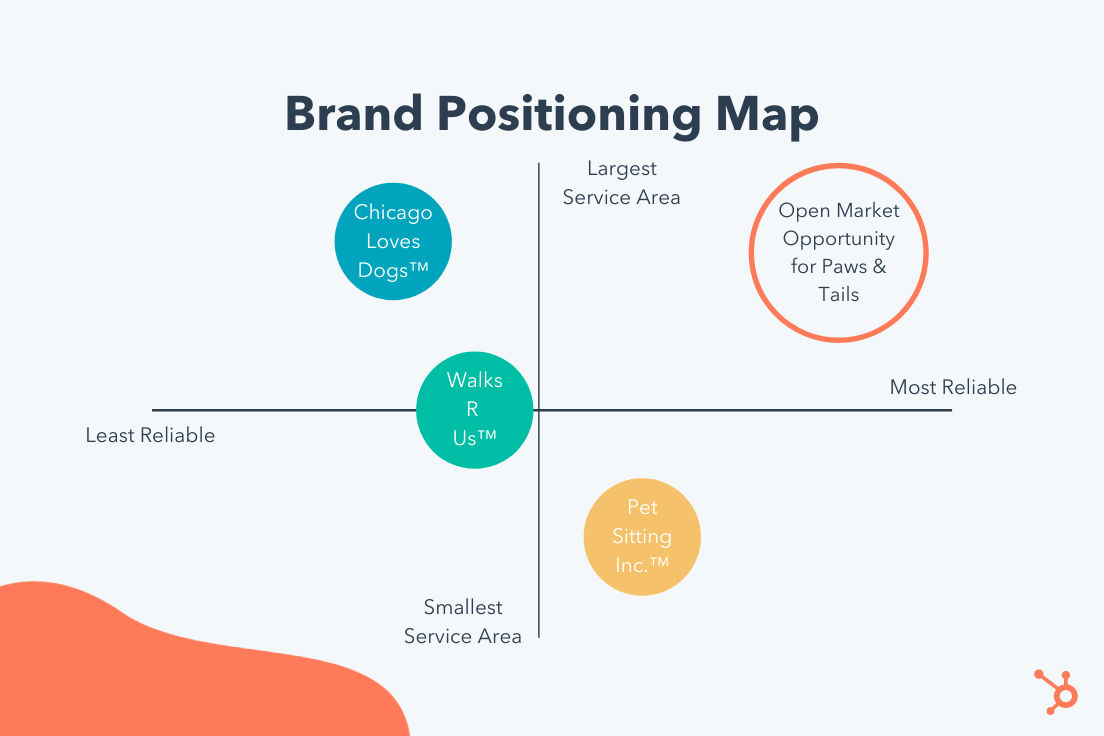
As the name suggests, positioning is the process of determining the position of your service within the area carved out through segmentation and targeting. Of course, your position will change depending on the axis you use as an indicator, but the key is to take a position that gives you a differentiated advantage when compared to your competitors.
As mentioned above, targeting and positioning are closely related to segmentation, and especially when it comes to targeting, it is important to be aware that they are used together with segmentation.
*If you would like to know more about STP analysis, please see below.
・Term explanation [STP strategy]
Why is segmentation necessary?

Diversification of consumer needs
Consumer needs are becoming more and more diverse, and in modern times, products and services from all companies are becoming more and more similar. It is nonsense to develop such products and services for everyone, and you cannot expect the sales to be commensurate with the costs incurred. Therefore, you should focus on prospective customers who are attuned to your company’s strengths and who have attributes similar to your main customers. It is important to target and approach the demographic you want to promote purchases and contracts.
Now that we have a complete range of products and services, needs are becoming increasingly diverse.
Furthermore, because there is so much information out there that we can’t process, people no longer pay attention to advertisements that are targeted at the general public.
Under these circumstances, it has become necessary to use segmentation to narrow down the target audience in order to attract the attention of consumers.
Countermeasures against competition through technological advances
Even if you feel the need for segmentation, manually sorting customer and lead information in the actual situation limits the number of customers you can respond to, and it takes a huge amount of time and effort. However, only a limited number of companies were able to implement it.
However, as technology has evolved and digital tools have become more affordable, many companies looking to segment are able to obtain and analyze data on their target audience’s purchasing behavior, interests, and more. It has become.
As technology advances, segmentation is becoming an essential marketing strategy.

Four typical variables for segmentation

Geographic Variables
Geographic variables are variables of geographical factors such as “country”, “region”, “climate”, “population”, “security”, “economy”, “culture”, and “regulations”.
For example, even within Japan, you can imagine that urban and rural areas differ in terms of population size and ease of distribution. Since the best-selling products vary depending on geographic factors, there are ways to reduce unsold items by arranging product lineups tailored to regional characteristics.
<Frequently used angles for geographical variables (geographic variables)>
Regions of the world (Asia, North America, Europe, Middle East, etc.)
Regions of Japan (Japan Sea coast, Pacific coast, East Japan, West Japan, etc.)
Regions of Japan (Hokkaido, Tohoku, Kanto, Chubu, Kinki, Chugoku, Shikoku, Kyushu, etc.)
Climate (rainfall, snowfall, temperature, humidity, etc.)
Population density (more people in urban areas, less people in suburbs, etc.)

Demographic Variables
Demographic variables are variables related to a person’s own characteristics, such as age, gender, family composition, occupation, annual income, educational background, and nationality. This includes segmentations such as “M1” and “F1” that have been used in mass marketing. It has the advantage that it is easier to understand the bias in needs than other variables, and it is easier to collect data in surveys of countries and companies. <Frequently used angles for demographic variables>
- Age (20s, 30s to 40s, 50s to 60s, 70s and older, etc.)
- Gender (male, female, etc.)
- Occupation (service industry, manufacturing industry, IT system, office work, programmer, marketer, etc.)
- Income (less than 3 million yen, 3 million to less than 4 million yen, 4 million to less than 5 million yen, 5 million to less than 10 million yen, etc.)
- Final educational background (junior high school, high school, junior college, university, graduate school, vocational school, etc.)
Psychological Variables
Psychological variables are variables of psychological factors such as “hobbies”, “preferences”, “values”, “commitments”, and “motivations”. Depending on the product or service, psychological variables may play a large role without bias due to demographic variables. For example, even among women in their 20s, there are those who are not interested in fashion and have a lifestyle that does not spend much money, and there are those who are sensitive to overseas trends and are preoccupied with fashion, so which type of target are you targeting? The direction of product development will be completely different depending on what you do. However, targeting based on social psychological variables alone is not common, and it is common to use them in conjunction with other variables. <Frequently used aspects of psychological variables (psychographic variables)>
- Lifestyle and values (emphasis on brand image, preference for organic products, etc.)
- Personality (social, introverted, nervous, ambitious, etc.)
- Social class (upper, middle, upper middle, lower middle, lower etc.)
Behavioral Variables
Behavioral variables are behavioral variables such as “date and time of activity,” “behavioral pattern,” “purchasing status,” and “frequency of use.” For example, you may need to change the way you market to new and returning users. Store visit history and past purchase data obtained from membership cards, etc. can be utilized. Data such as website browsing logs and email opening logs, which can be obtained using
marketing automation
(MA) tools, can also be used for segmentation. <Frequently used angles for behavioral variables>
- Situations of use (daily use, morning and evening use, weekend use, use during specific seasons, etc.)
- Knowledge (such as being a repeat customer and knowing the product well, interested but not familiar with the product, not aware of it at all, etc.)
- Usage frequency (light user, heavy user, middle user, etc.)

Evaluate segmentation with 4Rs
To evaluate whether you’ve done your segmentation correctly, consider the 4Rs: “Rank,” “Realistic,” “Response,” and “Reach.”
Rank (priority)
Rank considers whether the market can be ranked.
Segmentation that does not differentiate the market cannot be expected to be effective. The basic idea is to rank the segments divided by segmentation and target them in descending order of priority.
Realistic
At Realistic, we consider whether the market has the scale to increase sales.
There is no point in segmenting a market if you cannot generate sales.
If the targeted segment doesn’t have enough volume to make a profit, you shouldn’t target even high-conviction demographics.
Reach
Reach considers the difficulty level of delivering products and services to users.
The high level of difficulty of traveling abroad, such as in a foreign country or on a remote island, can be both an advantage and a disadvantage.
You should also check whether you can offer promotions, products, or services to the targeted segments.
Response (measurability)
For Response, consider whether you can measure user effectiveness.
If you have a market where you can measure the effects, it will be easier to formulate later marketing strategies.
This is from the perspective of whether it is possible to measure the response after actually conducting promotions and sales to the targeted segment.
To test whether your segmentation and targeting was appropriate, you need to target measurable segments.
*In addition, the two R’s of ‘Rate/Rate of Growth’ and ‘Rival’ are sometimes called ‘6R’.

Things to keep in mind when using STP analysis
STP analysis involves segmenting and segmenting the market based on common factors such as customers and needs, and determining which market to target within the segmented market and where the company’s position will be within that market. It’s something to analyze.
Whether or not you can implement excellent measures to differentiate yourself from the competition depends on the extent to which you conduct STP analysis. Let’s keep in mind the important points of view when conducting such an STP analysis.
Think from the customer’s perspective
Now that customers can choose from a variety of products, it has become essential to create products from the customer’s perspective. Each STP analysis is information that is fundamental to each product and company, so let’s prepare the information with a user-first approach.
Each item interacts with the other
It is necessary to think of segments, targets, and positioning as elements that interact with each other, rather than thinking of them as separate entities. If you think of it as a single entity, you may end up with contradictory results. For example, if you target the high-income group and then set the price too low for positioning, you will lose sight of the most important target. Make sure that the three elements fit together logically.
Calmly review the final completed output
Even if the target or market to enter is determined through STP analysis, it is not always the correct answer. Do some research on things like “Is there any growth potential in the market?” “Do segmented customers really exist?” and then reconsider and confirm. If the possibility is low, you must make corrections.
Understand your competitors’ business models in advance
You need to segment, target, and position your competitors in advance. If you don’t understand your competitors’ business models, you won’t be able to differentiate yourself, and you won’t be able to provide a basis for considering targets. The trick to STP analysis is to think about “what should I do to avoid competing with competitors?”
Used differently for BtoC and BtoB
For B2C, segmentation and targeting are relatively easy to do. This is because it is easy to create personas and understand what points to aim for. However, in the case of BtoB products, the company color must be clearly defined. Things become more complicated, such as company culture, culture, and the number of years the company has been in business. Keep in mind that your perspective will change dramatically.
By keeping the above in mind, you can optimize your use of STP analysis.
Points to note when using
STP
analysis
Only superficial settings are possible
For example, even if you set targets through segmentation, you will not be able to set detailed personas. STP analysis alone is not sufficient for business preparation. A more detailed business plan is required.
cannot be created with evidence
Another major weakness is that it cannot be set with solid evidence. For example, when positioning, there is no way to confirm customer needs. Since there is no evidence, we can only set the three elements of STP based on our imagination.
By keeping the above in mind, STP analysis using segmentation can be applied more appropriately to marketing.
.png?width=1500&name=Market_Segmentation_Matters (1).png)
summary
In an era where marketing from the customer’s perspective is required, segmentation and STP analysis have become essential marketing fundamentals. I’m sure everyone has realized that it is becoming important to analyze not only from the company’s perspective but also from the consumer’s perspective.
It can be said that finding out the target audience from this perspective and delving into the elements that the target wants from the product or service will lead to success. Understanding segmentation makes it possible to build multifaceted marketing.