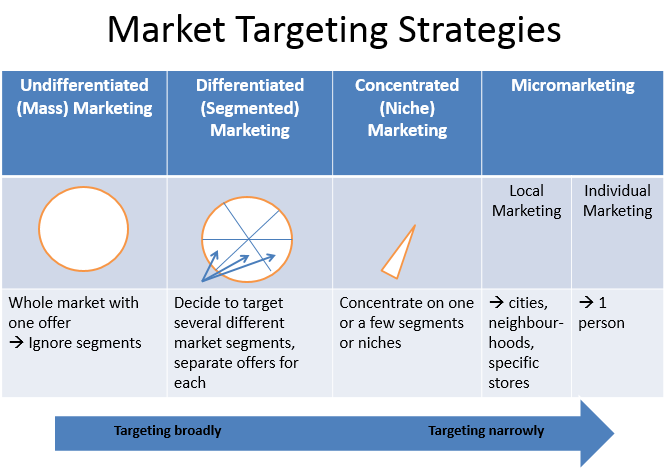
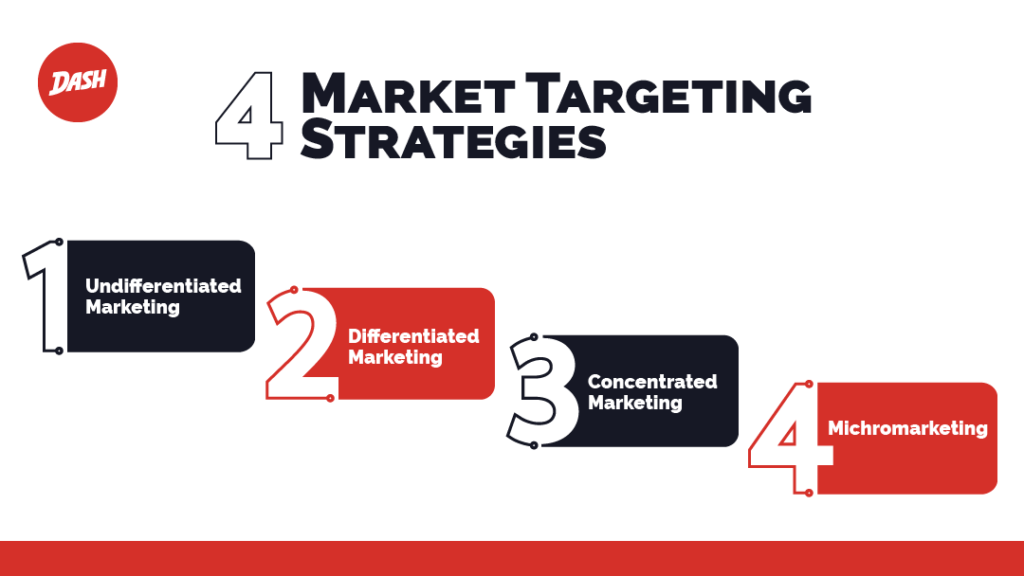
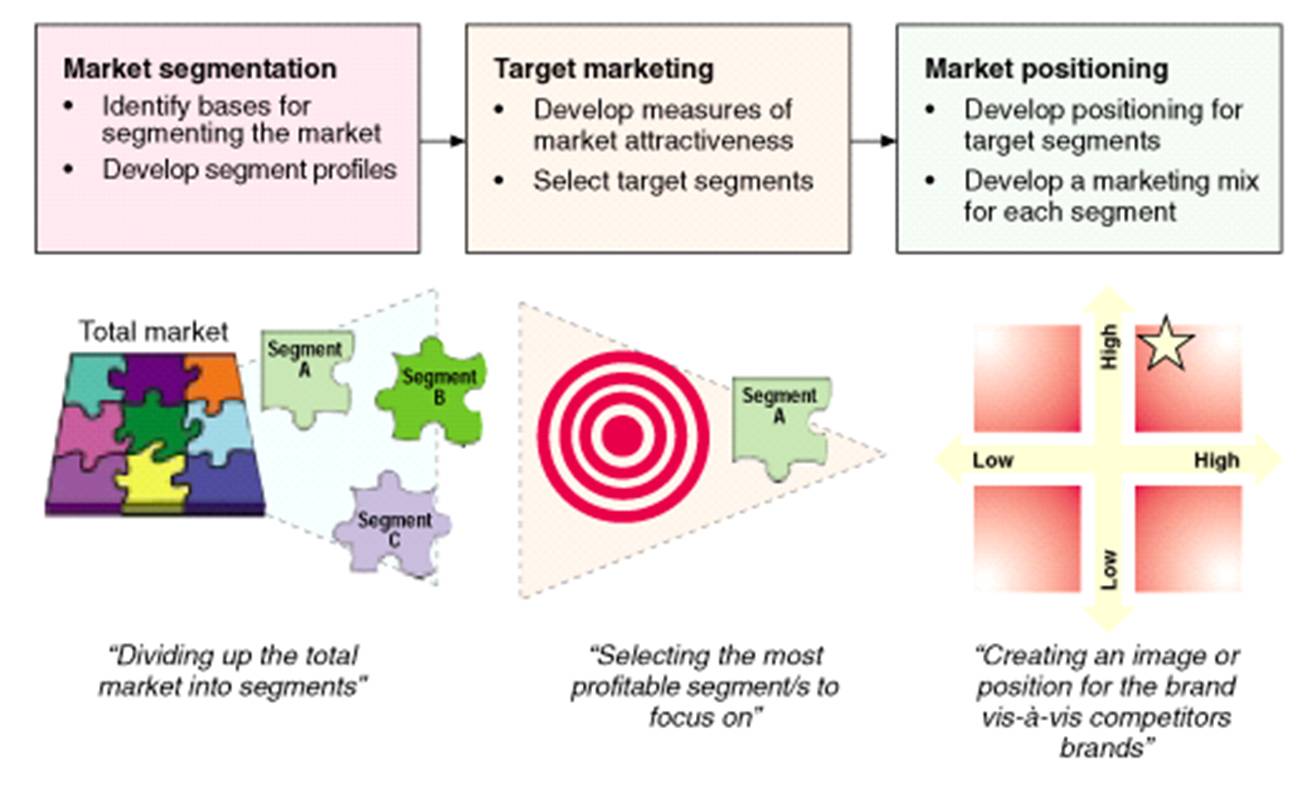
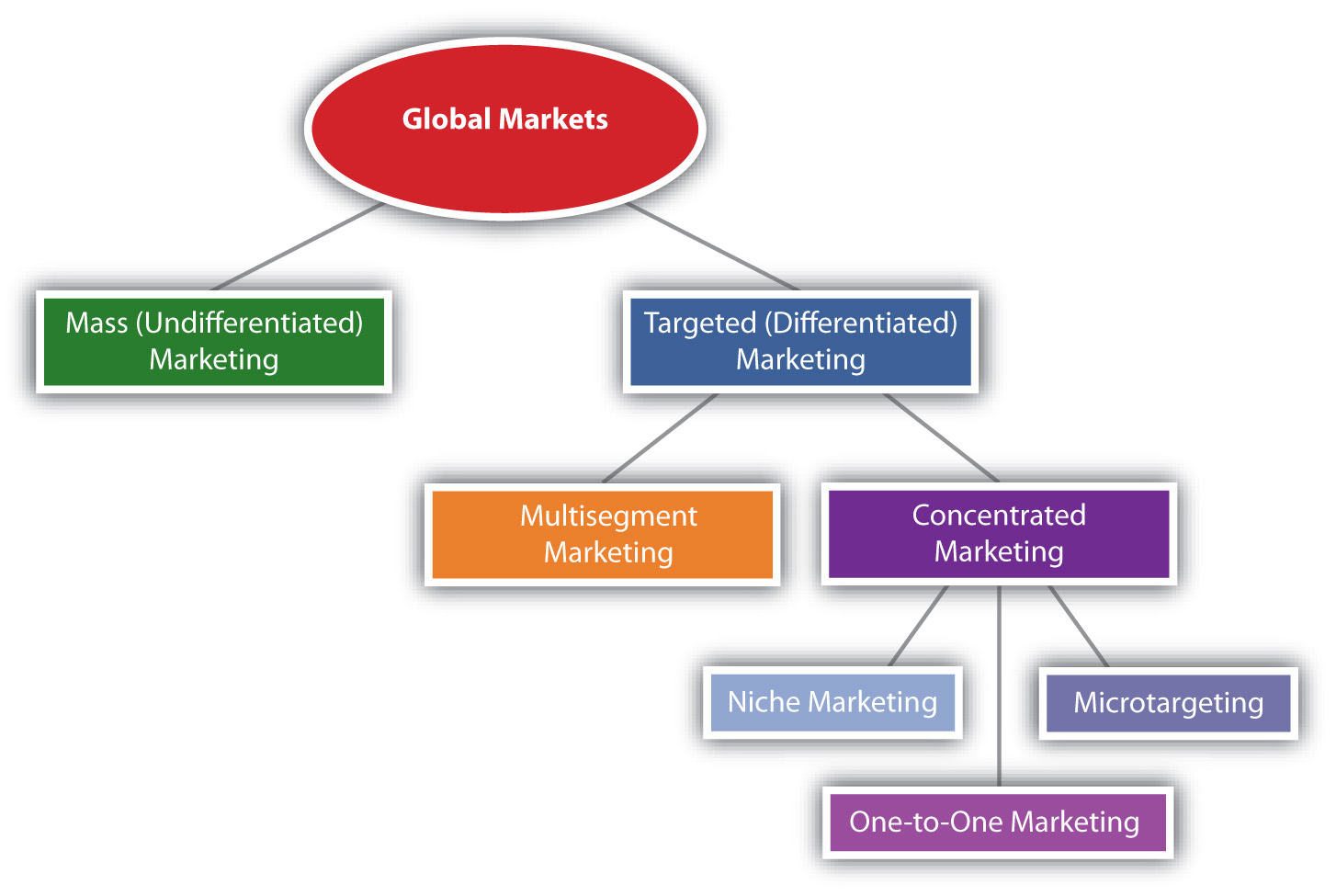
Targeting is the act of classifying the market from various angles and clarifying your company’s targets, such as which customer group you want to develop or promote your products or services to.
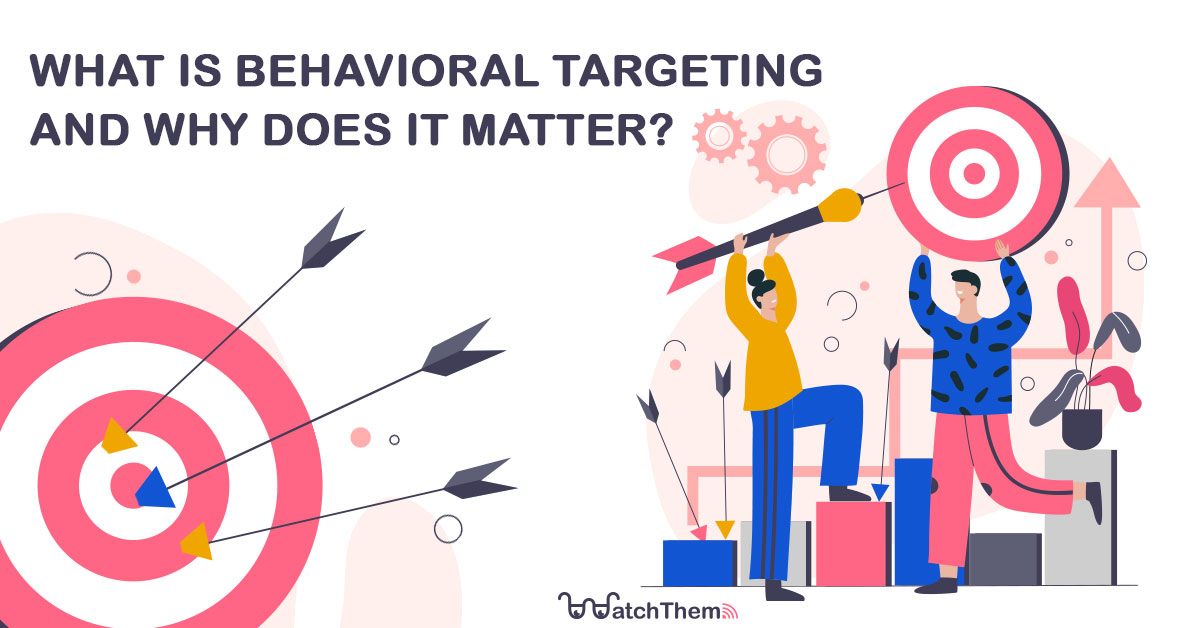
When targeting, it is important to choose segments that play to your strengths and give you an advantage over your competitors.
Targeting points
The following 6Rs are considered important as indicators for targeting.
1. Realistic Scale: Is the market size appropriate?
Market size must be considered when targeting. The size of the market you choose needs to be large enough to support your business.
2. Rate of Growth: Is growth expected?
The market you select through targeting is not just large enough. Even if the market is large enough at the time of analysis, it may decline later. Therefore, determining whether the selected market is expected to grow is an important point in targeting. Even if the market is small at the time of analysis, rapid growth may result in large sales.
3. Rank/Ripple Effect: Is customer priority/ripple effect high?
It is also important whether the products and services you provide are of high priority and interest to your customers. If there is a high priority or interest, you can expect a ripple effect on surrounding customers, such as spreading it through SNS.
4. Reach: Can you reach your customers?

The customers you select through targeting must be ones that you can actually reach when doing business, for example by having a directory available.

5. Rival: Isn’t the competition fierce?
/124314188-56a82f5e3df78cf7729cde31.jpg)
In general, a market is less attractive if competitors already have a large market position. On the other hand, if you can successfully differentiate yourself in a less competitive market, you may gain a significant position.

6. Response: Is the response measurable?
When targeting the market with advertising or other approaches, it is necessary to keep in mind whether the response and effectiveness can be measured.
Reference article