

“Needs” is a word that everyone involved in marketing has probably seen, heard, and used at least once. However, in reality, many people’s understanding is so vague that they find it difficult to explain their needs.
In order to take appropriate marketing measures, it is important to accurately understand the meaning of needs.
Therefore, this time, I will explain what needs are and then introduce the types of needs. We will also provide a detailed explanation of wants and seeds, which are often confused with needs.
What are needs?
Simply put,
needs
are “desires.”
Philip Kotler,
an American economist who is known as the “God of Marketing,” defines needs as a term that refers to “a state in which the sense of fulfillment necessary for a person’s life is not met.”
“A state of unsatisfied satisfaction” can be translated as “a state of desire.”
Therefore, the term “customer needs” is generally used to mean “desires that customers have.”
However, customer needs does not refer to the overall desires of customers.
The main meaning of the word “need” is “necessary”, and Kotler’s conditionalization of “necessary for people’s daily lives” indicates that customer needs are “necessary for the customer”. It means “high sexual desire”.
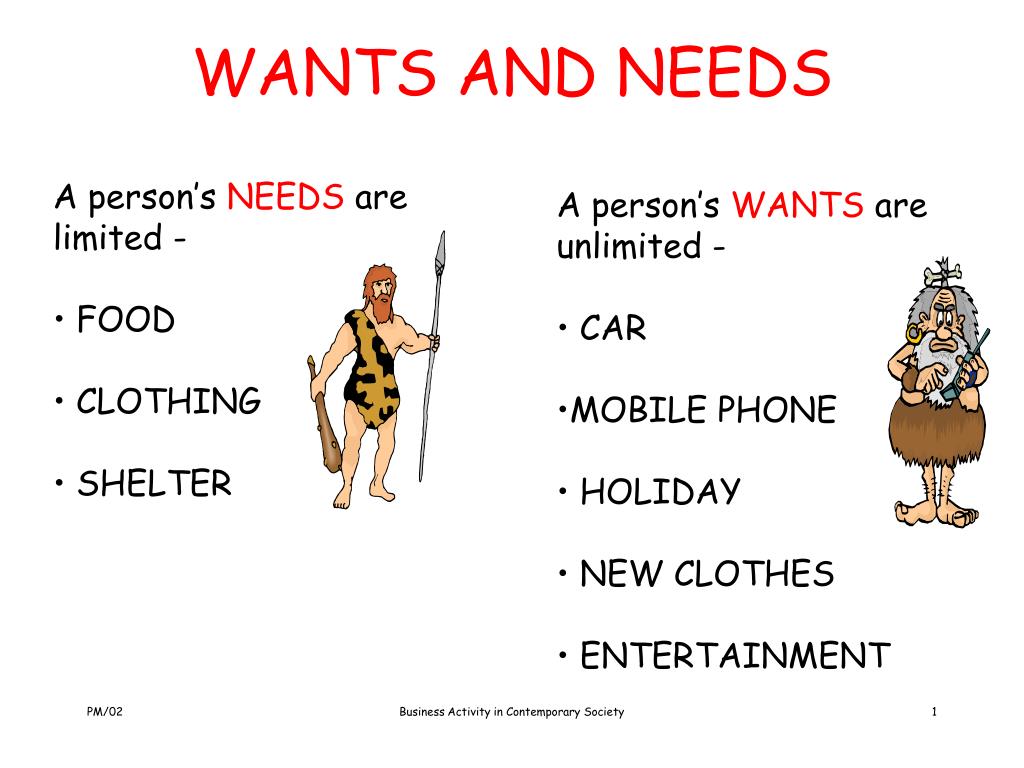
For example, a small desire such as “I want to take a trip by car,” which the customer feels is “I don’t have a problem, but I wish I could,” cannot be called a customer need.
Customers feel strongly that their problems must be solved and seek concrete solutions, such as “I have to commute by car because my workplace is not accessible by public transportation.” These desires are called customer needs.

Type of needs
Customer needs are broadly divided into two types: manifest needs and latent needs. It is no exaggeration to say that clearly distinguishing and understanding these needs is essential for efficient marketing. Below, we will explain each need using specific examples.
manifested needs
Revealed needs is a term that refers to needs that customers themselves are aware of.
For example, let’s say a customer says, “I want a water cooler.”
If you ask the customer why they want a water server, you’ll likely get a variety of answers, such as “I want to save the hassle of boiling water every time” or “I want to make milk for my baby using clean, safe water.” It will come.
In this way, the characteristics of manifested needs can be discovered just by asking customers a few questions.
You can dig deeper into the actual needs by asking the following questions.
Clerk: Why are you thinking of purchasing a water server?
Customer: Because I wanted to drink clean water every day.
Clerk: Was there a reason why you started wanting to drink clean water?
Customer: I haven’t been feeling well lately, so I talked to a friend and she suggested I try switching from water.
Clerk: If you don’t mind, could you tell me what you are concerned about about your body?
Customer: My communication isn’t very good and I’m worried about what can be done about it.
By listening to the needs of many customers, you will be able to conduct highly appealing marketing that resonates with customers.
However, it is not realistic to have repeated conversations with each customer and listen to their actual needs in detail.
There are two main ways to understand more customers’ apparent needs:
questionnaire
By conducting a survey, you can easily understand the apparent needs of many customers. In particular, conducting surveys over the internet is recommended because it allows you to collect feedback from customers who you would not be able to meet face-to-face.
Additionally, by using survey services, crowdsourcing sites, etc., the effort required to compile data can be kept to a minimum. It is also worth mentioning that it is possible to understand customers’ apparent needs by attributes such as gender, age, and region of residence.

social listening
Social listening is a research method that collects and analyzes information posted by customers on SNS such as Twitter and Instagram. It is currently attracting attention because it allows companies to learn the true feelings of their customers, which is difficult to find out even if they ask questions directly.
By conducting social listening, you can understand not only actual needs but also brand image and trends. By using social listening tools, you can more efficiently gather customers’ apparent needs.

latent needs
Latent needs is a term that refers to needs that customers are not aware of or cannot express well.
For example, let’s say a customer is building a house and says, “I want a walk-in closet so I can store a lot of clothes.”
This customer’s apparent need is “I want to store a lot of clothes.” However, even if we don’t express it in words, there are actually a variety of reasons such as “I want to store not only my clothes but also my important collections and safes,” “I want to get ready in the closet,” “I want to make it easier to organize,” etc. may have latent needs.
Providing such customers with a spacious walk-in closet to satisfy their apparent need to store a large amount of clothing will not increase customer satisfaction. In order to increase this customer’s satisfaction, it is necessary to create a walk-in closet with features that meet their latent needs, such as space for collections and safes, a full-length mirror, dressing table, and plenty of easy-to-use storage shelves.
It can be said that it is impossible to meet customer needs without understanding latent needs. Therefore, latent needs are also called true needs.
The following are the main methods for understanding latent needs:
interview
By conducting interviews, you can learn about potential needs from your customers. However, if you ask questions aimlessly, you will only be able to understand the actual needs, so you need to be creative in how you ask questions and carefully plan the content of your questions.
When conducting interviews to clarify latent needs, we recommend using a laddering method, in which you repeatedly ask about the benefits of a product or service, step by step, based on attributes, functions, emotions, and values.

customer analysis
By conducting customer analysis based on a variety of information such as customer attributes and past behavior, you can identify the latent needs of your customers. The following five main methods of customer analysis are considered effective in discovering latent needs.
| behavioral observation | Observe and analyze the behavior of multiple users in real time. |
| Behavior log analysis | Analyze user behavior history data on the web. |
| RFM analysis | Customers are ranked using three indicators: Recency (date of recent purchase), Frequency (frequency of use), and Monetary (purchase amount). |
| CTB analysis | Purchase predictions are made using three indicators: Category, Taste, and Brand. |
| segmentation analysis | Divide markets and customers into groups and perform analysis for each group. |

neuro research
Neuroresearch is a research method that measures neural activity responses, including brain waves, in real time and uncovers latent needs that customers may be unaware of. Combining this with other research methods, such as eye tracking and questionnaires, can further improve accuracy.
Difference between needs and wants
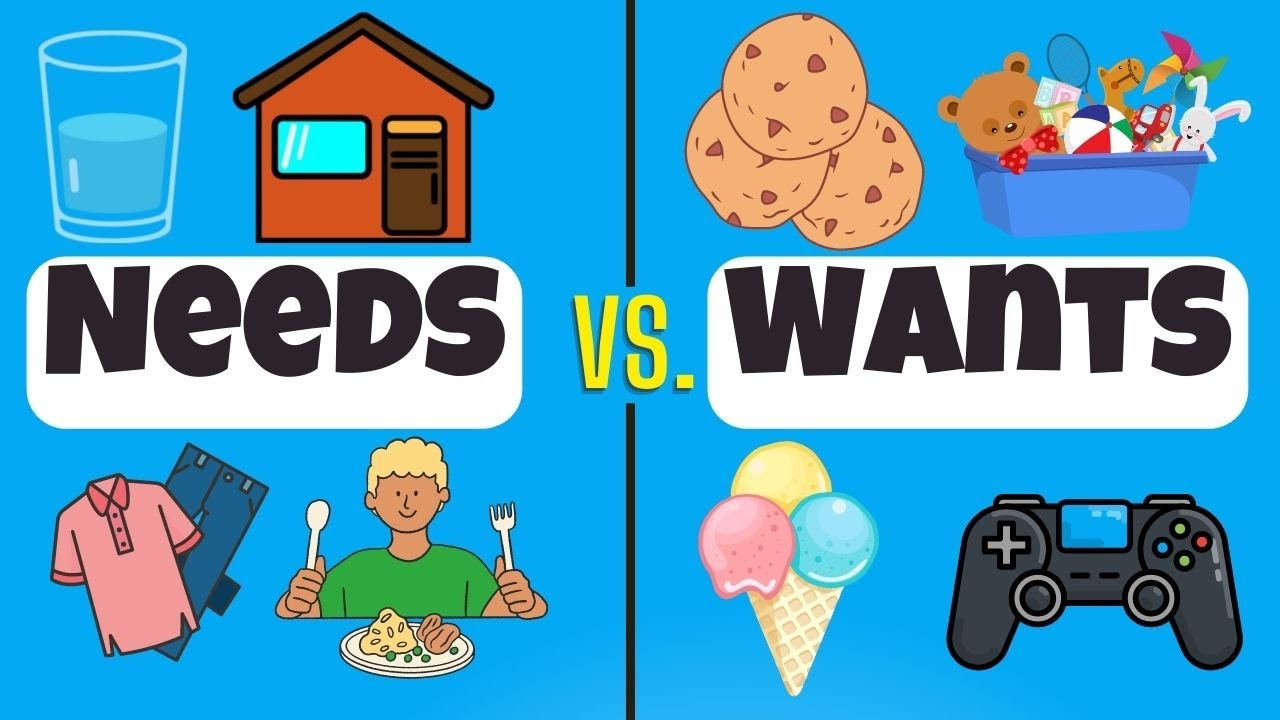
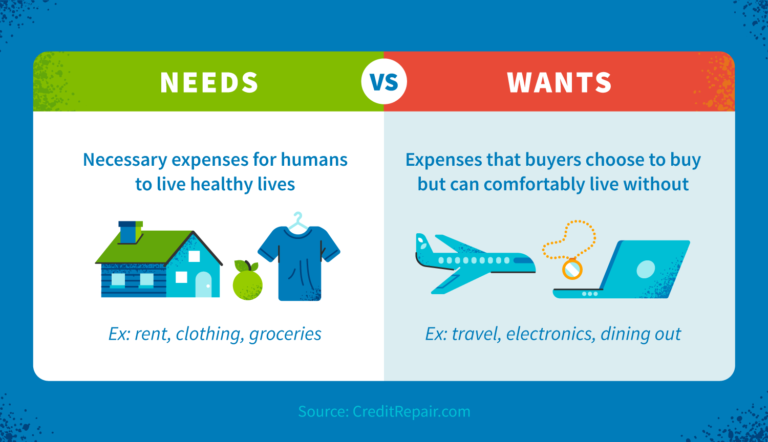
“Wants” is a concept that is often confused with needs.
Philip Kotler defines wants as “the desire to have a specific thing that satisfies a need.”
For example, let’s say a customer says, “I want to exercise at home, so I want a trampoline.” In this case, “I want to exercise at home” is a need, and “I want a trampoline” is a want.
In other words, needs and wants have a relationship between ends and means.
It is important to clearly distinguish between needs and wants.
For example, let’s say you have a customer who says, “I want to stock up on skin care products because I want to improve the condition of my skin.” This customer’s needs are “I want to improve the condition of my skin,” and their wants are “I want to have skin care products.”
Nevertheless, if you mistake the want of “I want to have skin care products” with a need, you may end up recommending skin care goods that have nothing to do with improving the condition of your skin, and you risk creating a sense of distrust among your customers. there is.
You may also become unaware of other options that could have been suggested, such as beauty appliances or supplements.
If you want to make proposals that will definitely satisfy your customers, you should hone your skills in distinguishing between needs and wants.

Difference between needs and seeds
“Seeds” is a concept that is often contrasted with needs.
Seeds is a word that refers to the technologies, ideas, strengths, etc. that a company has.
Needs-oriented means creating products and services with the aim of meeting customer needs. Although there is a risk of being exposed to price competition due to the large number of competitors, profits can be expected as the company provides products and services that are in demand.
On the other hand, being seeds-oriented means creating products and services by utilizing a company’s technology and ideas. Although it will not lead to sales if you cannot touch the heartstrings of your customers, the possibility of monopolizing the market by providing highly original products and services increases.
It may be easier to understand if you think of needs as a “customer’s perspective” and seeds as a “corporate perspective.”
In marketing, it is considered ideal to balance needs and seeds.
summary
Need is a word that refers to the desire that arises when a problem is so great that it requires a concrete solution.
Needs can be divided into two categories: manifest needs that the customer is aware of and latent needs that the customer is not aware of. In order to meet customer needs, it is essential to understand not only actual needs but also latent needs.
It is also important to distinguish between needs and wants and conduct marketing that balances needs with seeds.
Be sure to grasp the outline of the needs introduced this time and implement marketing that will lead to results.