

Recommendation in marketing is a “recommendation” function that aims to understand customer preferences and stimulate purchase intent. This is one of the strategies that has become popular in the digital marketing field. Here we will explain the benefits and mechanisms of introducing recommendations.
What is a recommendation?
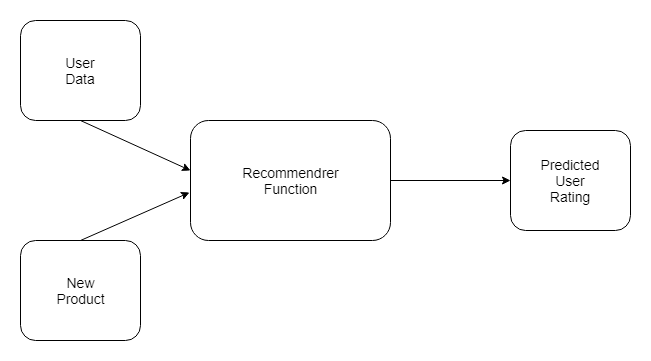
Recommendation, which is used in marketing terms, is a method of recommending products and services that may be of interest to users. We analyze the browsing history and purchase history of visitors on e-commerce sites and web pages, and suggest products and services that are likely to match the user’s preferences.
Recommendation functions display items you see on the website, such as “products recommended for you,” “people who viewed this item also viewed these items,” “recently checked items,” and “related articles.”
A feature that has become mainstream in recent years in digital marketing methods is the use of recommendation engines to implement on sites.
Advantages of introducing recommendations
・Increase unit price per customer and purchase price/acquire repeat customers
– Can make product suggestions instead of face-to-face sales staff
・You can increase the amount of time you spend on the e-commerce site
・Improved site usability
By adopting the recommendation function, you can expect the following effects. I will explain the specific contents.

Increase unit price per customer and purchase price/acquire repeat customers
You will be able to suggest products at the most appropriate time to users who are likely to purchase. The advantage is that it can be expected to attract customers by analyzing the user’s browsing history and purchase history and presenting products and services that seem to match the user’s tastes.

Can make product suggestions instead of face-to-face sales staff
Just like a salesperson at a physical store, you can suggest recommended products and related products. Since there is no difference in the level of service provided by the recommendation system based on experience or knowledge, it is easy to compare the effectiveness.

You can increase the time spent on the e-commerce site
By proposing recommended products, you can create an experience similar to window shopping. In addition, recommendations can strengthen guidance within the e-commerce site, which has the effect of extending the user’s stay time.
Improved site usability
Recommendations have the advantage of expanding product choices not only for operators but also for users. You have a better chance of finding a product that matches your tastes than finding the product you want through a spontaneous search.
Types and mechanisms of recommendations
・Collaborative filtering
・Content-based filtering
・Rule-based recommendation
・Personalized recommendations
・Hybrid recommendation
A recommendation engine is required to implement recommendations. We will explain the characteristics of the recommendation engine we use and its effects.

collaborative filtering
Collaborative filtering is an engine that uses a user’s usage history to suggest products purchased and viewed by other users with similar preferences. By recommending the products that User A has viewed or purchased to User B, who has similar preferences, it is easier to lead to a purchase.
Usage example
“People who viewed this product also viewed these products”
“People who bought this product also bought these products”
Content-based filtering
Content-based filtering is an engine that recommends similar related products based on the attributes of the product that the user is interested in. Content-based filtering sets conditions based on product information, so it can be effectively used for literature and music content services that contain a large amount of information.
Usage example
“Related items”
“We also recommend these products”
“Related articles”
“Related news”
Rule-based recommendations
A rule base is an engine that recommends products based on rules set by the site operator. This method can be effective if the target of the website is clear, such as promoting new products or limited-time products or acquiring new customers.
Usage example
“New product”
“Limited time product”
“Notable items”
Personalized recommendations
This is a method that suggests products that are assumed to be of interest to customers based on their usage history. Unlike collaborative filtering, personalized recommendations do not reference other users’ usage history. Recommending products of your choice increases purchase intent and encourages browsing within the site.
Usage example
“Recommendations for you”
Hybrid recommendation
This method combines multiple methods to improve the accuracy of recommendations. Collaborative filtering recommends related products to users with a purchase history, while first-time users are encouraged to cross the site based on content. Hybrid recommendations can be said to be effective in marketing to maximize users’ purchasing intentions.

Types of recommendation tools and how to introduce them
There are four main patterns that are common when introducing recommendation tools. We will explain the following methods from the perspectives of management scope, usage standards, cost effectiveness, etc.
Use the recommendation function of the EC system
When an EC system is introduced, it comes with a recommendation function. It is characterized by easy coordination of product information and easy rule-based operation. Although it can be operated without incurring additional costs for its recommendation function, its functionality tends to be inferior to that of specialized recommendation engines.
Use ASP service
This is a method of using an ASP (Application Service Provider) for an existing system. The advantage of an ASP service’s recommendation engine is that it can be implemented in a short period of time and at a low cost. Since it is easy to change the recommendation function due to changes in sales or operational methods, it can be said to be easier to plan in terms of costs.
Build a private DMP
There is a way to link the recommendation function with a private DMP (data management platform) that you have built in-house. Although there is an initial investment cost, you can accumulate customer information and incorporate more precise recommendation functions.
Utilizes open source recommendation engine
Open source type means that you prepare a server in your company and independently perform everything from operation to management of the recommendation engine. It allows for unlimited customization and is the best way to ensure data security, but it requires a high degree of technical skill and server space. This method is used by e-commerce sites where developers and IT engineers are stationed.
How to choose a recommendation engine
・Check whether the necessary functions are available
・Check if it can be linked with EC site operation tools
・Do a price simulation
There are three things you should check when choosing a recommendation engine. First, choose an engine that has the features you need for your site. It is also necessary to check in advance the compatibility of the operational tool and the recommendation engine you want to introduce.
Additionally, there are recommendation engines whose prices change depending on the number of accesses, so consider the operating period, functionality, and cost performance. By understanding the current e-commerce site
activity
, it becomes easier to calculate operational estimates that take into account the number of accesses.

Summary: Implement the recommendation function efficiently according to your operation.
The recommendation function has become an essential tool in digital marketing. Implementation on e-commerce sites varies depending on the type, pattern, and cost of the recommendation function. Let’s aim for efficient marketing by introducing a recommendation function suitable for the operation of your own e-commerce site. If you are a business that is having trouble with marketing measures, please feel free to contact us.