


Ansoff’s growth matrix is useful when considering future marketing strategies. By applying your company’s current situation to the framework, it becomes easier to formulate future strategies.
In this article, we will explain the basic knowledge of Ansoff’s growth matrix and specific strategies.
Basic knowledge of Ansoff’s growth matrix
First of all, what is Ansoff’s growth matrix? What kind of person is Ansoff? Let’s study basic knowledge.
in Applied Mathematics from Brown University in Rhode Island. After working at a think tank, he moved to Lockheed Aircraft Corporation and worked in the corporate planning department. He later moved to Lockheed Electronics, where he rose to become vice president.
In 1963, he became a professor at Carnegie Mellon University’s Graduate School of Industrial Management in Pennsylvania. In addition to teaching business administration at various universities, he also worked as a consultant.
The growth matrix was proposed in “Corporate Strategy Theory” published in 1965, and has also been extremely important in the world of management strategy, such as “Corporate Diversification Strategy” (1971) and “Strategic Management Theory” (1979). He has published a book.
Because of these brilliant achievements, he came to be known as the “father of business strategy.”

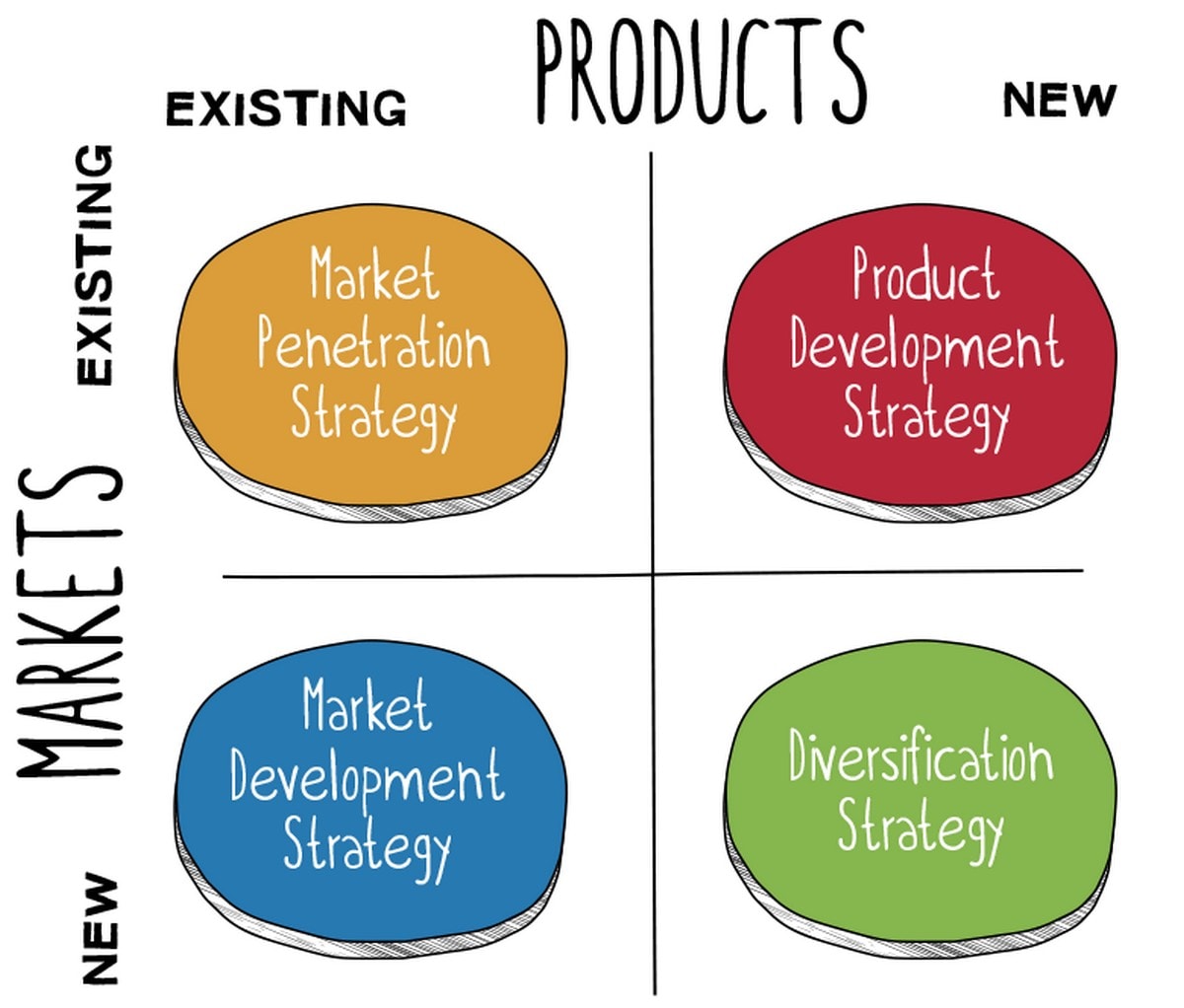
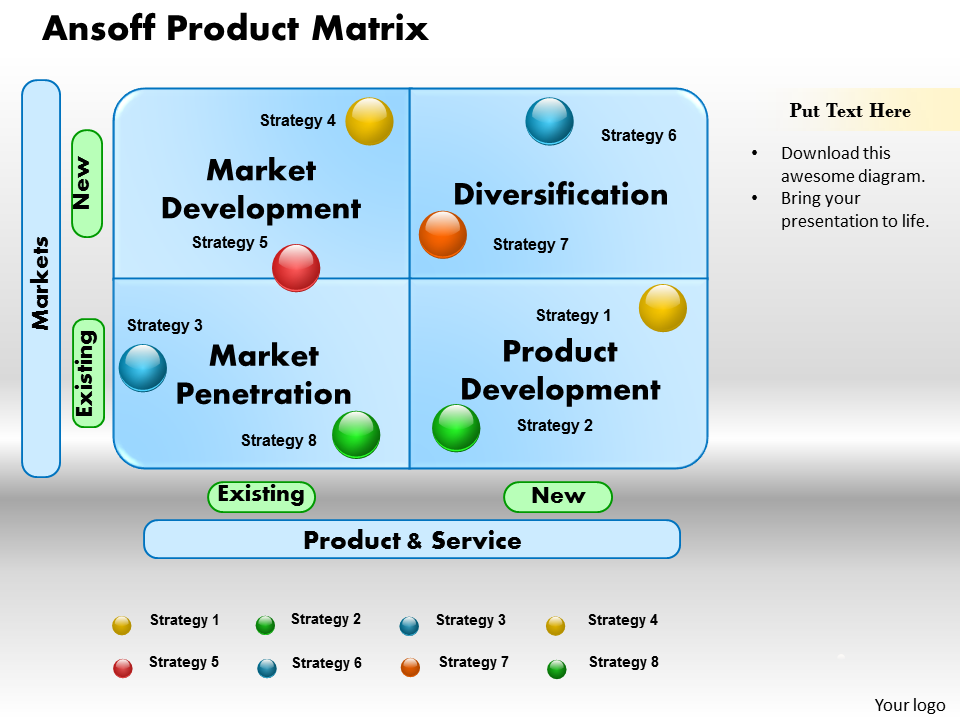
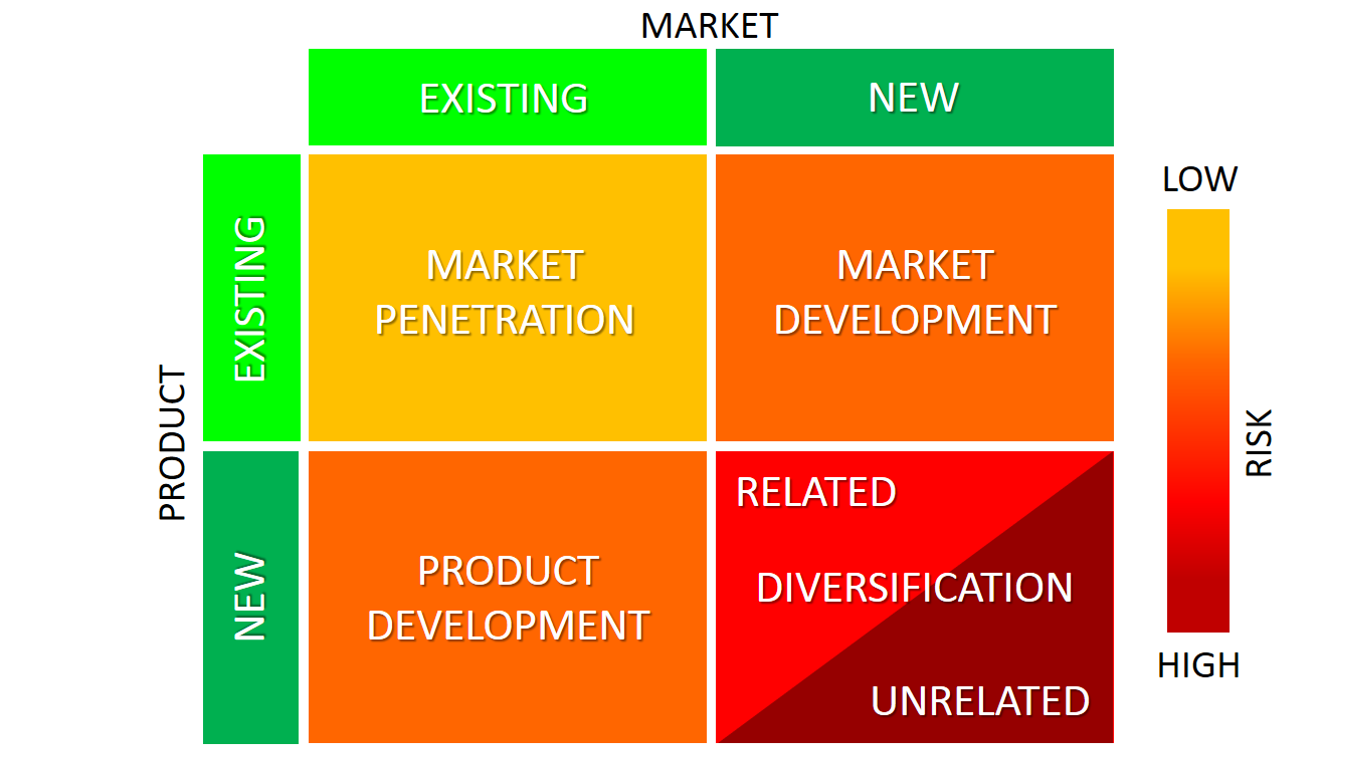
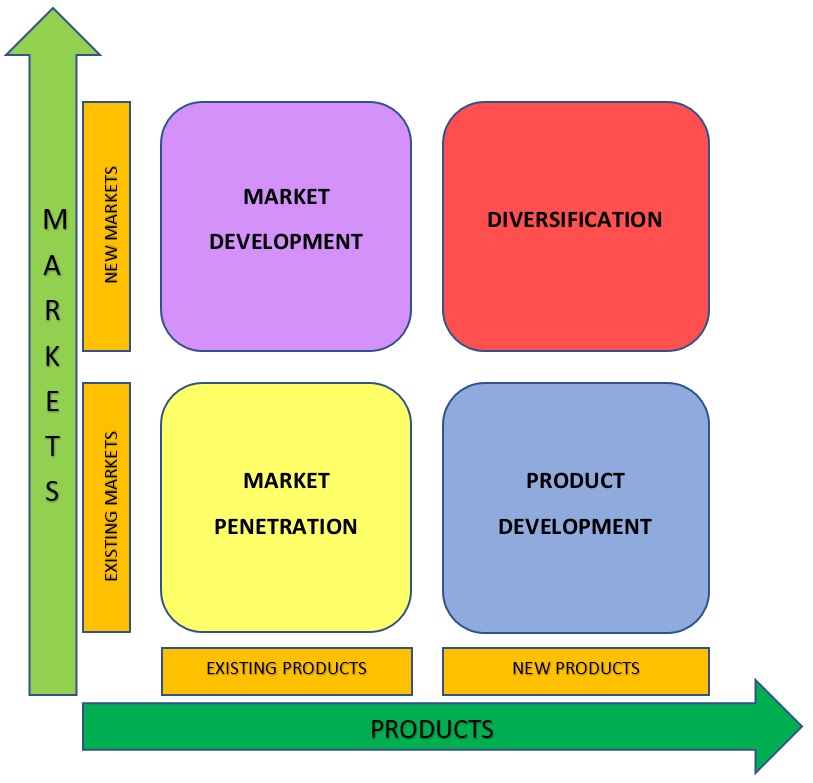
By applying your company’s current situation and future development to a framework that combines the four elements of “market”, “product”, “existing” and “new”, it becomes easier to formulate a market strategy.
For example, if a product already exists and a market has actually been established, it is necessary to adopt a strategy called “market penetration.” Conversely, if you develop an entirely new product and sell it to a new market, you can achieve growth by diversifying.
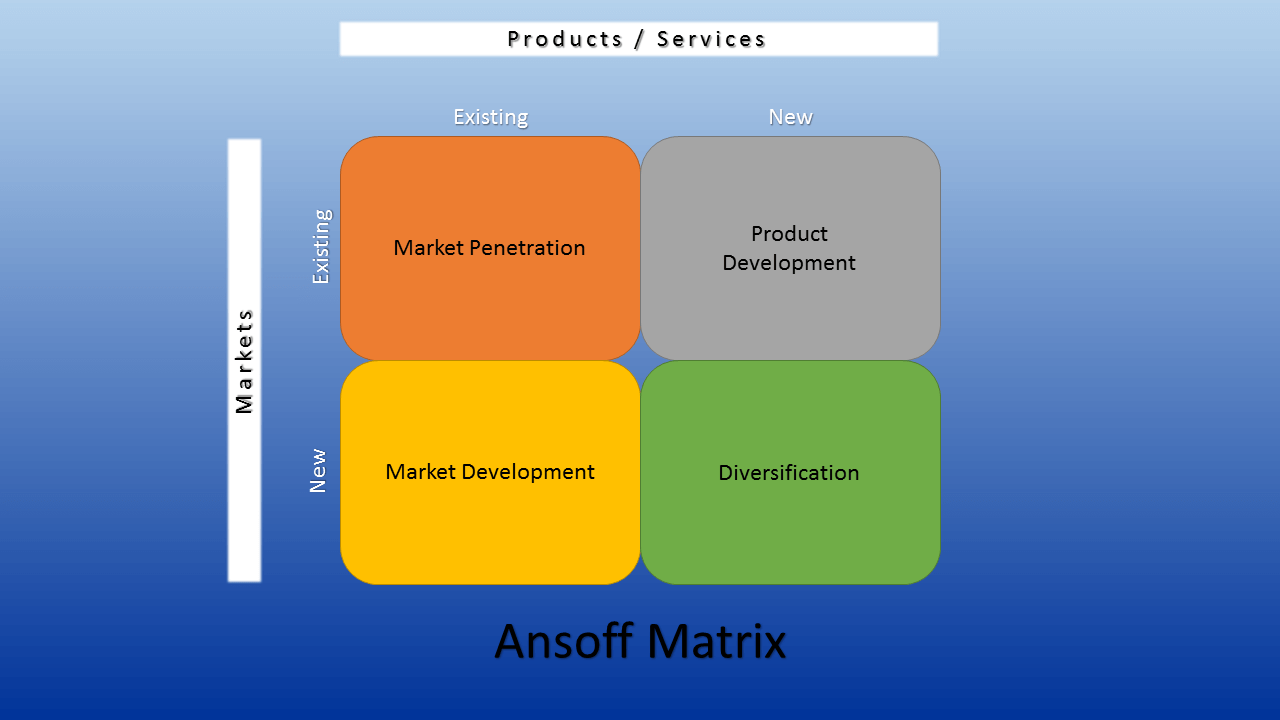
A detailed explanation of the four strategies
By using the above framework, you will be able to understand what kind of strategy your company should develop in the future. Let’s take a closer look at the content of each strategy.
- Market penetration (existing products x existing markets)
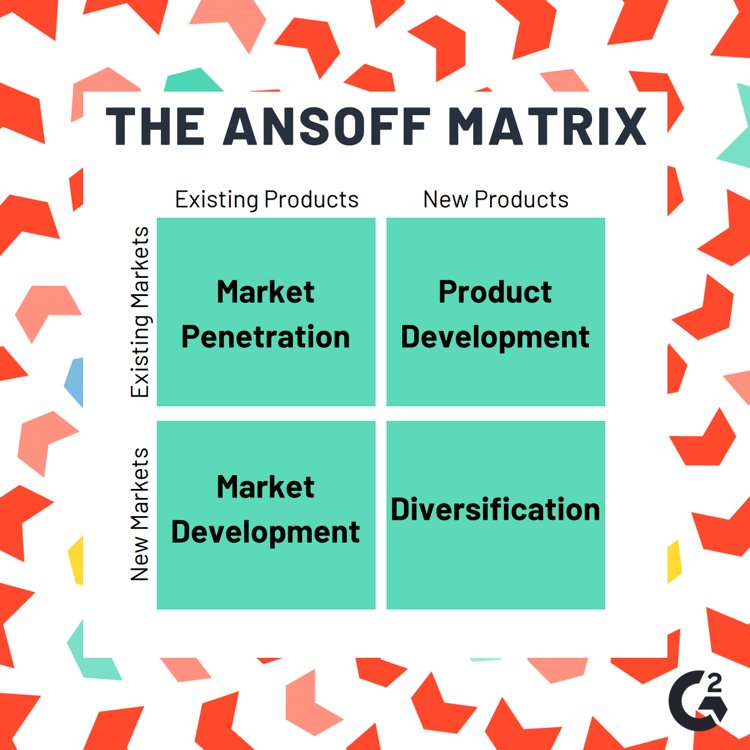
If you want to sell an already existing product into an existing market, you need to use a strategy called “market penetration.” Increase market share by increasing customer purchase frequency, number of purchases, unit price, and repeat rate.
Specifically, measures include improving the quality of existing products by improving them, improving the quality of services such as enhancing after-sales follow-up, and campaigns such as promoting replacement products and offering discounts.
As the name suggests, it is necessary to identify existing market needs and provide new value to customers. In some cases, we may need to expand our development/research departments and production lines, invest in equipment, and increase the number of employees.
By the way, sales of products related to existing products, accessories, and products with added functionality are also considered as “new products” in the growth matrix.
- New market development (existing products x new market)
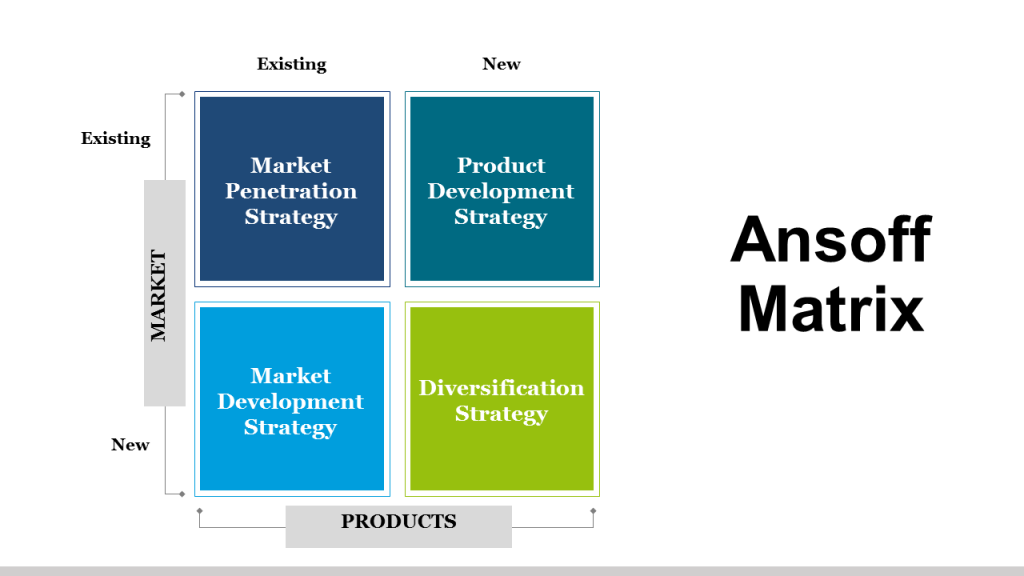
When you want to sell an existing product to a completely new market, you do “new market development.”
Even if the existing market is saturated or the competition is too strong, it is possible to greatly increase profits by developing a new market, but if you judge the market incorrectly, there is also the risk of not selling at all and incurring losses.
Specifically, measures include selling to other regions and overseas, and approaching a different customer base (customer industry, type of business, attributes, etc.).
This is the most difficult of the four, as it requires thorough market research and product development, and there is no guarantee that the product will sell, but if you are successful, you may be able to significantly expand your business.
The old ways of doing things won’t work, so you’ll need to approach it as if you were starting a new company or business from scratch. In fact, many companies engage in “diversification,” such as establishing a subsidiary and equipping it with specialized equipment and specialized staff, or merging with a company that has knowledge of the business they are trying to conduct through M&A.
Let’s use the growth matrix
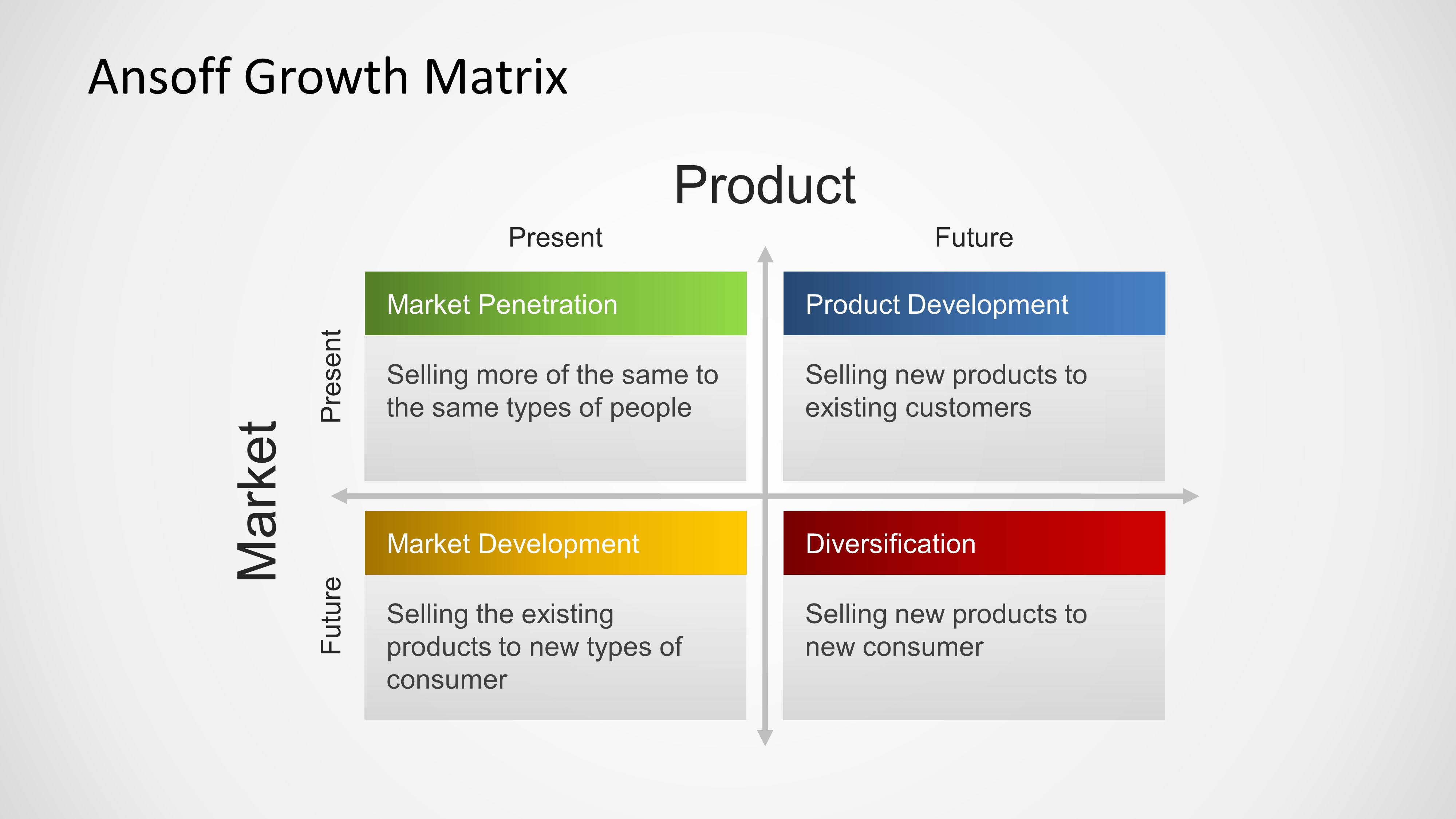
Ansoff’s Growth Matrix is an extremely useful tool for formulating future business strategies. Once again, we will post the framework with specific measures listed, so you can see where your company stands. Please try and think about it.

summary
◆Igor Ansoff, a Russian mathematician who created the growth matrix, is called the “father of growth strategy.”
◆The growth matrix has four axes: “market”, “product”, “existing” and “new”
◆The strategy a company should take is “market penetration,” “new product development,” “new market development,” or “diversification.”
◆By applying your company’s situation to the growth matrix, you can clarify the strategies your company should take in the future.