
One of the business strategies is “cost leadership strategy.” Cost leadership strategy is a strategy that establishes a competitive advantage by providing products and services at lower prices than competitors, or by reducing costs and increasing profit margins.
In this article, we will explain in detail the specific concept of cost leadership strategy, how it differs from other business strategies, and examples of corporate success.
What is cost leadership strategy?
Cost leadership is a business strategy proposed by
Michael Porter
, a professor at Harvard University and a world-renowned economist. Here, we will explain each of the following.
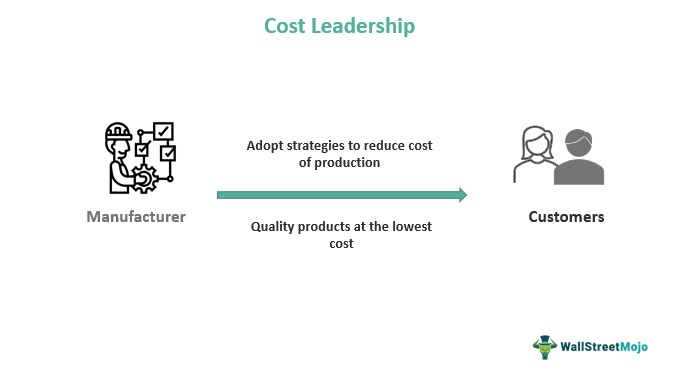
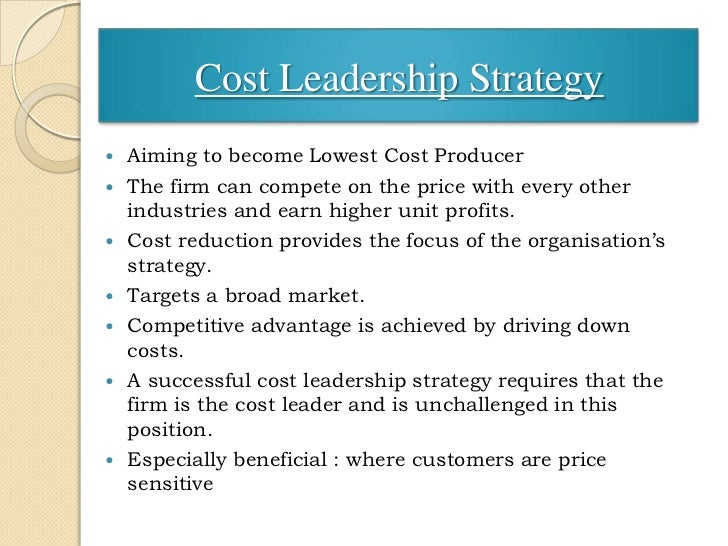
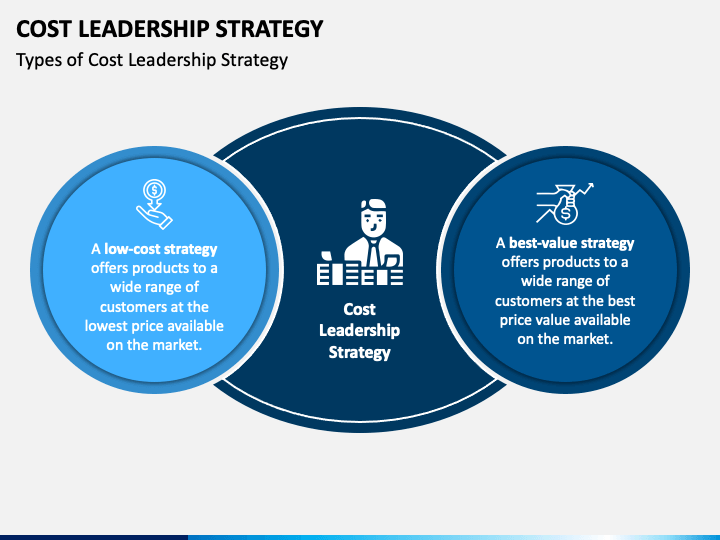
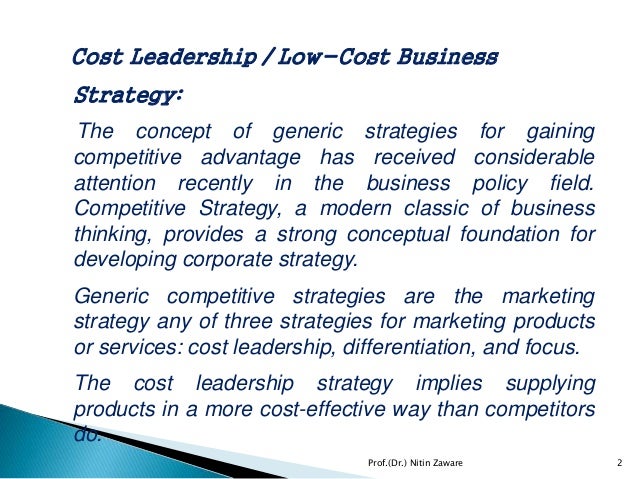
A cost leadership strategy is a strategy that establishes a competitive advantage by providing products or services at a lower price than competitors, or by reducing costs and increasing profit margins.
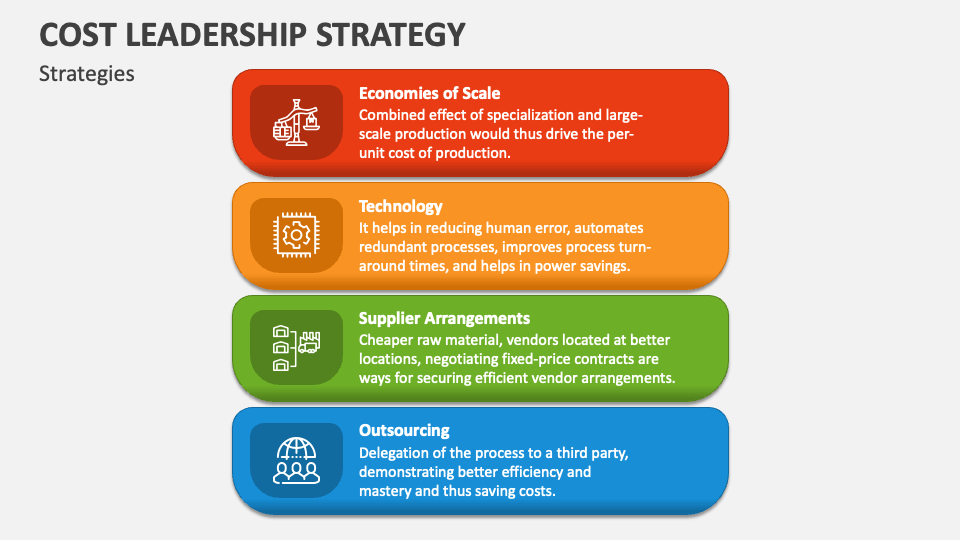
By implementing various cost reductions such as “lowering unit prices through mass production (volume discounts),” “improving production process efficiency,” “reducing material costs,” “direct purchasing,” and “reducing labor costs and fixed costs,” We will be able to provide products or services of the same quality as other companies at a lower price. Even if you do not lower prices, lowering costs will increase profit margins.
Background to the importance of cost leadership strategy
As of 2023, 43 years have passed since the cost leadership strategy was proposed by Michael Porter in 1980. However, it is still a business strategy that is considered important by many companies, and many companies are still implementing it today. One of the reasons for this is recent “changes in the market.”
For example, the securities industry is becoming increasingly commoditized, and competition among online securities companies to lower commissions is intensifying. Against this background, cost leadership strategy has become the cornerstone of business strategy in the securities industry.
This type of price competition occurs in all markets, and a cost leadership strategy is considered to be a business strategy that can flexibly respond to such market changes.

Difference from bargain sale
Cost leadership strategies and “selling low” are similar but different things. Bargaining is simply a measure to lower the selling price.
Measures such as temporarily lowering prices by holding a sale to dispose of inventory, opening commemorative sales or closing sales, and lowering prices without regard to profit margins in order to temporarily attract customers can be said to be “cheap selling”.
On the other hand, a cost leadership strategy is a strategy that builds a system to reduce costs and then lowers prices or increases profit margins.
Difference between “differentiation strategy” and “concentration strategy”
In addition to the “cost leadership strategy,” Mr. Michael also advocates “differentiation strategy” and “concentration strategy.” By choosing one of these three strategies, a company is said to be able to establish an advantage over other companies.
A differentiation strategy is the exact opposite of a cost leadership strategy. In other words, they provide products and services that are high-priced, high-quality, or rare. Luxury brands and high-end restaurants use this differentiation strategy.
A concentration strategy is a strategy that focuses on a small market and releases products and services in a concentrated manner.
Secure your own market by offering something that meets a niche demand, rather than offering something that will appeal to everyone.
| basic idea | market size | cost price | Sales price | |
| cost leadership strategy | Provide products and services at lower prices than competitors | large | low | low |
| differentiation strategy | Provide products and services with high added value at high prices | Medium | high | high |
| focused strategy | Provide products and services that meet niche demands | small | low to high | low to high |
To summarize, the differences between them are as shown in the diagram above. A company’s basic strategies can be said to be of three types: cost leadership strategy, differentiation strategy, and concentration strategy.
Difference from “Price Leadership”
Cost leadership strategy is a business strategy primarily aimed at gaining a competitive advantage in an industry by providing goods or services at lower prices than competitors.
On the other hand, there is also an industry term called “Price Leadership”. Price leader means “price leader” in Japanese, and refers to a leading company in an oligopolistic industry that has a large influence on other companies when determining the price of products and services. .
The price leader has the largest market share in the industry, and its distribution channels overwhelm other companies. The price determined by such a price leader becomes the de facto standard price.
The second largest companies after the price leader are called “price followers,” and they determine the prices of products and services based on the prices determined by the price leader.
In this way, price leadership is when a specific company leads the price within an industry, but cost leadership does not mean that a specific company determines the price within the market. The difference from price leadership is that it is a business strategy that considers cost as the “leadership = top priority.”
Benefits and risks of cost leadership strategies
Next, consider the benefits and risks of adopting a cost leadership strategy.
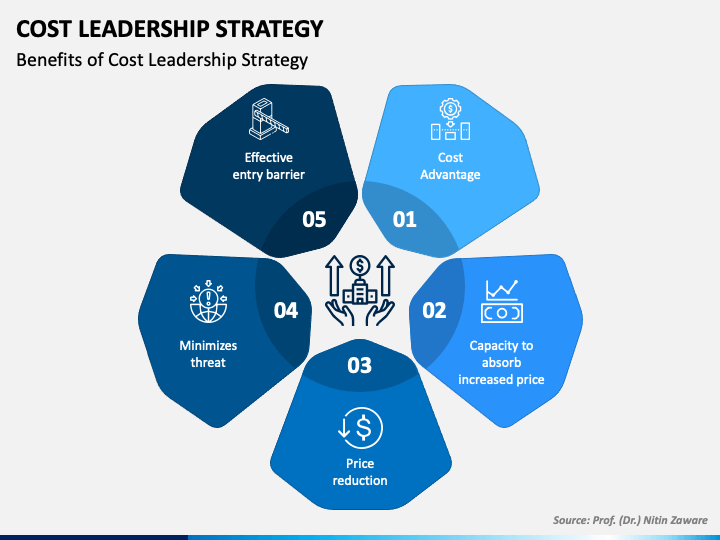
Benefits of cost leadership strategy
“Cheap” is a big attraction for customers. Everyone wants to buy a good product at a low price, and price is a major deciding factor.
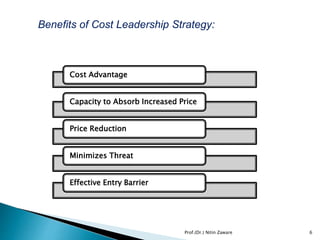
If you adopt a cost leadership strategy and lower your selling prices than your competitors, you can expect to attract more customers. We can also expect an improvement in profit margins.
If you sell something with a cost of 80 yen for 100 yen, your profit margin is 20%. For example, if we can reduce the cost to 70 yen by using cheaper materials, we can increase profits by 10%.
Risks of cost leadership strategy
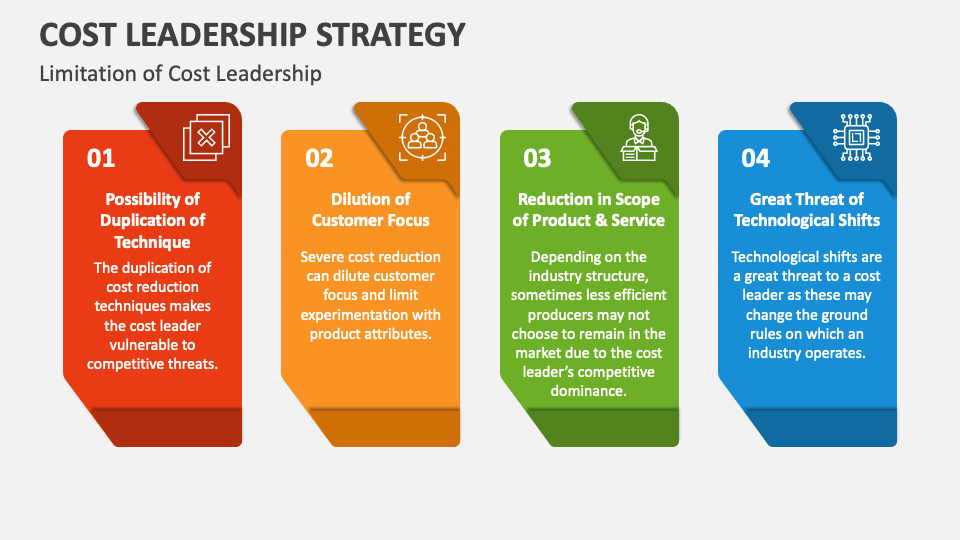
Cost leadership strategies also have risks. In many cases, lowering prices causes competitors to follow suit and lower prices, leading to price competition. If you lower your prices too much, you may find yourself in a situation where you are unable to make a profit and are unable to raise prices.
In addition, there is a risk that if the cost leadership strategy is pursued excessively, resulting in extremely low prices or poor quality, a company’s image of being “cheap” or “cheap but with decent quality” will become entrenched. Masu. A cost leadership strategy that goes too far can end up strangling your company.
How to implement a cost leadership strategy
Implementing a cost leadership strategy involves the following steps:
1. Understand and evaluate your company’s current situation
2. Research your competitors
3. Review raw material costs
4. Review the production process
5. Review distribution channels
6. Determine the price of your products and services
1.Understand and evaluate your company’s current situation
Evaluate how much margin your company currently has based on the gross profit of the products and services it handles.
2. Research your competitors
The presence of competitors in the market cannot be ignored, so research what prices they are offering their products and services.
3. Review raw material costs
If you provide products in-house, review raw material costs, and if you are in the service industry, review outsourcing costs.
4.Review the production process
Review the production process to see if there are any unnecessary steps. Basically, the longer the production process, the higher the working capital will be.
5. Review distribution channels
Distribution channel refers to the route that a product takes from your company to its customers. The more intermediaries there are during this time, the higher the distribution costs will be. If there are distribution channels that generate unnecessary costs, we will reduce them.
6. Determine the price of your products and services
We decide the price of our company’s products and services by comprehensively considering 1 to 5.
Key points of cost leadership strategy
The main points for implementing a successful cost leadership strategy are:
Invent ways to procure raw materials
In a cost leadership strategy, the first consideration is to reduce raw material costs. Reducing the cost of raw materials that must be procured each time a product is manufactured is essential for long-term business continuity.
To achieve this, for example, it will be necessary to “own your own farm,” “contract directly with producers,” and “search for alternative products.”
Expand production scale
By expanding the scale of production and increasing the amount produced at once, the effect of economies of scale is created. By routinizing or mechanizing the production of the same product and producing large quantities at once, it leads to a reduction in man-hours. Since products can be manufactured in a shorter process than currently, both work efficiency and work speed will be increased, and costs can be expected to be reduced.
Utilizing our own unique technology
If your company has unique technology that your competitors cannot imitate, it will help you establish your superiority. By acquiring intellectual property rights for your own proprietary technology, it is possible to prevent competitors from using your technology for a certain period of time.
Also, if you obtain a patent, you will be able to sell the technology. These proprietary technologies can become an asset later on.
Review working capital
It is difficult to reduce fixed costs such as water, gas, electricity, and personnel costs, but you can reduce your working capital even a little by, for example, replacing your air conditioner with an energy-saving one or signing a lease agreement for machinery and equipment. Let’s explore whether or not.
However, lowering wages or lowering the quality of benefits in order to reduce personnel costs can increase employee dissatisfaction and cause a decline in employee engagement. This can lead to a decline in business performance and, ultimately, to a decline in corporate performance.
To avoid such an outcome, it is important to carefully consider the reduction of personnel costs and to do so while giving priority to current employees.
Improve operational efficiency
Improving operational efficiency will also be necessary for cost leadership strategies in the long term. Improving work efficiency and shortening employee working hours can also lead to reductions in costs such as overtime pay.
Additionally, if you can reduce man-hours by improving operational efficiency, you can also reduce costs accordingly. One way to do this is to actively utilize IT such as business applications and introduce AI robots to make work routine.
Success stories of companies that have implemented cost leadership strategies
Let’s take a look at some examples of businesses that have successfully adopted cost leadership strategies.
McDonald’s example
McDonald’s can be said to be a typical company that has successfully implemented a cost leadership strategy. Thanks to our logistics system and thorough documentation, we are able to achieve overwhelmingly lower prices than competitors such as Mos Burger and Burger King.
However, in the past, there have been times when cost leadership strategies have gone too far, resulting in excessive price competition and poor performance. Currently, while adopting a cost leadership strategy, we are developing attractive products and increasing the added value of our services to develop our business with a good balance between cost and quality.
Saizeriya example
Saizeriya is another restaurant chain that has achieved success through its cost leadership strategy. We have achieved cost reductions through thorough quality control and streamlining distribution and operations.
By offering Italian food, which was previously difficult to find, at an overwhelmingly low price, we have established the image that “Saizeriya = cheap” and have succeeded in attracting young people, including students.
Sukiya example
Sukiya is a restaurant chain that practices cost leadership strategies from a different angle than McDonald’s and Saizeriya. We have been able to offer low-priced gyudon by purchasing ingredients in large quantities, operating with a small number of employees, and opening multiple stores to keep costs down.
However, for a time, there was a problem of people quitting part-time jobs due to deteriorating working conditions such as being robbed by one-off jobs and poor working conditions such as low wages and overwork.
Therefore, while maintaining a cost leadership strategy, we are now shifting to a differentiation strategy that improves quality and raises prices.
Uniqlo example
Uniqlo’s appeal is that you can buy high-quality clothing at affordable prices. The secret to achieving high cost performance lies in the system called SPA (Manufacturing and Retailing).
UNIQLO handles all product development, manufacturing, and sales in-house. Since there are no intermediaries such as wholesalers, there are no margins, making efficient distribution possible. The floating costs are returned as selling prices.
Nitori example
Nitori, like Uniqlo, uses a cost leadership strategy using SPA. We were the first to introduce the SPA method in the furniture industry, and can be called a pioneer.
We have been successful in attracting customers by emphasizing the catchphrase “It’s more than you asked for,” and by effectively promoting our excellent cost performance.
Amazon example
Amazon, which operates a mail order business on a global scale, has succeeded in reducing costs by locating distribution centers in the suburbs where land is cheap.
Amazon also has strong distribution channels, and handles everything from inventory management to packaging and shipping within its own warehouses, except for products listed by third parties. This one-stop system also contributes to the success of our cost leadership strategy.
Softbank example
SoftBank has successfully implemented a cost leadership strategy by offering low prices and discount plans targeting students.
In addition, in the broadband business that we had been conducting before that, we were able to achieve overwhelmingly low prices by reducing maintenance and advertising costs for ADSL lines.
HIS example
HIS has been selling low-cost airline tickets since its founding, targeting a customer base with
the need
to travel at low prices. At the time, air tickets to overseas destinations were extremely expensive, so HIS sought ways to offer them at reasonable prices.
This cost leadership strategy was successful, and a sales channel of providing low-cost airline tickets was established.
summary
◆Cost leadership strategy is a strategy to provide products and services at lower prices than competitors, or to increase profit margins.
◆ By adopting one of the following: “Cost Leadership Strategy”, “Differentiation Strategy”, or “Concentration Strategy”, you can establish an advantage over your competitors.
◆In cost leadership strategy, it is important to build a system to suppress costs.
◆An excessive cost leadership strategy carries the risk of causing price competition, a decline in the quality of products and services, and a deterioration of the company’s image.
◆ Examples of companies that have successfully introduced cost leadership strategies include McDonald’s, Uniqlo, and Amazon.