

DX (digital transformation) is the use of digital technology to transform operations and business models and increase corporate value. We will explain why DX is attracting attention, the current state of DX in Japan, and how to proceed with DX. We will also introduce specific examples of DX in companies.
What is DX (digital transformation)?
DX (digital transformation) refers to efforts to transform operations and business models using digital technology and increase corporate value.
Transformation means “transformation” or “transformation,” so the direct translation of DX is “digital transformation.” However, in Japan, it is recognized as a term used in business, so it generally refers to “digital transformation in the business field.”
The Ministry of Economy, Trade and Industry is strongly calling on companies to promote DX. It is important to know about DX in order to ride the rapidly changing business trends and survive as a company in the next era.
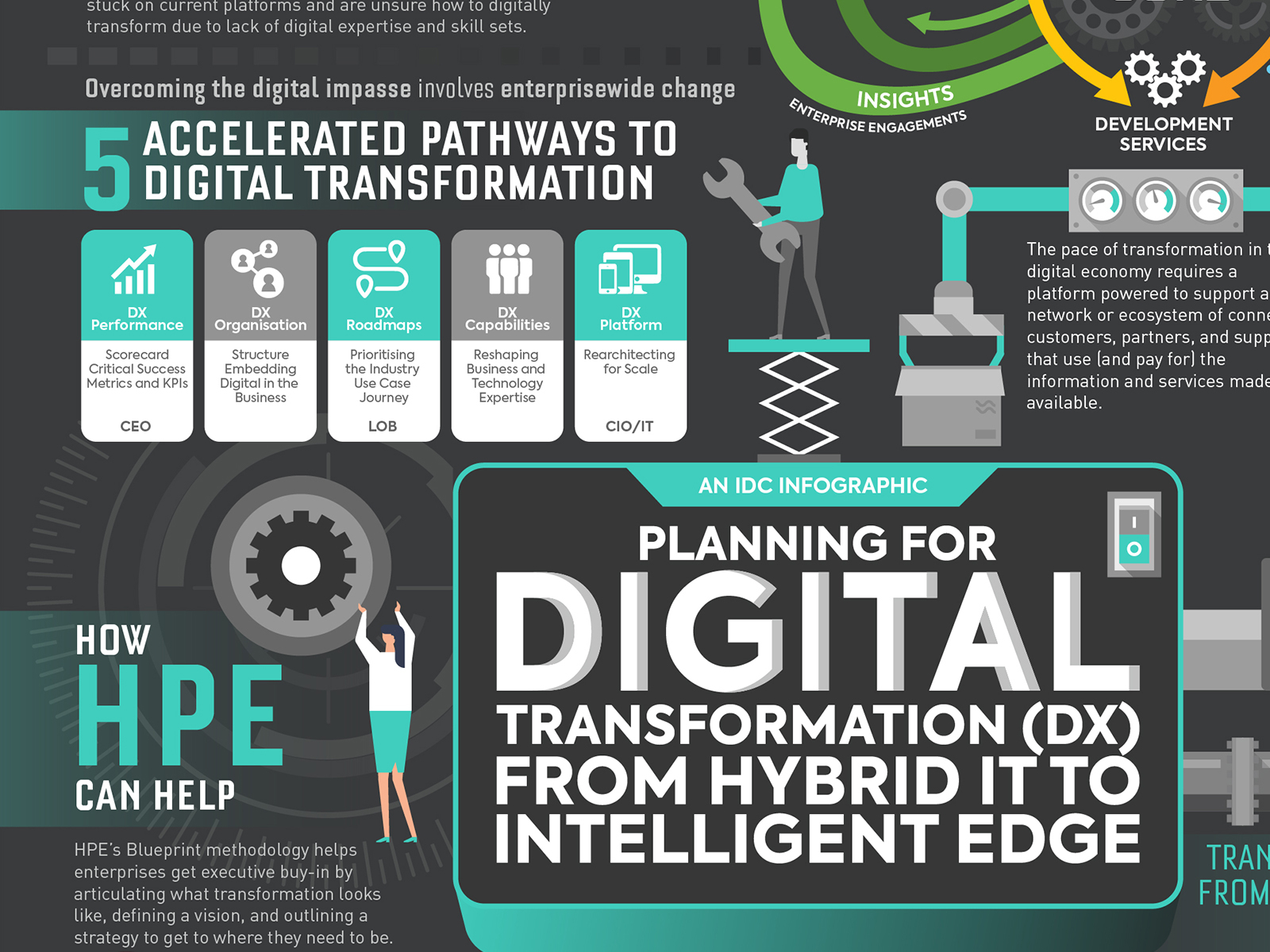
Meaning and definition of DX
The meaning and definition of DX is slightly different in Europe, America and Japan. Let’s take a look at what meaning each is used in.
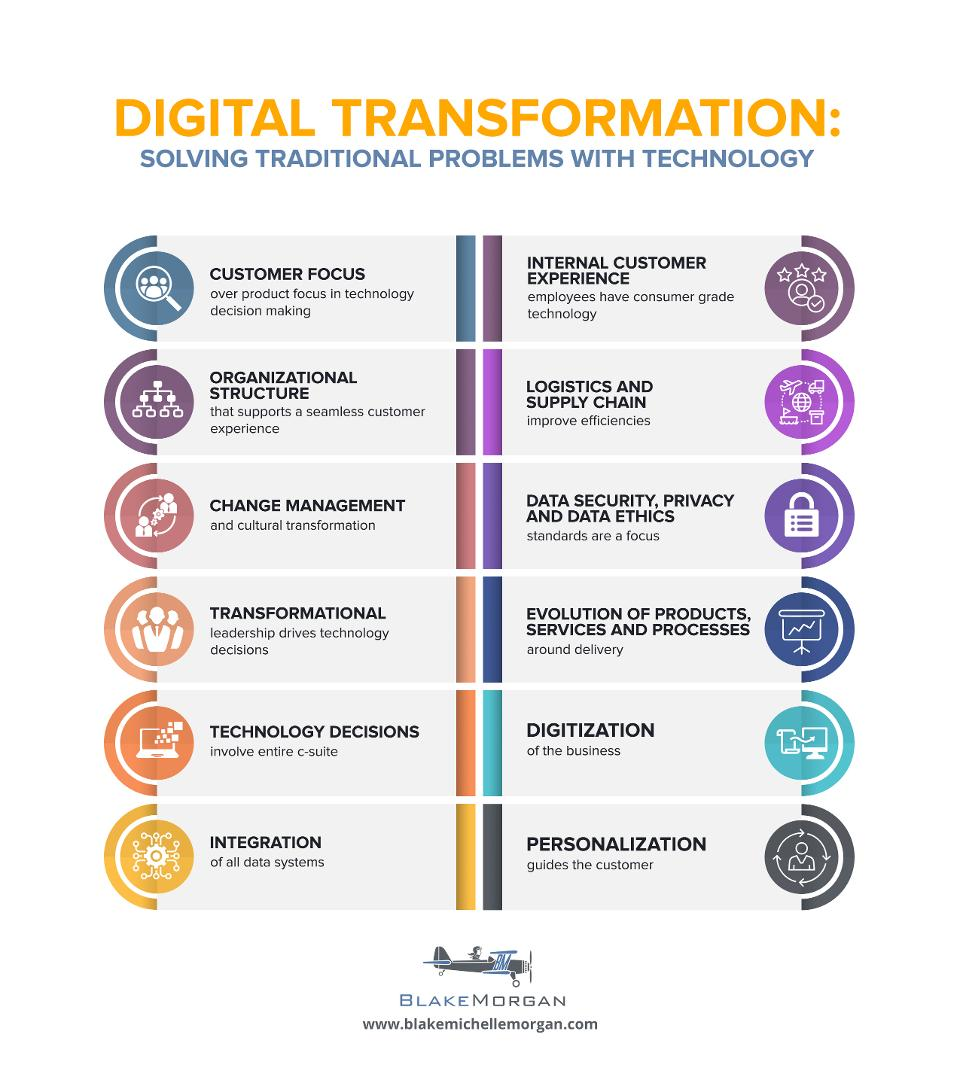
Definition of DX in Europe and America
DX (Digital Transformation) is a term proposed by Professor Eric Stoltermann of Umeå University in Sweden in 2004. Originally, the term meant “the penetration of IT will change people’s lives for the better in every aspect,” and it referred to changes in society as a whole, not just business.
At first, it was only proposed as an academic term, but as IT has come to be used in various business situations (social media and digital devices), DX has also come to be used as a business term. Now it looks like this. In the 2010s, DX began to be recognized as a business term itself, rather than a term that was also used as a business term.
Furthermore, DX is not necessarily defined as something that brings about positive change. Digital Disruption refers to disruptive change caused by digital technology, and can also mean revolutionary changes that fundamentally overturn existing values and systems.

Definition of DX in Japan
In Japan, the term DX has become popular since the Ministry of Economy, Trade and Industry released the DX Report in 2018. The Ministry of Economy, Trade and Industry defines DX as follows.
Companies are responding to rapid changes in the business environment, leveraging data and digital technology to transform products, services, and business models based on the needs of customers and society.・Transforming the culture and establishing a competitive advantage
In Japan, DX is recognized as a change limited to business. It is important for companies to deepen their understanding of DX, as it is possible to establish superiority by working on DX.
Reference:
Ministry of Economy, Trade and Industry “Digital Governance Code 2.0”
Differences between DX and IT and digitization
There are two words that are often confused with DX:
Let’s take a look at the differences between each word and DX.
Difference between DX and IT
IT (Information Technology) is a general term for computer and network technology. While DX refers to changing the very structure of society, organizations, and business, IT refers to using network technology to improve work efficiency and productivity without changing the structure of business processes. Masu.
Additionally, IT can be considered a part of DX. Although IT is an essential element to realize DX, implementing IT does not necessarily make DX a reality. It is necessary to clarify what kind of change you are seeking through IT and then proceed with the introduction of IT to realize DX.
Difference between DX and digitization
Digitization is the conversion of visible objects into digital form.
For example, replacing paper invoices with electronic invoices and replacing time card-based attendance management with apps are all examples of digitization. While DX refers to digitalization that aims to create corporate value on a company-wide scale, digitization refers to the digitization of individual objects such as tools and equipment.
Note that digitalization, which is often confused with digitization, refers to digitalization limited to specific processes. For example, converting a business model that sells cars to one that sells car sharing rights is an example of digitalization. Digitalization refers to the transformation of business models using digital technology.

Background of DX attracting attention and challenges faced by companies
DX has started to attract attention in Japan as the Ministry of Economy, Trade and Industry announced the “DX Report” in 2018. However, rather than DX attracting attention temporarily in 2018, it is thought that it will receive even more attention in the 2020s.
Let’s take a look at the background to why DX has become increasingly popular, the current state of DX in Japanese companies, and the challenges faced by companies.
Ministry of Economy, Trade and Industry warns of “2025 cliff”
The DX report released by the Ministry of Economy, Trade and Industry in 2018 explained the necessity of DX using the phrase “2025 cliff.” The 2025 cliff means that if DX conversion is not realized, the expected economic loss will be up to 12 trillion yen per year from 2025 onwards, and the damage to each company and the Japanese economy itself will be concretely estimated. It is expressed in numbers.
The DX report lists the following factors as obstacles to DX.
Reference:
Ministry of Economy, Trade and Industry “DX Report”
Aging of existing systems
One of the factors leading to the 2025 cliff is the aging of existing systems. If your system is old and has insufficient performance and functionality for DX, you will need to completely update the system. However, replacing the entire system not only costs a considerable amount of money, but also may require changes to business procedures and operations themselves.
The aging systems that many companies have are an impediment to promoting DX. Additionally, systems are often implemented in each department, making it difficult to utilize them across the company.
DX talent shortage
To advance DX, we need a large number of IT-savvy human resources. However, as DX is an issue that almost all companies must tackle, it is difficult to secure human resources who are familiar with IT, and some companies are unable to proceed with DX as desired due to a lack of human resources.
In addition to IT implementation, human resources are also needed to operate and maintain aging systems. The lack of IT human resources is thought to be one of the reasons hindering the promotion of DX.

Current status of DX promotion in Japanese companies
The Ministry of Economy, Trade and Industry emphasizes the importance of promoting DX and positions it as an issue that all companies must address. Is DX promotion actually being realized in Japanese companies? I will explain the current situation.
The percentage of companies working on DX is on the rise
According to the DX White Paper 2023, as of the 2021 survey, the percentage of domestic companies working on DX was 55.8%, but it had increased to 69.3% in the 2022 survey.
However, the issue is that the percentage of companies working on company-wide strategies is low at 68.1% in the United States and 54.2% in Japan as of fiscal 2022. Furthermore, among companies that answered that they are working on company-wide initiatives, only 26.9% of companies are working on company-wide initiatives based on company-wide strategies, and 27.3% of companies are implementing initiatives in some departments based on company-wide strategies. Only working on DX.
| Status of DX initiatives | Japan | US | ||
| 2022 | 2021 | 2022 | 2021 | |
| We are working on a company-wide basis based on company-wide strategies. | 26.9% | 21.7% | 35.5% | 36.6% |
| Efforts are being made in some departments based on company-wide strategies. | 27.3% | 23.6% | 32.6% | 35.0% |
| Each department is working individually | 15.1% | 10.5% | 9.8% | 7.6% |
| not working on it | 29.1% | 33.9% | 10.6% | 14.1% |
| Our main focus has been on digital business since our founding. | 0.4% | 0.7% | 3.9% | 2.2% |
| I don’t know | 1.3% | 9.6% | 7.5% | 4.6% |
Reference:
Information-technology Promotion Agency “DX White Paper 2023”
Approximately 10% of all small and medium-sized enterprises engage in DX
Looking at DX efforts by company size, about 40% of large companies are working on DX promotion, while only about 10% of small and medium-sized companies are working on DX promotion. As the size of the company decreases, the percentage of companies that are making company-wide efforts based on company-wide strategies decreases, and on the contrary, the percentage of companies responding that they are not making any efforts increases.
| Status of DX initiatives | 100 people or less | 101-300 people | 301-1,000 people | More than 1,001 people |
| We are working on a company-wide basis based on company-wide strategies. | 11.4% | 17.9% | 25.6% | 50.0% |
| Efforts are being made in some departments based on the company-wide strategy. | 14.8% | 28.5% | 37.6% | 30.5% |
| Each department is working individually | 13.4% | 14.6% | 18.8% | 14.3% |
| not working on it | 57.7% | 38.2% | 14.5% | 5.2% |
| Our main focus has been on digital business since our founding. | 0.7% | 0.8% | − | − |
| I don’t know | 2.0% | − | 3.4% | − |
An increasing number of companies are experiencing a shortage of DX human resources.
The percentage of companies that feel there is a “significant shortage” of DX human resources was 30.6% in FY2021, but this is an increasing trend to 49.6% in FY2022. There is a big difference from the situation in the United States, where the majority of companies answered that there was “no surplus or shortage.”
| Securing the amount of DX human resources | Japan | US | ||
| 2022 | 2021 | 2022 | 2021 | |
| somewhat excessive | 1.3% | 1.3% | 18.3% | 12.0% |
| There is no excess or deficiency | 9.6% | 10.4% | 55.1% | 40.4% |
| somewhat lacking | 33.9% | 54.2% | 19.3% | 25.7% |
| significantly lacking | 49.6% | 30.6% | 3.3% | 20.9% |
| I don’t know | 5.6% | 3.4% | 4.0% | 1.0% |
In-house training is the main way to acquire DX human resources
When it comes to efforts to acquire and secure DX human resources, in Japan, the highest rate of response was “in-house human resource development” (54.9%). We are also seeing the use of existing human resources, such as transfers from other departments.
| Acquire and secure human resources to promote DX | Japan | US |
| Contracts with outside experts (consultants, etc.) | 37.1% | 35.2% |
| Contracts with companies and individuals with specific technology | 28.3% | 42.5% |
| External recruitment (mid-career recruitment) | 44.3% | 35.9% |
| Developing internal human resources | 54.9% | 42.5% |
| Utilize existing human resources (including transfers from other departments) | 47.7% | 32.9% |
| Referral recruitment (referring friends and acquaintances from your company’s employees) | 8.5% | 24.9% |
| Not securing human resources | 11.5% | 2.7% |

Five points that will lead to successful DX promotion
In order to overcome the challenges that hinder DX transformation and lead Japan’s DX promotion to success, it is necessary to implement the following points.
1. Digitization of company information
2. Organizational DX promotion including management
3. Introduction of new methods
4. Data utilization
5. Securing and developing DX human resources
I will explain each point.
1. Digitization of company information
If you’re wondering where to start with digitalization, start by focusing on the things that have traditionally been managed and processed using analog methods.
For example, it is important to start with something familiar, such as issuing electronic documents such as invoices and receipts, and digitizing internal documents such as paid leave applications and absence reports. By digitizing paper documents inside and outside the company, you will be able to manage information as data, making it easier to proceed with DX.
2. Organizational DX promotion including management
If you proceed with systemization and DX in each department, you will not be able to achieve DX across the entire company, and this may actually delay DX. It is important for the entire company to work together to advance DX conversion in a planned manner.
In addition, in order to fundamentally transform a company, it is necessary to promote organizational DX that involves not only management but also frontline employees. The key to success in DX is for the entire company to work together on DX rather than in a top-down manner.
3.Introducing new methods
DX does not simply mean going paperless or systematizing. Not only business models and work content, but also ways of thinking and problem-solving methods need to change in line with digitalization.
For example, by introducing new development methods and ways of thinking such as “design thinking” and “agile development,” it becomes easier to understand user needs, which may lead to the survival of the company. Let’s actively learn new methods and ways of thinking and aim to improve work efficiency and productivity.
4.Data utilization
Data-driven management, which makes good use of the data accumulated on a daily basis, enables management decisions based on data. First, build a foundation for collecting data so that you can collect all the information that will be useful and useful in the future.
However, in reality, many companies are unable to utilize the collected data appropriately, even if they are able to collect it. Rather than collecting data just to collect it, it is important to first discuss within the company how to utilize the collected data.
5.Secure and develop DX human resources
It is necessary to secure DX human resources who are familiar with the digital domain and have the knowledge and skills to take the initiative in transforming business.
Methods of securing new employees include reskilling existing employees and developing human resources, but both take a certain amount of time and cannot be used immediately. For urgent situations, consider hiring external personnel or outsourcing some tasks.
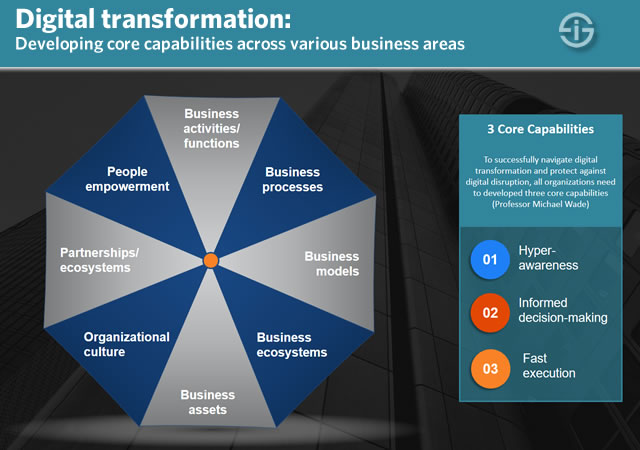
4 steps on how to proceed with DX conversion
Based on the above points, let’s proceed with DX conversion by following the steps below.
1. Visualization of current situation and issues
2. Building a DX promotion organization
3. Improving operational efficiency through digital utilization
4. Analysis and utilization of accumulated data
We will explain each step in turn.
1. Visualization of current situation and issues
Accurately understand and visualize your company’s situation and the situation of the industry as a whole. By analyzing the situation, you can see the problems that need to be solved and the resources that are available.
For example, list the tasks handled by your existing systems, the number of employees in charge of management, and the data held by each department. By visualizing the issues and current situation in this way, you will be able to concretely envision the goals that should be achieved through DX.
2.Building a DX promotion organization
Realizing DX will improve operational efficiency, but it will not eliminate the need for human resources. It is necessary to secure human resources in charge of DX-related work and build an organization for promotion.
DX conversion can proceed relatively smoothly by utilizing existing human resources, but if you do not have suitable human resources, you can consider methods such as transferring them from a different department, hiring external human resources, or outsourcing on a business-by-work basis.
It is also important to not only gather the human resources currently needed, but also to develop internal human resources for the future. DX is not a short-term trend, but rather an issue that should be addressed over the long term. Let’s work on developing internal human resources in order to prepare for further DX in the future.
3.Improve operational efficiency through digital utilization
We will identify tasks that require a lot of manual work or tasks with low efficiency, and introduce systems and tools to promote digitization.
However, care must be taken, as choosing systems and tools with a focus on solving specific problems may reduce cost effectiveness or make it difficult to utilize data company-wide. Let’s correctly recognize the issues from the perspective of the company as a whole, rather than the issues of each department, and identify the necessary systems and tools.
In addition to solving current problems, it is also important to consider future growth. For example, if you choose a system that suits your current business size, you may need to replace the system as your business grows in the future, which could end up increasing costs.
4.Analysis and utilization of accumulated data
Digitalization of operations allows us to collect a wide range of data. Analyze the acquired data in a timely manner and use it to improve work flows and business models.
In order to make the data easy to use, it is necessary to make it available for viewing by each site personnel. Being able to understand data from different departments in real time makes it easier to coordinate between departments, further increasing operational efficiency.
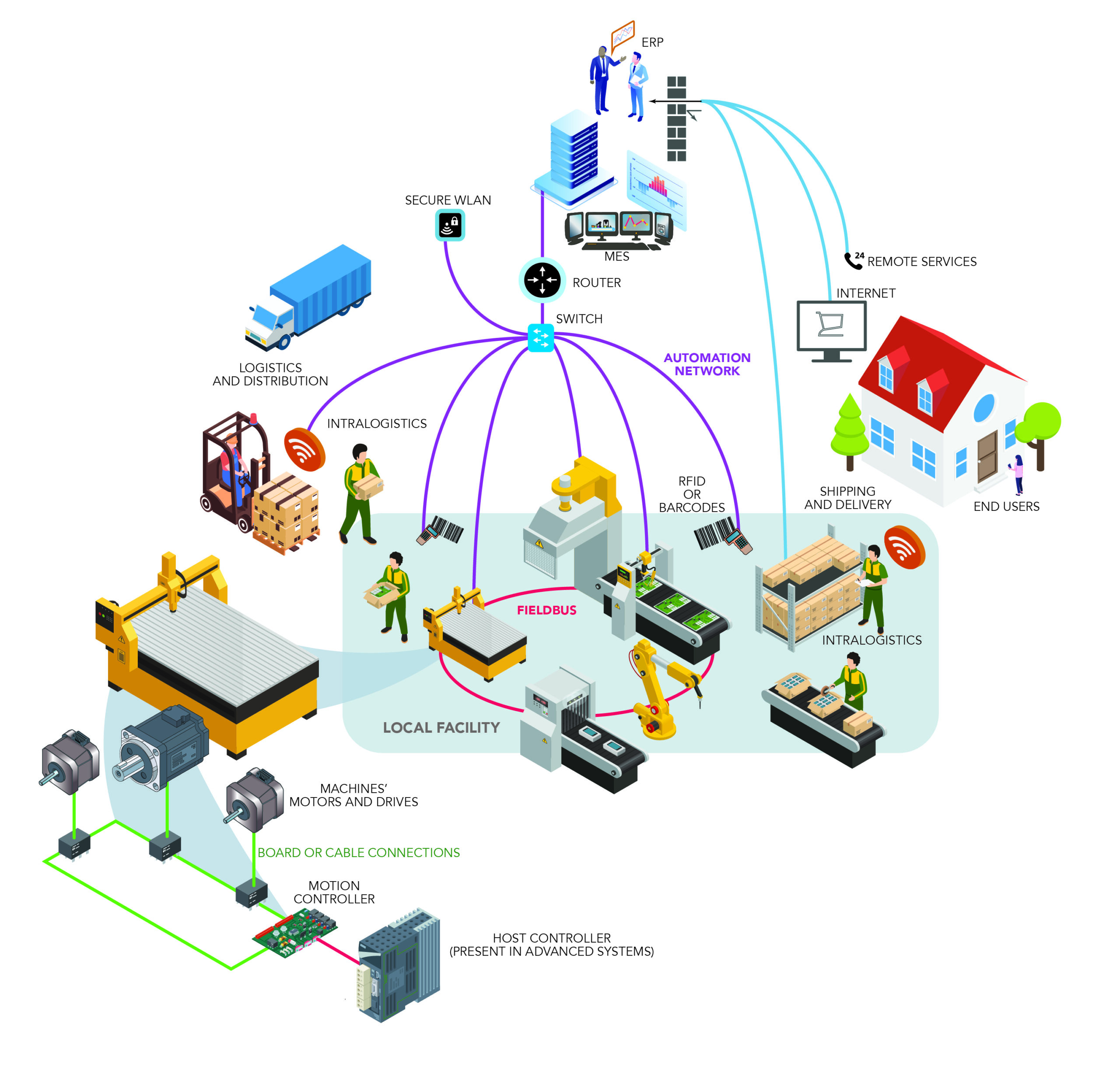
Specific examples of DX in companies
Examples of actual DX initiatives include:
However, although these are examples seen in many companies, they are not necessarily required to be implemented. It is necessary to proceed with DX conversion according to the size, industry, and challenges of your company.
Introduction of web conferencing tools
By implementing web conferencing tools such as Zoom and Teams, you can hold meetings from anywhere. This will make it easier to collaborate with employees who are working remotely or with employees from different branches or sales offices.
You can also use web conferencing tools for meetings with business partners. Not only is it necessary to secure a conference venue, but you can also save time traveling to the conference venue, reducing costs and improving work efficiency.
Introduction of chat tools for business
The introduction of chat tools for business is also a DX initiative that leads to improved business efficiency. For example, you can create a group for each project team and use it to exchange necessary information, confirmation, and instructions regarding work.
Not only can you avoid problems with what you said or didn’t say by communicating through text, but you can also avoid the same questions by checking past communications. Also, if you use it for small talk, it will lead to smoother communication.
Digitalization of offline customer service
In offline customer service at stores, etc., there is a limit to the number of customers that can actually be served. By replacing offline customer service with digital services, you will be able to respond to each potential customer individually, which you cannot reach offline.
For example, you can build an e-commerce site or provide online customer service to existing customers. By switching to online customer service, it will be possible to reduce sales personnel and store size, making it easier to reduce costs.
Introduction of BI tools
BI (Business Intelligence) tools are tools that analyze data accumulated within a company and support quick decision-making in management and sales. By introducing BI tools that can visualize data, you will be able to make speedy decisions and will be less likely to miss business opportunities.
BI tools can be used in the following situations:
Providing services using digital data
By analyzing digital data with AI, we will be able to make recommendations and communicate appropriately to each customer. If you aim to increase profits, you will need more advanced analysis and proposals using AI.
It is also necessary to develop potential customers into good customers through web marketing. You can download a free guidebook covering the basics of BtoB web marketing from below. Please feel free to use it.

Examples of corporate DX promotion
We will introduce examples of DX promotion that have achieved results in companies. Please refer to it and utilize it in your DX initiatives tailored to your company’s situation.
Kubota Co., Ltd.: Streamline machine repair with an app
Kubota, a company that develops and manufactures agricultural and construction machinery, has identified the disparity in skills and experience of service engineers at local distributors as an issue in promoting global expansion. Therefore, we developed a fault diagnosis app that utilizes AR and made it available to service engineers in the field.
We are now able to determine the cause of a failure on-site, which not only allows us to respond quickly, but also reduces downtime for our customers. We have also improved the efficiency of our customer support operations.
Reference:
Kubota Co., Ltd. “Developed an app to streamline repair of construction machinery using smartphones”
Kirin Holdings Co., Ltd.: Established DX Strategy Promotion Office
In order to stably supply products to customers, it is essential to sensitively detect and respond to market changes and to build a more robust supply system. Kirin Brewery, a beverage manufacturer, established a new SCM (Supply Chain Management) department in 2021 and began efforts to achieve stable supply and cost optimization with the following goals:
In order to achieve our goals, we are also developing materials demand and supply management apps and manufacturing planning apps to promote company-wide DX.
Reference:
Kirin Holdings Co., Ltd. “Kirin Group’s DX Initiatives”
Unimate Co., Ltd.: Reduce costs with automatic measurement app
Unimate, which rents, manufactures, and sells uniforms, was facing the problem of excessive costs for returns and exchanges. Most returns and exchanges occur due to size differences due to human error. Not only was the workload increasing, but they were also worried about the environmental impact of waste products and transportation.
Therefore, we developed an automatic measurement app “AI×R Tailor” that utilizes AI image recognition, and created a system to determine the appropriate size uniform. This reduces the number of size exchanges and reduces the workload not only for Unimate but also for the client.
Reference:
Unimate Co., Ltd. “Air Taylor”
Resona Holdings Co., Ltd.: Extracting new customers with banking apps
The Resona Group was faced with the issue of having less than 10% of its individual customers with whom it was able to conduct face-to-face business, meaning that it had no active contact with most of its customers. Additionally, we were faced with the need to advance our business from a bird’s-eye view across the entire group.
Therefore, the Resona Group App was born as a tool to promote the digitalization of financial services ahead of other banks. Customer convenience can also be expected to improve as a variety of financial services are now available through apps. In addition, we found that there was a correlation between customers using the app and the use of foreign currency deposits, and when we extracted customers from a different perspective than the deposit amount and provided guidance on foreign currency deposits, the conversion rate was approximately doubled. achieved.
Reference:
Resona Group “Resona Group App”
Asahi Group Holdings Co., Ltd.: Aiming to transform into a new organization by promoting DX
Asahi Group Holdings has launched the “Food as a Service” concept, which aims to create new business by fusing food and beverage and digital, and is promoting its own DX. We view DX as not simply promoting digitalization, but also as an organizational change in work styles and culture, and have been working on company-wide reforms.
We are also focusing on developing DX human resources. For example, we have launched a course to develop human resources who can create and give new ideas to life, and a course to develop human resources specialized in business analysis, and we are recruiting applicants from within the company.
Understand the definition and methods of DX and aim for corporate growth
All companies need to implement DX that suits their own situations and issues. Let’s work on DX and aim for corporate growth by taking hints from the case studies and company examples introduced.
Additionally, DX requires company-wide efforts. Sharing data and coordinating operations across all departments not only enables more efficient management and sales, but also makes it easier to accelerate corporate growth. For example, you can consider introducing appropriate tools such as MA (Marketing Automation) tools that seamlessly connect marketing and sales, and CRM that realizes unified customer management.