

Five Forces Analysis
is
a framework for analyzing industry profitability
.
We conduct analysis
from five perspectives: “industry competition,” “threat of new entrants,” “threat of substitute products,” “bargaining power of sellers,” and “bargaining power of buyers.”
This time, let’s take a look at the definition and purpose of Five Forces Analysis, as well as specific examples of Five Forces Analysis in the generic drug industry.
What is Five Forces Analysis? Definition and purpose
What is Five Forces Analysis? Let’s take a look at the definition and purpose of Five Forces Analysis.

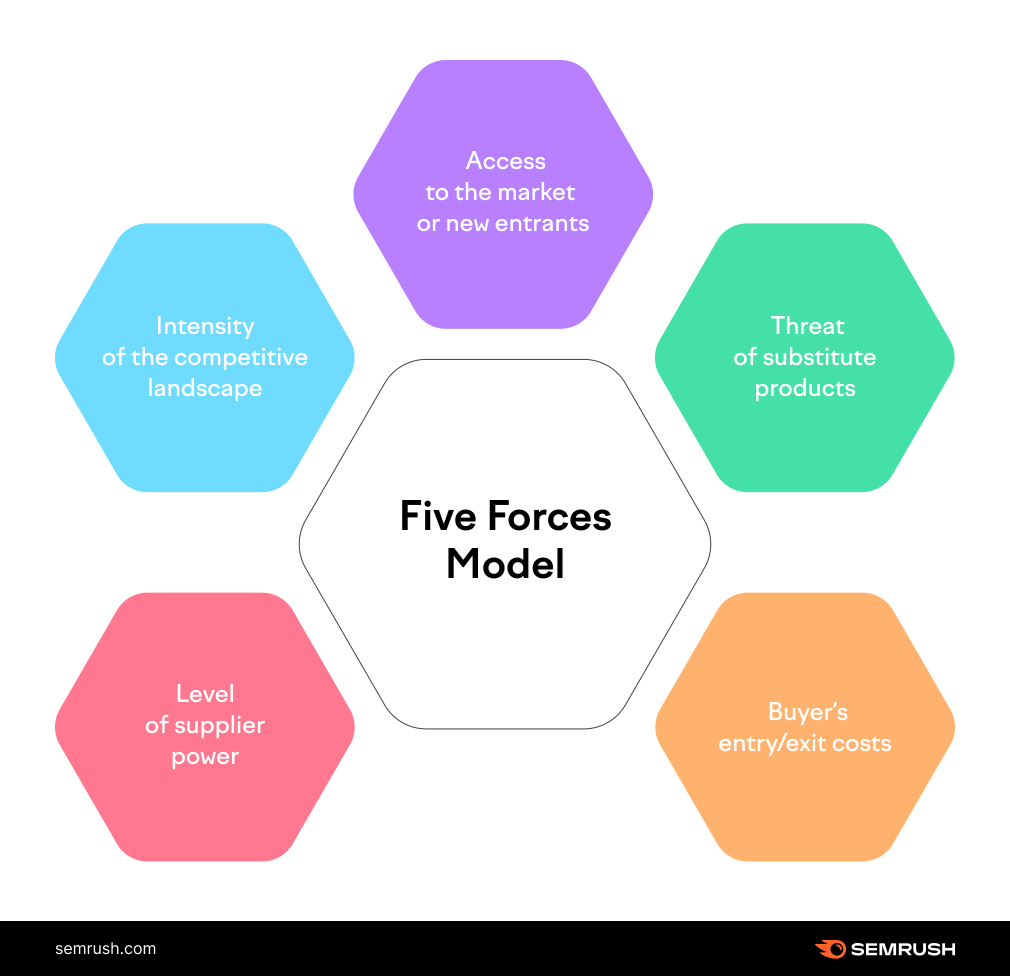
Five Forces Analysis is the analysis of an industry from the perspective of five forces.
Five Forces Analysis
is
a framework
for analyzing industry profitability proposed by management scholar
Michael Porter
.
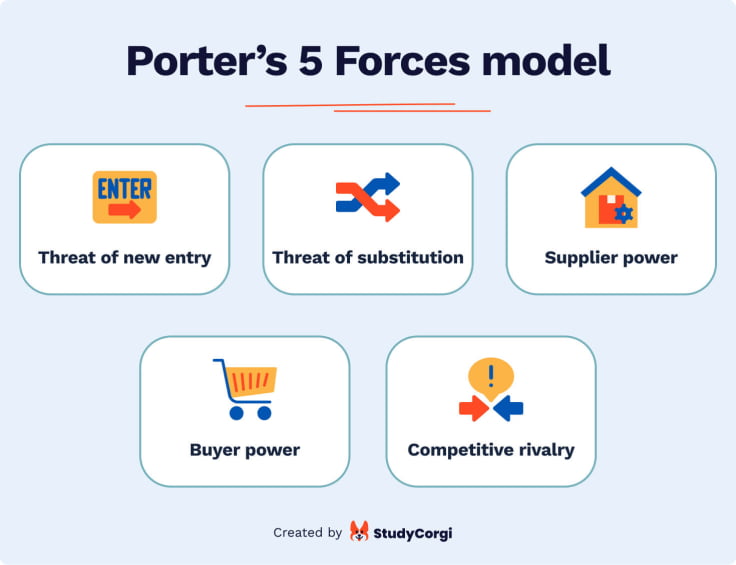
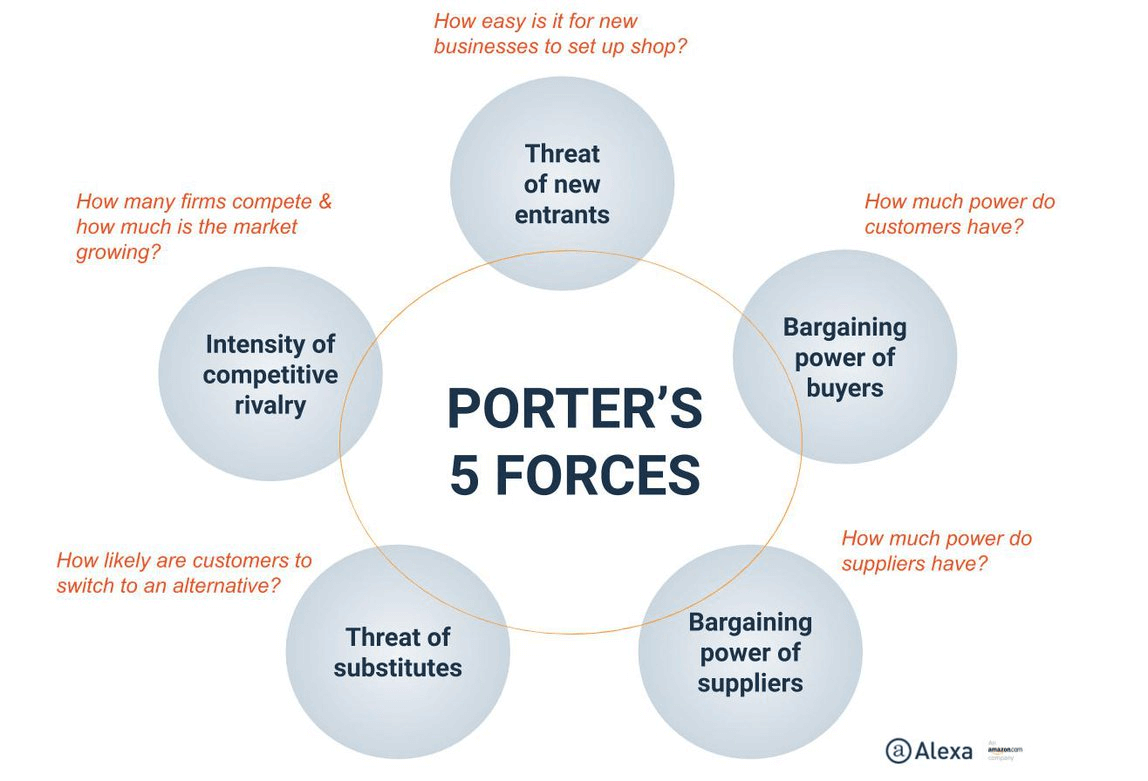
Factors affecting industry profitability include:
-
“Competition within the industry”
-
“Threat of new entry”
-
“Threat of substitutes”
-
“Seller’s Bargaining Power”
-
“Buyer’s Bargaining Power”
Analyze the industry from the “Five Forces”.
Details of each of the five forces
The details of each of the five factors in Five Forces analysis are as follows.
Competition within the industry
Competition between companies in an industry affects profitability.
If an industry is oligopolized, competition will be moderate; on the other hand, if there are many companies of similar size entering the industry, competition will be fierce.
When competition within an industry is intense, strategies such as differentiation and price competition strategies are required to stay ahead of competitors.
Exiting the business may also be an option.
Threat of new entry
When new companies enter an industry, competition increases and profitability decreases.
In industries where new entry is easy and barriers to entry are low, even if the profitability of the industry increases, new entrants will continue to enter the industry quickly, and profitability will decline as competition intensifies.
In order to reduce the threat of new entrants, an effective strategy is to raise the barriers to entry into the industry by strengthening your company’s strengths.
Threat of substitutes
The threat of replacing an existing product or service with another product or service that meets a similar need for customers.
As more cost-effective products and services emerge, they can steal market and reduce profitability.
The replacement of matches with lighters and the replacement of fountain pens with ballpoint pens are typical examples of the threat of substitute products.
In order to reduce the threat of substitutes, strategies include increasing the “switching costs” that customers have to pay when switching from an existing product or service to another, improving design, functionality, and convenience, and engaging in price competition. is valid.
seller’s bargaining power
This refers to the strength of demands from suppliers for parts, raw materials, etc.
In oligopolistic industries or industries with monopolistic technology, sellers tend to have strong bargaining power, and in such cases, buyers are forced to accept higher prices and incur higher costs.
A seller’s bargaining power can be reduced by strategies such as allowing for substitution.
buyer’s bargaining power
It refers to the strength of customer demands for lower prices and improved quality.
If buyers have strong bargaining power, they will demand discounts, making it difficult to increase profits.
In general, industries that sell to customers with very high purchasing power have difficulty generating large profits.
In order to reduce the bargaining power of buyers, it will be necessary to increase their advantage over buyers through strategies such as lowering switching costs to alternative sales destinations.

Purpose of Five Forces Analysis
There are three purposes for performing Five Forces analysis:
Objective 1: Improving profitability
<br/> Five Forces analysis
allows you to identify your company’s competitive advantages and develop strategies to improve profitability
.
In particular, it is possible to identify threats to the future, such as new entrants and substitute products, allowing for a smooth response when a threat actually appears.
Objective 2: Deciding whether to enter a business or withdraw from a business
<br/> The degree of competition within an industry and the structure of the industry, as revealed by Five Forces analysis, serve as
the basis for management decisions regarding new entry or withdrawal from a business
.
Objective 3: Optimal allocation of management resources
<br/> Examining how best to allocate management resources is essential when formulating management strategies.
The opportunities and threats revealed by Five Forces analysis are the basis for determining the allocation of business resources
.

Specific examples of Five Forces analysis in generic drugs
With the government promoting generic drugs, the generic drug industry has become a promising market.
As a specific example of five forces analysis, let’s take a look at an analysis example from the generic drug industry.
:max_bytes(150000):strip_icc()/porter_final-b4b8e5b2014544dbaa1884017efbc164.png)
1. Threat of new entrants
The barrier to entry into the generic drug industry is that development costs are low because there are no development costs.
Furthermore, the cost of switching suppliers for our medical customers is also low, as all generic drugs have exactly the same ingredients.
On the other hand, the strict regulations of the Pharmaceutical Affairs Act require advanced clinical trials, the large capital investment required to manufacture pharmaceuticals, and the existence of unique distribution channels for pharmaceuticals, which raise barriers to entry. That’s what happens.
Overall, the threat of new entrants to the generic drug industry is judged to be “moderate.”

2. Competition within the industry
The market for generic drugs is rapidly expanding due to government promotion measures, but many of the companies entering the market are small, and it is said that there is still no market leader.
Foreign companies from India, the United States, and other countries have also entered the market, and the current situation is that there is extremely intense competition in the generic drug industry.

3. Threat of substitutes
Brand-name drugs become substitutes for generic drugs, and there is a tendency for medical professionals and patients to return to choosing brand-name drugs.
Additionally, as the concept of “from treatment to prevention” spreads, foods for special health uses, health foods, and functional foods can also become substitutes, so the threat of substitutes to the generic drug industry is judged to be “moderate.” It is.
4. Buyer’s bargaining power
With the ongoing consolidation of insurance pharmacies by major chain pharmacies, the bargaining power of buyers in the generic drug industry tends to increase.
Furthermore, since there are multiple identical generic drugs, the cost of switching to another product is extremely low, which also increases the bargaining power of buyers.

5. Bargaining power of the seller
The concentration of sources for pharmaceutical raw materials is increasing due to revisions to the Pharmaceutical Affairs Law that require registration for the manufacture of pharmaceutical raw materials.
On the other hand, however, the bargaining power of sellers is judged to be moderate overall, as new entrants continue to enter the raw material supply chain.
Looking at the generic drug industry as a whole, as the market expands, new entrants continue to enter the market, and the current situation is extremely intense competition.
In order to escape from this situation, companies must choose between a strategy to survive price competition by expanding scale and mass production, or a strategy to differentiate through added value.

summary
◆What is Five Forces Analysis? A framework for analyzing industry profitability.
◆Analyze from five perspectives: “industry competition,” “threat of new entrants,” “threat of substitute products,” “bargaining power of sellers,” and “bargaining power of buyers.”
◆There is intense price competition in the generic drug industry, and the current situation is that a price competition strategy or differentiation strategy is required.