

“No-code/low-code” system development has become more common in the IT field these days. No-code refers to developing software such as apps without writing any code in a programming language. On the other hand, the key to low code is to develop by writing less code.
Currently, no-code/low-code development has become so prominent that it can be called a “buzzword” in the IT industry. Will this concept continue as a common style in the future, or will it remain a passing fad? Explaining “effectiveness” in development.
Reference source:
No-code/low-code development that has entered the practical stage
What is no-code/low-code development?

“No-code/low-code development” involves developing software such as applications without writing any code or writing very little code.
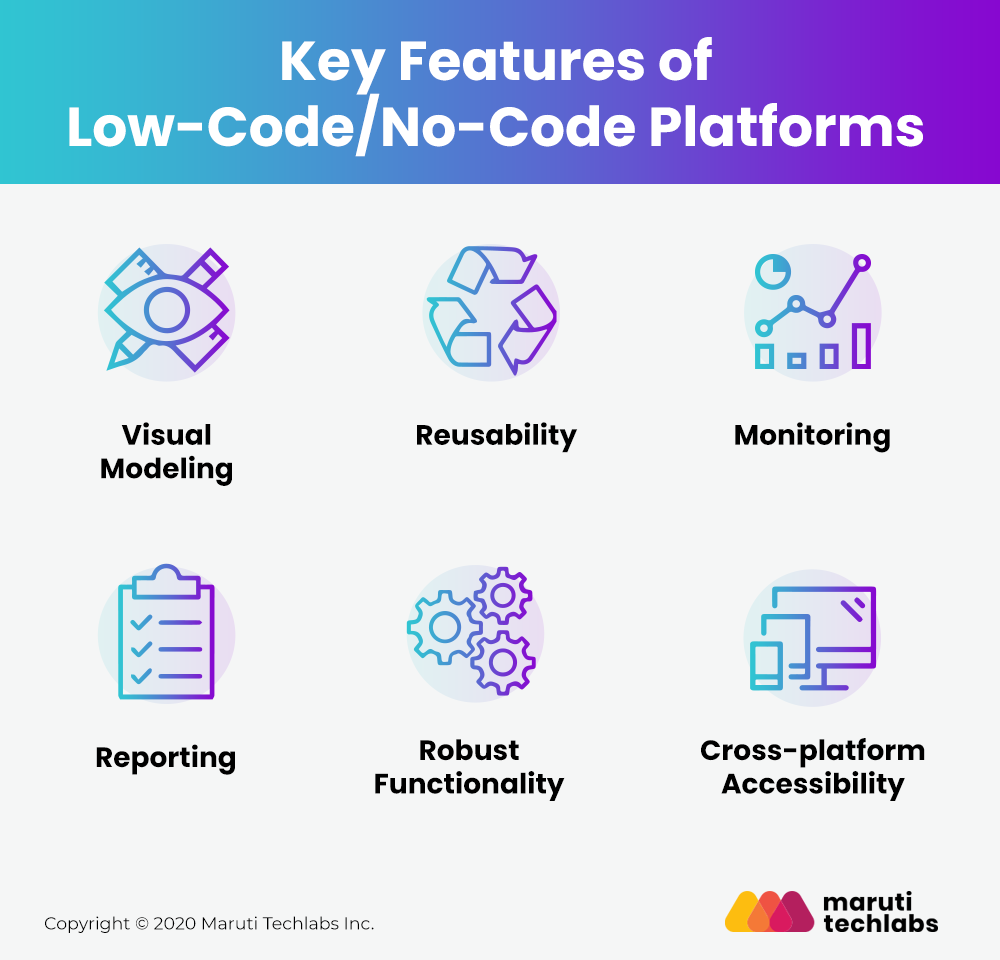
Demand is increasing amid the shortage of IT human resources, and many predict that no-code/low-code development, which can be handled without programming knowledge, will continue to increase in comparison to development that involves coding. It seems so.

To begin with, computers use two electrical signals (binary numbers), one off and one on, to perform calculations and process information. The signal is off (0) and on (1).
In fact, the data processing of smartphones and the photos taken with mobile phones that are set on the home screen are all actually expressed as a series of off (0) and on (1).
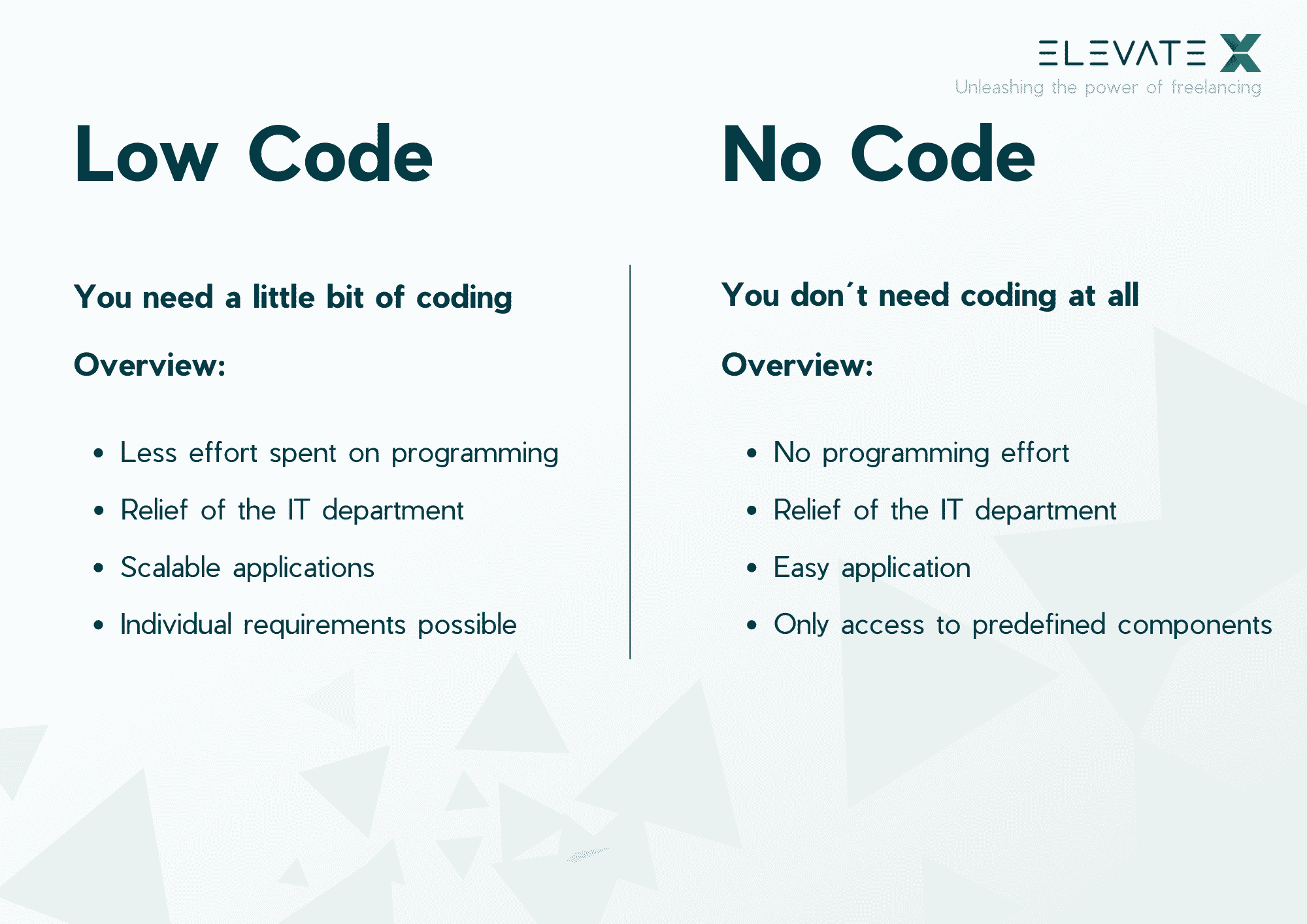
Until now, signals could only be understood by a small number of people with computer expertise, but programming languages have been created to connect humans and computers so that more people can handle them. This will be explained in detail below.
What is a programming language?

A programming language is a language that goes between humans and computers and transmits the signals necessary for system development to the computer.
Words written in a programming language are called “code,” and the software we use today can be thought of as a collection of codes created from such programming languages.
Although code was created to connect humans and computers, it is difficult to master it without studying it, and specialized knowledge is required when transmitting advanced technology to computers.
Reference source:
No-code/low-code development that has entered the practical stage
How effective is no-code/low-code?
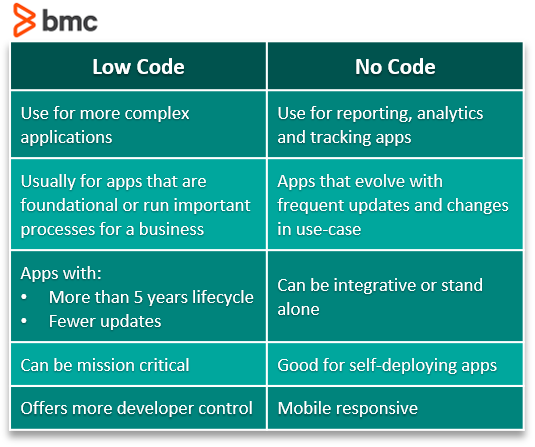
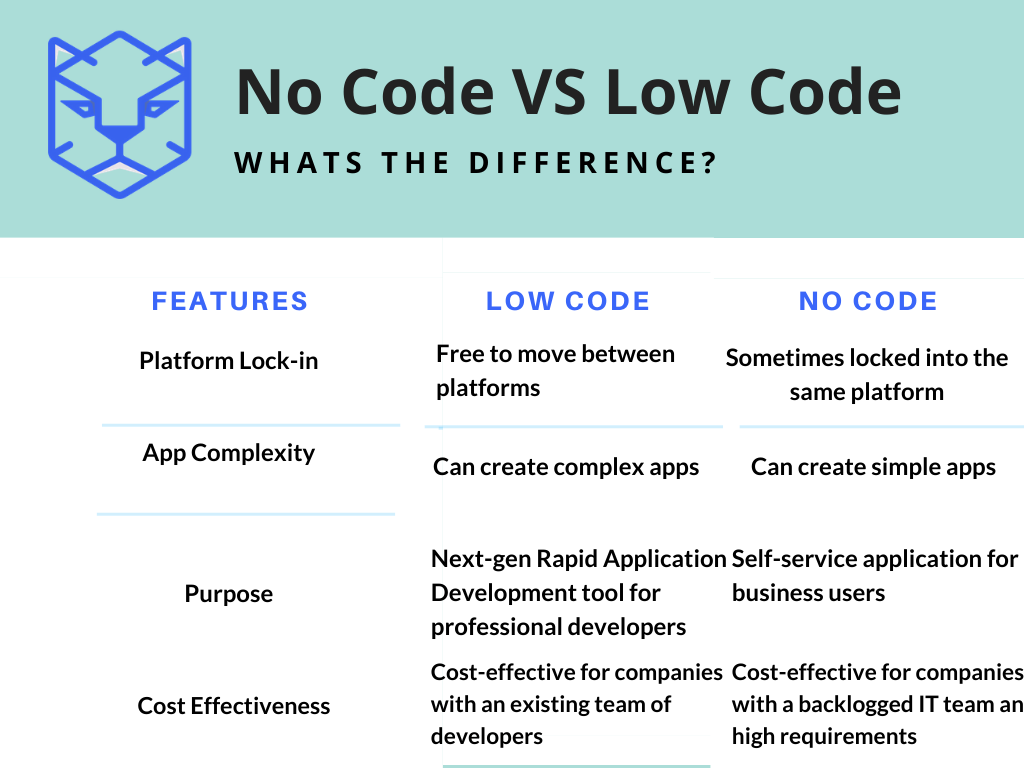
While code, a programming language, requires specialized knowledge, no-code/low-code development, which can be easily used by anyone, is ideal for companies that are struggling with a lack of human resources and companies that want to build systems at low cost. This would be a useful measure.
Basically, only a mouse is used for developing software. By configuring computer processing using drag and drop, it is possible to transmit the necessary information without any knowledge of complex codes.
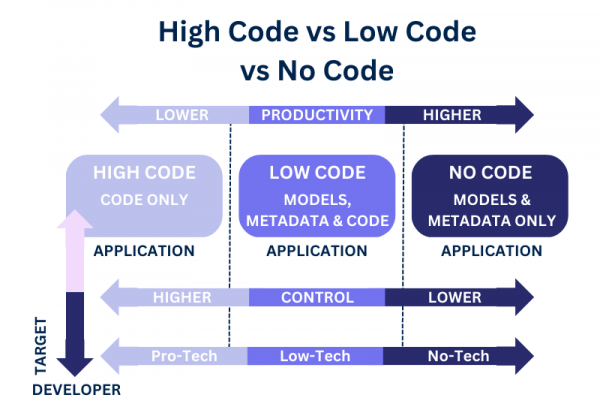
A successful example of no-code/low-code development is when a business user who had never written code or had experience in software development successfully developed an application in just three days. Of course, he developed it without writing a single line of code.
Reference source:
No-code/low-code development that has entered the practical stage
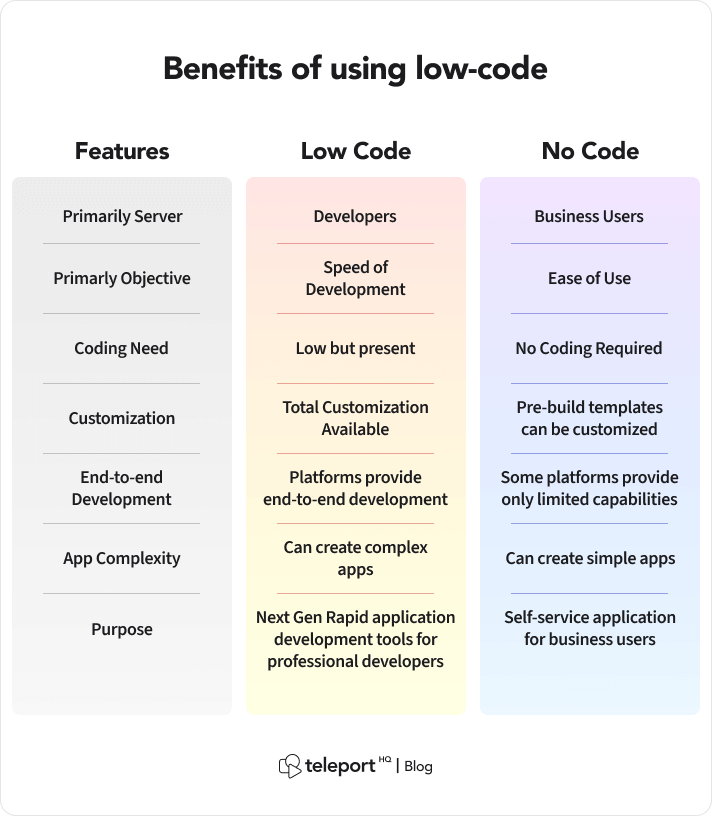
summary

No-code/low-code development is expected to be a useful technology for companies. With the latest technology, it is possible to create highly sophisticated applications even with no-code or low-code, and it is also possible to implement AI and link to APIs (Application Programming Interfaces: what connects applications and programs).
For example, marketers can create their own marketing tools and implement marketing analysis using specialized databases.
If no-code/low-code develops further in the future and becomes commonplace, everyone will be able to become an application and software developer and create the world they envision.
Reference source:
No-code/low-code development that has entered the practical stage