

In order for a company to continue to exist for a long time, it is necessary to maximize customer satisfaction. However, customer satisfaction can only be improved when multiple factors come together, such as improving the quality of products, services, and personnel, as well as design and price.
Therefore, many people are probably looking for ways to improve customer satisfaction and whether there is
a framework
for investigating customer satisfaction. In this article, we will explain portfolio analysis that is useful when considering customer satisfaction and future strategies. We will also introduce an overview of the value portfolio that should be used for business restructuring, so please refer to it.
What is a portfolio?
Before I explain about portfolio analysis, I would like to explain about portfolio. Actually, the word portfolio has many different meanings. When many people reading this article hear the word portfolio, they probably think of something like a “creator’s collection of works.” In conclusion, if you are in the creative industry, there is no difference in the image above. However, portfolio is also used in the investment and finance industry, and as an educational term. It is important to understand that the word is used from various angles, so it is not just used to refer to a collection of works or achievements.
Meaning of portfolio by industry
Earlier, I gave an overview of the portfolio. Here, we will introduce the meaning of portfolio by industry.
- Investment/financial industry
- education industry
- creative industry
Let’s look at each in turn.

Investment/financial industry
In the investment and financial industry, a portfolio is a term used for a list or combination of assets held by an investor or businessperson, such as stocks, bonds, cash, real estate, and deposits. In addition, in the case of stocks and bonds, each issue is shown in detail as part of the portfolio.
Investors and businesspeople hold multiple assets while hedging risk so that they will not lose their assets even if one business goes bankrupt or the stock market collapses. By owning multiple assets, even if one of them goes bankrupt, it is possible to rebuild and reinvest. In other words, the concept of portfolio in the investment and financial industry is that it is better to allocate multiple assets in order to hedge risks.
education industry
Portfolio in the education industry refers to an individual assessment tool called a personal portfolio. Specifically, it is an evaluation method that records videos and photos of students studying for entrance exams and tests, and saves reports, exam papers, etc. as data. By having these portfolios, it is possible to calculate the student’s overall value, which cannot be measured simply by academic tests. It is an evaluation method that is gaining popularity in the education industry and is being adopted in a wide range of fields such as self-development and school education.
Portfolio as an educational term originated in London, began to be adopted in the United States and the United Kingdom in the 1980s, and is unique in that it came to Japan in the 1990s.
creative industry
A portfolio in the creative industry is understood by many to be a collection of works. Individuals working for a company create it as evidence to highlight their achievements when changing jobs, and freelancers create it as a substitute for sales materials. It is extremely useful for measuring an individual’s ability, so it almost always exists in a wide range of fields such as web production, writing, and design.

What is portfolio analysis?
So far, we have provided an overview of portfolios and explained the meaning of portfolios by industry. From here, I will explain about portfolio analysis. Portfolio analysis is an analysis method and framework used for customer satisfaction surveys. It is an analysis method that uses items such as products, services, personnel, prices, etc. as satisfaction levels, represents them in a two-dimensional graph, and then identifies important items that need improvement.
Here, we will use a customer satisfaction survey as an example to investigate satisfaction with products and services. In this survey, we will ask individual questions about the quality of products and services, prices, quality of personnel, etc. After conducting the survey, set the overall satisfaction of the product or service on the vertical axis, and set the importance of the correlation between individual questions and overall satisfaction on the horizontal axis. Next, by placing a point plot (drawing) in the center, you can divide the vertical and horizontal axes into four areas. This area is called a “quadrant.”
The quadrants are called Areas 1 to 4 and are numbered counterclockwise. In addition, it is defined by the level of satisfaction and importance, and depending on where it is placed, it becomes a framework that can identify areas for improvement in products and services.
Role of each quadrant
Earlier, I explained that the quadrant can be divided into four, and the role of each quadrant is as follows.
- Quadrant 1 (upper right): Both customer satisfaction and importance are high
- Quadrant 2 (top left): Customer satisfaction is high and importance is low.
- Quadrant 3 (bottom left): Low customer satisfaction and low importance
- Quadrant 4 (bottom right): Customer satisfaction is low and importance is high

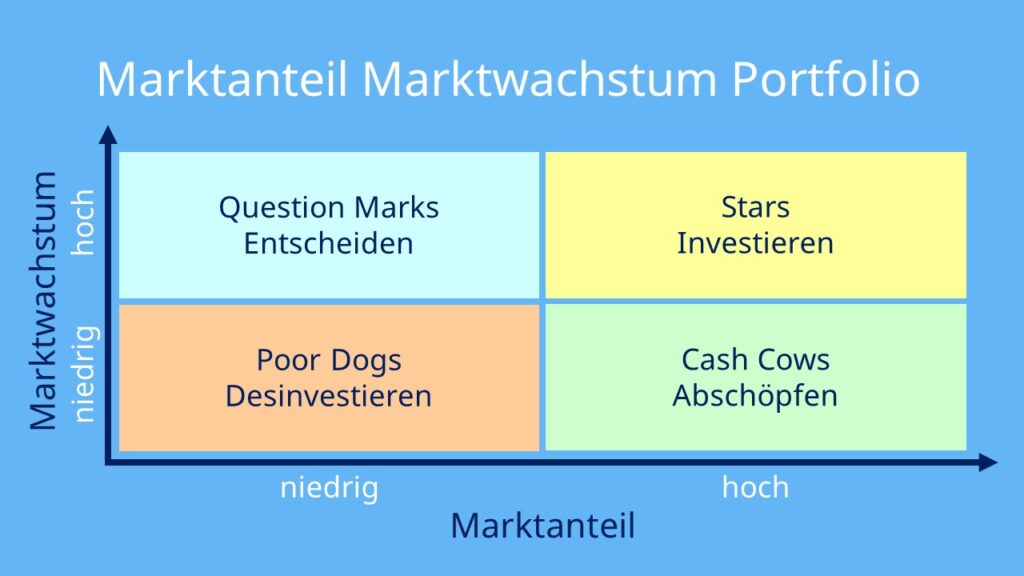
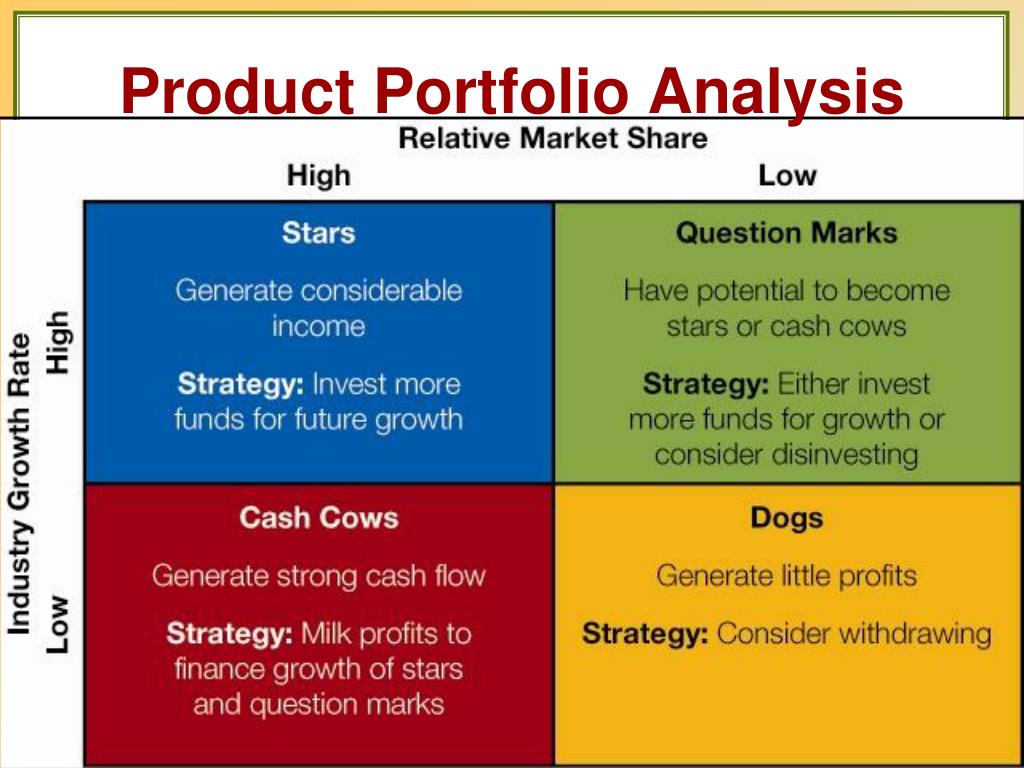
In addition, Boston Consulting, a world-famous consulting firm, proposed
PPM analysis
as a method for determining the investment allocation of management resources. PPM is an abbreviation for “Product Portfolio Management” and describes the first quadrant as the star, the second quadrant as the problem child, the third quadrant as the loser, and the fourth quadrant as the money tree. Next, I will specifically explain what can be learned from each quadrant.
Quadrant 1 (top right)
The first quadrant is the star, and contains items with high customer satisfaction and importance. Some people may think that improvements are unnecessary because they have already achieved a certain level of satisfaction, but if maintenance is neglected, satisfaction levels may drop all at once, so it is important to actively spend time This is an item that should be multiplied.
Quadrant 2 (top left)
The second quadrant is the problem child, with items that have high customer satisfaction but low importance. Therefore, even if satisfaction is achieved, it has little impact on the overall situation. This is an item that we need to be careful about so as not to reduce satisfaction while aiming to increase our overall influence even more than now.
Quadrant 3 (bottom left)
Quadrant 3 is the loser, the items with low customer satisfaction and low importance. Even if you were able to increase customer satisfaction, the overall importance remains low, so it is not recommended to focus on items.
Quadrant 4 (lower right)
The fourth quadrant is the money tree, with items that have low customer satisfaction but high importance. Therefore, prioritizing improvements will lead to an increase in overall satisfaction, and can also be expected to increase a company’s sales, as it is called the money tree.
How to deal with losers
Earlier, I explained what can be learned from each quadrant, but many of you may be wondering how to deal with the losers in the third quadrant. In fact, improving satisfaction in the third quadrant has low overall importance, so there is definitely no need to actively improve it.
Therefore, losers are generally considered to be items for which it is good to consider withdrawing from the business. Even if you keep them, there is a risk that they will be a drag on the overall management and may become a barrier to improving overall satisfaction, so consider withdrawing depending on the situation.
How to deal with problem children
Next, how to deal with problem children. Although problem children have a low level of satisfaction with their current situation, they have a large impact on the overall situation, so if they succeed, they may be promoted to star status, and if they fail, they may fall into the category of losers. Therefore, it is important to continue to invest the profits earned from problem children in problem children and promote them to star status in the medium to long term.
However, if you spend more time than necessary or don’t invest enough money, you will be a loser, so accurate business judgment is required.

Use value portfolio to rebuild business
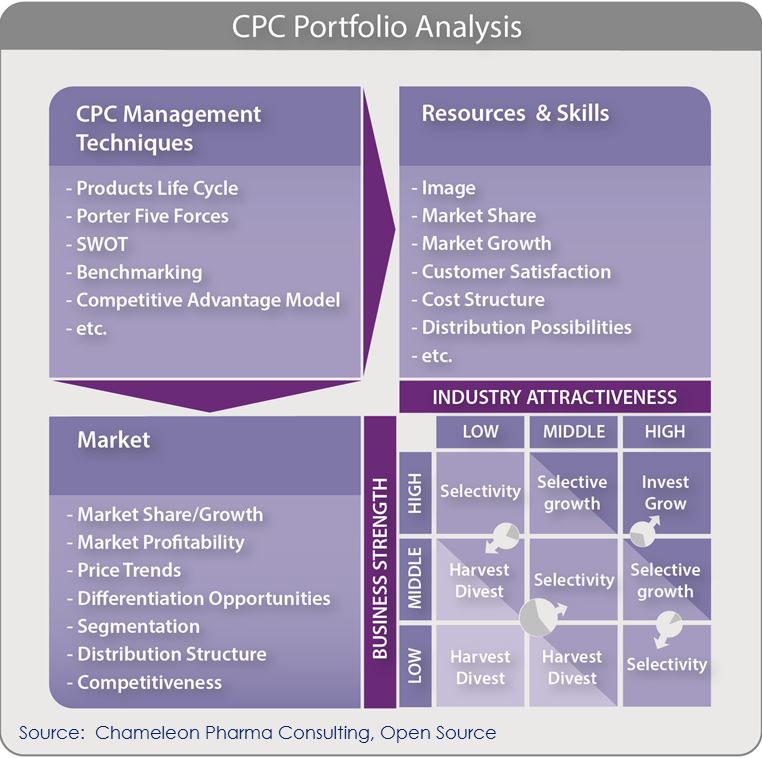
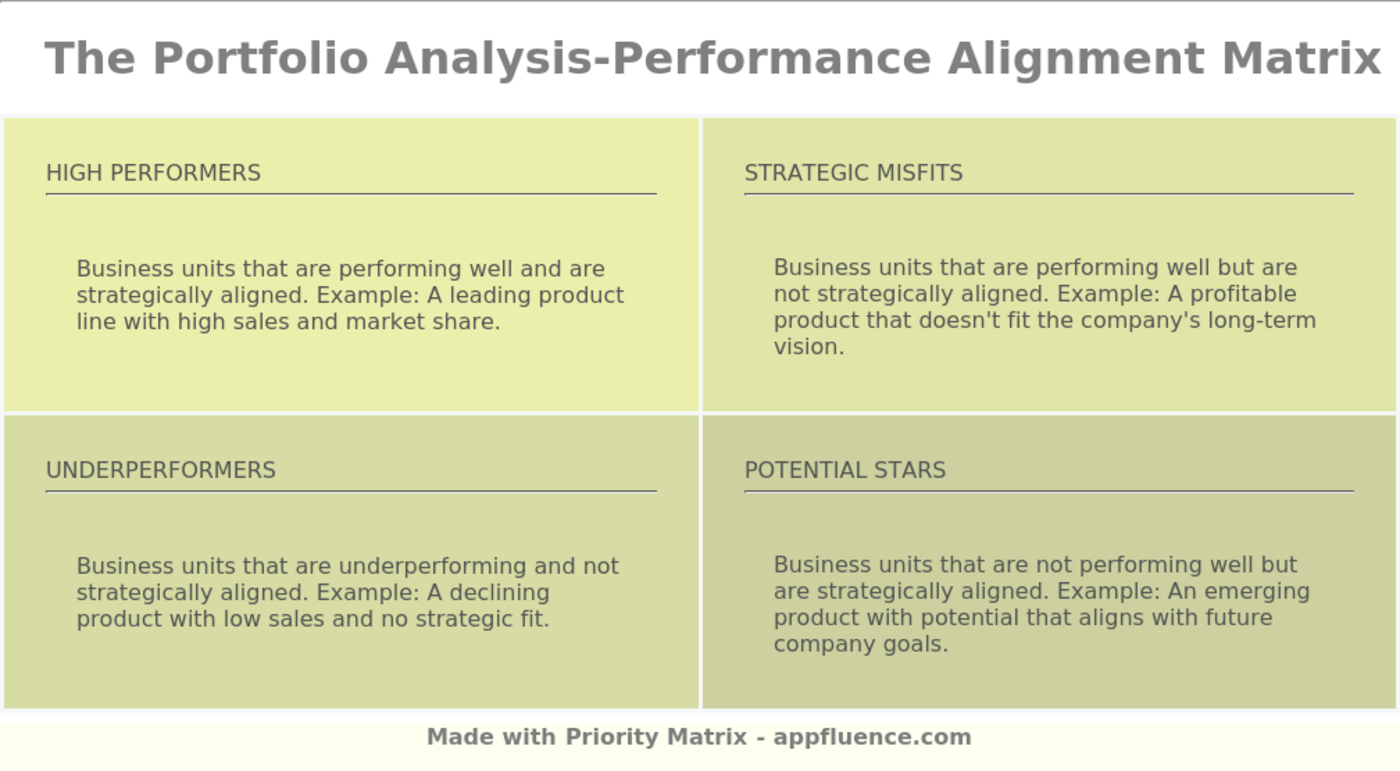
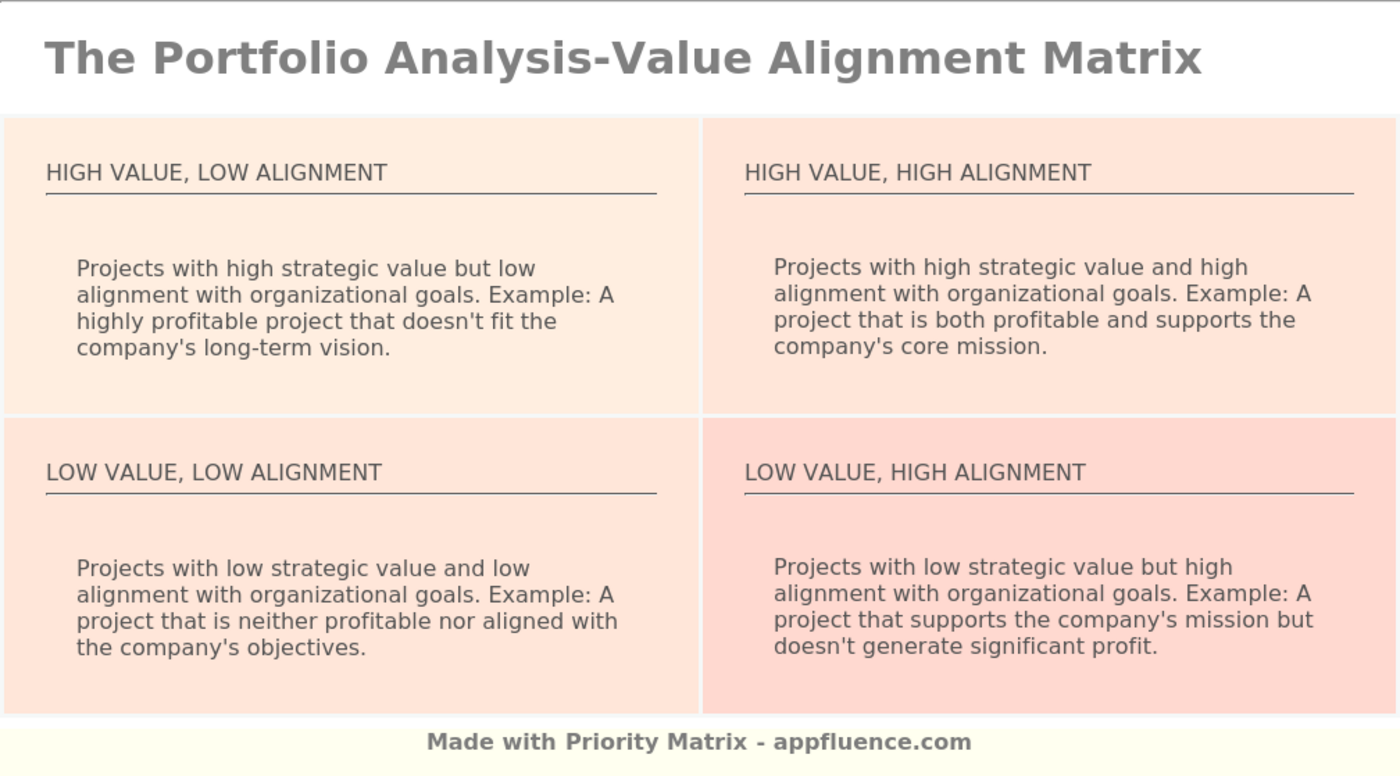
So far, we have explained portfolio analysis that shows the relationship between customer satisfaction and importance, but value portfolios are also useful when restructuring a business. A value portfolio is a framework that shows consistency with a company’s vision on the vertical axis and high return on investment (
ROI
) on the horizontal axis. The value portfolio is also divided into four areas, and the roles of each area are as follows.
- Quadrant 1 (top right): Favorite
- Quadrant 2 (top left): Challenges
- Quadrant 3 (bottom left): Closeout
- Quadrant 4 (bottom right): Opportunity
Since it can be divided into the above categories, let’s analyze where the business that is facing the issue falls into and formulate a future strategy. Also, why not combine the portfolio analysis and value portfolio that I explained earlier and use it for marketing activities or for selecting businesses that should be expanded in corporate management?
summary
In this article, we provided an overview of portfolio analysis, the meaning of portfolios by industry, and explained value portfolios. A portfolio does not only mean a collection of works, but also has different meanings depending on the industry.
Also, if you don’t know the current level of customer satisfaction or can’t see what measures to take next, proactively utilize portfolio analysis. Then, why not figure out which area each of these applies to and consider choosing the best option depending on the area?