

A framework
is a framework for organizing ideas. In business where speed is important, using various frameworks allows you to organize your thoughts logically in a short period of time.
In this article, we will take up typical business frameworks and explain them by usage scenario.
What is a framework?
Framework is a word that means framework or structure. When frameworks are used in decision-making, analysis, problem solving, etc., optimal solutions can be found logically and rationally.
Frameworks are used in various situations in business. If you can utilize a framework, it is often possible to extract useful information from a huge amount of information, and to smoothly proceed with analysis in the desired direction.
Additionally, many business frameworks have been empirically proven to be useful and are easy to use in practice. Use it when you are stuck, such as when you can’t come up with a new idea or when it is difficult to make a decision, to move your business forward.
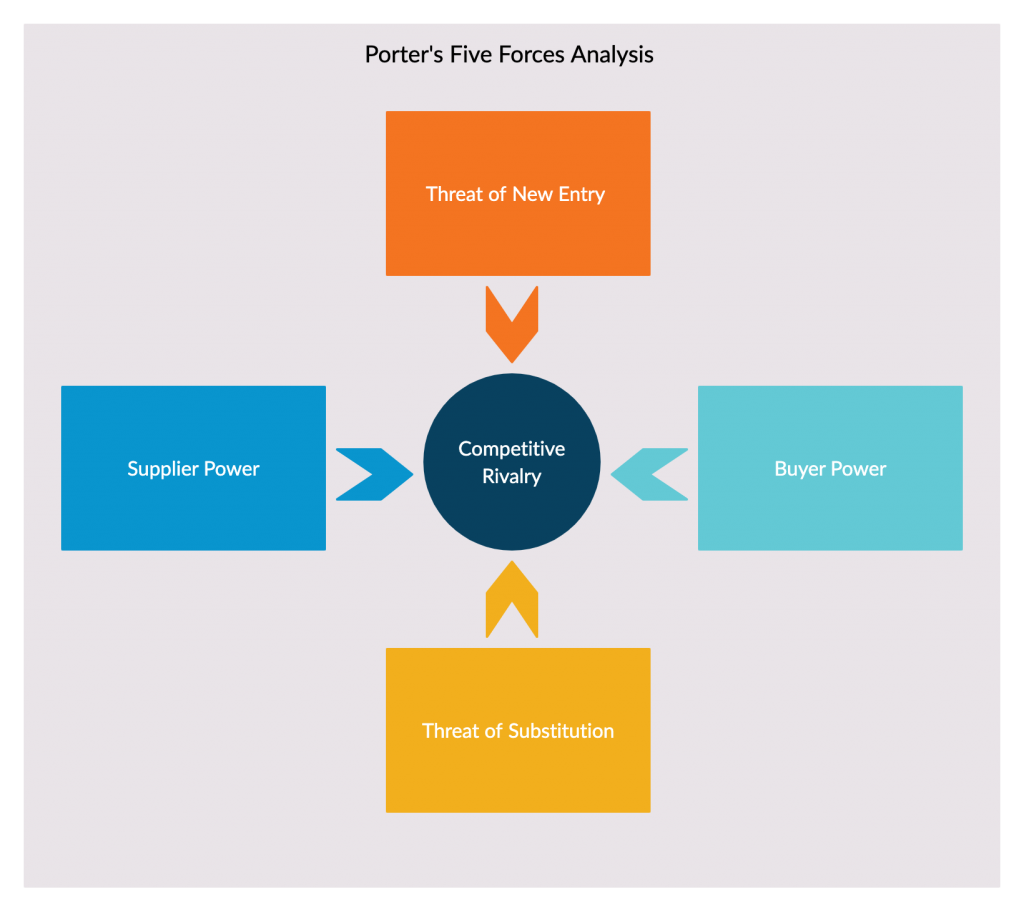
Advantages of using frameworks in business
Business requires speed. Even if you have a great idea, if it takes time to turn it into a product or service or bring it to market, you will fall behind your competitors.
By using frameworks, you can organize your thoughts faster and save a lot of time. In order to survive in business and continue to produce results, it is necessary to know frameworks and use them appropriately.
However, just knowing the framework is not enough to master it. Use frameworks repeatedly to learn how to use them so that you can use the appropriate framework in the appropriate situation.
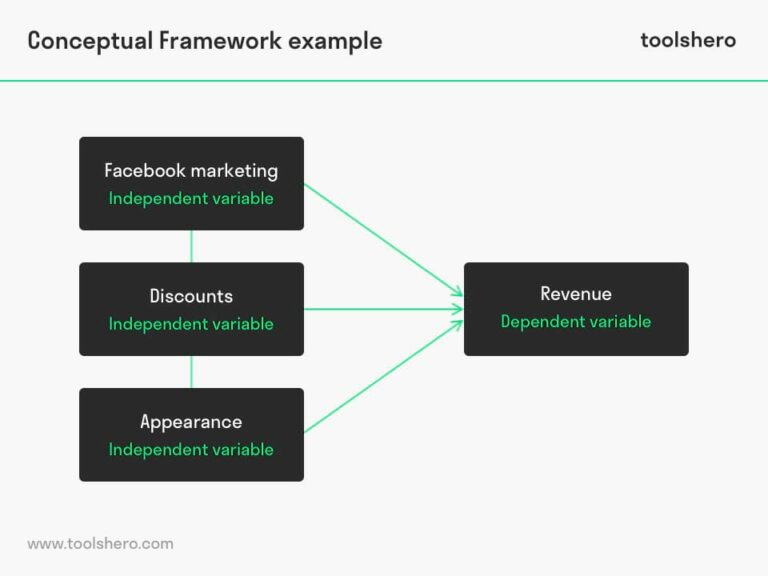
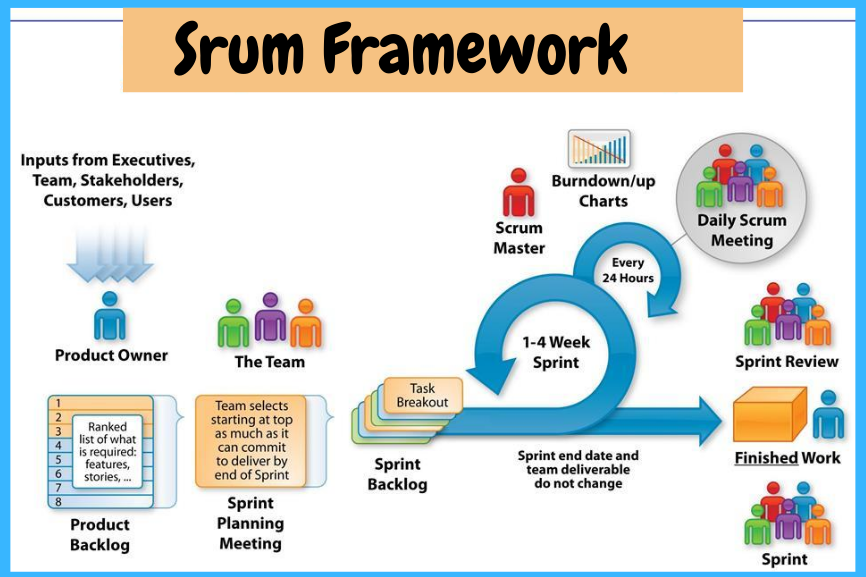
“Business framework” and “IT industry framework” are different things.
The word framework is used not only in business situations or when you are stuck, but also in the IT industry, so some people may think of it as a mixed term.
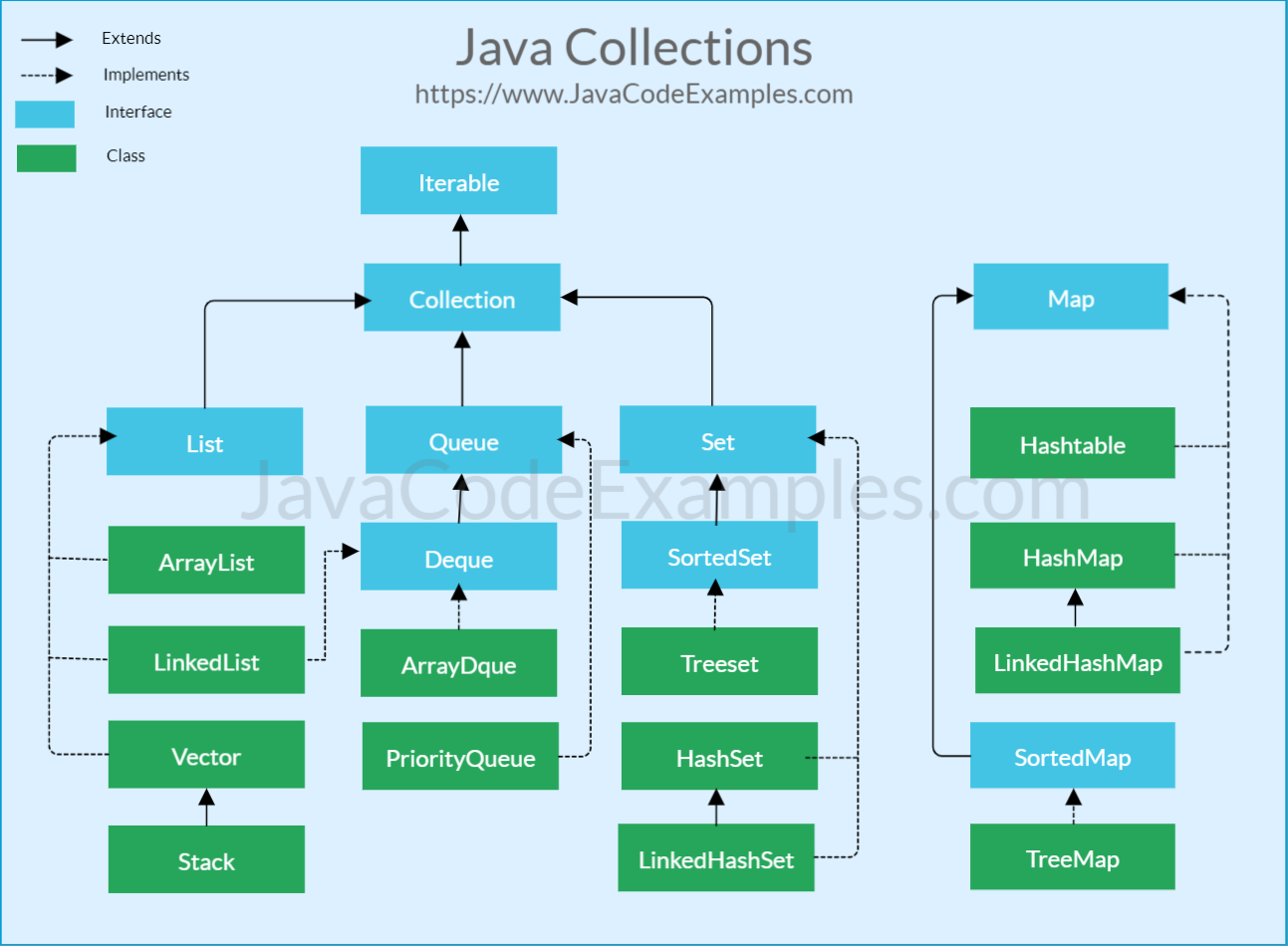
A framework in the IT industry is software that serves as the foundation for developing applications. There are multiple types of frameworks in the IT industry, including web application frameworks used to create web applications and utility frameworks that can perform mathematical functions and tests.
Using a framework can reduce development man-hours and shorten the development process, so it is one thing you should definitely keep in mind if you are involved in the IT industry.
Related term:
frame

Main usage scenarios of business frameworks
There are many types of business frameworks, each with its own characteristics and should be used depending on the purpose and situation. Choosing the wrong framework can actually complicate your business flow.
There are five main situations in which business frameworks are used:
1. Organize your thoughts
2. Logical thinking/information analysis
3. Idea generation
4. Business analysis
5. Management strategy/business plan
We will introduce what is required in each scene and what frameworks can be used.
If you want to know the specific framework right away, please click below.
[By usage] 15 representative business frameworks

1.Organize your thoughts
When I have a lot of information and find it difficult to organize my thoughts, I use a framework that helps me organize my thoughts. For example, the following framework is suitable for organizing your thoughts.
Both can be used when there are many options or when there are many factors/variables to consider. If you can organize your thoughts, it will not only be easier to organize them into a business, but you will also be able to systematize your ideas, making it easier to get support from those around you.
2.Logical thinking/information analysis
Humans tend to act based on certain beliefs. Even if you think you are thinking objectively, you may make leaps in logic or develop your ideas by using idiosyncratic examples as the standard.
When you need to use logical thinking to reorganize information, you can use the following framework.
By using an appropriate framework and organizing your thoughts logically, you will be able to accurately analyze the current situation. Use the above framework when you need to analyze information.

3. Idea generation
When you can’t come up with an idea for a new business, why not try using the following framework?
Ideas don’t just come out of nowhere. By organizing your thoughts or developing your thoughts, you can create a situation where it is easier to come up with ideas.
Both methods involve writing it out on paper. If you can’t think of an idea, try writing it down in a visual form.
4.Business analysis
When an existing business is not producing the expected results, it is necessary to analyze the business and identify the problems. Use the following framework to analyze your business’ challenges and areas for improvement.
Both frameworks have different targets for analysis. Try to use multiple frameworks to review your business from multiple perspectives.
5.Management strategy/business plan
The following framework can be used when developing a business strategy or creating a detailed business plan.
The appropriate strategy will change depending on the progress of your business. Use the framework to revise your strategies and plans accordingly.
[By usage] 15 representative business frameworks
Frameworks are tools that can be used to advance business speedily and effectively. However, if you are not familiar with using it, you will not be able to gather your thoughts at the right time. We will introduce the mechanism and specific usage of each framework, so be sure to practice it several times before putting it into practice.
3 frameworks that help organize your thoughts
Some frameworks that can help you organize your thoughts include:
We will explain how to use each in detail.
PDCA
PDCA is an acronym for Plan, Do, Check, and Action. By getting into the habit of planning, executing, evaluating, and improving in order, you can improve your strategies and ideas.
Furthermore, PDCA is not a framework that can be implemented only once. When the improvement stage is over, you can return to the plan and repeat it many times to verify the effectiveness and execute your business with even greater precision. Repeating the PDCA cycle in this way is sometimes expressed as “running the PDCA cycle” or “running the PDCA cycle.” For example, you can do it like this:
5W1H
It is a framework that explains information by dividing it into the elements of When, Where, Who, What, Why, and How. Not only can you convey information accurately, but you can also reduce omissions when organizing your thoughts. For example, when holding a Valentine’s Day promotional event, you can formulate the following hypothesis to find out the purchasing motives of potential customers.
logic tree
A logic tree is a framework that allows you to finely identify individual and specific events from a broad outline. It is a useful framework for identifying essential issues and is used in many business situations.
For example, let’s say you receive a complaint from a customer at a restaurant. At that time, there are many possible actions to take based on the complaint, such as the cause of the complaint, the next solution, and things to share with employees. Therefore, it is recommended to use it when organizing your next actions and thoughts in response to a specific event like this.
Two frameworks useful for logical thinking and analysis
The following frameworks can be used for logical thinking and analysis.
Let’s take a closer look at how to use each.
2 axis view
A two-axis diagram is a framework used to visualize the value of products. You can freely set the vertical and horizontal axes to display the position of the target object.
For example, when considering the concept of a new clothing brand, the vertical axis is set as “high price – low price” and the horizontal axis is set as “pop – chic” to visualize the new brand’s positioning. Also, if you include the positioning of existing brands and competing brands in the diagram, the positioning of the new brand will become clearer and it will be easier to target.
MECE
MECE is a framework that means “exhaustive and non-overlapping” when translated into Japanese. They are named after the first letter of each word.
- Mutually
- Exclusive and Collective
- Exhaustive
For example, let’s say someone drinks coffee after waking up in the morning. Drinking coffee after waking up in the morning is not limited to male business people, but also women who take care of children and do housework. In other words, coffee drinking overlaps between male business people and women who raise children and do housework. MECE is a framework that uncovers overlapping points (objects) for these specific events and leads to a “state of no omissions and no overlaps.”
3 frameworks that help you generate ideas
When you can’t come up with an idea for a new business, you can try the following framework.
By writing a lot, you can expand your ideas. Let’s take a look at how to use it specifically.
mind map
A mind map is a framework that makes it easier to generate ideas by listing related keywords. First, write the keyword that will become the theme in the center of the paper, write words related to the keyword around it, and connect them with lines. Next, write out further subdivided words from related words and connect them with lines like branches.
By repeating this process, you will be able to create a diagram that resembles a family tree starting with keywords. Since each element is visualized by displaying related words, it is recommended when a theme has already been decided and you are creating content.
Mandarat
Mandarato is a method of generating ideas using a 3×3 grid. We will proceed with the following steps.
1. Draw a 3×3 grid and write the theme keyword in the center grid.
2. Write images and words associated with the keyword in the eight surrounding squares
3. Create 8 3×3 squares surrounding the 3×3 square.
4. Write the keyword written around the first square in the center of each of the eight squares.
5. Write 8 images and words associated with the 8 keywords in each square.
In the end, a huge 9 x 9 square will be completed, and 80 images and words associated with the keyword will be written on it. Let’s extract ideas that can be used from these words.
association matrix
An associative matrix is a way to generate ideas by combining variables.
For example, when a home appliance manufacturer develops new cooking utensils, let’s say they consider two variables: “one person vs. 2 or more people” and “pop-up toaster vs. toaster oven.” By considering the combination of each variable, you may be able to discover that existing products do not cover the “pop-up toaster for living with two or more people.”
Using an association matrix, you can find holes in existing products and holes in targets. Also use it when you want to expand your repertoire or improve comprehensiveness.
5 frameworks useful for business analysis
When analyzing your business, you can leverage the following frameworks:
We will introduce each method and how to use it.
3C analysis
3C analysis
is a framework that takes the initial letters of the following three C’s.
As you can see by analyzing the three above, 3C analysis is a framework that can be used commonly for all services and businesses. This is because every service has a market and competition. Therefore, when you are stuck in attracting customers or making sales for your services or business, why not use 3C analysis to investigate the cause?
From the page below, you can see a page that provides a detailed introduction to the specific steps of 3C analysis using examples, and you can download the template for free. 3C analysis is a standard method among business analysis methods. Please make use of the template and use it for your analysis.
4P analysis
4P analysis
is a framework that is an acronym for the following four words starting with P.
- Product
- Price
- Promotion
- Place/Distribution
It is mainly used for analyzing a company’s products. For product, we analyze brand power and reliability, and for price, we determine whether the price is appropriate for the market and competition.
In Promotion, we analyze appropriate ways to attract customers for the product, such as web marketing, mass advertising, and handing out flyers.Finally, in Place, we consider ways to distribute the product for a long time, such as opening physical stores and starting affiliate advertising.
PEST analysis
PEST analysis
is an acronym that combines the four initials of Politics, Economy, Society, and Technology. It is used to identify the environment surrounding companies and markets and to develop business strategies.
The detailed method is summarized in the following material. You can download the template for free, so please use it to create a strategy that accurately reflects the current trends.
SWOT analysis
SWOT analysis
is a framework that is an acronym for four words.
- Internal Strengths
- Internal weaknesses
- External opportunities
- External threats
In other words, it is a useful framework for identifying strengths and threats for both internal and external factors and connecting them to improvements.
The following page provides a detailed explanation of how to use SWOT analysis. You can also download useful templates for free. Please feel free to use the link below.
value chain
A value chain is a framework for identifying strengths and weaknesses in a business process. For example, let’s take homepage creation as an example.
- Homepage composition/planning consideration
- Identifying the elements necessary to attract customers
- Deciding on the overall design
- actually start building
- Test and complete
We will briefly explain the process, but we will identify your company’s strengths and weaknesses in the above process. It can be said that it is a useful framework for the growth of a company, as it allows you to develop ways to further develop the strengths that emerge at that time, and to come up with specific improvement plans for weaknesses.
2 frameworks useful for management strategy and business planning
The following frameworks can be used when developing management strategies and business plans.
We will introduce how to use each.
STP analysis
STP analysis (
STP strategy
) is a framework that is an acronym for three words, and is a useful framework when formulating
marketing
strategies.
- Segmentation
- Targeting
- Positioning
First, segment your users and then select the users you want to target with your service. Finally, it is an analysis method that determines in what position the service should be appealed to the user.
AARRR model
The AARRR model is an acronym for Acquisition, Activation, Retention, Referral, and Revenue. We treat each stage as a growth stage, quantify the situation at each stage, and identify issues based on the data.
For example, if you want to increase the number of traffic to your e-commerce site, use the AARRR model to identify issues as follows.
Maximize your profits by actually using the framework
Knowing a lot of frameworks is a great advantage for your business. However, just knowing it does not mean you can use it in practice. Please actively use it in your daily work and make it your own.