

Many people have probably heard of
JavaScript
at least once when creating
a homepage
or engaging in some kind of work in the web industry. However, I think there are many people who do not understand the characteristics of JavaScript and what it can do specifically.
In this article, we will introduce the overview and history of JavaScript, as well as three typical things you can do with JavaScript. We will also explain the characteristics of JavaScript and its differences from Java, so please refer to it.
What is JavaScript?
First, let’s start with an overview of JavaScript. JavaScript is a programming language that runs on browsers and is always used when creating dynamic web pages. In reality, web pages can work without JavaScript, but without JavaScript you cannot create various movements on web pages. For example, much of the content that only appears when the user clicks it, graphic animations, etc. are realized using JavaScript. Therefore, JavaScript can be said to be the most typical programming language used when creating ideal web pages.

History of JavaScript
JavaScript was first implemented in the early 1990s under the name “LiveScript”. The name was later changed to JavaScript in 1995, and the core part became standard in 1997.
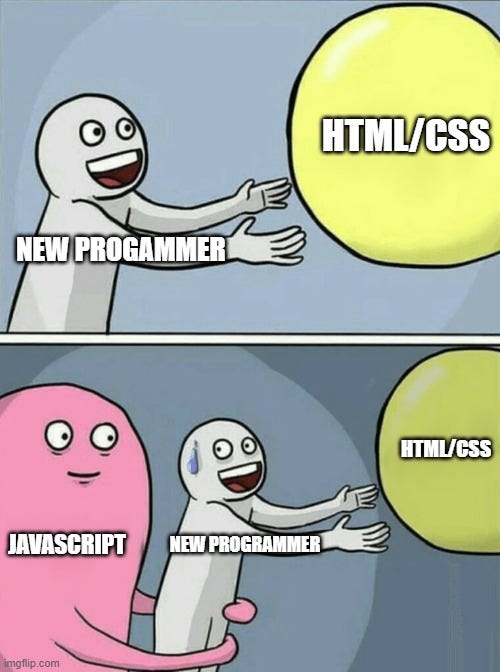
Before the introduction of JavaScript, it was common for websites to be created using only
HTML
and
CSS
. However, it is true that HTML and CSS inevitably resulted in a simple website, and the design was poor. However, with the advent of JavaScript, it became possible to achieve rich designs, and there is a history of rapidly expanding the range of website designs.

3 things you can do with JavaScript
So far, we have explained the history of JavaScript. From here, I will introduce the following three things you can do with JavaScript.
- Add movement to your website
- Ajax
- Control over form behavior
Let’s look at each in turn.

Add movement to your website
By using JavaScript, you can add movement to your website. There are many parts of these that cannot be implemented using HTML and CSS alone. For example, you can use JavaScript to add animation to buttons or add effects to menus.
Simple buttons and menus that do not implement JavaScript can lead to a decrease in CTR (click-through rate), making it difficult to generate sales from your website or page. There is also the possibility that user convenience may be impaired.
One of the benefits of JavaScript is the ability to implement designs that improve user convenience and directly lead to increased sales and access.
Ajax
Ajax is a function that allows you to update just the part you want to update without switching screens, and is also called asynchronous communication. Normally, if you want to update a web page, you have to update the entire page. However, with Ajax, you can update any part of the page without updating the entire page.
A typical example of Ajax is Google Maps. Google Maps uses Ajax to fill in missing areas on the screen, and the displayed screen is updated as you scroll. JavaScript Ajax is also used when you want to change the screen displayed in response to mouse scrolling on a web page.
Control over form behavior
By using JavaScript, you can control form behavior. Let’s look at two examples below.
- When you enter your postal code on the entry form, your address will be automatically entered.
- If incorrect or missing information is entered, an error will be displayed automatically.
Some of you reading this article may have seen examples like the one above. Actions in response to these events are performed using JavaScript. Additionally, the above example increases user convenience and has great benefits for
SEO
.

Characteristics of JavaScript
As we have explained so far, you can use JavaScript to accomplish a variety of things. Additionally, JavaScript has the following three characteristics, which are considered very important by engineers and the web industry.
- A wide range of frameworks are available
- Can be executed with a browser
- Compatible with both front and server
Let’s look at each in turn.

A wide range of frameworks are available
JavaScript is characterized by the abundance of frameworks and libraries available. For example, frameworks include:
- React
- Angular
- Vue (view)
A framework is a “framework” that is useful when developing web pages and apps. In addition, typical JavaScript libraries are as follows.
- jQuery (Jake Ely)
- Ajax
In particular, the jQuery mentioned above has been expanded and simplified in advance to make JavaScript easier to use. For example, there are many cases where it takes 30 lines of code to write code in JavaScript, but only about 5 lines with jQuery.
As mentioned above, the availability of a wide variety of frameworks and libraries for implementation has the advantage of making it easier for developers to reduce their workload.
Can be executed with a browser
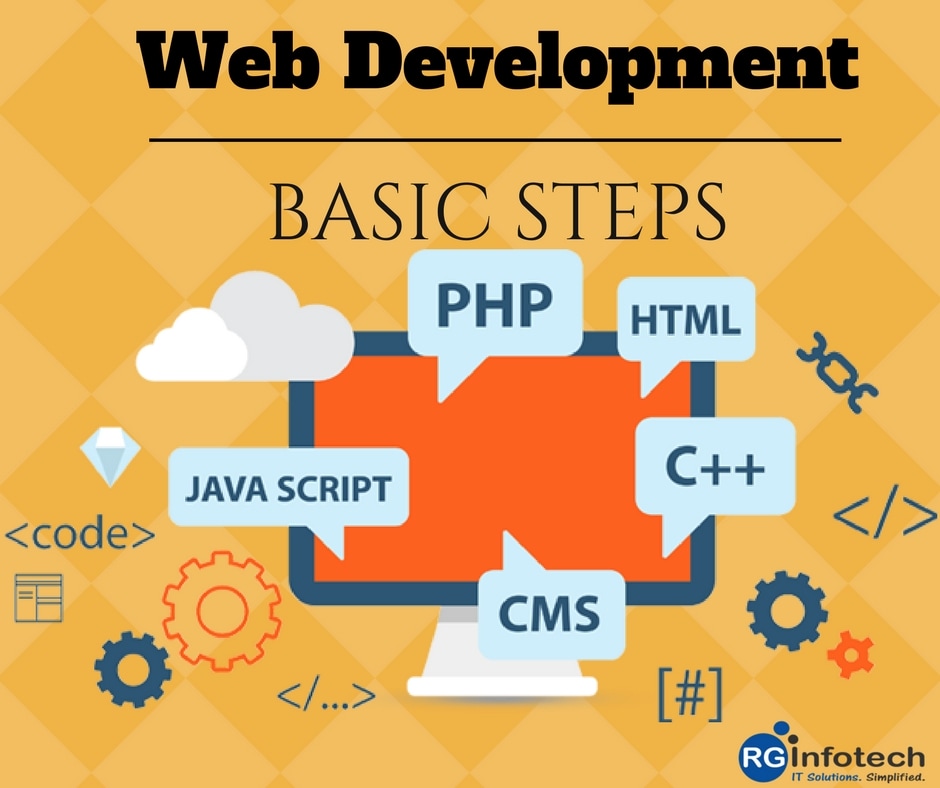
For typical programming languages such as PHP and Python, the developer must prepare an execution environment. However, JavaScript has an execution environment prepared on the browser side, so it can be executed as long as there is a browser.
It is also compatible with almost all browsers, including Google Chrome, Safari, IE, and Firefox, which are commonly used on a daily basis. However, since the behavior may differ slightly depending on the browser, it is important to check the behavior on all browsers when developing.

Compatible with both front and server
JavaScript is a programming language originally focused on front-side development. However, with the advent of software called Node.js, server-side development has become possible.
Therefore, one of the reasons why JavaScript is so popular is that once you learn JavaScript, you can use it for both front-side and server-side applications. In fact, the macros used in a Google-related service called “Google Apps Script” are also based on JavaScript.

Difference between JavaScript and Java
So far, we have explained what JavaScript can do and its features. However, although the word “Java” exists as a word similar to JavaScript, many people may not know the difference between the two. Although these two words are similar, it is true that they are completely different.
Java is a programming language that processes variables statically, and is mainly used when developing large-scale systems such as SNS. JavaScript, on the other hand, is used in some cases when developing large-scale systems, but its general use is for creating web pages and developing applications.
Therefore, the situations in which they are used are completely different. If you are confused, there is no problem in thinking that JavaScript is used for the development of small to medium-sized web services such as web pages, and Java is used for the development of large-scale systems.
summary
In this article, we explained JavaScript. By using JavaScript, you can add movement to your website and add actions in response to events. Additionally, JavaScript is the fundamental language for creating attractive websites and homepages. First of all, why not take a look at what you can do with JavaScript and get a solid idea of the website you want to create?