

The word “segment” comes from the English word “segment,” which means “division” or “part,” and is often used as a general business and marketing term. In this article, we will introduce the meaning and purpose of segments, as well as the metrics that are important when setting segments. Let’s get a general understanding of what a segment is.
What is a segment?
The word segment has different meanings depending on the area in which it is used. Let’s take a look at its meaning in general business and its meaning as a marketing term.
Segments, which are used in general business, refer to individual elements that are divided by business type, sales target area, etc. Segment is used to refer to a separate part of a whole.
On the other hand, a segment as a marketing term refers to a customer group divided by user’s age, gender, occupation, etc., or a customer group that can be grouped based on the user’s perception of the product and consumption behavior based on the consumption process. It also refers to
Keep in mind that the term segment used in general business simply refers to separate elements, while the term segment used as a marketing term refers to a customer group divided by certain criteria.
Difference between segment and other words
Words similar to segment include “target” and ”
segmentation
.” Let’s take a look at the differences between these words and segments.

Difference with target
First, let’s take a look at the difference between Target and Target. Target refers to which segmented group you want to target. Specifically, the groups divided into “men” and “women” are called segments, and the targeted groups are called targets.
Simply put, you can say that you have a target within a segment.
Differences from segmentation
What is the difference between segments and segmentation? Segmentation refers to the act of segmentation itself. In other words, as a marketing term, segmentation refers to dividing customer groups according to certain classifications.
Segmentation is a word that refers to the act of dividing into segments, and segmentation refers to customer groups divided by that act.
Purpose of segment
So, what is the purpose of setting segments in the first place? Although it is similar to targeting, segmentation is used to target customer groups that can be more effectively approached with your company’s products.
Consumers live by a variety of values. Creating a variety of products to accommodate this diversity can be fatal for companies with limited resources.
As mentioned above, a target is a more detailed division than a segment, but first of all, in order to clarify the concept of your company and which customer group you want to approach, you should consider segmentation. Settings will be required.
In this way, it can be said that the standard flow in
marketing
is to set the segment that the company will approach and then work on detailed measures aimed at more specific targets.
Conditions for performing segments
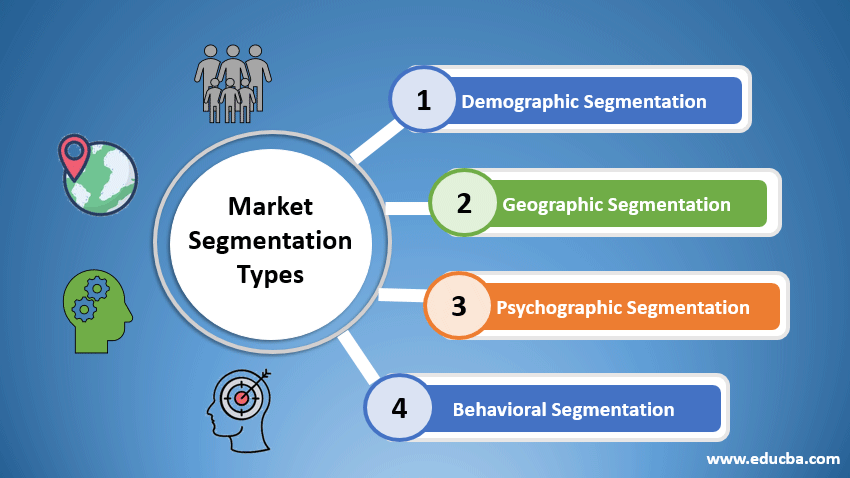
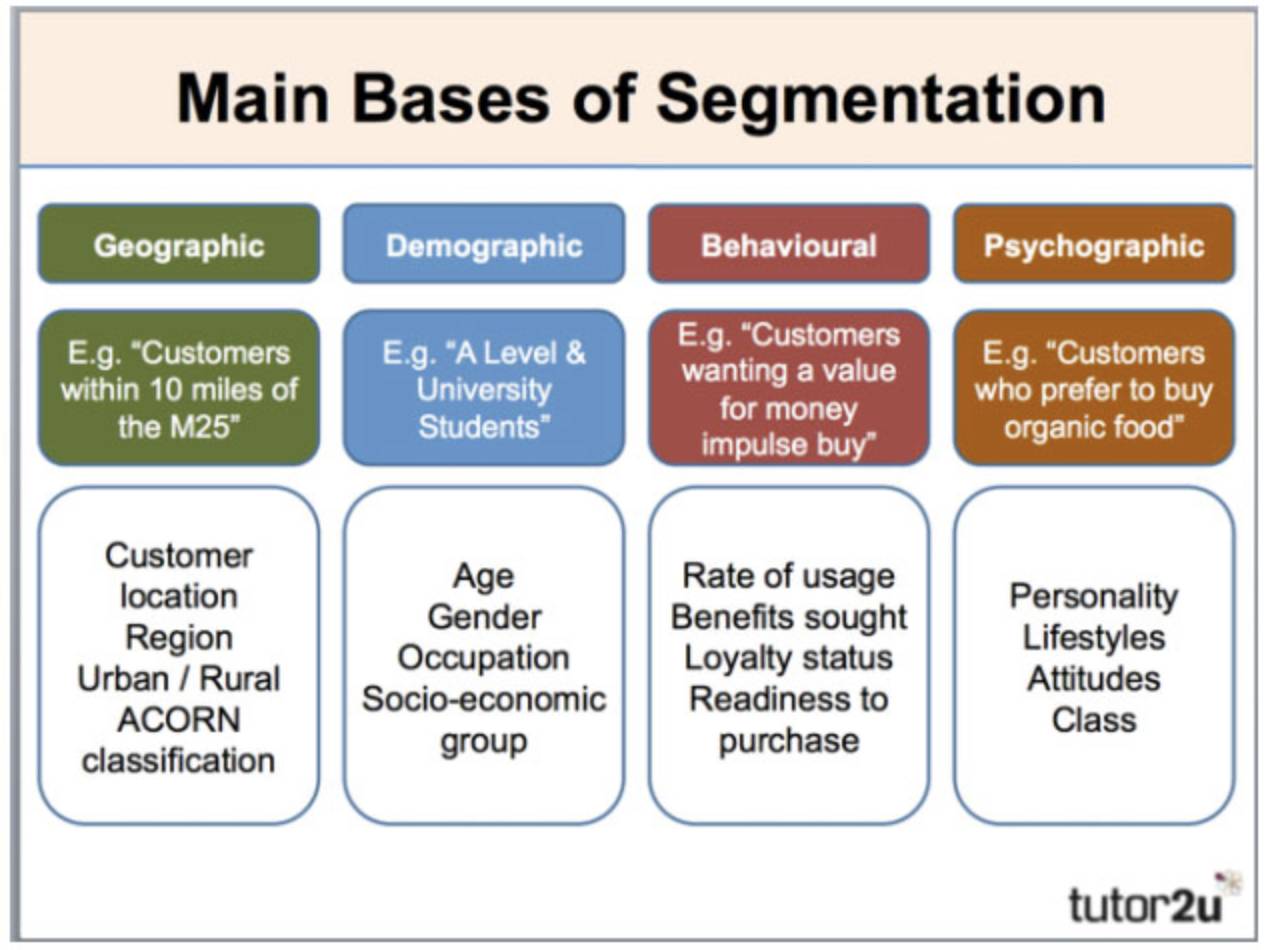
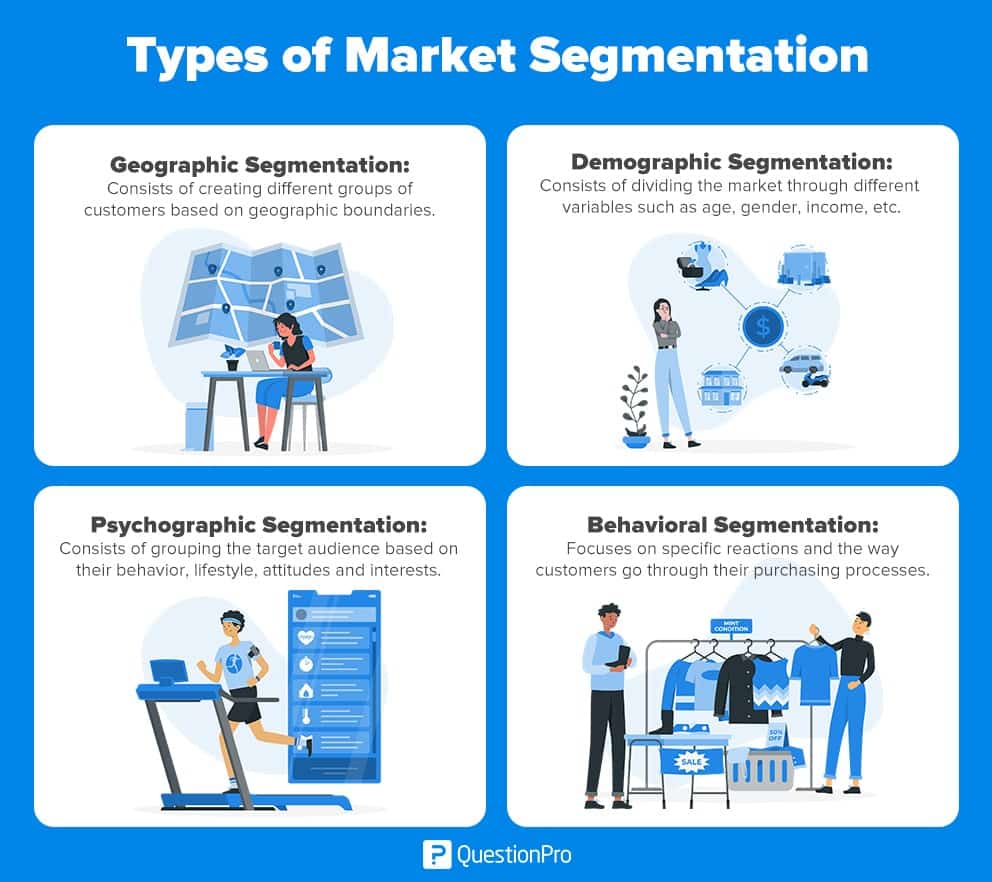
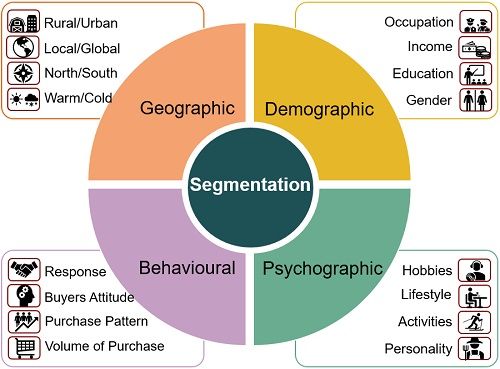
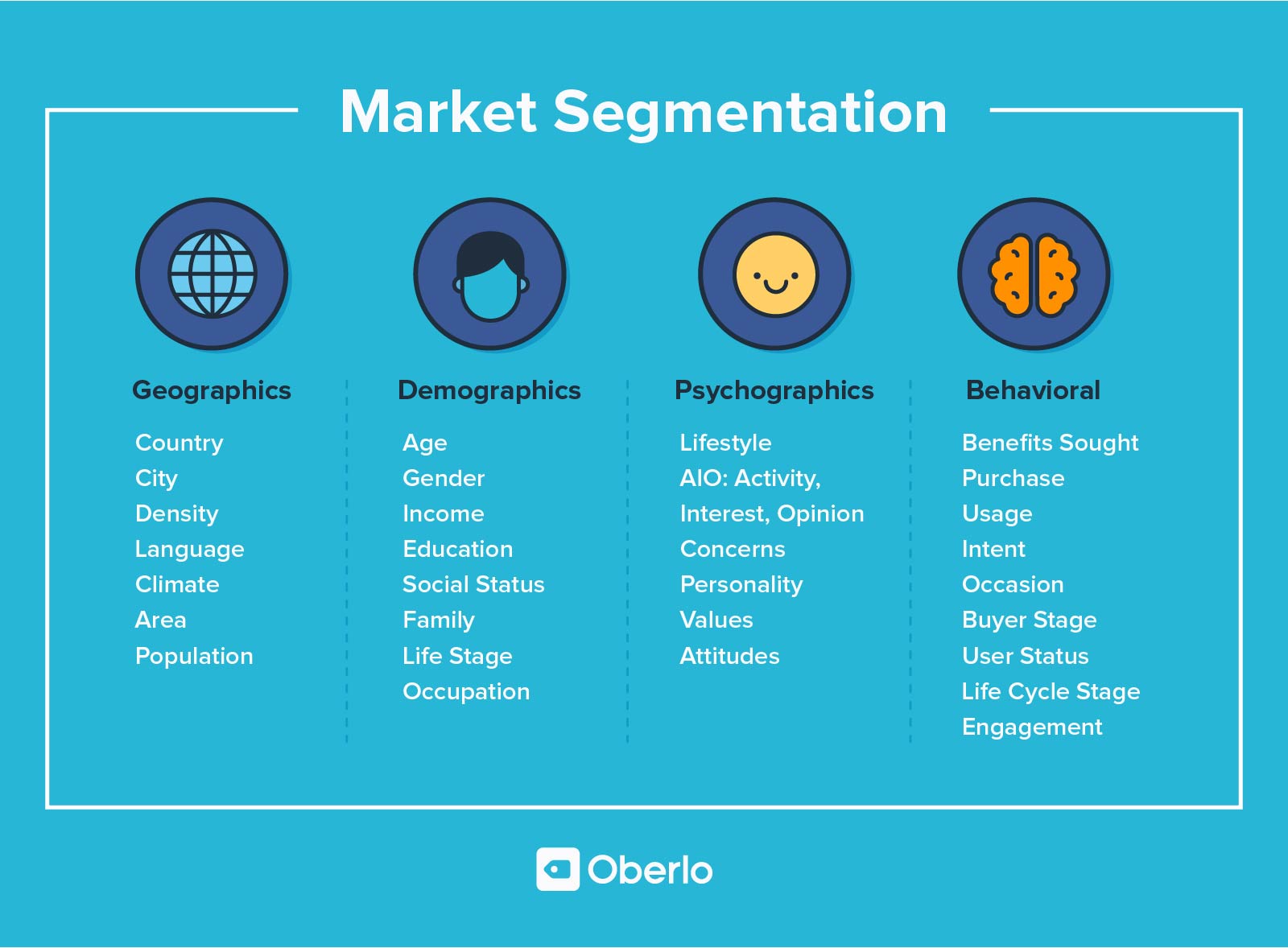
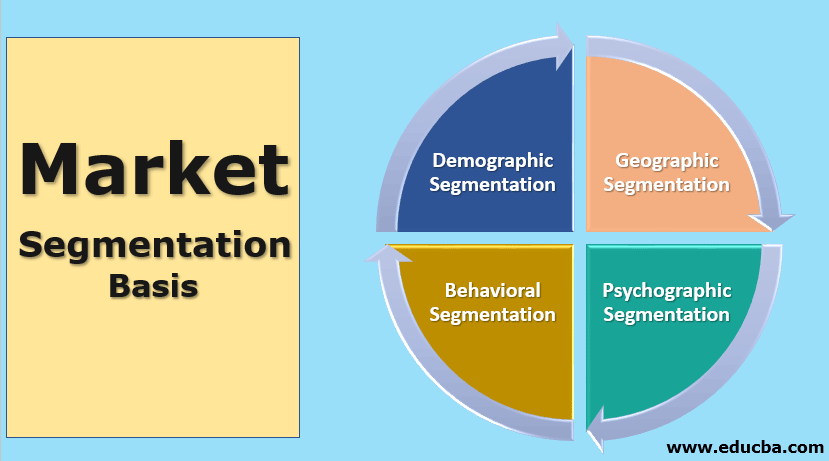
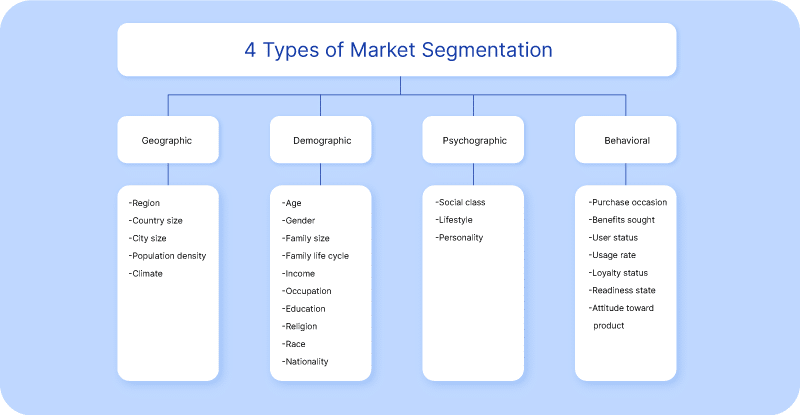
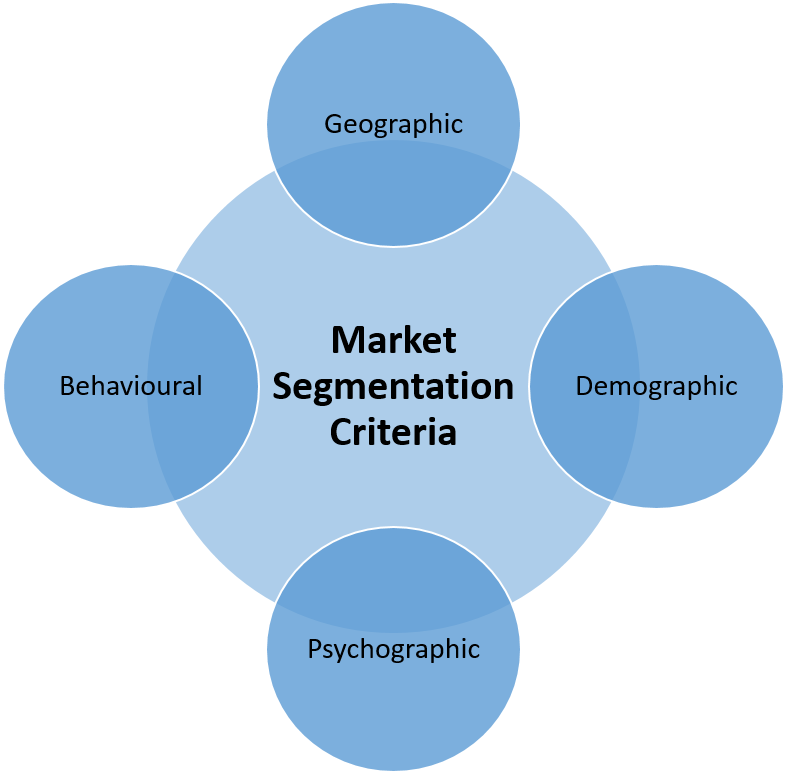
So far, we have explained the meaning and purpose of segments. From here, we will explain the conditions for performing segmentation. Here we will introduce four variables that influence the setting of segments.
behavioral variables
Behavioral variables refer to numerical values that reveal the actual behavior of users by classifying them by day of the week, time of day, environment, frequency, etc.
In addition, behavioral variables include service purchasing experience, purchasing decision-making patterns, and frequency of use.
In recent years, as represented by big data, it has become possible to obtain measurements of each consumer as quantifiable data. Based on the measured user data, precise segment settings are now possible.

Demographic variables
Demographic variables are numbers that are revealed by classifying people by age, gender, occupation, family structure, etc. As exemplified by the Ministry of Internal Affairs and Communications’ demographic survey, it can be said to be a basic indicator for analyzing consumers. Classifications such as the “F1” group (F stands for female, meaning women between the ages of 20 and 34), which are often used in audience ratings surveys, can also be considered to be this demographic variable.
By looking at demographic variables, you can establish the most basic segmentation.
geographic variables
Geographical variables, as the name suggests, are numerical values that are revealed by looking at geographical differences and classifying them based on economic conditions, climate conditions, religious and political environments, etc. of each country or region.
Economic conditions and climate conditions are markedly different between Hokkaido and Okinawa and Tokyo. Furthermore, in places where religions and lifestyles are significantly different, such as between Europe and the United States and Japan, or between the Middle East and Japan, it is not possible to consider purchasing behavior based on a fixed standard.
By analyzing these geographic variables, you can derive effective segmentation settings.
psychological variables
Psychological variables are numerical values that are revealed by classifying users based on psychological aspects that do not appear in user behavior, such as their increasingly diverse values and lifestyles. Also known as psychographic variables.
Similar to behavioral variables, they are variables that depend on each individual user, but unlike behavioral variables, they are hidden variables that are based on each user’s internal thinking, and can be said to be the most difficult to analyze.
If we can segment based on these psychological variables, we can directly approach users’ desire for approval and satisfaction.
:max_bytes(150000):strip_icc()/Market-Segmenation-76c1fe9e48ff4906bc2a565bb67c6862.png)
The four R’s important for segmentation
So far, we have talked about the conditions for performing segmentation. From here, let’s break it down further and introduce some guidelines for setting effective segments. These are commonly referred to as the 4 R’s.
Rank
Rank means prioritization and is used to judge whether the customer base is ranked according to the importance of the company’s objectives.
Naturally, if you select multiple items, there will be a priority order. In such cases, it is necessary to rank the segments according to their importance for achieving the company’s objectives and realizing the concept.
An important decision factor is not only whether it fits your company’s direction, but also whether it is an important segment for differentiating yourself from your competitors.
Realistic
Realistic literally means reality, but it also means effective scale. This is to determine whether the scale is large enough to secure sufficient sales when dividing into segments.
For example, creating a segment with a small market size may not make that segment effective. If the segment is too large, it has no meaning as a segment, but it is important to target a certain size and establish a segment that is large enough to secure the necessary sales.
Reach
Reach means reachability, which determines whether it is possible to reach a segmented customer.
When considering the index called Reach, the difficulty of reaching the product to the user is important. Simply put, it is less likely to reach users living abroad than users living in Japan.
Determining reachability and setting appropriate segments will be important when considering your company’s profits.
Response
Response literally means reaction, but it also means measurability. This is to determine whether it is possible to check the reactions from the customer group set by the segment.
We mentioned earlier that scale and reachability are important when setting up segments. When considering such metrics, it is also important to consider whether or not you can expect a response from users.
The importance of word of mouth is often talked about in the marketing industry, but the ability to measure user reactions is also important when evaluating the appropriateness of segment settings.
Meaning of segments in marketing
Why are segments important in marketing? Segmenting is necessary to ensure that your products are delivered to the users who are looking for them, and to effectively increase your sales accordingly.
If you set the segments incorrectly, you may end up delivering your products to users who don’t really want your products, or you may end up selling your products to users in areas that are environmentally unsatisfactory. It will be relaxing.
If this situation occurs, it may lead to a decline in customer satisfaction with the company’s products and a decline in the reputation of the company itself.
When thinking about your company’s marketing, keep in mind that accurate segmentation based on clear indicators will help your company attract customers and increase sales, and develop your business. Let’s do it.
summary
In this article, we have explained the meaning and purpose of segments, as well as the metrics that should be considered when setting up segments. Segment generally refers to each individual element, but in marketing terms it refers to a customer group that is divided based on certain conditions.
Segments are important for attracting customers and increasing sales for your company. Keep in mind the four variables and indicators called the four R’s when setting up segments to effectively deliver your products to users.