

Almost everyone knows the term viewer ratings. However, many people may have doubts as to exactly what kind of measurements are being taken. Additionally, although Internet broadcasting has become commonplace in recent years, the contents of indicators such as viewership ratings are not the same as those for TV programs. In this article, we will explain viewership ratings for TV programs and Internet broadcasts.
What is audience rating?
Viewership ratings generally referred to numbers per household, but recently, with the spread of video distribution over the Internet, program exposure on media other than television has also increased. If that happens, TV stations will need to provide information from a position closer to the viewers.
Furthermore, more detailed indicators are being used than ever before, such as the introduction of time-shift viewer ratings that support recording, and the use of individual viewer ratings. Audience ratings serve a variety of purposes. For example, when a company becomes a sponsor of a TV program, it can be used as a measure to measure the effectiveness of advertising, and it can also be used to examine whether the audience demographic changes depending on the content of the program.
Also, a program with a high viewership rating means that it is highly topical, so by collecting the opinions of those who have watched the program, you can point out problems with the program, or conversely point out the good points. This will also help improve the quality of future programs.
In this way, audience ratings play an important role in
marketing
and corporate activities, and TV stations continue to make efforts to acquire viewers every day.
Viewership ratings generally refer to numbers per household.
Viewership ratings refer to “household viewership ratings” and “individual viewership ratings,” which are explained in the “Types of viewership ratings” section below. It is an index that indicates the “size of viewing amount”, which is how many “households” and “individuals” watched a news/TV program or TV commercial in real time during the time it was being broadcast. In other words, it is an index that expresses “how much a program was watched,” and is not a value that evaluates the quality of the broadcast content or the value of the program.
How to conduct an audience rating survey
Currently, the only research organization that provides viewer rating data through viewer rating surveys is Video Research Co., Ltd. (VR), which conducts viewer rating surveys in 32 television broadcasting areas in Japan from time to time. The survey method is to randomly select households in each area of Japan that own a TV and calculate viewership ratings based on the TV viewing status of that household.
These randomly selected households to be surveyed are called “sample households.” Viewer ratings are calculated in increments of at least 1 to 5 minutes, and divided by the program’s broadcast time frame to give the “average program viewer rating.” In addition to the program’s average audience rating, it also calculates the “average viewership rate for each time segment” for each time segment of the day.
How to obtain audience rating data
The main method used to obtain audience rating data is “PM = People Meter.” An audience measurement tool called PM will be installed in households that have agreed to participate in the audience rating survey to measure TV viewing status.
Up to 8 TVs can be installed per household and the viewing status of each TV can be measured individually. Mainly by operating a remote control with a measurement function, the user records who in the family watched, at what time, and what program. Using this survey method, it is possible to obtain “household viewership ratings” and “individual viewership ratings” in a single survey, as well as data on TV operating rates.

Even with a viewer rating of 1%, is that a large number?
In general, a viewership rating of less than 10% is expressed as a “single digit viewership rating,” giving the impression that the viewership rating is not very good. So, how many people are watching a “viewership rating of 1%”?
According to a commentary by Video Research (VR), a major viewer rating research company, an individual viewer rating of 1% in the Kanto region means approximately 405,000 people are watching.
Reference: VRDigest+ “How many people have a viewership rating of 1%?” Video Research explains the basics of viewership “Ki”
(
https://www.videor.co.jp/digestplus/article/80437.html
)
However, the value of “405,000 people” applies only to the Kanto region, and other regions differ depending on the region and characteristics, so it is necessary to calculate it using another calculation method. Looking at this value, you can see that even with a viewership rating of 1%, there is a considerable number of viewers.
Role of audience ratings
There are three main types of audience ratings:
Now, let’s explain each feature in detail.
Check the trends in the world
By measuring audience ratings, we have the role of confirming trends in the world, such as what kinds of things people are currently interested in. In other words, audience ratings play a role in social research. Mass media such as television, newspapers, and magazines are powerful tools for shaping public opinion.
Confirm programs with high demand
This information is used by producers, who decide on program content, to confirm the needs of viewers. In addition, we analyze not only the program but also which scenes show the most interest.
Confirmation of advertising effectiveness
Commercial broadcasts can have advertising effects by including commercials or by having celebrities wear clothes with brand names on them. It is an important element for programs and broadcasting stations because it allows many people to see advertisements in proportion to the viewer rating numbers.
Television stations place great importance on viewer ratings, and will cut the budget or cancel programs with low viewer ratings. In other words, audience ratings are a very important indicator for TV stations, and they are generally very sensitive about them.
What is core audience rating?
Core viewership is a term used to express individual viewership in the family segment, and generally refers to individual viewership between the ages of 13 and 49. The definition of core audience ratings differs depending on each TV station, but generally falls under the following audience rating categories.
| Core audience rating (core audience rating classification) | |
| T layer (Teen-age) | Men and women aged 13-19 |
| F1 layer (Female) | Women aged 20-34 |
| F2 layer (Female) | Women aged 35-49 |
| M1 layer (Male) | Male aged 20-34 |
| M2 layer (Male) | Men aged 35-49 |
Sponsors (advertisers) who place mass advertisements place particular emphasis on the above core segment, which has a large number of loyal customers, as they have a wider range of activities and a higher desire to purchase products and services than other audience segments. Against this background, TV stations are always conscious of how they can produce programs and commercials that are acceptable to the above core demographic.
Types of audience ratings
There are two types of audience ratings surveys:
Household audience rating
Household audience ratings are the percentage of households that own a TV that watch a program. Generally speaking, audience ratings refer to household audience ratings. The target households are fixed, and viewer ratings are determined by the programs watched by the target households.
Individual audience rating
Individual viewing ratings are for family members aged 4 and over in a household, and represent how long each family member watched TV. It is mainly used in marketing to target targets in detail such as age and gender.
Since programs can now be viewed through a variety of media, there will be a need to meet the needs of each individual viewer even more in the future. Therefore, the importance of individual audience ratings will increase. Furthermore, due to the declining birthrate, it is less likely that families will watch the same program together, which is another reason why individual viewer ratings are needed.

Other types of audience ratings
In addition to “household viewership ratings” and “individual viewership ratings,” there are the following viewership ratings.
What is time shift audience rating?
“Time-shift audience rating” is an index that shows how often recorded news/TV programs and TV commercials are played. Measures how many times a TV program or TV commercial has been played within approximately 168 hours (7 days) after it was recorded.
Time-shifted viewership ratings are only viewership ratings that are viewed at times other than real time, so they are not included in regular viewership ratings.
What is the overall audience rating?
The overall viewership rating is the viewership rating when viewing in either “real-time viewing” or “time-shift viewing.” In other words, if you watch in either real time or time shift, it will be counted as 1 in the overall viewership rating.
If you watch in both real-time and time-shifted, it will be counted as “real-time viewing” and the overlap rate will be taken into account in the measurement. For example, if the real-time viewership rate is 15%, the time-shift viewership rate is 10%, and the overlap rate is 1%, the overall viewership rate will be as follows.
Real-time viewership rate 15% + time-shift viewership rate 10% – overlap rate 1% = 24%
■Overall audience rating = 24%
Continuous audience rating
Due to the structure of TV programs, this is the percentage of households where the mayor continued even in programs and news programs that are organized into two parts, and even in programs that span multiple weeks.
How to measure audience ratings
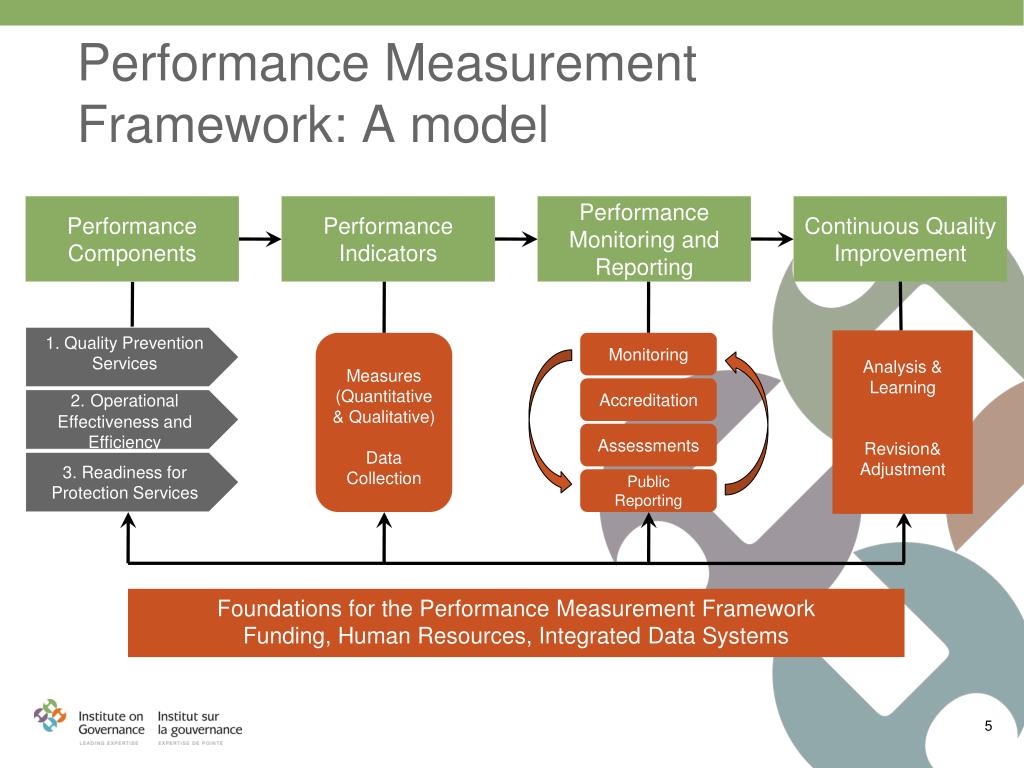
There is a traditional method for measuring audience ratings. However, in recent years, various other measurement methods have been introduced to provide more detailed viewership ratings.
Traditional method
Since 1962, a research company called Video Research has been conducting research for a long time. Originally, the survey targeted a large number of households in areas with large populations such as the Kanto and Kansai regions, and a small number of households in areas with small populations. As of October 2021, there are 10,700 households.
However, the proportion of families watching a single program together is lower than it used to be, and the same measurement methods used in the past are not always accurate. Therefore, various measurement methods are now being introduced. The main methods will be explained below.
diary questionnaire
A diary-type questionnaire is a questionnaire that is administered to each individual in 5-minute increments using a questionnaire. Unlike the two types described below, humans are characterized by the fact that they take measurements manually. Viewership ratings are generally measured using systems or machines, but this is an unusual method of measurement. Rather than just giving numbers, you can collect specific impressions from viewers.
online meter system
By simply attaching a measuring device to the TVs owned by target households, you can find out what programs are being watched at the time of measurement. It is common to use this method to find out household audience ratings.
People meter (PM) system
Compared to online meters, people meters give viewership ratings for individuals. Remote control buttons are installed in each house in advance, and since each family member has a different button, it is possible to find out who watched what program and at what time.
What is viewer rating in video viewing?
In recent years, video streaming methods using the Internet have become mainstream, and video distribution services are provided through a variety of services. On the Internet, metrics such as viewer ratings and number of views are used as indicators.
Compared to TV, video viewing is characterized by the fact that the numbers are clearly displayed in real time. Therefore, you can use it as a reference when producing future programs. Therefore, it is unique in that it can run the PDCA cycle faster than TV viewer ratings.
Viewership rating
The viewership rating for video viewing is calculated as the ratio of the number of times a video is played to the number of times the video is displayed. If the viewership rate is low, people are visiting the page that displays the video, but for various reasons they are not playing the video.
Possible causes include the title not being the one you want to watch, or the operating instructions for playing the video being difficult to understand.
Play rate
Next is the playback rate, which is not on TV, but it is the ratio of the video played to the length of the video. In other words, if the playback rate is high for a long video, it means that you are able to adequately convey the content of the video to your viewers. Even if the number of views is high, it may not be reaching the viewers, so the playback rate is an important indicator.

Average viewing time on YouTube is an important indicator
The average viewing time on YouTube is one of the most important metrics. The average viewing time is a value that shows how long users watch the video, and the longer the average viewing time, the more popular the video is.
Generally speaking, it is considered ideal if you can maintain an average viewing time of 40% or more on YouTube. In other words, if a video has a total length of 10 minutes, the average viewing time is considered to be good if it is watched for about 4 minutes or more.
Formula for calculating average viewing time
To find the average YouTube viewing time, divide each user’s viewing time by the number of users. For example, if user A watches for 5 minutes, user B watches for 6 minutes, and user C watches for 7 minutes, the average viewing time is as follows.
(5 minutes for A + 6 minutes for B + 7 minutes for C) ÷ 3 people = 6
■Average viewing time = 6 minutes
Benefits of longer average viewing time
The longer the average viewing time on YouTube, the more benefits there will be. It is as follows.
Easily increase the number of plays
The longer the average viewing time on YouTube, the better the algorithm will evaluate it and the more likely it will be displayed in “Recommended”. There are two recommended places: the “home screen” and the “next video” that is displayed while watching a video.Displaying here increases the possibility that users will click on it. In other words, being displayed in the recommended list will help increase the number of views.
Advertising revenue will increase more easily
The longer the average viewing time, the more ads will be displayed within a single video. This can easily lead to an increase in advertising revenue.
For example, if an ad is displayed once every 30 seconds, if the average viewership rate is 1 minute, the ad will be displayed only 2 times, but at 2 minutes, the ad will be displayed 4 times.
If it is 3 minutes, it will be 6 times, and the cash points will simply increase. Even if the number of views is the same, the longer the average viewing time, the higher the advertising revenue will be.
What indicators other than viewership rate are necessary for video media?
When it comes to video media, playback rates and viewership rates aren’t the only things that are important. Compared to television, it is possible to provide more clear numbers of data that can lead to advertising. The following indicators are said to be important.
Now, we will explain each indicator in detail. In terms of video viewing, it is an indicator that shows not only the number of programs being watched, but also how much advertisements are being viewed, and whether the advertisements are leading to product sales and member acquisition, which is the main purpose of advertising.
number of clicks
Advertisements are displayed on video media, and the number of times you click on the advertisement is recorded as data. If the video and ad content are linked, users may click on the ad to check more detailed information after watching the video. In other words, the number of clicks varies depending on the content of the video.
Television viewer ratings are determined by the number of people who watch the program, but for video media, more detailed figures are given, such as how many people watch the video and see the advertisement. The ratio of the number of clicks to the number of impressions is called the click-through rate, and the higher the click-through rate, the more likely it is that the content of the ad or video matches the needs of the viewer.
In addition, on popular sites with many viewers, you can set search keywords called ”
tags
” on videos to increase the number of views and improve advertising effectiveness.
number of conversions
is when a viewer takes the action desired by the advertiser, such as not only viewing the ad but also purchasing the advertised product or requesting information. The most important thing in video advertising is to increase the number of conversions and increase the conversion rate.
If the number of clicks is high but the conversion rate is not high, the product and ad content may not match, or the advertising site may be difficult for viewers to use. This means that usability may be poor.

summary
In this article, we have explained viewer ratings in detail. Viewership ratings are not measured in real-time by generation as in the past, but there are various measurement methods that allow for more detailed data.
Viewer ratings not only measure which programs are being watched the most, but they also allow us to understand trends in the world by understanding what viewers are looking for. Furthermore, there are various purposes such as confirming the value of each program as an advertising medium.
In recent years, broadcasts have started to be broadcast on video. Unlike TV viewership ratings, it provides a variety of data such as not only the number of times a program is watched, but also how effective advertising is. It is important to analyze this data to create program and advertising content that better meets the needs of viewers.