

Creating
a marketing
budget is a daunting task for many marketers. Every year, marketing measures are becoming more digitalized, and new approaches to users and marketing methods are being created. On the other hand, old measures are becoming less effective, making it difficult to achieve the same results with the same measures as the previous year.
How you allocate your limited marketing budget has a direct impact on your contribution to sales for that year, so your sales can change dramatically depending on your choices. It is extremely difficult to consider optimal budget allocation while predicting changes over the course of a year.
This time, we will introduce how to decide the marketing budget and the optimal allocation method.
Steps to decide on a marketing budget
There are five steps required when developing a marketing budget.
① Check the sales target ② Understand the sales structure ③ Analyze the data ④ Calculate the number of lead acquisitions and acquisition unit price for each measure
⑤ Coordinate with management and obtain approval

① Check sales targets
The first thing you need to do when developing a marketing budget is to understand the sales goals you want for your company as a whole. The target figures are calculated backwards from the company’s overall sales target and set for each department.
The marketing department sets the number of business deals and new leads acquired in accordance with sales targets. Depending on the company, the cost per acquisition of an opportunity or lead, or the cost per customer acquisition (CAC) may also be added to the target figure.
Additionally, since the marketing department cannot generate sales on its own, it is important to consider how much it will contribute to achieving sales targets, such as the number of deals handed over to the sales department, customer acquisition costs, and actions to improve the order rate. must be formulated.

② Understand the sales structure
Once you know your sales goals, it’s time to break down the components that make up those sales. Generally speaking, sales = number of orders x average order amount. Furthermore, the number of orders received = number of business negotiations acquired × order rate, and the number of business negotiations acquired = number of leads acquired × business negotiation acquisition rate, and the number of leads acquired can be broken down by factors for each measure.
For listing ads, the number of leads acquired = number of clicks x conversion rate, and number of clicks = number of impressions x click rate.
In addition, the composition of the average order amount changes depending on the type of product/service handled, unit price, and options. We will analyze how the sales of the products and services handled by your company are structured so that you can generate data.
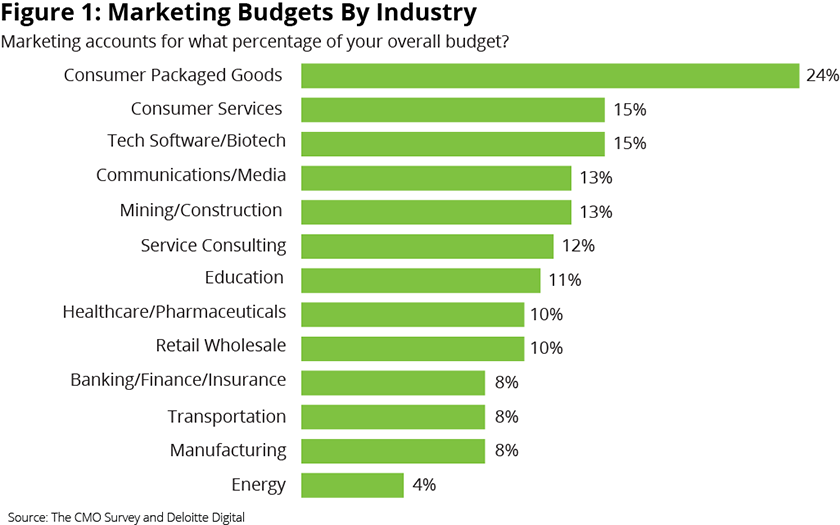
③ Analyze the data
Once you have broken down your sales goals and understood each element, collect current data and analyze the issues. In order to allocate an appropriate budget, it is essential to explore the issues with current marketing measures.
Based on the analysis results, you can reduce or reduce the budget allocation for measures that have a low contribution to achieving sales targets, or make decisions such as allocating the budget to new measures.
For example, in the case of listing ads, we identify and analyze not only the number of conversions and cost per acquisition, but also the click-through rate, conversion rate, keywords and ad text that responded well, and keywords and ad text that did not have an effect.
We will extract the issues with listing advertisements from the analysis and determine whether there is still room to acquire more customers than the current situation, or whether there is no room for it because it has already been harvested. Also, if there is no room for acquisition, we will consider whether it is possible to improve the cost per acquisition.
If the contribution to achieving the sales target is high and there is still room for acquisition, increase the budget allocation, or if the contribution is low and there is no room for acquisition, consider reducing the budget allocation to increase acquisition efficiency. can.

④Calculate the number of lead acquisitions and acquisition unit cost for each measure
Once we have extracted the issues of the current marketing measures from the current data, we will calculate the number of leads acquired and the cost per acquisition for each measure. Considering the status of each issue, we will consider the number of acquisitions and acquisition unit price that can achieve the target numerical value.
For management, rather than detailed measures such as listing advertisements, seminars, and website improvements, the purpose of budget allocation can be broken down by function of measures such as “attracting new leads,” “improving new lead acquisition rate,” and “following up on existing leads.” It becomes easier to share.
[Attract new leads]
Measures related to lead generation, such as placing various advertisements such as listing advertisements and SNS advertisements, and exhibiting at events such as seminars and exhibitions.
[Improving new lead acquisition rate]
Measures to improve the acquisition rate, such as improving the website
[Follow existing leads]
Send emails to potential customers, such as leads with a past business history or leads acquired through white paper downloads or seminar applications, leading to business negotiations. Measures applicable to lead nurturing
Additionally, by quantifying the number of deals won, the number of orders received, the cost per deal acquired, and the cost per customer acquisition (CAC), and by visualizing their contribution to sales targets, it will be easier to understand budget allocation.

⑤ Coordinate with management and obtain approval

Finally, we compile the budget into a draft form, coordinate with management, and obtain approval. Management confirms and considers whether the budget will help achieve the company’s sales goals and whether the budget allocation is in line with medium- to long-term management strategies.
Prepare supporting data and evidence so that you can clearly answer questions or suggestions from management. Once the agreement is reached with management, it will be finalized.

Optimal allocation of marketing budget
There are three main ways to optimally allocate your marketing budget.

① Contribute to achieving sales targets
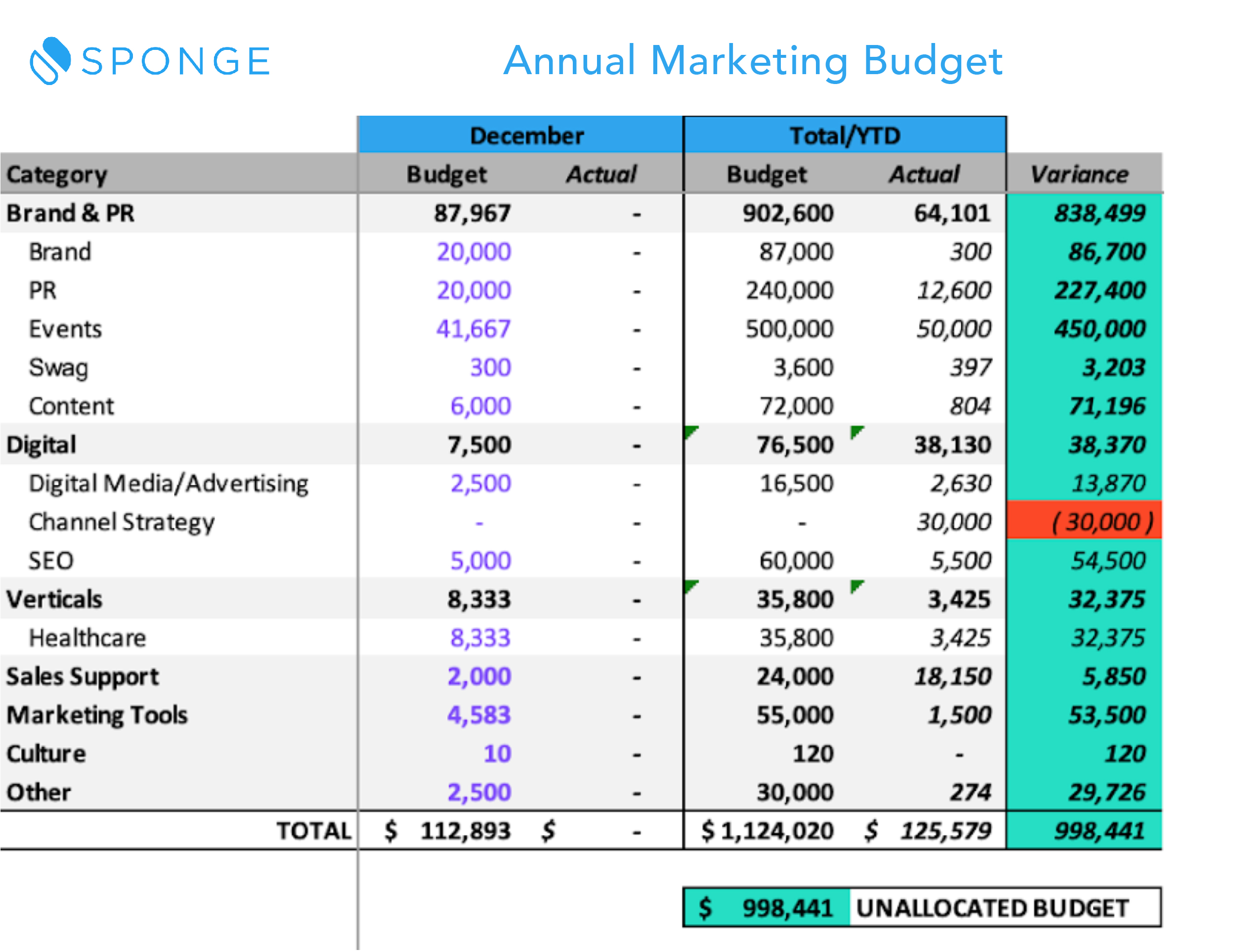
As mentioned above, the marketing department alone cannot generate sales. How budget allocation contributes to achieving sales targets, which are business goals, and a budget that is formulated based on quantified conditions such as the number of business deals won and customer acquisition costs, is the optimal budget allocation. I can say it.
②Appropriate timing
This is especially true for events that have fixed dates, such as exhibitions and seminars, but allocating budget just because they were held last year is not the best way to allocate the budget. Understand demand peaks and order timing through data analysis, and reflect the appropriate timing of focus in budget allocation.
③Do not harden too much
Although the marketing budget is determined at the beginning of the period, it is important to create a system that allows for flexible changes if the results are not as expected at the beginning of the period.
Rather than implementing measures according to the budget allocation decided at the beginning of the period, the appropriate budget allocation is to optimize the budget while looking at the contribution of each measure to the sales target.

summary
- Since the marketing department alone cannot generate sales, create a budget while keeping in mind how much it will contribute to achieving sales goals.
- There are five steps to determining your marketing budget:
- For management, rather than detailed measures, it is easier to share the purpose of budget allocation by dividing the measures into functional categories such as “attracting new leads,” “improving new lead acquisition rate,” and “following up on existing leads.”
- The marketing budget is determined at the beginning of the period, but it is important to create a system that allows for flexible changes if the results are not as expected at the beginning of the period.
① Check the sales target ② Understand the sales structure ③ Analyze the data ④ Calculate the number of lead acquisitions and acquisition unit price for each measure ⑤ Coordinate with management and obtain approval