

SEO
is one of the most common methods used by companies to attract customers from the web. In fact, many companies are strengthening their customer attraction through SEO and acquiring many inbound customers.
However, many people are thinking about working on SEO with the aim of achieving this state, but are unsure where to start and whether their company can really complete the process on their own.
Therefore, in this article, we will explain how to do SEO measures yourself, and we will also explain methods that you should not use when doing SEO measures. If you want to strengthen your SEO measures, please use this as a reference.
Can I do SEO measures myself?
In conclusion, it is impossible for someone without knowledge to carry out all SEO measures. However, there are some SEO measures that can be taken even without specialized knowledge. The important thing is to identify SEO methods that can be completed by your company.
If you don’t have specialized knowledge, trying to use methods that you can’t handle will not only waste time, but will also lead to no results. Therefore, why not try starting with the content explained in this article that even beginners can put into practice?

8 SEO techniques that beginners can use right away
Here are eight SEO techniques that beginners can use right away.
- Understand the process of getting indexed by search engines
- Optimize your content for search keywords
- Insert title and description tags appropriately
- Set headings according to rules
- Optimize for mobile (responsive)
- Compress and upload images
- Ensure minimum number of characters
- Spread on SNS
Let’s look at each in turn.
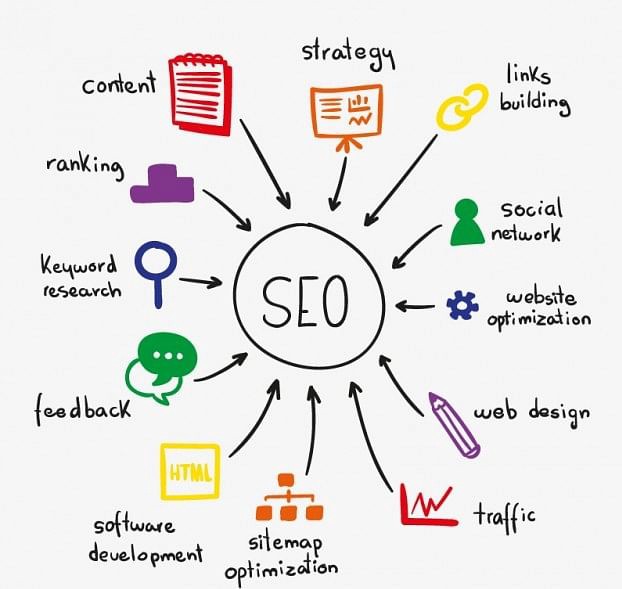
Understand the process of getting indexed by search engines
First, let’s understand how
search engines
index it. In the first place, indexing refers to how published articles are displayed in search results. No matter how much effort you put into publishing content, if it’s not indexed in search results, no one will see it, and all your work will go to waste.
In order to be indexed by search engines, it is important that the content satisfies both users and search engines. Satisfied content refers to a state in which the user’s search intent is met.
In all user behavior, when a user searches for something on a search engine, it boils down to the need to solve a specific problem. Therefore, the first SEO method is to properly understand the meaning, background, and concerns that users are searching for, and prepare content that meets those needs.
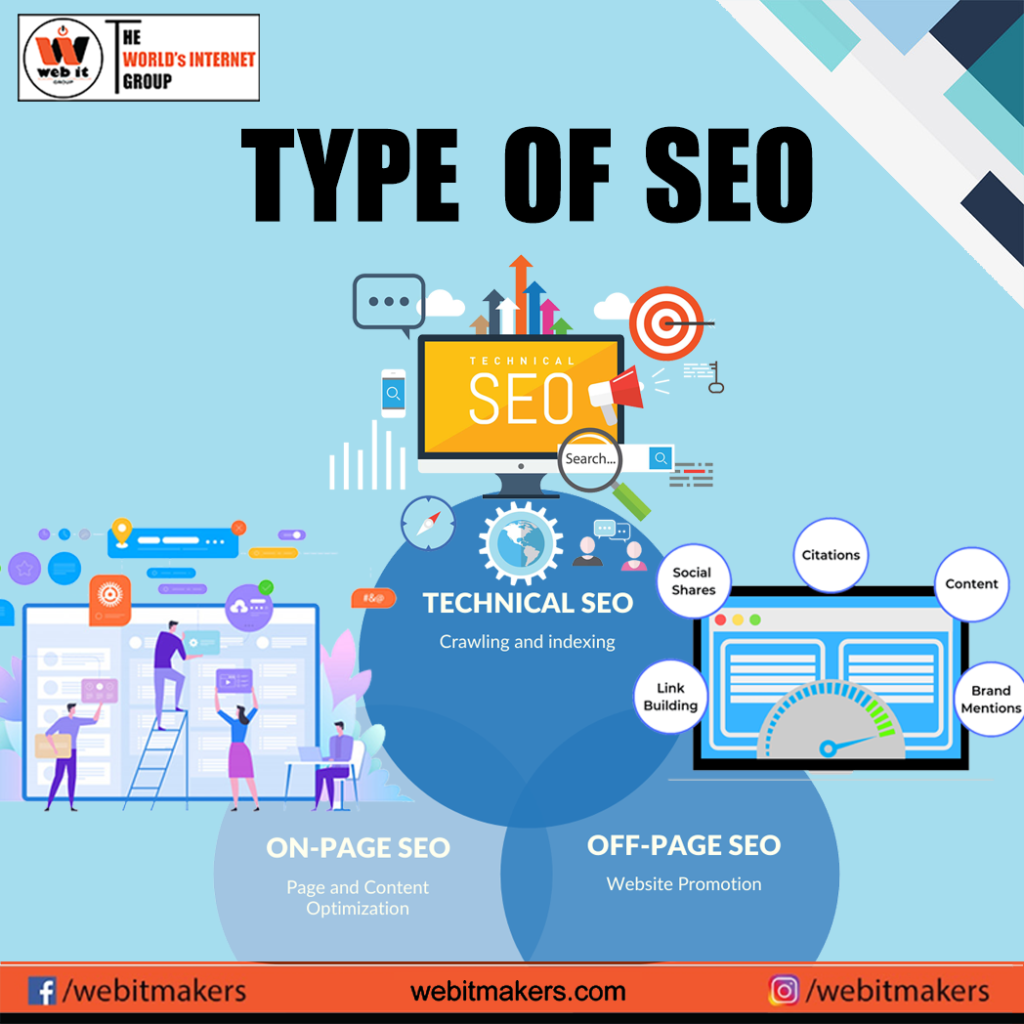
Optimize content based on search keywords
Users always search by entering specific keywords. For example, “Credit card recommendations” or “SEO cost”. Users searching for “recommended credit cards” are clearly concerned about wanting to know which credit cards are recommended for them.
When it comes to “SEO cost”, there is
a need
to know the cost of SEO. The key is to optimize your content for the keywords these users are searching for.
A common mistake is, for example, when a user is searching for “SEO cost”, but the content focuses on SEO consulting, and the answer is not about the important SEO cost. This is a rare case.
Naturally, in the above case, user satisfaction will not increase, so search rankings will not improve. Be sure to optimize your content for user search keywords.
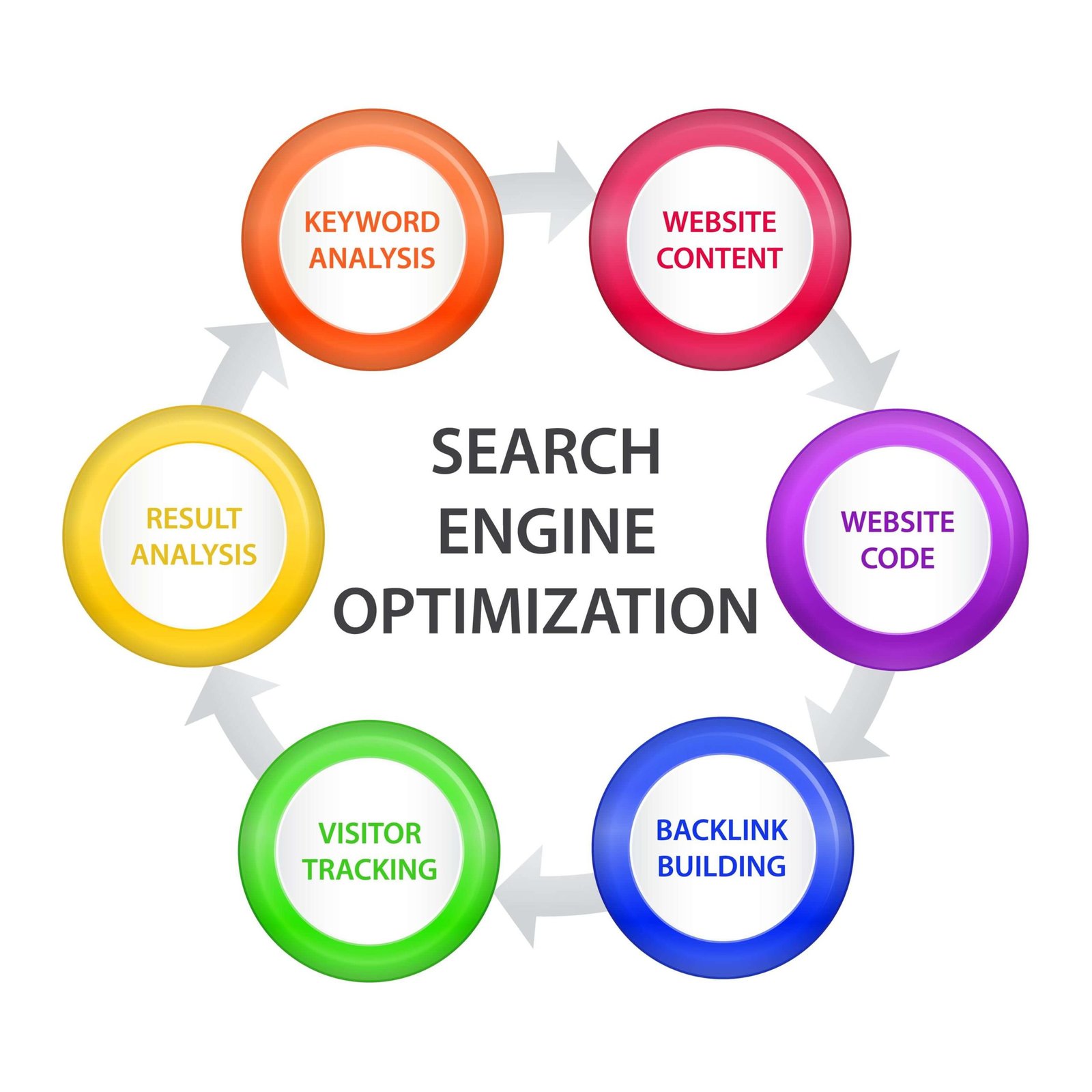
Insert title and description tags appropriately
The title tag is an important tag for conveying the topic of your content concisely and clearly to search engines. The description tag is a summary of the article that is displayed below the title tag in search results.
From the search results, users click on articles that are more appealing and likely will solve their problems. And these are determined from the contents of the title and description tags. Be sure to include title and description tags appropriately, as they are important factors that affect click-through rate.

Set headings according to rules
Think of headings as a table of contents for the entire text. Also, headings are set using h tags. The largest topic is h2, the contents under it are h3, and the contents under h3 are h4. This h tag has rules recommended by search engines.
That is, use h tags in order. For example, let’s say you write content for the keyword “SEO cost”. In that case, the possible h tags are as follows.
- h2: Overall cost of SEO measures
- h3: Internal measures
- h3: External measures
- h3: Content SEO
- h4: Since the content is a specialized field, outsourcing costs may be incurred in some cases.
- h2: SEO consulting cost
As shown above, the main topic is H2, followed by H3 and H4. Also, once you have finished explaining the general topic of h2, you will also know that the next h2 has begun.
Setting h tags (headings) in this way not only makes it easier for users to understand the information that can be obtained from the article, but also allows the content of the article to be conveyed appropriately when it is indexed by search engines.
Therefore, from an SEO perspective, be sure to use the h tag according to the rules.

Optimize for mobile (responsive)
Next, it is also important to optimize for mobile (
responsiveness
). Google indexes content using a mechanism called mobile-first indexing. This is a system that indexes content based on the mobile version, not the PC version.
So, if your website is not mobile-optimized, you will be at a disadvantage in indexing at that point. If you are running on WordPress, there is a mobile-optimized design plate called a
WordPress
theme, so basically you can make it mobile-optimized just by installing it.

Compress and upload images
Google also considers the page speed of a website important. However, page speed requires the knowledge of a professional engineer, and it can be said that it is almost impossible for beginners to tackle it.
However, one way to improve page speed that even beginners can try is to compress images before submitting them. One image doesn’t make much of a difference, but as the operating period increases and the number of images exceeds several hundred, the page speed changes dramatically.
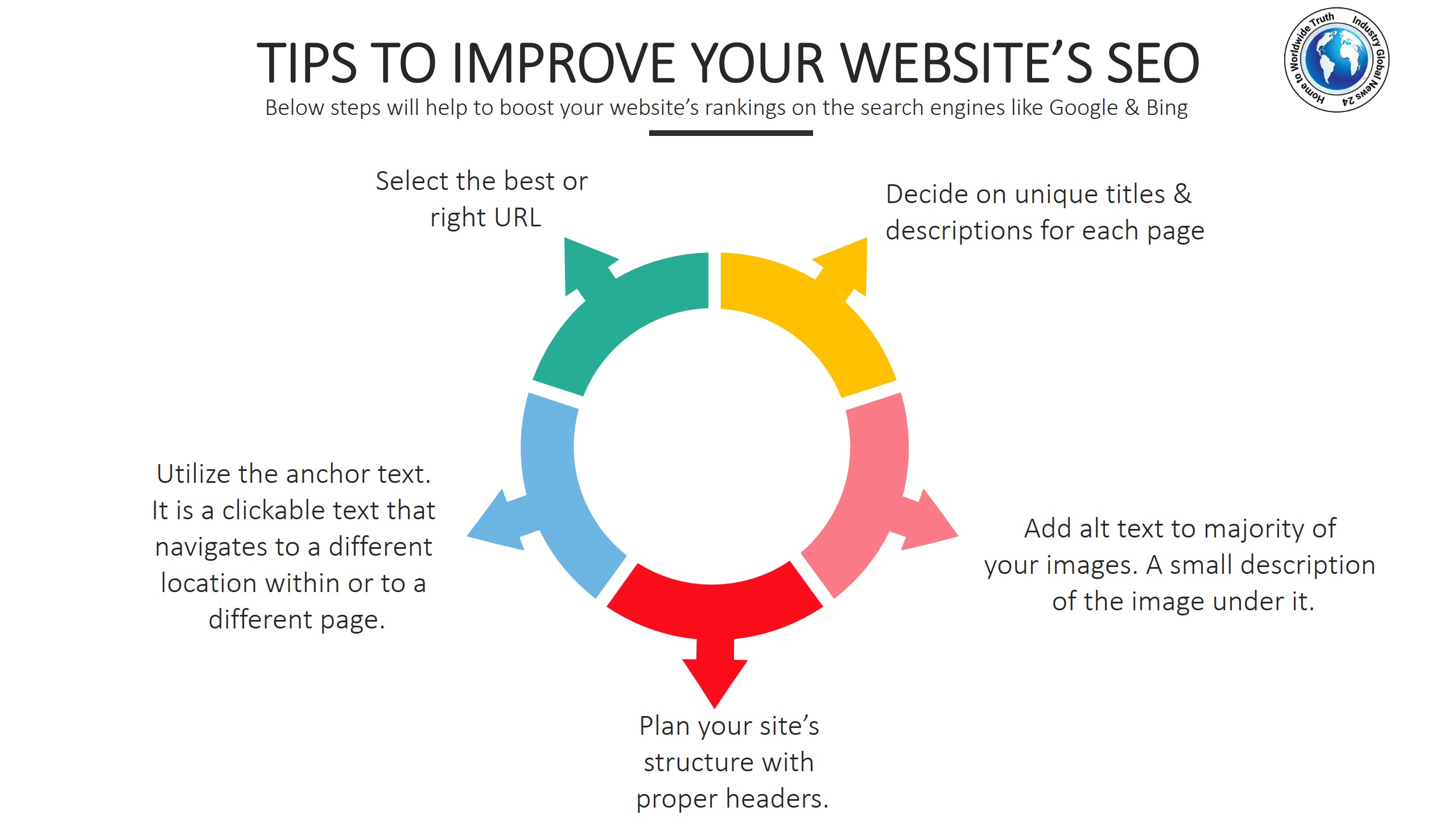
Ensure minimum number of characters
It is not true that the more characters you have, the higher you will rank, but the minimum number of characters is necessary to satisfy the search intent. Some people upload diary-like content of about 200 characters, but this is inappropriate from the perspective of attracting customers.
Although it varies depending on the content and genre, you will need at least 2,000 to 3,000 characters.

Spread on SNS
SEO measures do not mean that you can expect to suddenly attract an explosive number of customers from the initial stage. This is a method that allows you to gradually gain access over a period of 3 to 6 months. Therefore, in order to increase access as much as possible from the initial stage, make sure to spread the content published on your company’s SNS accounts.
3 methods you should not use when dealing with SEO
So far, we have explained SEO techniques that beginners can use. Here, we will introduce three typical techniques that you should not do when it comes to SEO.
- Mass production of low quality content
- Get backlinks from websites created just for backlinks
- word salad
Let’s look at each in turn.
Mass production of low quality content
Low-quality content is not limited to content that does not meet the user’s search intent, but also refers to content that does not have enough characters or content that is full of images.
In particular, you need to be careful when it comes to content with a small number of characters, as it is often mass-produced without you noticing.
Google has released a standard called “EAT” as an official standard for evaluating websites. It is an acronym for Expertise, Authoritativeness, and Trustworthiness, and it is a standard that cannot be ignored when getting a page to rank higher in SEO measures.
Therefore, when creating content, it is better to be conscious not only of quantity but also of quality.
Obtaining backlinks from websites created just for backlinks
Backlinks are useful for increasing your website’s domain power and quickly improving your search rankings. However, Google also looks at the quality of backlinks. In particular, avoid self-produced links from websites created solely for the purpose of collecting backlinks, as there is a high risk of being penalized.
word salad
Word salad is the practice of including more keywords in your content than necessary. Ensuring an appropriate number of keywords will have a positive effect on SEO, but cramming in more than what users and search engines want will only have a negative impact. Therefore, it is important to take measures using words that can be included naturally.
summary
In this article, we have explained some SEO strategies that even beginners can tackle. Although it is impossible to carry out SEO measures that require advanced techniques, even beginners can tackle them without any problems using the methods explained in this article.
Why not start by understanding the mechanism behind indexing and creating high-quality content?