

In the previous article (
), we talked about the history and definition of
marketing
, the concept of “managerial marketing” that views marketing from a management perspective, and its characteristics. I introduced about. It explains that “Managerial marketing is a strategy that considers a company’s strategy itself as marketing, and involves decision-making by management.”
When looking at marketing from a management perspective, the relationship with management strategy is inseparable. Some of you who read the previous article may have looked at the concept and characteristics of managerial marketing and wondered what exactly “management strategy” and “managerial marketing (or
marketing strategy
)” are. Many people may have wondered whether there is a difference between the two.
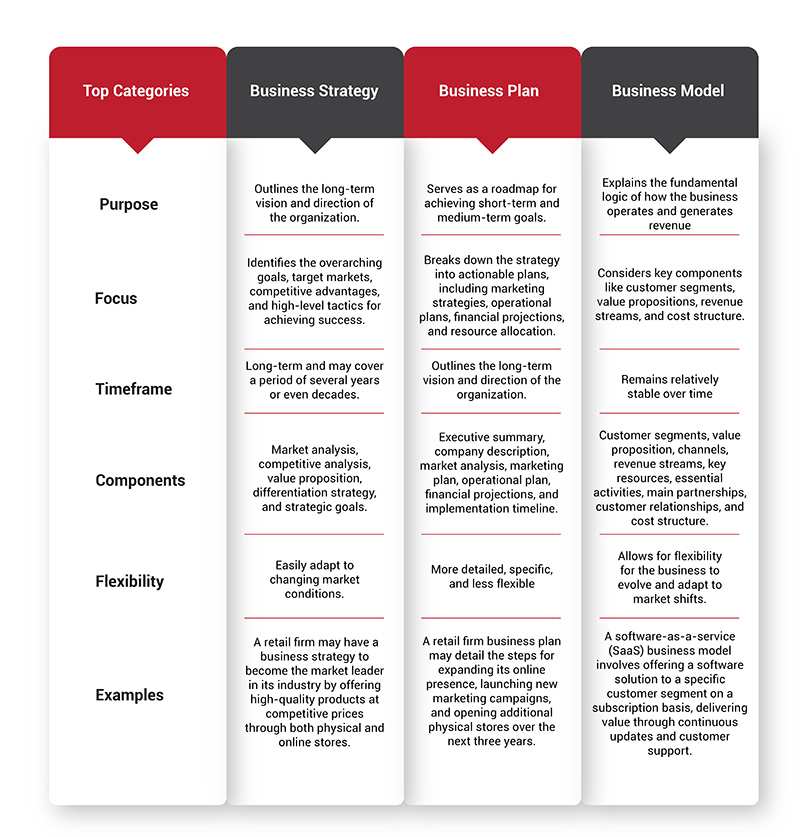
This time, we will look at what a business strategy is, its definition, the classification of business strategies, and explain its relationship with marketing strategy and the positioning of each.
What is business strategy?
Are business strategy and marketing strategy different? Regarding this question, to conclude, there is no clear academic definition of a difference between management strategy and marketing strategy. There are two main reasons for this. The first reason is that there is no unified academic definition of the terms management strategy and marketing strategy in the world.
The second reason, as mentioned in the previous article, is that management strategy theory and marketing theory were established at the same time, and that their origins, lineages, and points of emphasis are different.
In this section, we will review the definition of each strategy and the target areas of management strategy, focusing on textbook literature on business strategy theory.
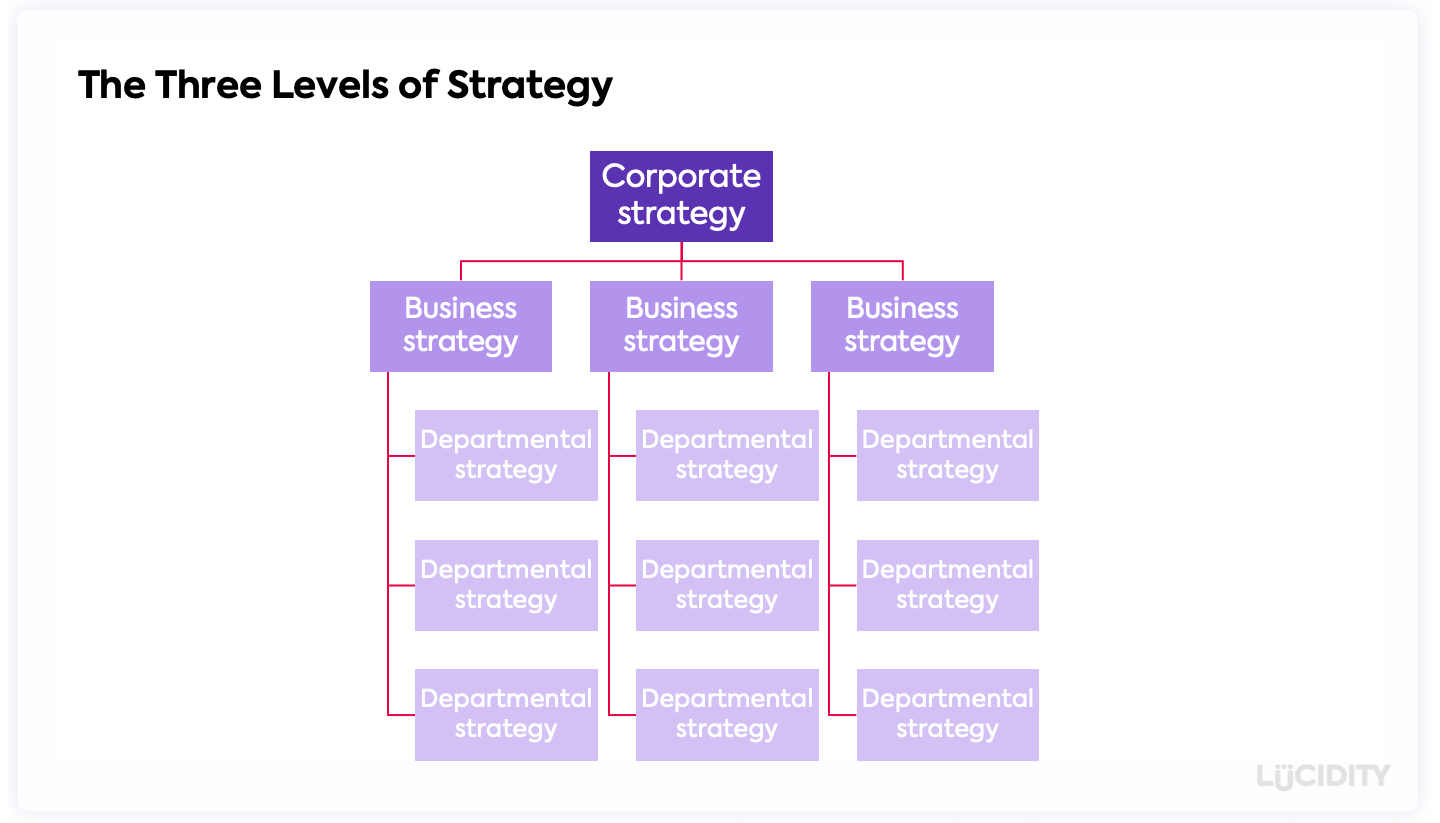
What is strategy? ~Various definitions of strategy and what they have in common~
According to Kato (2014), the meaning of the word management strategy is diverse and ambiguous. He also pointed out that words such as business strategy and strategies are also used in general business settings, where simply adding the word “strategy” turns any management policy into a business strategy. I am.
In practical and business settings, the word strategy is overused and everything is treated as a management strategy. It can be said that this is caused by.
Therefore, in Table 1 below, we have selected some definitions of management strategy by representative management scholars from Japan and abroad. Here, we will look at several representative definitions to find commonalities and identify the essential elements of strategy.
| 1 | “Defining a company’s long-term goals and objectives, adopting the course of action, and allocating resources necessary to carry out those goals” Chandler (1962) |
| 2 | “Management strategy indicates the basic direction of an organization’s activities in relation to the environment, and it selects the basic situation of the organization’s activities and determines the basic policy of the combination of activities.” Itami ( 1984) |
| 3 | “It is a concept that shows the pattern of environmental adaptation in a future-oriented manner, and serves as a guideline for decision-making by people within the company.” Ishii et al. (1996) |
| 4 | “Draw a vision of what you want to be in the future, and in order to achieve that vision, consider the management resources (abilities) you have and the business environment to which you should adapt (the surroundings). Maps and plans (scenarios) that relate the situation)” Numakami (2000) |
| 5 | “An integrated and coordinated set of commitments and actions designed to leverage core competencies and gain competitive advantage.” Hoskisson et al. (2007) |
| 6 | “The basis of strategy is to apply one’s greatest strengths to one’s weakest points…A good strategy consists first of all of organizing targeted and consistent actions, not only capitalizing on existing strengths; , create new strengths. Second, change your perspective and discover new strengths…A good strategy has a well-founded basic structure and is directly linked to consistent action. The basic structure consists of three parts: diagnosis, basic policy, and action.” Rumelt (2011). |
| 7 | “The future vision of companies and the path to achieving it” Aoshima and Kato (2012) |
| 8 | “The future situation that should be reached and specific measures to achieve it” Kato (2014) |
Table 1: “Definition of management strategy”, created by the author
As you can see from the definitions in Table 1, each definition has slightly different granularity and emphasis. However, just from the definitions discussed this time, we can find two major commonalities:
(1) Strategy indicates a company’s guidelines and policies. (2) Strategy involves the actions, actions, and execution of plans of a company.
In fact, Kato (2014) states, “Management strategy is based on the current situation and consists of two points: 1. the future situation to be reached, represented by the vision, and 2. the measures that are the path to get there. ”.
Rarely do I come across articles or people who misunderstand that management strategy is about managers setting visions and policies, showing leadership, or, worst of all, tinkering with the organization. These are big mistakes. Of course, there is no doubt that the formulation of vision and policies, leadership, and organizational reorganization to improve execution capabilities are all important “parts” of strategy.
The problem is that there are cases where each part is misunderstood as a strategy, and each part is disconnected. What is particularly common is a pattern in which the content communicated as a strategy is not accompanied by action or execution, or is not translated into concrete measures.
As shown above, the common feature of strategies is the ability to formulate policies and implement them, but in the first place, in formulating policies, recognition of the essential issues, that is, an understanding of the current situation, is a prerequisite. In other words, if we re-arrange the important points in strategy, we can say that the following three elements are tightly linked: 1. Problem recognition (understanding the current situation), 2. Policy formulation, and 3. Execution ability.
Richard Rumelt, who is also known as a strategy guru, talks about this in his book “Good Strategy, Bad Strategy” published in 2011.
“A good strategy encourages more than the realization of goals and visions. A good strategy does not take away from the challenges we face, but suggests approaches to overcome them. The more difficult the situation, the more likely we are to act. A good strategy is one that aims for harmony and concentration, leading to problem solving and competitive advantage. (…) A bad strategy ignores difficult problems, ignores selection and concentration, and forces conflicting demands and interests. A bad strategy uses vague terms such as goals, efforts, vision, and values, and does not provide a clear direction. However, defining strategy in such a vague and broad manner creates a disconnect between strategy and execution. (Rumelt, 2011, pp.8-11)
From the above definition of strategy, what they have in common, and Rumelt’s discussion, there are three essential elements in a strategy: 1. Understanding (analysis) of the current situation, 2. Formulation of policy, and 3. Execution. It can be said that these three elements are common not only to management strategies, but also to various “○○ strategies.”

Areas targeted by management strategy
In the previous section, we reviewed the essence of strategy. In this section, we will explain the areas (≒ hierarchies or levels) when thinking about management strategy, and confirm which areas are specifically targeted by managerial marketing.
Generally, as shown in Figure 1, management strategies are divided into three categories: 1. Company-wide strategy, 2. Business strategy (competitive strategy), and 3. Functional strategy (Sagawa, 1992; Aoshima and Kato, 2012; Ogura and Saito, 2012; Kato, 2014; Yamada, 2018)
i
.
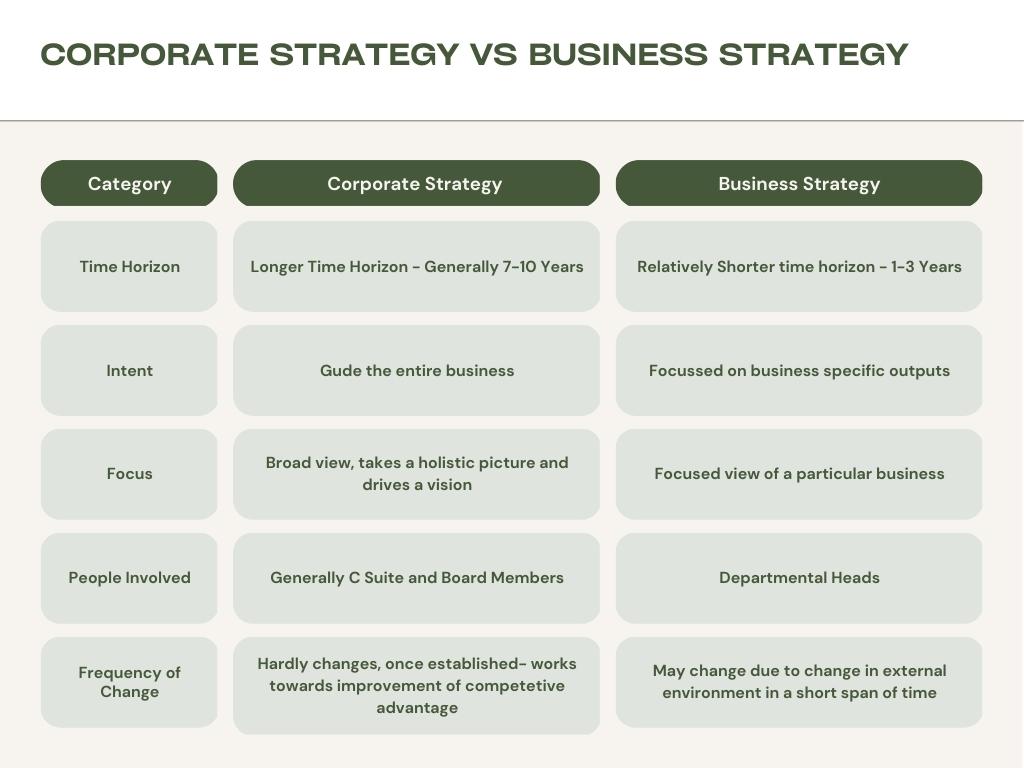
Figure 1: “Three Categories of Management Strategy Theory,” quoted from Kato (2014).
According to Kato (2014), discussions about company-wide strategy focus on the allocation of management resources (human resources, goods, money, etc.) throughout the company. Due to this nature, discussions about company-wide strategy are primarily aimed at diversified companies with multiple businesses.
On the other hand, discussions about competitive strategy focus on measures in the product market and target individual businesses. Therefore, competitive strategy is also called business strategy.
With regard to functional strategies, the discussion covers the measures taken by each functional department that make up the management strategy. Functional strategies are considered to be one of the components of management strategy, so when discussing management strategy, rather than discussing these alone, the elements of functional strategy are treated in combination.
However, this does not mean that discussions of functional strategies are less important or inferior to discussions of business strategies. In fact, just as financial strategy is strongly tied to finance theory, and sales strategy is strongly tied to marketing theory, the areas covered by functional strategy can stand as academic disciplines on their own. Therefore, it is important to understand this not as a matter of which function is superior, but as a framework for recognizing the hierarchy of the discussion you are trying to handle.
Based on the above framework, it can be said that most of the various “XX strategies” that many business people deal with on a daily basis are business strategies or functional strategies.
Managerial marketing refers to the tendency to view a company’s strategy itself as marketing. So, which area (≒level) of management strategy does managerial marketing actually target?
As mentioned earlier, company-wide strategies are aimed at diversified companies (mostly large companies). Therefore, it can be said that the target area of managerial marketing in diversified companies often focuses on decision-making from the company-wide strategy level to the business strategy level.
On the other hand, the target area of managerial marketing for companies operating a single business, small and medium-sized enterprises, and venture companies can be considered to be responsible for decision-making from the business strategy level to part of the functional strategy.
In the previous article, I hadn’t mentioned the classification of management strategy levels yet, so I explained that the strategic level can be considered managerial marketing, the business planning level can be considered marketing management, and the operational level can be considered marketing operations. It was based on this premise that I prefaced the story with, “It’s quite violent.”
As mentioned above, strategy and marketing are multilayered. Although it may not be necessary to pay strict attention to these differences in practice, the distinction and understanding of these concepts will help organize your thoughts and discussions, so please keep them in mind. It might be good.

Marketing strategy and marketing management
In the previous section, we confirmed the definition of strategy, the target areas of management strategy, and explained the scope covered by the concept of managerial marketing. In this section, we will consider the definition and scope of marketing strategy and marketing management based on textbook literature in marketing theory.

What is marketing strategy?
As mentioned above, the concept of managerial marketing is sometimes discussed across three layers of strategy (company-wide strategy, business strategy, and functional strategy).
Regarding marketing strategies for each company, Shimaguchi and Ishii (1995) state that after understanding customers and competitors, defining the company’s strengths, business scope, and positioning, strategic policies and management resource allocation are planned from an organizational perspective. This activity is also called “strategic marketing.”
On the other hand, Inoue and Ishida (2021) mention marketing strategy, saying, “Marketing strategy is positioned as a part of functional strategies” (Ibid, pp. 188-189).
In this way, Shimaguchi et al.’s interpretation of marketing strategy can be said to be at the level of managerial marketing, while Inoue et al.’s interpretation can be said to view marketing strategy from a marketing management perspective.
The question that arises here is, what exactly is the definition of marketing strategy?
As mentioned above, the scope of marketing strategy changes depending on the hierarchy (level) at which it is viewed, so practitioners do not need to be too strict about this, but when it comes to defining marketing strategy, it is important to first understand marketing theory. Let’s check the latest ones from
Kotler
et al.’s (2021) “Marketing Management”, which systematically organizes the topics, and the ones that are featured in domestic marketing-related books.
| 1 | “Deploying a good marketing strategy over the long term requires both discipline and flexibility. Companies must stick to their strategy but constantly improve it. At its heart is the development of an enduring value proposition that responds to the real needs of the customer… There are two key elements to a marketing strategy: the target market in which the company competes, and the relevant market actors. A carefully selected target market and a well-crafted value proposition form the basis of a company’s business model and serve as a tactical strategy that defines the company’s service offering. ” (Kotler et al, 2021, pp. 47-54). |
| 2 | “Marketing strategy is an integrated pattern of decisions that identifies important choices about marketing activities and the allocation of marketing resources that enable an organization to achieve specific objectives by providing customer value.” ” Varadarajan (2010) |
| 3 |
“Marketing strategy is the process of determining the direction a company should take in the external environment and allocating resources in order to achieve product and brand goals. (…) Marketing strategy begins with environmental analysis. STP is planned and executed through the process of determining marketing mix , implementing strategy, and controlling.” Inoue and Ishida (2021, pp. 25-68.) |
Looking at the three definitions above, it is clear that the essence of strategy as shown in the previous section is that it incorporates the elements of setting a policy, implementing it (tactically), and making decisions. I understand. However, one point that differs from the discussion of business strategy in the previous section is that the discussion of marketing strategy emphasizes keywords such as “market identification” and “value proposition (≒ or provision of customer value).”

As shown in the previous article, marketing theory has its roots in sales management theory by practitioners, and the discussion, which was originally discussed in terms of business strategy (competitive strategy) and functional strategy, changed around the 1960s. This led to a shift in focus to discussions at the management level. Therefore, in the definition of marketing strategy, it can be said that market orientation and customer orientation are more strongly reflected than in the definition of business strategy in the previous section.
What is marketing management?
Here, I would like to explain about marketing management, which has been mentioned frequently since the last article, but not specifically.
First, as usual, let’s check the definition from a marketing textbook.
| 1 | “Marketing management is management to achieve a marketing mix that is both internally consistent and consistent with the external environment.A marketing mix is created in line with set targets, concepts, and positioning. The basic idea is to formulate a plan.” Ishii et al. (2013) |
| 2 | “Marketing management is the art and science of selecting target markets and acquiring, retaining, and growing customers by creating, delivering, and communicating superior customer value.” Kotler et al. (2021) ) |
| 3 | “What kind of value (What) and how (How) should we provide to which customers (Who)?” Marketing management is the work system that leads to answers to these questions regarding individual products and brands. ” Onzo and Sakashita (2023) |
Regarding the above three definitions, you may feel that there are some overlaps with the definition of marketing strategy already mentioned, but the key points in the definition of marketing management are those of Ishii et al. (2013) and Onzo et al. As shown in Sakashita (2023), this can be said to emphasize its significance as a work system. The focus is on implementation and planning.
I personally believe that this kind of “implication as a work system” is extremely important when considering marketing management in practice. Therefore, when I am asked the question, “What is marketing (as a practical matter)?”, my answer is “Creating, operating, and continually improving a system that will get people to buy it.”
Masuii
. In other words, I believe that marketing management as a practical matter boils down to building, managing, and improving
value chains
.
Concepts such as STP, marketing mix, and
4Ps
are used as a framework to support the implementation of marketing management. In this article, we will limit ourselves to the interpretation of marketing management, but we will also discuss the actual purchasing mechanism, how to build and operate the value chain, and how various frameworks are involved in this process. I would like to explain the details on another occasion.

After all, are management strategy and marketing strategy different?
As mentioned at the beginning, there are no established definitions for management strategy and marketing strategy. Additionally, as discussed above, the scope of company-wide strategy will vary depending on whether the company is a diversified company or a single company, the type and number of business domains, and the size of the company. Therefore, it is impossible to assert that “management strategy is about ○○, and marketing strategy is about ■■.”
The most important points in this article are Rumelt’s three elements for business strategy or marketing strategy: 1. Understanding the current situation (identifying the problem), 2. Formulation of policy, and 3. Execution. The point is that it exists as an absolutely indispensable strategic essence.
In fact, Sagawa (1992), who was a driving force behind Kao’s growth in the latter half of the 20th century, argues that corporate strategy and marketing strategy are two sides of the same coin, and therefore do not necessarily follow a uniform order or classification. An overview of the development process and marketing strategy is shown in Figures 2 and 3 below.
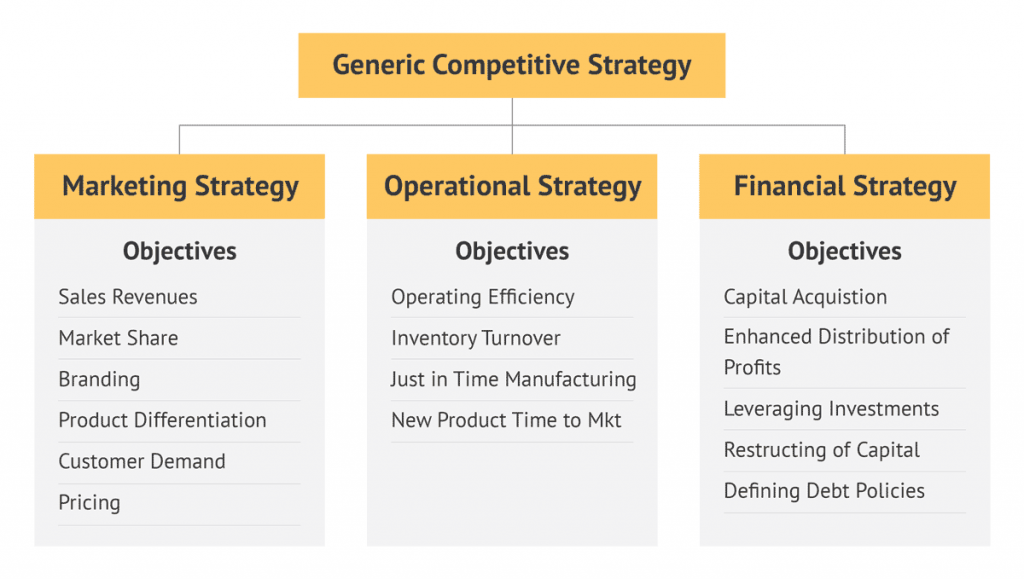
Figure 2: Quoted from “Corporate Strategy Formulation Process” (Sagawa, 1993).

Figure 3: Quoted from “Overview of Marketing Strategy” (Sagawa, 1993).
Looking at Sagawa’s organization, we can see that the process of formulating a company’s strategy is as follows: understanding the current situation → formulating policies → (formulating the organization) → marketing strategy. It can also be seen that marketing strategies include elements shown in marketing management and marketing mix.
In the practical world, there are many cases where management teams do not have a clear strategy, or even though they have a strategy in place, things don’t go as planned, or they have built an organization but people are not moving. I often see and hear about companies and business people who are In fact, companies and people who are facing these problems either do not clearly identify the problem in 1. among the essential elements essential to strategy, or they only rely on theoretical theories, fancy plans, and approval documents. I think there is a high possibility that the problem is either that the company has not been able to come up with a clear policy that will lead to the implementation of item 3.
Since I am not involved in management myself, I do not have the experience or skills to speak arrogantly about strategy, but as a practical person, I can show you the direction of things or make decisions. When doing so, I am always conscious of whether or not it can be put into action and whether there is feasibility. If you read this article, I think it would be a good idea to at least carefully check whether the “strategies” that pop up in your daily work or meetings are linked to implementation.
In the previous article and this article, abstract and conceptual discussions continued twice, but from the next article onwards, we will summarize Sagawa (1993) as mentioned above and discuss academic management strategy theory. Based on this, I would like to gradually delve into strategic thinking and the specific activities of marketing management.
- There is also literature that considers the functional strategy part to be product strategy (Sagawa, 1992; Yamada, 2018).
- This expression, “Create a system that will get people to buy it,” was used by the author when he was still a new employee at Kao and received guidance on marketing from Mr. Hakuhiko Takahiro, a management scholar and manager. Since then, I have used this expression as I think it is the most appropriate.
[References]
Yaichi Aoshima and Toshihiko Kato (2012). Competitive Strategy Theory, Toyo Keizai Inc.
Chandler, Alfred D. (1962), Strategy and structure: chapters in the history of the American industrial enterprise, Cambridge, MA: The MIT Press.
Junko Inoue and Daisuke Ishida (2021). “Revised Marketing” The Open University of Japan Educational Promotion Association.
Junzo Ishii, Kei Kuriki, Mitsuteru Shimaguchi, and Takuro Yoda (2013). “Seminar Introduction to Marketing 2nd Edition” Nihon Keizai Publishing.
Junzo Ishii, Akihiro Okumura, Tadao Kagono, and Ikujiro Nonaka (1996) Management Strategy Theory, Yuhikaku.
Itami, Noriyuki (1984). “New Logic of Management Strategy: Dynamism of Invisible Assets” Nikkei BP Marketing (Nihon Keizai Shimbun Publishing).
Toshihiko Kato (2014). “Competitive Strategy” Nikkei BP Marketing (Nihon Keizai Shimbun Publishing).
Kotler, P., Keller, K., and Chernev, A. (2021), Marketing management 16e, Pearson Education Limited. 2022)
McCarthy, EJ (1960). Basic marketing: a managerial approach. Homewood, IL: RD Irwin.
Naoto Onzo and Gentetsu Sakashita (2023). “The Power of Marketing: A Collection of the Most Important Concepts and Theoretical Frameworks” Yuhikaku.
Numagami, Miki (2000), “Business Management of Action: Exploration of Unintended Consequences in Business Management”, Hakuto Shobo.
Yukio Ogura and Kokunori Saito (2012). “Introduction to Business Administration” The Open University of Japan Educational Promotion Association.
Robert, H., Michael, H., Duane, I. and Jeffrey, H. (2007), Competing for advantage, Cengage Learning.
Rumelt, R. (2011). Good Strategy/Bad Strategy: The Difference and Why it Matters, Crown Business. (Translated by Akiko Murai, Nikkei BP Marketing (Nihon Keizai Publishing), 2012)
Rumelt, R. (2022). The Crux: How Leaders Become Strategists, Public Affairs.
Kozaburo Sagawa (1992). “New Marketing Practices” President Publishing.
Mitsuteru Shimaguchi and Junzo Ishii (1995). Modern Marketing (New Edition), Yuhikaku.
Kozo Yamada (2018). “Introduction to Business Administration” Open University Educational Promotion Association.
Varadarajan, R. (2010), Strategic marketing and marketing strategy: Domain, definition, fundamental issues and foundational premises, Journal of the academy of marketing science, 38(2), 119-140.
[Recommended literature for study]
Numagami, Miki (2009). “Thinking about business strategy” Nihon Keizai Shimbun Publishing.
Miki Numagami (2023). “Easy to understand marketing strategy 3rd edition” Yuhikaku.