

The sales you can get from your website will vary greatly depending on whether or not you have designed your website well. In some cases, it is not uncommon for sales to more than double just by adjusting the flow design of the site, so it is something that should be addressed immediately.
However, many people may not know where to start when it comes to designing a website. Therefore, in this article, we will provide an overview of website conductor design, and explain how to think about it and how to actually do it. We will also explain what you should be aware of when designing your site’s lead lines, so please use this as a reference.
What is site conductor design?
First, I will explain the outline of the site conductor design. Site flow design means considering the actions you want users to take and preparing a route for them. As the phrase “guiding line” suggests, a website is designed according to the actions the website operator wants users to take.
For example, suppose your company provides sales agency services. If you want to get inquiries about this service from your website, you can think of the following flow: TOP page → Sales agency service page → Pricing page → Inquiry page.
Alternatively, you may consider a simple flow of “TOP page → Material request page (inquiry)”. The difficult part about designing a site’s flow is that even if you design a website to follow the flow of users that your company is considering, the actual users may not behave in the same way.
There is a high possibility that the customer will not contact you as a result of the customer leaving the page or staying stuck on some page. Therefore, if your company’s users are not transitioning as you envisioned, you should either reconsider the flow or improve your website in accordance with the user transitions.
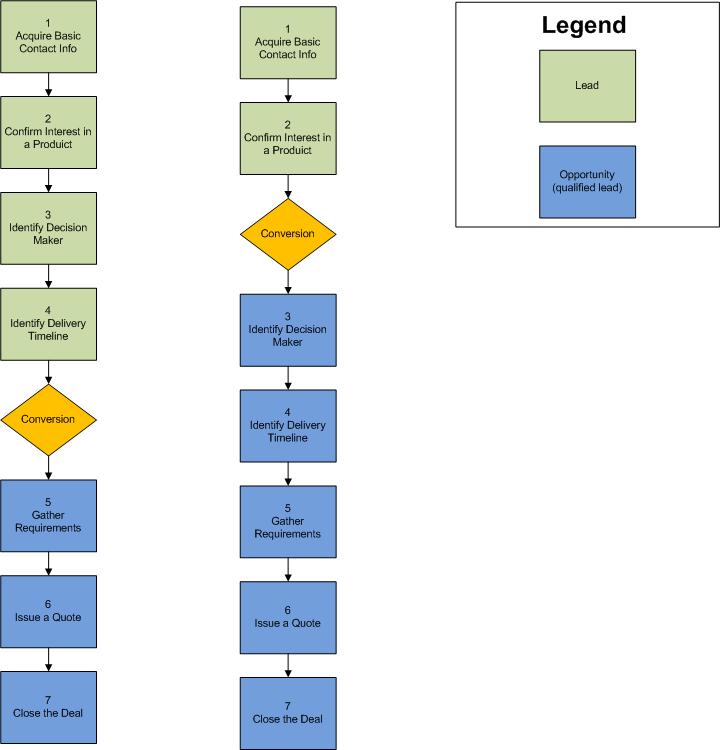
Difference between conductor and flow line
By the way, there are two words, conductor and flow line, but these two words have different meanings when it comes to website management. As mentioned above, the flow line is the route that the user actually moves. In other words, the transition pages and flow become the flow line.
Using Google Analytics, you can analyze detailed movement lines. For example, using the sales agency website mentioned earlier, let’s say you want people to see the pricing page, but they are actually looking at the operator information instead of the pricing page.
In this case, as a countermeasure, it may be necessary to thicken the content of the operator information page and change the conductor design.
Once you have accumulated a certain amount of data on your website, be sure to set aside some time to analyze and reconsider your route design based on your website’s flow lines.
Why site navigation design is important
Up to this point, we have provided an overview of website design. Here we will explain why site design is important.
Let’s look at each in turn.

to increase conversions
By designing your site’s navigation, you can increase conversions. As introduced at the beginning, there are cases where sales have doubled simply by designing the website’s flow.
The reason why designing a site’s navigation increases conversions is because it allows users to receive the information they are looking for at the right time. When a user wants to know the price, if the path to the price page is easy to understand, they will be able to transition appropriately and lead to conversion.
Conversion is an indicator that is directly linked to sales, so be sure to design your site’s flow.
To improve SEO rating
By designing your site’s navigation, you can improve your SEO rating. This is because users move through multiple pages appropriately, increasing metrics such as conversion rate and length of stay. If your SEO rating improves, even when you create a new page, it will be indexed relatively quickly.

To improve the company’s image
A website that is easy to navigate will improve UX and usability. As a result, the company’s image will improve. And since users will want to spread the word about a website with a good image, they will naturally spread the word about your website or page on SNS.
There are only benefits to designing your site’s flow, so it’s important to think carefully before approaching it.

How to think about and create a website design
Designing a website can be very difficult for first-time users. In fact, there are even people who specialize in designing website leads, so success will not happen overnight. In order to design a website that is as good as possible, be sure to keep the following three things in mind.
I will explain each in turn.

Clarify the purpose of your website
First, let’s clarify the purpose of your website. Purpose, in other words, is the user’s goal, or conversion. If the purpose of your website is to obtain requests for information, you need to design an appropriate path to the information request page.
On the other hand, in the case of “telephone inquiries,” you will need to make it easy to make calls. The appropriate route will differ depending on the purpose of your website, so start by clarifying your purpose first.

Select targets in detail
Next, it is important to carefully select your targets. A common failure case using a cram school as an example is the case of creating a website that is easy to view for parents in their 30s. At first glance, you may think that you have selected your target because you are targeting parents in their 30s and narrowing down your search.
However, you cannot maximize conversions unless you consider the situation and background in which your target makes an inquiry. For example, in the case of a cram school, the situation is different, such as “I did not get good grades at other cram schools” or “I am participating in free trial sessions of multiple cram schools.”
It is important to consider these situations in detail.

Design a conduit that makes it easy for the target to contact you
Once you have decided on your target, situation, and background, let’s design a route that will make it easy for your target to contact you. For example, in the cram school case mentioned above, if you want to target people who are participating in “free trial sessions for multiple cram schools,” you will need to redirect them to the free trial inquiry page.
At the same time, it would be convenient if you could make a reservation based on the dates and calendars where free trial sessions are being held. It is important to design a line that makes it easy for the target to make inquiries, such as this one.
Continue to verify effectiveness
Finally, let’s verify the effectiveness. Use Google Analytics and analysis tools to check how users are actually moving. It is important to analyze the user’s sentiment based on these transitions, create appropriate pages, and redesign the leads.

Things to keep in mind when designing your site
Up to this point, we have explained how to think and how to design a website. From here, we will explain other points you should be aware of.
Let’s look at each in turn.
TOP page composition
It is no exaggeration to say that the composition of the TOP page is the most important point when designing the flow of the site. If the structure and flow of the TOP page is not appropriate, users will not be able to transition to the lower page. Analyze what kind of information users want and in what order when visiting the top page, and create a structure accordingly.
Also, in SEO, if information is not concentrated on the TOP page, the overall SEO rating of the site will not improve. A common mistake is when a page is only concerned with appearance and the top page contains almost no text.
Search engines
are more concerned with how much text the user needs than with pretty images, so the balance between text and images is important. This also applies to lower-level pages.
navigation menu
Think of the navigation menu as the menu in the header. By providing a channel for inquiries in the navigation menu, CVR (contract rate) may improve.
Additionally, placing
links
to pages that users are interested in in the navigation menu will make it easier for users to navigate between pages.
sidebar
Mainly place the URL or banner of the page you want to transition to in the sidebar of the article content. At the same time, it is desirable that the URLs and banners you want to transition to follow the user’s scrolling. This will allow a certain number of users who visit your article content to transition to the page you want them to transition to.
Button position
Finally, the position of the buttons is also important. Similar to the sidebar case above, if the button is not available when the user wants to make an inquiry, there will be a loss of opportunity for conversion. By following the header and sidebar and placing a contact button there, you can improve your CVR and conversion numbers.
summary
In this article, we have explained the conductor design of the site. When designing a website’s flow path, it is important to clarify the purpose of the website and carefully select the target audience. By designing the flow of your site, you can increase sales and have the advantage of clarifying areas that need improvement.
Why not start by analyzing your current site flow and identifying areas that need improvement?