

The word “strategy” is often used in the business world, but in many cases it is also used to include the meaning of the word “tactics.” However, in order to build the correct
marketing
plan, it is important to correctly understand the difference between strategy and tactics.
Therefore, this time, we will introduce the difference between strategy and tactics, the meaning of each, and specific examples in marketing.
Difference between strategy and tactics
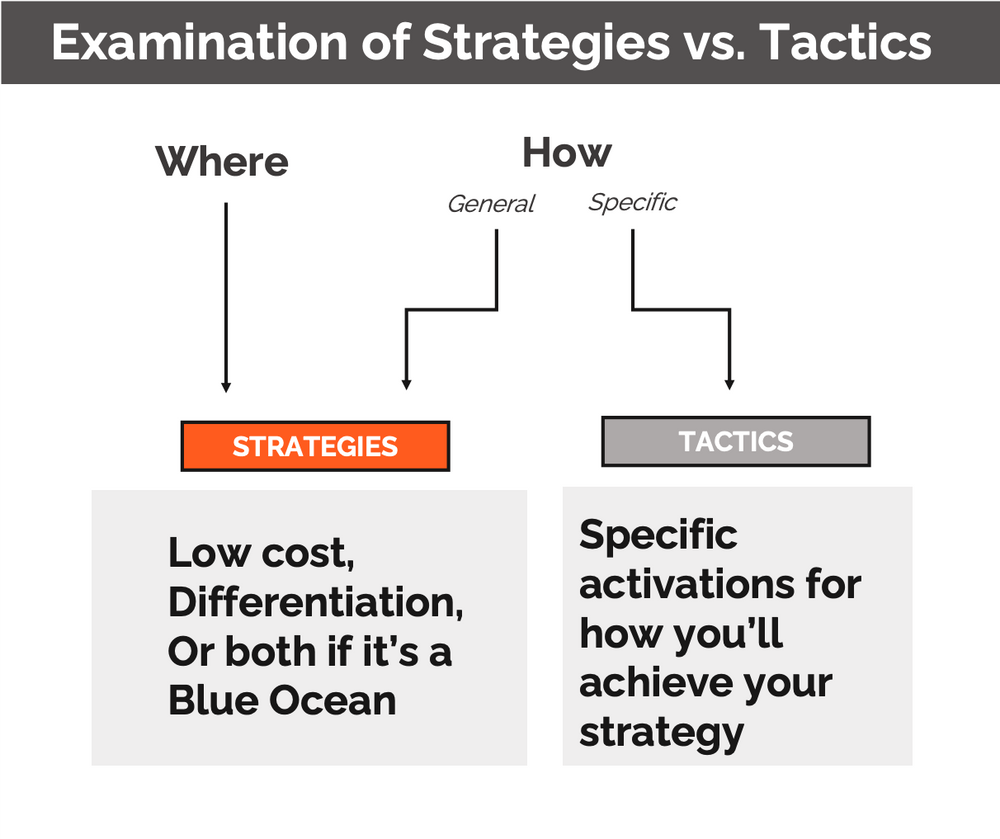
Strategy and tactics both have the same purpose in the sense that they are techniques for achieving a goal, but their roles and usage situations are clearly different.
A strategy is, so to speak, a “big-picture and long-term plan or guideline for achieving goals or achieving success.”
Tactics are “the execution of actual operations on a short-term, small-scale level in accordance with the concepts and guidelines determined by strategy.”
In other words, strategy is a long-term perspective, and tactics are a short-term perspective.For example, the perspectives are “strategy = macro” and “tactics = micro.”

What is strategy?
First, strategy is defined as follows.
”①Ikusa’s plan. Especially big-picture methods and strategies for winning battles. A concept higher than tactics.
② A strategy to carry out things in a holistic manner in order to achieve a certain purpose. ”
Quote:
Kotobank Strategy
Originally, strategies were used to refer to techniques used in battles to achieve victory. The origin of the word strategy is derived from the Greek word “strategos”, and its history goes back to the end of the 18th century, when the word strategy was widely used in a military sense.
Since then, the term strategy has gradually come to refer not only to military terms but also to the measures and strategies used to achieve objectives in all situations involving conflict.
In Richard P. Rumelt’s book Good Strategy, Bad Strategy, he says, “Strategy is what an organization should do to move forward. It is about thinking about how to make things happen.”

Meaning of strategy
So what does strategy mean? The word strategy can also be applied to markets where companies are competing with each other, and is frequently used in business settings.
The meaning of strategy in business refers to the guidelines and corporate philosophy that enable a company to achieve sustainable growth from a broad perspective and long-term perspective. The word strategy is also used when formulating individual business plans, such as the development of products and services, and in these cases it can refer to the direction and strategy of the business plan.

What you need for strategy
Strategies are created in response to the most important issues and problems for a company, and are different from mere goals set in daily operations. Therefore, research and analysis are necessary to develop strategies that can be developed to address the most important issues and problems.
When formulating a strategy, we first investigate and analyze the current situation, identify issues and problems, and then decide on the basic policy of what should be done to resolve the issues and problems. What is even more important is to translate the basic policy into actions such as how to achieve it.
If strategies are limited to basic policies, there is a high possibility that they will become mere theoretical ideas without implementation.
What is tactics?
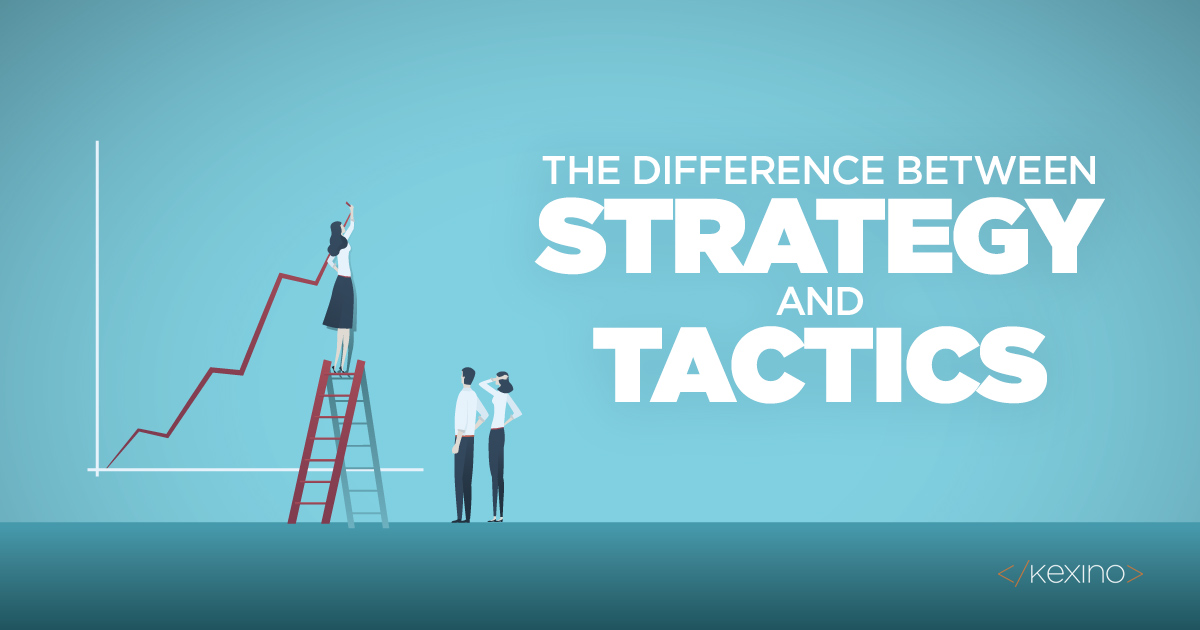
Tactics refer to specific means for achieving a strategy. The image is that a strategy indicates a general flow of direction and actions to achieve it, and it becomes concrete in practice through tactics.
Tactics are defined as follows:
”① Techniques for carrying out operations and battles most effectively. A concept subordinate to “strategy”. Tactics.
②Means and methods taken to achieve a certain purpose. ”
Quote:
Kotobank Tactics
The word “tactics” originally referred to military combat techniques, and has been recognized as a technique for utilizing the combat power of each unit. From there, the word tactics has been used in all areas, and the term tactics has come to be widely used in competitive fields such as competition, economics, management, and negotiation.
meaning of tactics
In military terms, tactics are defined as short-term, small-scale maneuvers to carry out actual operations effectively and efficiently in accordance with the concepts and guidelines determined by strategy. This has a military meaning, but these tactics are also seen in the market, and the word “tactics” is often used in business settings.
The meaning of tactics in a company is the specific means and methods for leading individual business-level projects to success, from the development to sales of products and services.
Tactics are discussed as part of strategy.
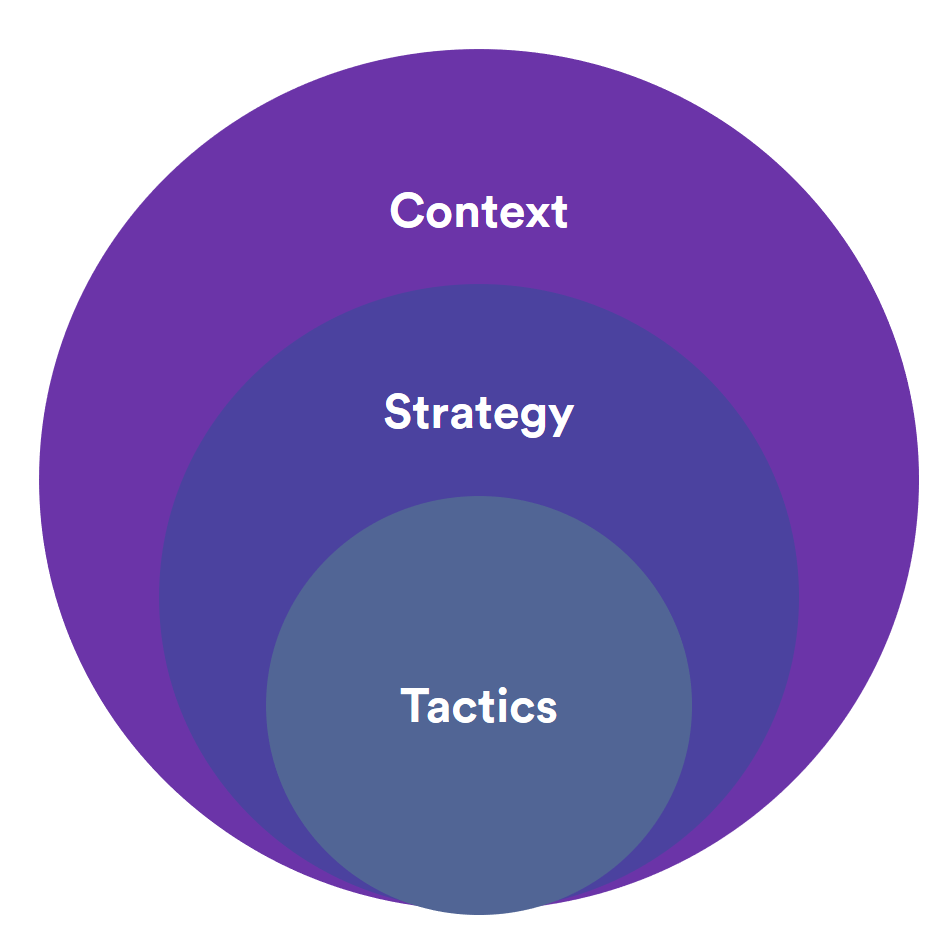
In actual business, tactics are often discussed within strategies, and people do not say things like, “The tactics of this strategy are…” However, it is necessary that the aforementioned concepts of strategy and tactics be recognized within the common understanding of the members. If awareness is weak, it is necessary to deliberately clarify strategies and tactics.

It is easier to understand if you explain it as strategy, strategy, tactics, and tactics.
The difference between strategy and tactics can be easily explained by drawing a pyramid by adding strategy and tactics. Draw a four-level pyramid with strategy at the top, strategy, tactics, and tactics.
Strategy: The direction in which the company should move Strategy: Projects to realize the strategy Tactics: Specific means to accomplish the project to realize the strategy Tactics: Practical methods on site, how to fight
Examples of strategies and tactics
We will explain specific examples of strategies and tactics from a management and marketing perspective.
In today’s world, where the Internet and
IT
are advancing at a remarkable pace and permeating users, it would be difficult for a company to make progress without
a marketing strategy
that utilizes web media.
Marketing strategy in terms of corporate performance and profits indicates what an organization can do to increase its performance and profits, and it means thinking about how to achieve what is good and desirable for the organization.
Strategy and tactics in management
Management strategy refers to the overall measures taken by a company to achieve its business objectives sustainably from a broad and long-term perspective. These are the so-called corporate philosophy, management philosophy, and behavioral guidelines, which are the basic strategies for running a company. On the other hand, management tactics are specific methods and means for making management strategies successful.
Success is defined as how to allocate and effectively utilize management resources such as “people, goods, and money” for individual business-level projects carried out as part of management strategy, and what criteria are met. We will clarify specific strategies such as:
Strategy and tactics in marketing
In contrast to management strategies and tactics, which are mainly aimed at the company and its employees, marketing strategy determines what value and strengths the company will provide to the “customer = market.” This is a strategy to do so.
We develop strategies for projects at the individual business level, determining how and to whom we will provide our company’s value and strengths. Marketing tactics then follow the concepts and guidelines determined in the marketing strategy, and we decide how to specifically implement the strategy.
for example,
We will clarify specific means and methods.
Examples of strategies and tactics in marketing
Marketing is necessary for business operations to improve sales and other performance and increase profits. When you think about it from the perspective of performance and profits, thinking about marketing for a company can be said to be the same as formulating a strategy.
Generally speaking, strategies related to performance and profits are commonly referred to as “marketing strategies.” Segmentation (market segmentation) is important when developing a marketing strategy. Please see the column below for details.
Specific examples of marketing strategies
There are two specific examples of marketing strategies:
Marketing strategy involves formulating an execution strategy that specifically determines how to approach potential customers (market). Please see the column below for details.
Examples of marketing tactics
Web media is one of the tactics used to achieve marketing strategies such as increasing the number of prospective customers and connecting prospective customers to sales results.
In order to increase the number of prospective customers, it is necessary to adopt
SEO
measures such as optimizing the structure of web media, enriching content, and measures against smartphones, as well as performance-type advertising such as listing advertisements,
retargeting
advertisements, and SNS advertisements. There is.
Turning prospects into sales results requires a precise and continuous approach and continuous communication with them. The advantage of using web media as a tactic is that it is possible to take continuous action using email distribution, etc.
To efficiently operate web media tactics
In order to operate web media tactics efficiently, it is a good idea to adopt the suggestions of a specialized company.
At “HR Pro” operated by our company, we use a model called a funnel to diagram the process by which a large number of prospective customers are narrowed down step by step to purchase your company’s products and services, and we use a model called a funnel to find the optimal approach for each step. We are implementing this while managing numerical values.
Furthermore, HR professionals have successfully utilized systems for email distribution to great effect. You can download materials on tips for achieving results with a market strategy that uses web media as a tactic from the page below, so please take advantage of it.

Strategy and Tactics Corporate Case Studies
Below, we will introduce examples of companies that successfully adopted strategies and tactics.
Saizeria case study
Saizeria, a chain store that offers low-priced Italian food, is a company that has been able to succeed by continuing to offer a product range that is significantly lower priced than its competitors. A strategy to establish a competitive advantage by achieving significantly lower costs than competitors is called a “cost leadership strategy.”
The basic idea is to reduce the cost of goods, lower the price of the product, and increase profit margins. In order to keep the cost of ingredients down, Saizeria does not contract with farmers or stores, but rather has its own farms to secure ingredients. Furthermore, we have built a cold chain system that thoroughly controls temperature to ensure that the quality of the harvested ingredients does not deteriorate, and we have established our own distribution route.
This strategy has been successful, allowing us to provide services that leverage our strengths that our competitors cannot match.
Muji case study
One company that has achieved success with its
branding
strategy is Muji. The company’s products, including food, daily necessities, and clothing, are popular among a wide range of age groups due to its low-priced yet high-quality image.
A marketing tactic that MUJI is particularly focused on is concept creation. This pretty much sums up MUJI’s marketing tactics.
90% of the concept, 10% of the action, so 90% of the effort is put into the concept. They must have been confident that by solidifying their concept, they would be able to offer their products to customers without delay.
These solid concepts and tactics that do not change the product convince customers and make the branding strategy a success.
Shimamura case study
Shimamura, a clothing chain store, is a successful company that uses a “cost concentration strategy” that creates cost advantages in specific markets.
In order to achieve thorough cost control in the specific market of clothing, Shimamura has taken measures such as securing purchasing routes, improving operational efficiency at distribution centers, and increasing the proportion of part-time employees.
Through this marketing tactic, we were able to significantly reduce operating costs. Thanks to this cost concentration strategy, our domestic sales from 2020 to 2020 have continued to rise to second place in the industry.

summary
◆ Strategy indicates how an organization should move forward.
◆ Tactics are specific means to achieve a strategy.
◆ Marketing strategy is something that shows how an organization can increase its performance and profits.
◆ There are two specific examples of marketing strategies: “increase the number of prospective customers” and “connect prospective customers to sales results.”
◆ “Web media” is a tactic used as a specific means to achieve marketing strategies.
◆ It is also a good idea to adopt the suggestions of a specialized company in order to efficiently operate web media tactics.