

It is commonly said that “resource management is important for business management,” but what exactly does “resources” mean?
The English word “resource”, which means “resources” or “materials”, refers to “management resources” in business.
This article explains the meaning of resources, usage examples, and the importance of resource management in business.
By reading until the end, you should have a deeper understanding of “resources.”
What is a resource?
First, let’s check the meaning of “resource” and understand the difference in meaning from terms that are often confused.
Meaning of resource
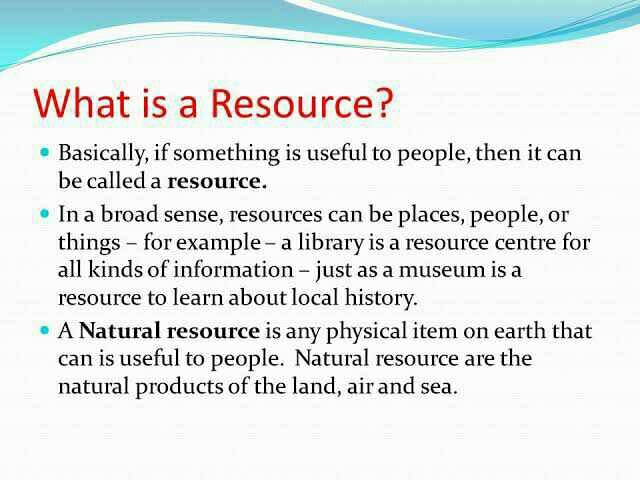
Resource is an English word meaning “resource,” “finance,” “supply source,” or “materials.” For example, natural resources are expressed as “natural resources,” human resources are expressed as “human resources,” and so on.
What are “resources” in the business field?
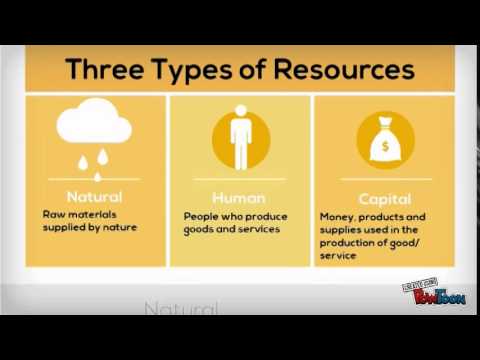
Resources in business are “resources that can be utilized in business to create value.” In other words, resources refer to “management resources necessary for a company’s management activities” such as “people,” “things,” “money,” and “information.”
What does “resource” mean in IT?
The term “resource” is also used in the IT field, but it has a different meaning when used in business.
In the IT field, “resources” refer to things such as “memory capacity,” “hard disk capacity,” and “CPU processing speed” required to run a computer. In Japanese, it is sometimes called “computing resources.”
Difference from asset
Asset is a word that is often confused with resource. We have briefly summarized the differences between resources and assets.
| resource | Refers to “resources” that generate profits and value when utilized. These include “people,” “things,” “money,” and “information.” |
| assets | Refers to “assets” and “property” that have value just by owning them. This includes “money/securities” and “real estate.” |
resource example sentences
Specifically, how is the word “resource” used in a business setting? Below, we will introduce three typical ways the word “resource” is used and specific example sentences for each.
Lack of resources/insufficient resources
“Lack of resources” means “a lack of management resources necessary for management and business.” It is used when a project or department does not have enough human resources or budget.
- We do not have enough human resources, so we would like to hire more staff as soon as possible.
- Project progress is slow due to lack of resources
- Our company has a noticeable lack of resources in ○○ department.
Allocate resources / Allocate resources
“Allocate resources/allocate resources” means “to allocate the management resources necessary for a business” or “to use the management resources you have.” It is used when allocating personnel and budget to projects and businesses.
- Considerable resources should be allocated to Company A’s project.
- Where should we allocate our internal resources now?
- Resource allocation needs to be carefully considered
- Check to see if there is any imbalance in resource allocation.
Resource management/Manage resources
“Resource management” refers to managing business resources in order to make effective use of them. Resource management also includes things like “putting the right resources in the right place” and “securing missing resources from outside.”
- Resource management is essential to project success
- Resource management is essential for company development

Management resources (management resources)
As mentioned above, business resources are the “management resources necessary for a company’s management activities” such as “people,” “things,” “money,” and “information.” Here, we will explain in more detail what management resources refer to.
What are the four management resources? Six? Seven?
There are various ways of thinking about what should be considered management resources.
Until the 1990s, “people,” “things,” “money,” and “information” were said to be the “four major management resources.”
However, over the past 20 years or so, the way we think about management resources has changed. Today, six management resources can be considered, including time and intellectual property in addition to the four major management resources. In addition, we sometimes add “brand” to make the list “seven management resources.”
Other than the four major management resources, “time,” “intellectual property,” and “brand” are all intangible, and it can be said that as the times change, intangible management resources are becoming more and more important.
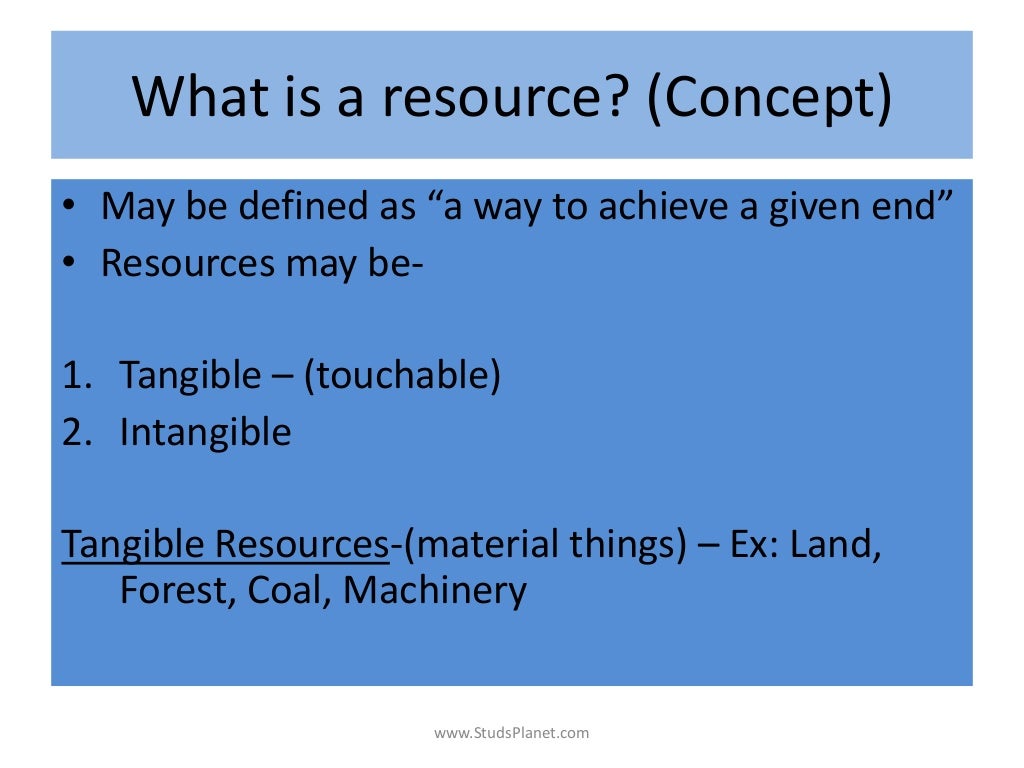
Tangible resources “people” “things” “money”
Of the “seven management resources,” three are tangible resources: “people,” “things,” and “money.” Below is a summary of what role each resource plays.
| human | Refers to your company’s employees (human resources). It is said to be the “most important resource in business” because it is impossible to produce or sell things without people moving. The ability to utilize people efficiently has a major impact on a company’s productivity. |
| mono |
This refers to “products,” “factories and equipment used in production,” “office equipment and equipment,” etc. Efficient production and corporate activities are supported by things. For example, high-spec products are thought to increase efficiency and productivity. |
| money | Refers to operating funds. Money is essential for running a business, such as “hiring and paying salaries to talented people,” “developing new products,” “expanding sales channels,” and “enhancing production facilities.” When a company runs out of money, it becomes difficult to continue its business, and it may even go bankrupt. |
Intangible resources “information” “time” “intellectual property” “brand”
In recent years, intangible business resources have become increasingly important. By understanding the roles of “information,” “intellectual property,” “brand,” and “time,” you should be able to manage resources more effectively.
| information | This refers to “customer data”, “market trend data”, etc. Information is said to dominate the economy in the 21st century, and information is an increasingly important resource. Accurate and timely information collection and analysis are important when making decisions as a company. There are also companies that process the information they hold to add value and earn profits. |
| intellectual property | “Company-specific know-how” is intellectual property. Examples include “sales and sales know-how,” “planning know-how,” and “human resource development know-how.” There is also the idea that “networks with stakeholders” are included in intellectual property. Intellectual property has the characteristic that it cannot be easily imitated by other companies. |
| brand | It refers to the “recognition” and “trust” gained from customers and society through the accumulation of “admiration” and “trust.” If you can establish your brand, you can differentiate yourself from other companies and reduce promotional costs. Like intellectual property, it has characteristics that other companies cannot easily imitate. |
| time | “Employee time” and “time related to corporate activities” are also treated as resources. In corporate activities, it is important to improve the efficiency of “time taken for decision making” and “time taken for service provision and production.” Methods of time resource management include “outsourcing operations” and “acquiring the relevant business from another company to shorten the time it takes to develop the business.” |
Furthermore, when classifying intangible management resources, there is a way of thinking that includes “intellectual property” and “brand” under “information.”
McKinsey’s 7S
Consulting firm McKinsey & Company advocates the idea of using the “7S” as management resources.
The
framework
for thinking about organizational change based on 7S is widely used in business settings. Below is a summary of each item of 7S.
| Strategy | Action policy/plan for achieving goals. “Corporate strategy,” “business strategy,” “functional strategy,” etc. |
| Structure | Structure of company organization. Depending on the company, there are differences in whether the hierarchy is flat or deep. |
| System | Rules within a company and the mechanisms that make them work. “Attendance management”, “Personnel evaluation”, “Vacation system”, etc. |
| Shared value | Corporate philosophy and vision. This is necessary for employees to move forward in unison, and is particularly important among the 7S. |
| Skill | Technology, skills, knowledge, and know-how within the company. This includes not only production-related technology, but also “sales and marketing capabilities” and “planning and marketing capabilities.” |
| Staff | Organization members/employees. It also includes “recruitment system,” “education system,” and “evaluation system.” |
| Style | Company culture and corporate culture. This includes “desired employee image,” “tacit understanding,” and “work environment/atmosphere.” |
Furthermore, “strategy,” “organization,” and “system” are called the “hard 3S,” and “values,” “skills,” “human resources,” and “style” are called the “soft 4S.”
The advantage of analyzing an organization using 7S is that it makes it possible to clarify the “issues the organization faces” and “prioritization of issues.” In the past, when it came to solving organizational issues, there was a tendency to place too much emphasis on hardware aspects, but with the 7S framework, it is now possible to consider organizational change from both hardware and software aspects.
human resources
Among all management resources, “people” or human resources are particularly important.
What is “Human Resources” and “HR”?
Human resources refer to the skills, abilities, knowledge, etc. of a company’s management and employees. Also referred to as “human resources,” “human resources,” or “human resources.” It is also increasingly being referred to as “human capital.”
The term “human resources” is sometimes used to mean “the use of human resources in corporate activities” or “the department responsible for the use of human resources.” In such cases, the abbreviation “HR” stands for “Human Resources.”
Importance of human resources
Human resources are particularly important among management resources. This is because the “skills” and “abilities” possessed by employees are directly connected to corporate activities and influence the company’s performance and growth.
Human resources increase corporate value and competitiveness by utilizing management resources such as “materials,” “money,” and “information.”
What is Human Resource Management (HRM)?
“Human resource management (HRM)” refers to “regarding people as resources, and building and operating systems that maximize their potential.” In the past, employees were considered a cost, but in modern times, employees are no longer considered a “cost” but a “human resource.” Additionally, as the workforce declines and the need to increase employee productivity increases, human resource management has gained attention.
Before HRM was proposed, the common method for managing people was “Personal Management (PM, Personnel and Labor Management).” PM regards human resources as a cost and manages and controls the “people” that constitute the workforce.
After that, HRM began to attract attention in Japan from the 1990s onwards. HRM differs from PM in that it emphasizes human resource development. HRM positions human resources as management resources and aims to grow the company by utilizing human resources. Therefore, it is necessary to hire, develop human resources, place the right people in the right jobs, and produce results in accordance with the company’s strategy.
Specific HRM tasks include the following, which are handled by the Human Resources Department and the management classes of each department.
- Building a personnel system
- Forecasting human resources needed
- Predictive hiring
- Human resource development through education and training
- Allocation and reassignment of human resources
There are various theories and frameworks regarding HRM. When actually developing HRM, famous frameworks such as the “Michigan Model,” “Harvard Model,” and “High Performance HRM” are often referred to.
What is human capital management?
In recent years, the term “human capital management” has also gained attention.
In human capital management, human resources are not “objects of management” but “objects of investment” and are seen as capital for the growth of a company. By investing in human resources and connecting them to “creating new value” and “exercising individual strength and individuality,” we aim to achieve “mid- to long-term corporate development” and “strength to respond to unexpected situations.” .
The following factors are behind the increased attention to human capital management.
- Penetration of diverse work styles
- Increase in the number of diverse human resources such as “non-regular employees” and “foreign nationals”
- Global trends to invest in human resources
- Requests from investors
- Necessary as a management strategy in the DX era
Globally, we live in an era in which a company’s efforts related to human capital are directly linked to corporate value, and human capital is now being used as a basis for investment decisions in the stock market.
.png)
external resources
Resources in business are not limited to internal resources. External resources are “resources located outside the company.”
If you do not have enough resources within your company, you can solve the problem by utilizing external resources. For example, consider the following examples:
- Contract with an online assistant only during busy periods
- Consult with external consultants about your company’s management issues
- Outsourcing SNS operations to individual marketers
- Call centers that are difficult to operate in-house are converted to BPO
In this way, it can be said that the use of external resources is appropriate when there is a shortage of human resources within the company or when there are no internal personnel with the necessary knowledge or skills.
The advantage of using external resources is that you can utilize highly skilled human resources without incurring training costs.
:max_bytes(150000):strip_icc()/business-9536b19e48b54a638b8fd2a8aee60d25.jpg)
The importance of resource management
In order to utilize management resources efficiently and maximize corporate profits, management such as “understanding” and “allocating” resources is essential.
Understanding management resources is essential for corporate management
Start by understanding your company’s management resources.
This makes it easier to set “realistic goals for the resources available.” For example, by understanding people = human resources, you can avoid setting “a quota that is unlikely to be achieved” or accepting an order for “a project for which there is clearly a lack of resources.”
In addition, by understanding resources such as goods and money, it is possible to avoid unnecessary inventory and assets and improve cash flow. For example, you can take measures such as “cancel the lease contract for company cars that are not in use.”
Next, plan the effective allocation of resources to increase productivity. Using people as an example, if you place the right people in the right places, they will be able to perform to their full potential.
It is also essential to periodically review the allocation of management resources. Let’s quantitatively evaluate how much profit we were able to generate with the allocated resources. It is also important to plan for reallocation as business conditions change.
If you understand each resource, you can discover and solve problems early.
For example, by properly managing resources, you can quickly notice problems such as “a project is likely to be delayed.” If you understand your resources, it will be easier to identify causes such as “lack of time” and “lack of skills.”
Appropriate management helps prepare for unexpected situations
Even in unforeseen situations such as “unexpected work occurring due to a problem,” if you know the resources, you can allocate an employee within the project or department who can handle it.
Additionally, if you determine that your company does not have enough internal resources, you can immediately consider using external resources.
Furthermore, if not only managers but also members understand each other’s resources, there is a possibility that members will work together to compensate for the lack of resources such as “time” and “skills”. Resource management helps in “creating a system of cooperation within the company.”
Quickly plan the allocation of management resources
Understanding your company’s resources and usage makes it easier to put resources where they’re needed. By understanding “surplus resources” and “insufficient resources,” you can efficiently reallocate resources.

Examples of business damage due to lack of resources
So, what kind of damage can a company suffer if resources are insufficient due to lack of proper resource management?
Shortage of “human resources”: Human resources drain and turnover rate increases
A shortage of human resources may lead to a loss of human resources. This is because a lack of manpower increases the burden on each employee and increases dissatisfaction.
Additionally, if talented people leave, it will lead to a decline in competitiveness, and if the turnover rate increases, there is a possibility that you will not be able to attract people even if you conduct recruitment activities. Human resource optimization is a particularly important point in resource management.
Shortage of “things”: Decline in productivity
Workplaces that lack “IT tools and devices such as computers” and “office supplies” are more likely to experience a decline in productivity.
For example, between “ordering by handwritten fax” and “ordering and placing on a cloud system,” the latter is considered to be more efficient.
In addition, a “dirty and difficult-to-use office” may not only reduce productivity but also reduce employee motivation.
Lack of “information”: Decline in competitiveness
If information among management resources is insufficient, competitiveness may decline.
For example, without accurate information, it becomes difficult to plan effective marketing measures. As a result, there may be cases where a product is strong but cannot sell due to poor marketing.
In addition, if work becomes individualized and a company does not accumulate business know-how, the quality of work will decline due to generational change from veterans to young people and talented employees retiring, and competitiveness will decline. Masu.

Resource management example
What kind of resource management should we keep in mind to prevent the resource shortages described above?
Organize a team with flexible resource allocation
One of the tips for resource management is to allocate resources with sufficient margin. Be sure to allocate things with plenty of leeway in terms of personnel, time, and budget.
If you have sufficient resource allocation, it will be easier to make adjustments when a problem occurs. For example, if you have time, you can respond to sudden changes in specifications within the delivery deadline, and if you have staff, you can devote your manpower to troubleshooting.
On the other hand, if there is not enough leeway, it will be difficult to make adjustments within departments and projects, which may lead to delivery delays.
Utilize external resources to fill human resources shortages
If internal resources are insufficient, it is possible to make up for the shortage by utilizing external resources. External resources are useful not only when there is a shortage of manpower, but also when in-house personnel lack the skills.
For example, there are many outsourcing services that can be used on a short-term or spot basis, such as “online assistants,” “short-term temporary workers,” “crowdsourcing,” and “outsourcing.” In addition to simply outsourcing operations, it is also possible to outsource entire specific departments such as the “information systems department” or “call center.”
However, depending on the scale and quality of the external resources used, the cost may be high, so care must be taken when introducing it.
Increase employee motivation and prevent leakage through comprehensive education and training
When managing people, it is necessary to pay attention to “motivation management.” This is because whether or not employees are able to perform to their full potential is also influenced by emotions such as motivation.
For example, many employees lose motivation if they are unable to improve their skills at their current workplace.
In order to prevent dissatisfaction, it is necessary to provide learning opportunities such as training, workshops, and seminars. If there are no in-house resources available for training, external resources such as external seminars and external instructors can also be used.
In addition, regular interviews will be necessary to understand “lowering of employee motivation” and “dissatisfaction with the personnel system.”
Promote systemization of business operations and improve productivity
Promoting the systematization of business operations is also a part of resource management.
By introducing an efficient system, you can shorten employee work hours, and “reducing overtime hours” leads to lower costs.
By increasing efficiency, you can reduce the number of people involved in job A and free them up for job B, which requires more manpower.
In addition, by systematizing resource management itself, accurate and timely resource management becomes possible.
However, installing and using the system requires initial costs and running costs. You also need to take into account the cost of disposal.
Consider raising funds to resolve the lack of financial resources
If you do not have enough money to run your business or advance your project, consider raising funds.
If you can raise appropriate funds, you will be able to invest the budget in things like launching new businesses and projects, developing new products, training human resources, and improving the office environment, which will lead to your company’s growth.
Funds can be raised in the following ways:
- Investment from investors
- Loans from financial institutions
- Conversion of assets into cash
- Utilization of subsidies and subsidies
- crowdfunding
PPM analysis for management resource allocation planning
In order to appropriately allocate management resources, it is important to reduce investment in declining businesses and actively invest in growing businesses. If you can do this, you can get big results with little resources.
PPM analysis
(Product Portfolio Management) is useful for identifying “declining businesses” and “growing businesses” in your company.
PPM analysis is a management method proposed by the founder of Boston Consulting Group, a major consulting firm, in 1970, and even now, more than 50 years after its introduction, it is still used by many companies to determine the allocation of management resources. .
For detailed explanations and methods of PPM analysis, please see ”
What is PPM analysis? Explaining the basic marketing strategy formulation framework
“.
summary
Resource management is essential in business, and terms such as “resource shortage,” “resource allocation,” and “resource management” are often used in project management and human resources fields.
When the term “resource” is used in business, it often refers to “people,” and recently, “human resource management (HRM)” and “human capital management” have also been attracting attention. The global trend is to see people not just as a labor force, but as “an important resource and asset for companies.”
In order for employees to maximize their individual abilities, it is important to place the right people in the right jobs. Additionally, in order to appropriately allocate management resources, including human resources, we recommend using methods such as PPM analysis.